
Building a hardwood deck is one of the most rewarding outdoor projects you can undertake—blending natural beauty, long-lasting performance, and timeless appeal. But choosing the right wood species means understanding how each performs in real-world conditions: from daily foot traffic to sun exposure, moisture cycles, and maintenance expectations.
In this decking comparison guide, we break down the top hardwood decking species—Ipe, Cumaru, Teak, Tigerwood, and Mahogany—to help you decide which one best fits your project goals and budget.
Ipe (Brazilian Walnut) Decking
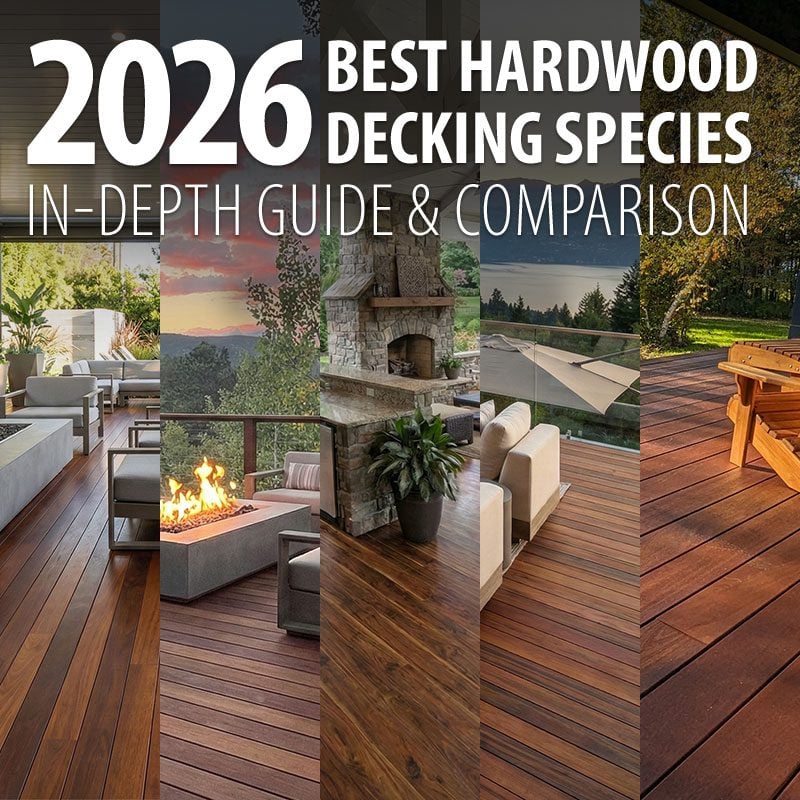
Ipe, often called Brazilian walnut, is widely regarded as one of the premium choices for decking due to its exceptional density, hardness, and outdoor durability.
Pros
- Extreme durability: One of the hardest decking woods available—far outpacing most domestic options and composites—which makes it highly resistant to wear, dents, and foot traffic.
- Rot & insect resistance: Naturally dense and oily, Ipe resists decay, termites, and fungal attack better than many other species.
- Long lifespan: With proper care, an Ipe deck can last decades, often outlasting multiple composite decks.
- Fire resistance: Has a Class A fire rating—similar to concrete.
Cons
- Hard to work with: Its density makes cutting and pre-drilling necessary—which can slow installation and increase labor time.
- Higher cost: Premium material comes with a premium price tag—often more than many other hardwoods and alternative decking materials.
- Color change: Ipe naturally weathers to a silver-gray patina if left untreated—beautiful to some, less desirable to others unless sealed regularly.
Best for: High-traffic outdoor living spaces, luxury homes, and areas where longevity is prioritized over upfront cost.
Cumaru (Brazilian Teak) Decking
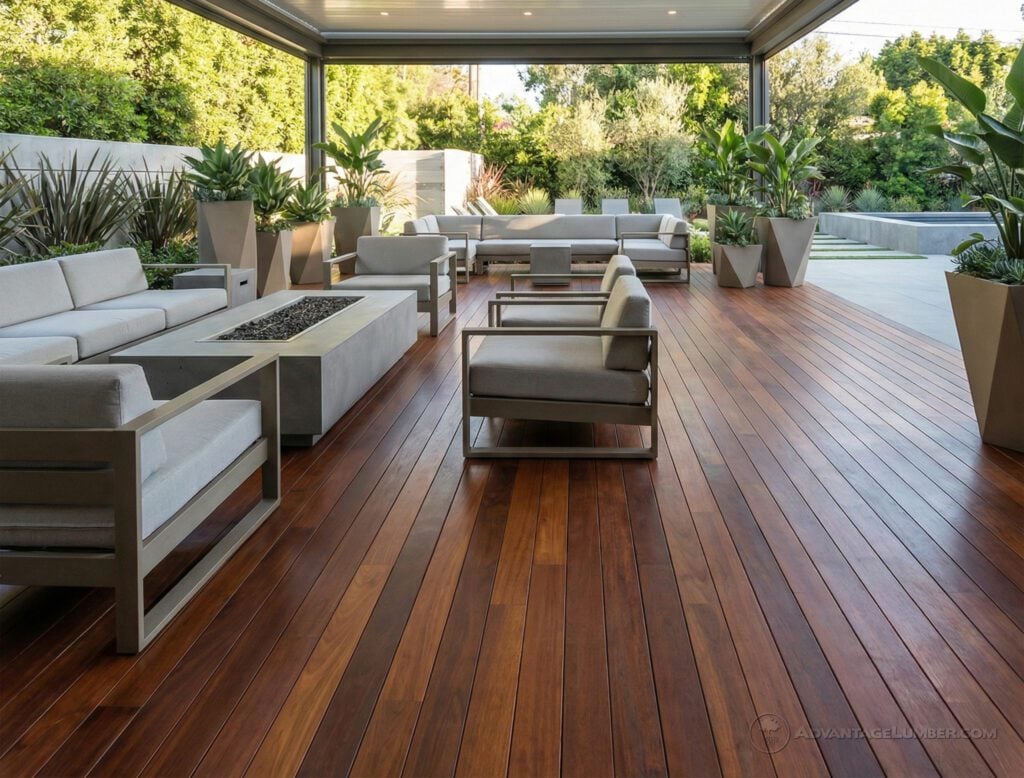
Cumaru—sometimes called Brazilian Teak—is a tropical hardwood that sits just below Ipe in hardness but still offers outstanding performance for decking.
Pros
- Strong and durable: Slightly softer than Ipe but still significantly harder than most woods, giving excellent resistance to everyday wear.
- Affordable alternative: Often costs less than Ipe while delivering similar durability and aesthetic appeal.
- Rich color variation: Natural hues range from golden brown to deep reddish-brown, adding warmth to outdoor spaces.
Cons
- Dimensional changes: Like all hardwoods, Cumaru can shrink or swell with wide moisture swings, especially if not kiln-dried properly. It may not be ideal for extremely dry or highly variable climates.
- Color shift: Without maintenance, colors will mellow and may turn silver-gray over time—a visual shift some homeowners may find less desirable.
Best for: Projects seeking premium performance and a slightly more budget-friendly alternative to Ipe.
Teak Decking
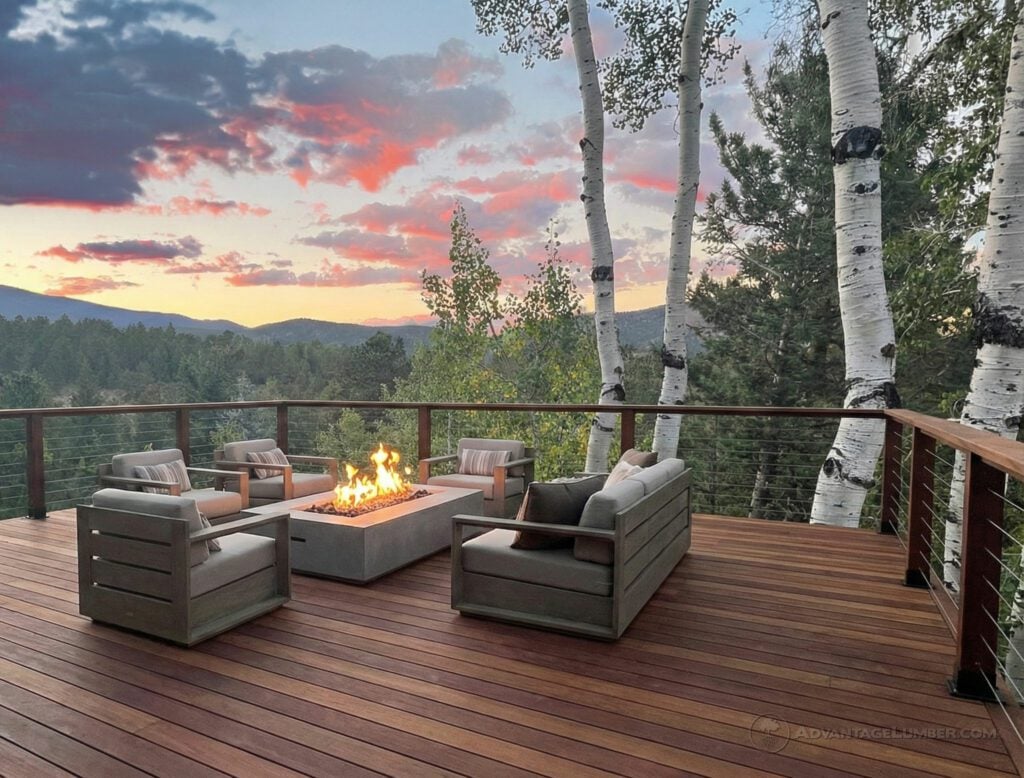
Teak is legendary in boatbuilding and outdoor furniture for its natural oils and water resistance, making it a strong decking contender—particularly in climates with frequent moisture.
Pros
- Exceptional water resistance: High natural oil content helps teak withstand moisture, rot, and mildew better than many other species.
- Stable in changing conditions: Teak experiences relatively low shrinkage and expansion compared with many woods exposed to moisture cycles.
- Aging gracefully: Whether you choose to seal it or let it silver naturally, teak’s aesthetic evolves beautifully over time.
Cons
- Softer than ultra-dense tropical hardwoods: Teak is durable, but it is not as hard as Ipe or Cumaru. For extremely high-traffic commercial environments, a denser species may be preferred.
- Tool wear: The natural silica content can blunt cutting tools faster than other woods—an installation factor to consider.
Best for: Waterfront decks, humid climates, areas where water resistance is especially important.
Tigerwood Decking
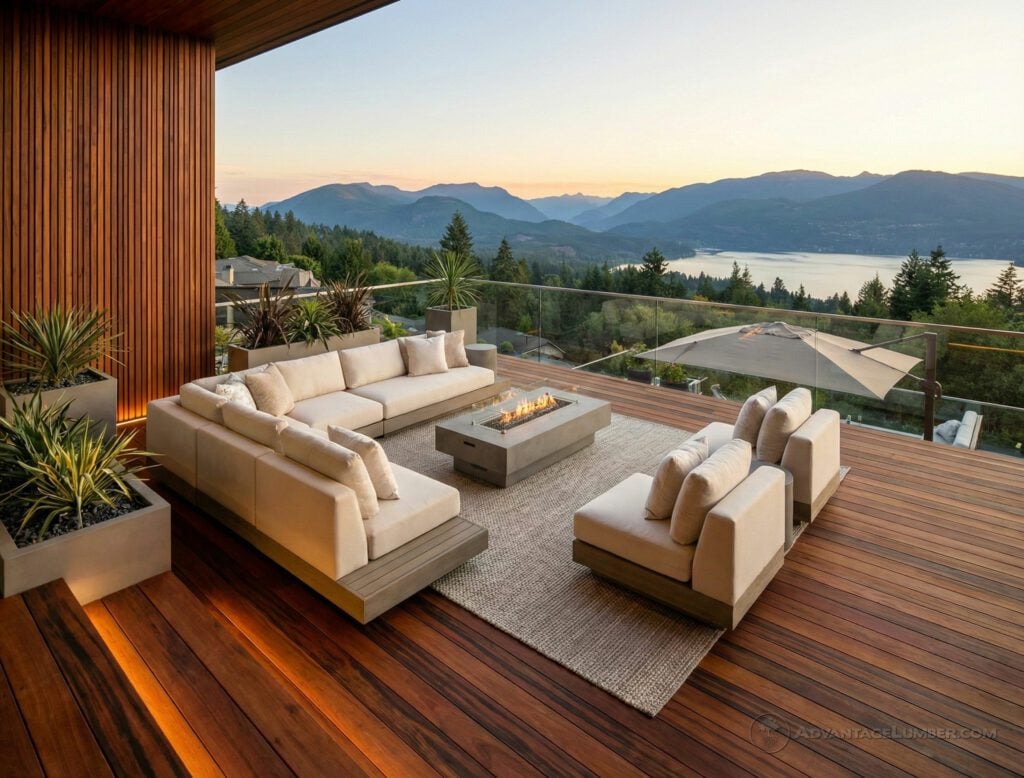
Tigerwood is a visually striking exotic hardwood with dramatic grain patterns and strong performance—often chosen for its distinctive look and reliability.
Pros
- Unique appearance: The bold striping and reddish tones give Tigerwood a luxury feel that few other woods can mimic.
- Durable and stable: Excellent hardness and natural resistance to rot, insects, and outdoor wear.
- Less splintering: Compared to some dense woods, it’s known to be relatively stable with lower splinter tendencies.
Cons
- Maintenance for color: If you chose Tigerwood for its striking color, it will take some work to maintain—periodic oiling will prevent it from turning gray.
- Still premium pricing: While far less expensive than Ipe, Tigerwood remains a higher-end choice compared to many domestic alternatives.
Best for: Designs where distinctive aesthetics and durability are equally important—great for patios, pergolas, and feature decking.
Mahogany (Red Balau) Decking
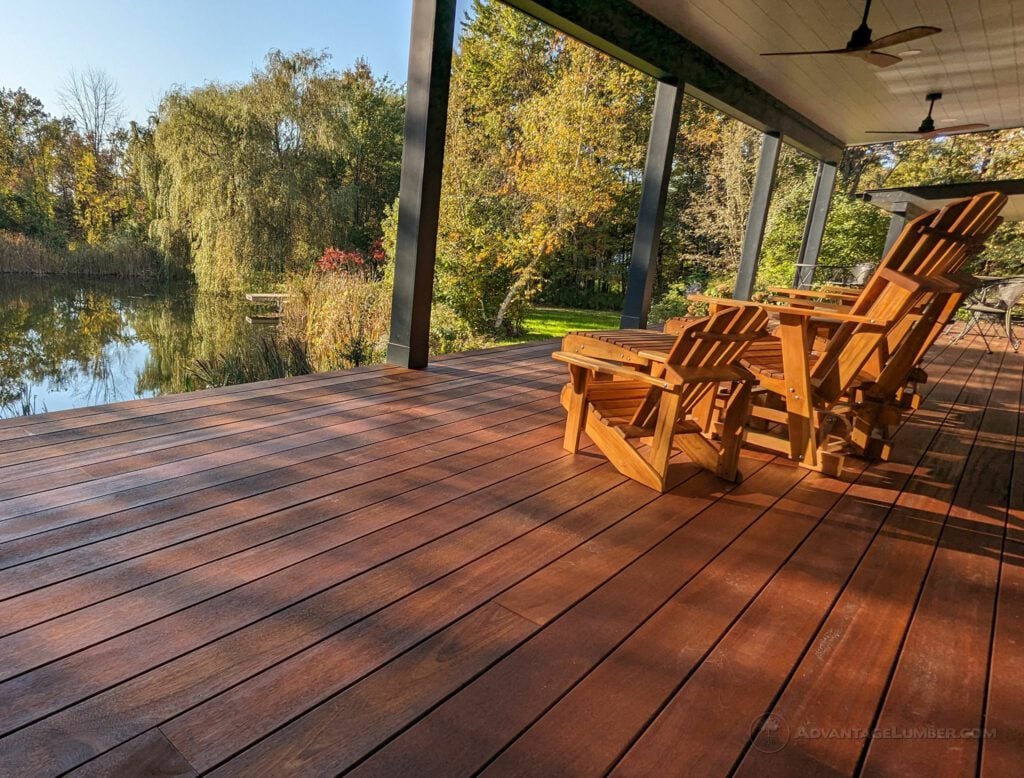
Mahogany decking delivers excellent outdoor performance, attractive reddish-brown tones, and strong value compared to many tropical hardwoods.
Pros
- Durable and dense: Well-suited for residential decks and everyday outdoor use.
- Naturally decay resistant: Performs well against rot and insects when properly maintained.
- Warm, classic appearance: Reddish-brown color and straight grain create a traditional hardwood look.
- More workable than ultra-dense species: Generally easier to cut and fasten than Ipe or Cumaru.
- Strong value: Often more budget-friendly than premium tropical hardwoods.
Cons
- Seasonal movement: Can expand and contract more than ultra-dense species in extreme climates.
- Surface checking possible: Minor checking may occur in high sun or dry environments.
- Color maintenance required: Will weather to silver-gray without periodic oiling.
Best for: Homeowners wanting a traditional hardwood look with dependable performance at a competitive price.
Quick Decking Comparison
| Species | Durability | Rot & Insect Resistance | Stability | Workability | Price |
|---|---|---|---|---|---|
| Ipe | ⭐⭐⭐⭐⭐ | ⭐⭐⭐⭐⭐ | ⭐⭐⭐⭐ | ⭐ | ⭐⭐ |
| Cumaru | ⭐⭐⭐⭐⭐ | ⭐⭐⭐⭐⭐ | ⭐⭐⭐ | ⭐ | ⭐⭐⭐ |
| Teak | ⭐⭐⭐⭐ | ⭐⭐⭐⭐⭐ | ⭐⭐⭐⭐⭐ | ⭐⭐⭐ | ⭐⭐⭐⭐ |
| Tigerwood | ⭐⭐⭐⭐ | ⭐⭐⭐⭐ | ⭐⭐⭐ | ⭐⭐⭐ | ⭐⭐⭐ |
| Mahogany | ⭐⭐⭐⭐ | ⭐⭐⭐⭐ | ⭐⭐⭐ | ⭐⭐⭐⭐ | ⭐⭐⭐⭐ |
Final Thoughts
There’s no single “best” hardwood for every project, but each species here shines in its own way:
- Ipe offers unmatched durability.
- Cumaru balances strength and value.
- Teak excels in wet climates.
- Tigerwood delivers dramatic aesthetics.
- Mahogany offers classic warmth, dependable durability, and strong overall value for residential decking.
Your choice should match not just your budget, but also how you want your deck to look and perform over decades—from the heat of summer to snowy winters and everything in between.
