
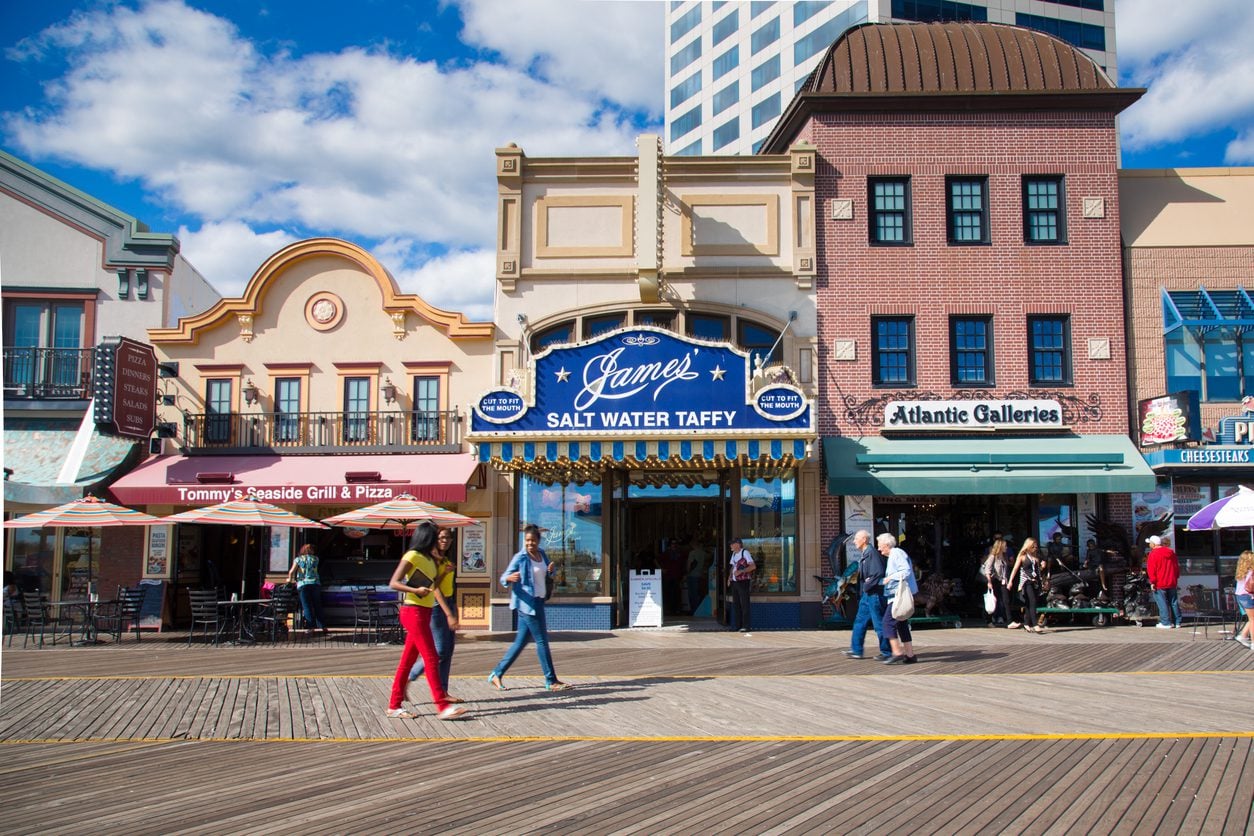
Which Performs Better on Boardwalks, Restaurant Decks, Docks & High Traffic Spaces?
When it comes to commercial decking projects, the stakes are much higher than a typical backyard build. Boardwalks, restaurant patios, hotel pool decks, docks, piers, marinas, and public waterfront spaces often see thousands of people walking across them daily.
That level of foot traffic changes everything.
Material selection isn’t just about color and curb appeal — it’s about durability, maintenance, liability, long-term cost, and performance under real-world abuse.
Two of the most commonly specified materials are hardwood decking and composite decking. Let’s break down how they compare in demanding commercial environments.
The Unique Challenges of Commercial Decking
Before comparing materials, it’s important to understand what makes commercial projects different:
- Heavy daily foot traffic
- High-impact wear (chairs, tables, carts, strollers, coolers, maintenance equipment)
- Spills (food, drinks, grease, oils)
- Sunscreen over spray stains
- Constant exposure to moisture (boardwalks, docks, piers)
- Limited ability to control user behavior
On a residential deck, you can tell guests not to spray sunscreen while standing on the deck because it may stain. On a public boardwalk with thousands of visitors per day? That’s simply not realistic.
Public-use projects require materials that can withstand uncontrolled conditions.
Hardwood Decking on Commercial Projects
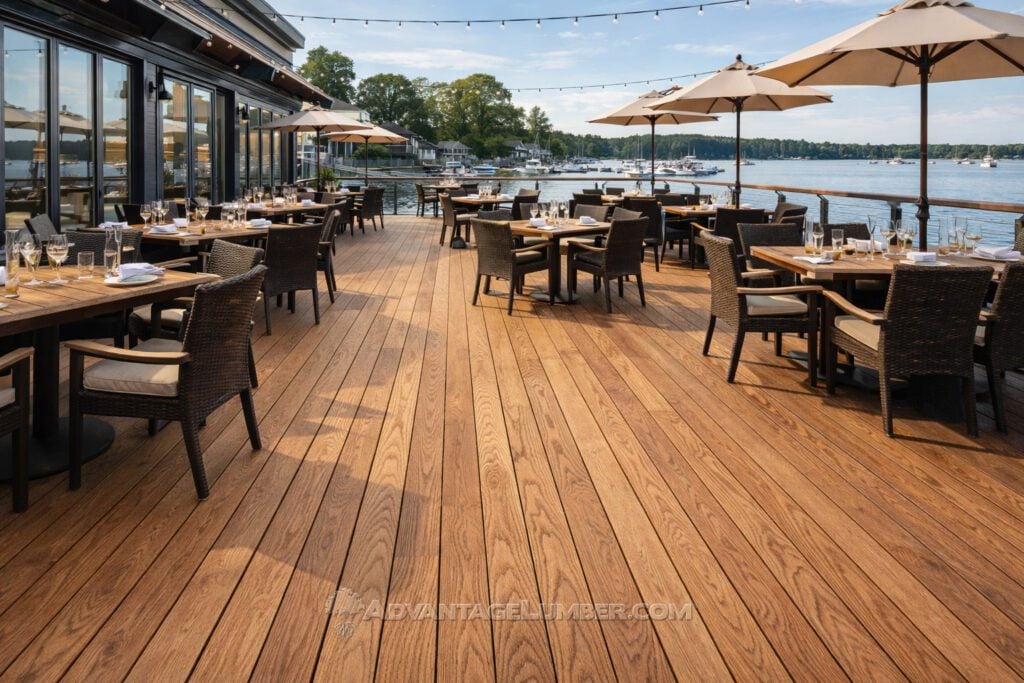
Premium hardwoods such as Ipe, Cumaru, Tigerwood, Garapa, and Thermally Modified Wood have been used for decades on large-scale commercial boardwalks and waterfront projects across the country.
Pros of Hardwood Decking (Commercial Applications)
1. Exceptional Strength & Load Capacity
Hardwoods like Ipe are extremely dense and strong. This makes them ideal for:
- Boardwalks
- Docks and piers
- Restaurant decks
- Public parks
- Marina walkways
They handle heavy pedestrian traffic and commercial furniture without flexing or feeling spongy.
2. Proven Performance in Harsh Environments
Ipe and similar tropical hardwoods have:
- Natural resistance to rot and decay
- Resistance to insects
- Excellent performance in high-moisture environments
This is why many long-standing Atlantic City–style boardwalks and coastal installations use hardwood decking.
3. Stain Resistance & Sanding Capability
In commercial environments, spills are guaranteed:
- Sunscreen over spray
- Food and grease
- Beverages
- Oil and fuel (on docks and marinas)
Unlike composite decking, hardwood can be:
- Sanded
- Restored
- Replace a few boards without worrying about discontinued colors and collections
If a section becomes heavily stained or worn, it can often be refinished rather than replaced. If the damage is extensive enough than boards can easily be replaced and will match. Opposed to composite often colors are discontinued or different patterns and collections are no longer available. Not to mention even if you can replace the boards with composite the colors will usually never match because fading does occur overtime with composite.
This is a major advantage when managing large public-use spaces.
4. Cooler Surface Temperatures
Hardwood decking generally stays cooler than many composite products, especially darker composites. On beachfront boardwalks or pool decks, this improves user comfort. Ipe is dark if you maintain the color and it can get hot too but most commercial applications let it go grey and that is cooler than dark brown.
5. Long-Term Lifespan
Properly installed hardwood decking can last:
- 30–50+ years
- Even longer in certain applications
That kind of lifespan makes it attractive for municipalities and commercial property owners focused on long-term ROI.
Cons of Hardwood Decking
- Higher upfront material cost
- Requires periodic maintenance (cleaning and optional oiling)
- Natural color will weather to silver-gray if not maintained
- More time consuming to install
However, many commercial projects choose to let hardwood weather naturally to minimize maintenance while retaining structural performance.
Composite Decking on Commercial Projects

Composite decking (including capped wood-plastic composites and mineral-based composites) is widely used for commercial spaces because of its low maintenance appeal and uniform appearance.
Brands such as Trex, TimberTech, and Deckorators have commercial-rated lines designed for higher traffic.
Pros of Composite Decking (Commercial Applications)
1. Low Routine Maintenance
Composite decking does not require:
- Oiling
- Sealing
- Staining
- Sanding
This can reduce annual maintenance costs.
2. Uniform Appearance
Composite decking provides:
- Consistent color
- Minimal natural variation
- Modern aesthetic
For certain commercial properties, this uniform look is preferred.
3. No Splinters
In barefoot environments like pools and waterfronts, composite offers a splinter-free surface.
Cons of Composite Decking in Heavy Commercial Use
While composites perform well in many residential applications, commercial environments introduce challenges.
1. Staining Limitations
Many composite manufacturers include stain limitations in their warranties.
Common issues in commercial environments include:
- Sunscreen over spray staining
- Food grease
- Wine, soda, and condiment spills
- Mold and mildew growth in high-moisture areas
On a residential deck, it’s easy to ask guests not to spray sunscreen while standing on the deck. On a public boardwalk with thousands of visitors daily, you cannot control that behavior.
Once deeply stained, composite boards often:
- Cannot be sanded
- Cannot be refinished
- May need to be replaced
That can become expensive on large-scale projects.
2. Heat Retention
Darker composite decking products can become very hot in direct sunlight. On beachfront or poolside installations, this can create user discomfort and liability concerns.
3. Surface Wear in High Traffic Areas
In extremely high-traffic commercial applications:
- Surface scratching
- Finish wear patterns
- Traffic lane fading
may become visible over time.
Unlike hardwood, these areas cannot be sanded and restored.
4. Structural Feel
Some composite products can feel more flexible under heavy loads compared to dense hardwood decking, especially if joist spacing is not tightened for commercial applications.
Comparing Hardwood vs. Composite for Specific Commercial Applications
Boardwalks
Hardwood Advantage: Proven decades-long performance, refinishable surface, extreme durability.
Composite Concern: Staining, heat, replacement of damaged boards.
Restaurant Decks
Hardwood Advantage: Can be sanded if grease stains occur.
Composite Concern: Food and drink spills may leave permanent stains.
Docks & Piers
Hardwood Advantage: Excellent moisture resistance and strength.
Composite Advantage: No splinters and low routine maintenance.
Consideration: Exposure to fuel, oil, and marine debris may impact composites.
Hotels & Pool Decks
Hardwood Advantage: Cooler underfoot in many cases.
Composite Advantage: No splinters and consistent appearance.
Key Issue: Sunscreen staining in high-volume environments.
Long-Term Cost Considerations
Commercial property owners must evaluate:
- Initial material cost
- Installation cost
- Maintenance budget
- Replacement frequency
- Downtime for repairs
While composite may offer lower short-term maintenance, hardwood often delivers superior long-term durability and the ability to restore rather than replace.
On projects with thousands of daily users, repairability becomes extremely important.
Final Thoughts: Which Is Better for Commercial Projects?
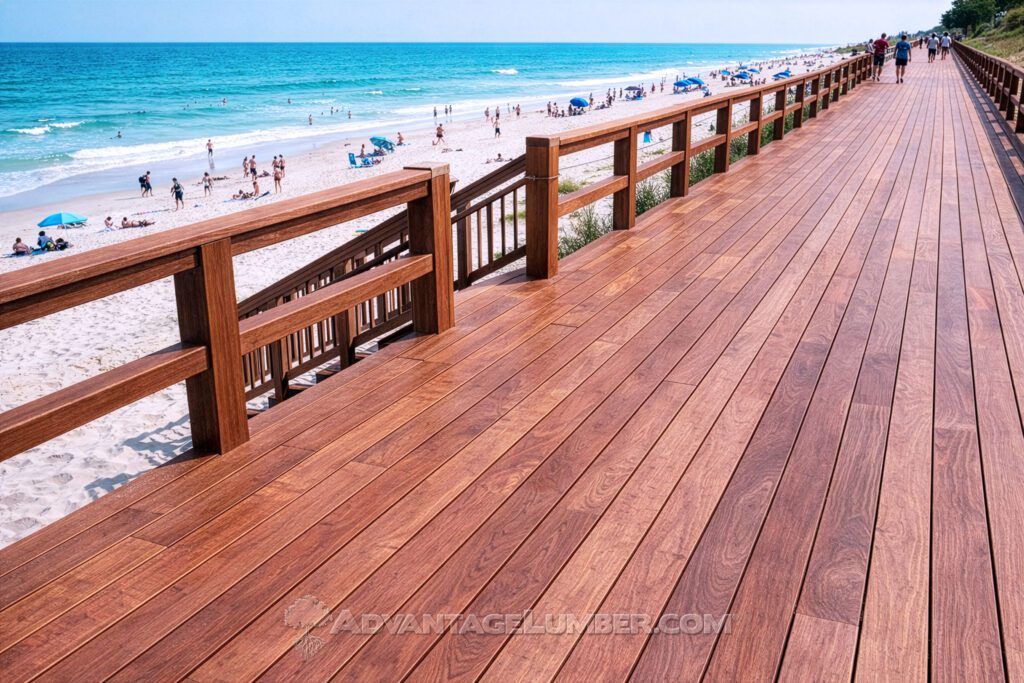
There is no one-size-fits-all answer — but there is a right material for the right application.
Hardwood decking is often the preferred choice for:
- Public boardwalks
- High-traffic waterfronts
- Long-term municipal installations
- Projects where restoration is preferred over replacement
Composite decking may be ideal for:
- Controlled-access commercial patios
- HOA-managed properties
- Projects prioritizing minimal routine maintenance
The key is understanding that commercial environments are fundamentally different from residential backyards. What works perfectly for a homeowner hosting a few gatherings per year may not hold up the same way under thousands of daily users.
At AdvantageLumber.com, we’ve supplied hardwood and composite decking for commercial projects across the country — from large-scale boardwalks to restaurant patios and marina docks.
If you’re planning a commercial project and want help evaluating which material is right for your specific application, our team can assist with product selection, takeoffs, and specifications to ensure long-term performance and value.
