
Composite decking has become a go-to choice for homeowners who want a long-lasting, low-maintenance alternative to traditional wood decking. As composite technology has matured, so have the material options. Each is designed to perform better in certain environments and applications.
When people ask, “What is the best composite decking material?”, the answer is rarely one-size-fits-all. The best option depends on how the deck will be used, how much moisture it will see, and what kind of performance matters most for the project.
Below, we break down the main categories of composite decking available today and explain where each type tends to perform best.
Wood Pulp Composite Decking
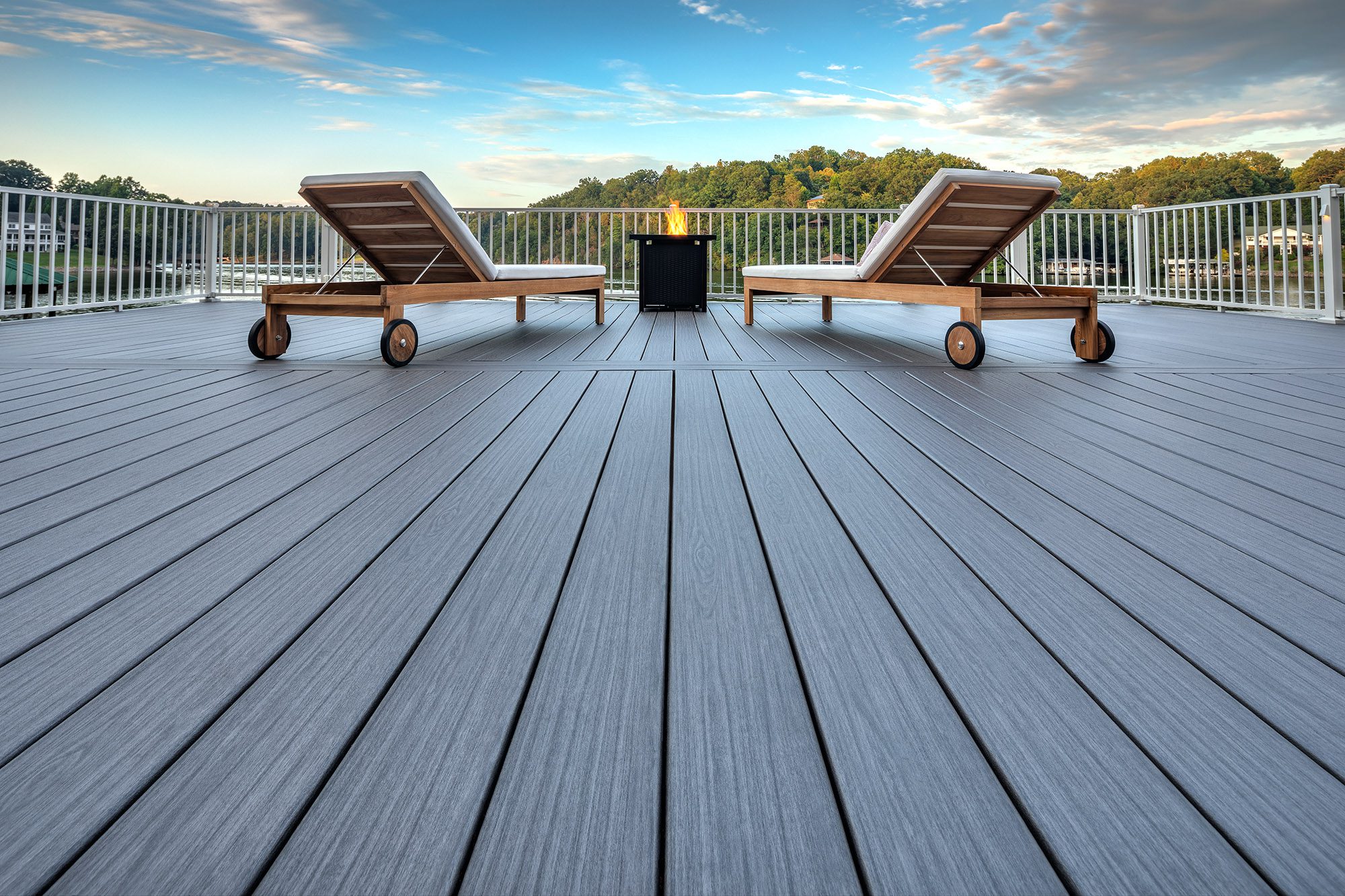
Wood pulp composite decking is the most common and widely recognized type of composite decking. It is made by blending wood fibers with plastic and performance additives to create a board that looks like wood but requires far less maintenance.
During manufacturing, finely ground wood material is combined with plastic polymers, heated, and formed into deck boards with realistic wood-grain textures. Most modern boards also include a protective outer cap that helps resist moisture, staining, and fading.
This type of composite decking offers a balance of appearance, durability, and cost, making it a popular choice for residential decks. It resists splintering, rot, and insect damage far better than traditional lumber while maintaining a familiar wood-like look.
Best suited for:
Standard residential decks, elevated structures, and outdoor living spaces where moisture exposure is moderate.
Mineral-Based Composite Decking
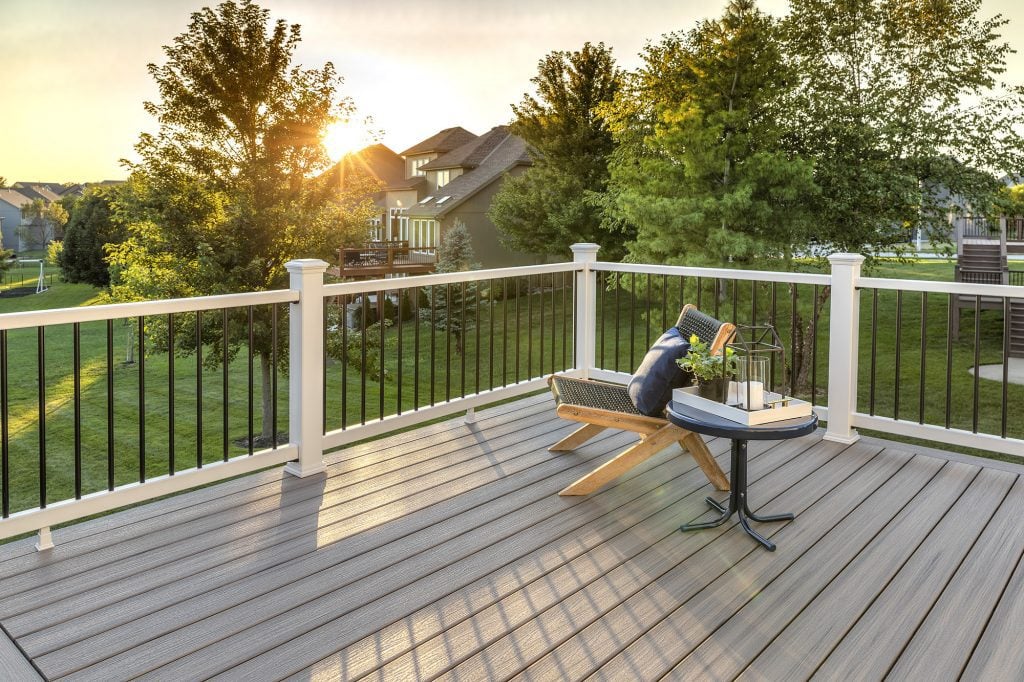
Mineral-based composite decking is a newer category that replaces wood fibers with finely ground mineral material. Instead of relying on wood content, this type of decking uses stone-based fillers combined with plastic to create a denser, more stable board.
Because it contains no wood pulp, mineral-based composite decking absorbs very little moisture. It also tends to experience less expansion and contraction with temperature changes and often stays more comfortable underfoot in warm conditions.
These characteristics make mineral-based composites a strong option for decks built close to the ground or in consistently damp environments where traditional wood-based composites may not be ideal.
Best suited for:
Ground-level decks, low-clearance installations, and areas with frequent moisture exposure.
PVC Decking
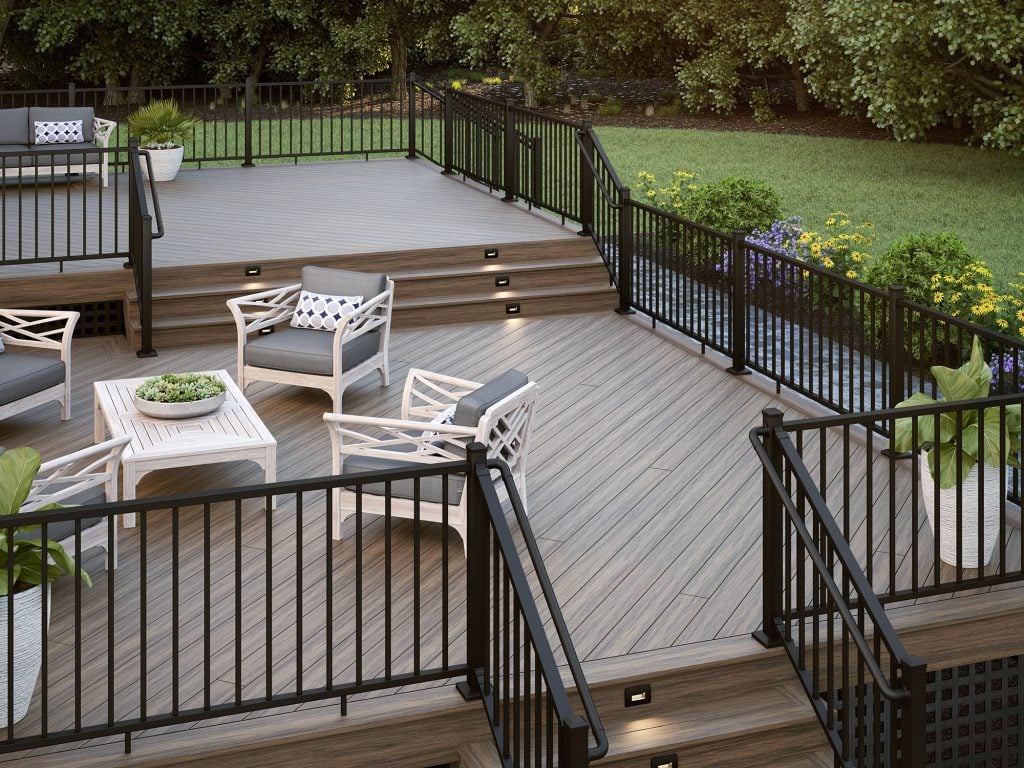
PVC decking is often grouped into composite discussions even though it does not contain wood or mineral fillers. Made from 100% plastic material, PVC decking is completely waterproof and unaffected by moisture.
Because there is no organic content, PVC boards will not rot, swell, or support mold growth. They also tend to perform well in environments where decks are frequently wet or exposed to humidity.
PVC decking typically offers a clean, consistent appearance and requires minimal upkeep beyond routine cleaning.
Best suited for:
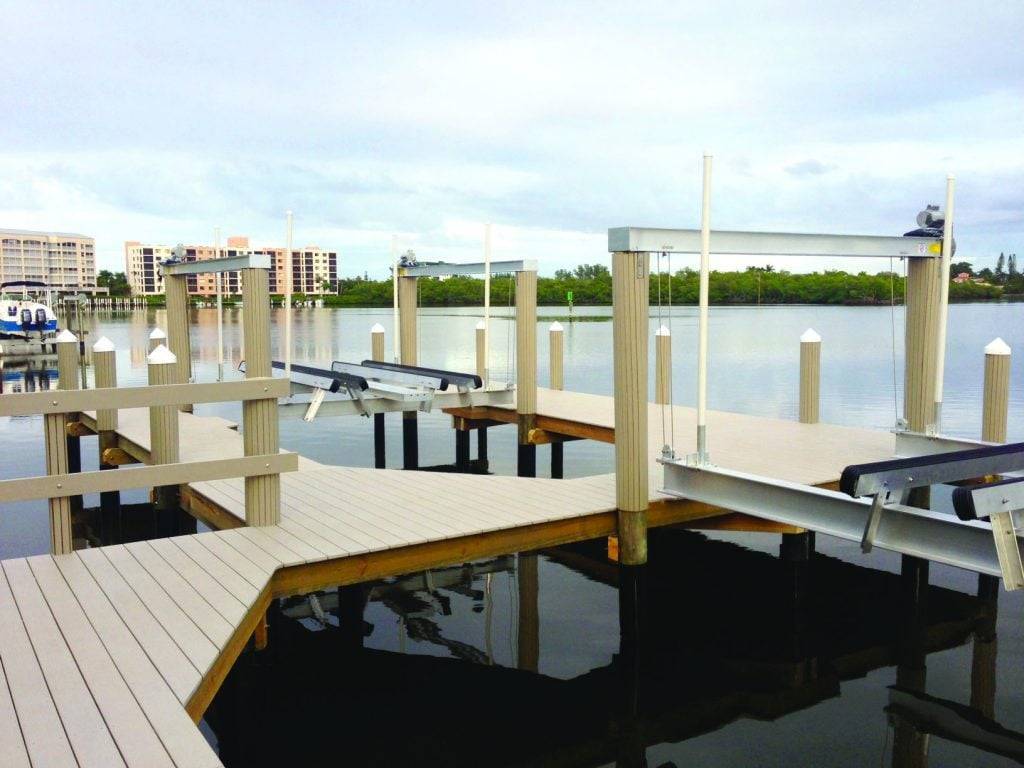
Pool decks, docks, coastal environments, and regions with heavy rainfall.
HDPE Decking
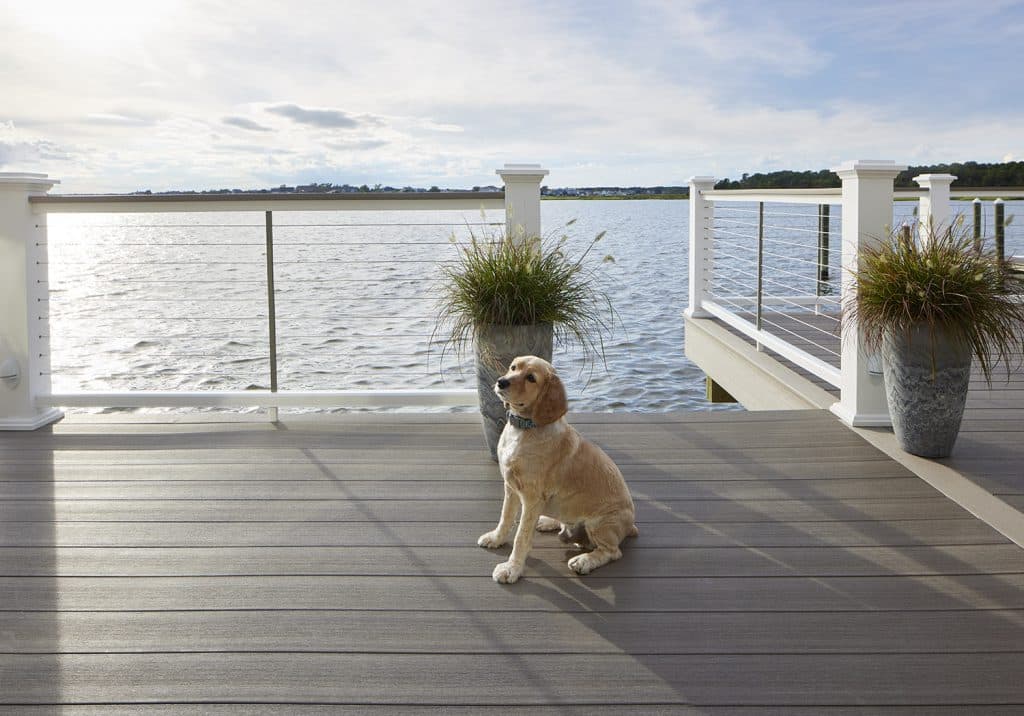
HDPE decking is another non-traditional composite option made entirely from high-density polyethylene. Like PVC decking, it contains no wood or organic material, making it fully waterproof and highly resistant to moisture-related issues.
HDPE decking is known for its toughness and durability in demanding conditions. It resists chemicals, UV exposure, and wear, making it a common choice for commercial or marine applications.
While the appearance may be slightly different from traditional wood-look composites, HDPE decking excels in environments where performance matters more than aesthetics.
Best suited for:
Marinas, boardwalks, docks, and high-exposure or commercial settings.
So, What Is the Best Composite Decking?
The best composite decking material depends on how and where the deck will be used.
Wood pulp composites remain a reliable option for most residential decks. Mineral-based composites add strength and moisture resistance for ground-level applications. PVC and HDPE decking provide fully waterproof solutions for wet or high-exposure environments.
Understanding these differences helps homeowners make informed decisions and avoid overbuilding—or underbuilding—for their specific project. With a wide range of composite decking options available, Advantage Lumber helps match the right material to the right application, ensuring long-term performance and satisfaction.
