
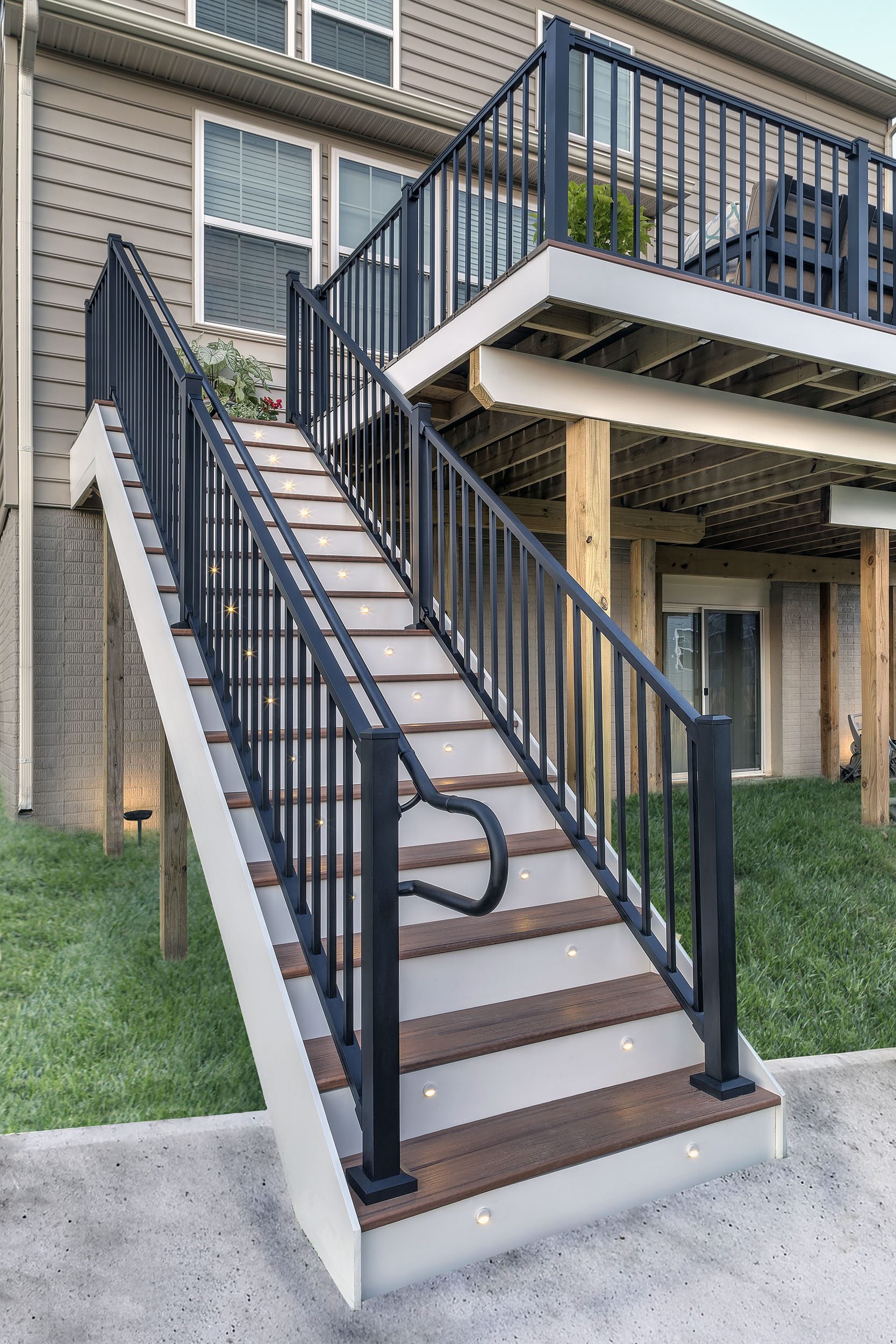
When building or renovating a deck, safety and accessibility should always be top priorities. One key element that often comes into play is the installation of graspable ADA-compliant handrails.
These handrails are designed to provide a secure grip, making decks safer for everyone, including those with disabilities. But why are they frequently required?
In this post, we’ll discuss the reasons behind these requirements, what makes a handrail ADA-compliant, and specific regulations in major U.S. cities.
Whether you’re a homeowner planning a new deck or a contractor ensuring compliance, understanding these guidelines can help you create a functional and code-compliant outdoor space.
What Are Graspable ADA-Compliant Handrails?
ADA-compliant handrails are those that meet the standards outlined in the Americans with Disabilities Act (ADA) Standards for Accessible Design. These standards aim to make public and commercial spaces accessible to individuals with disabilities, but they also influence residential building codes through references in the International Residential Code (IRC) and International Building Code (IBC).
A “graspable” handrail is one that can be easily held onto for support. Key features include:
- Shape and Size: Typically round or oval, with a diameter between 1.25 and 2 inches for easy gripping. Non-circular handrails must have a perimeter of 4 to 6.25 inches and include finger recesses if larger.
- Height: Mounted between 34 and 38 inches above the stair nosing or walking surface.
- Clearance: At least 1.5 inches between the handrail and the wall or adjacent surface to allow for a full grip.
- Continuity: Must be smooth and continuous without interruptions, providing reliable support along stairs or ramps.
These design elements ensure the handrail can support weight and prevent slips or falls, adding an extra layer of security to decks.
Why Are They Often Required?
Graspable ADA-compliant handrails are mandated in many scenarios to promote safety, prevent accidents, and ensure legal compliance. Here’s a breakdown:
Safety and Fall Prevention
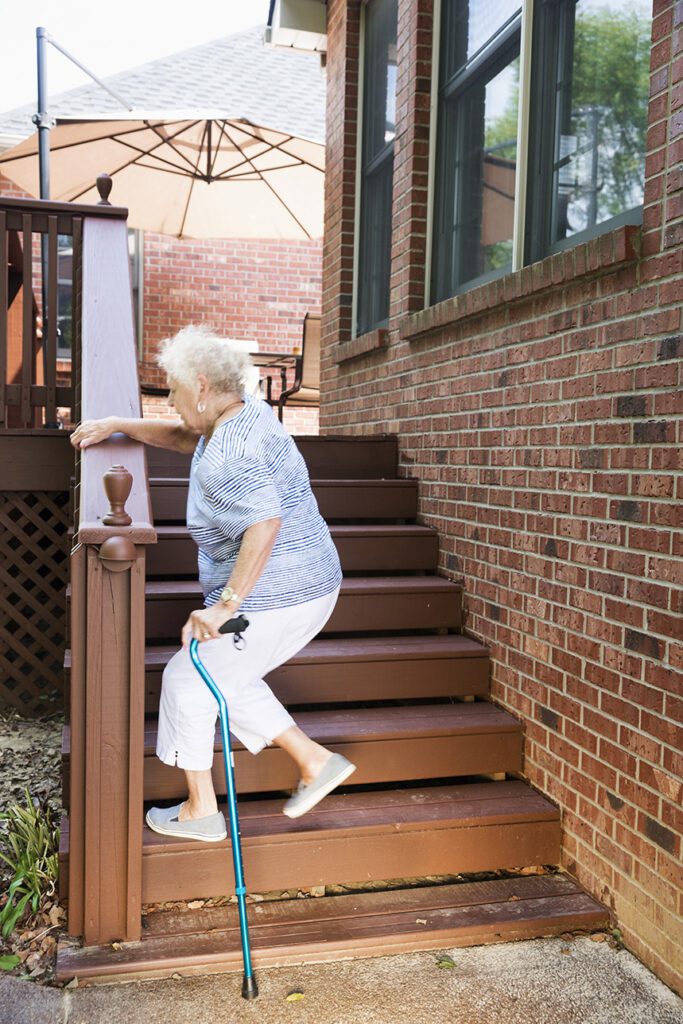
Decks with stairs or elevated surfaces pose fall risks, especially for children, the elderly, or those with mobility issues. Handrails provide stability and balance, reducing the likelihood of injuries. According to building codes, handrails are essential on stairs with four or more risers or rising more than 30 inches. They must withstand at least 200 pounds of force in any direction, ensuring durability.
Accessibility for All
The ADA emphasizes inclusivity, requiring handrails in commercial and public spaces to assist people with disabilities. While the ADA doesn’t directly apply to private residences, many local codes incorporate similar standards via the IRC for residential decks and IBC for commercial ones. This overlap means graspable handrails are often required to make decks usable by everyone.
Legal and Code Compliance
Failing to install required handrails can lead to failed inspections, fines, or liability issues. The IRC requires graspable handrails on residential deck stairs with four or more risers, while the IBC mandates them for commercial settings with rises over 6 inches. These codes are adopted or modified by states and cities, making compliance essential.
In essence, these handrails aren’t just a “nice to have”—they’re a critical component for safe, accessible decks that meet modern building standards.
When Are Graspable Handrails Required on Decks?
Requirements kick in based on deck height and stair configuration:
- Deck Height: Guards (including handrails) are needed if the deck is more than 30 inches above grade.
- Stairs: Handrails on at least one side for four or more risers; both sides in commercial settings.
- Ramps: Required if the rise exceeds 6 inches or the slope is steeper than 1:20.
Always check local codes, as they may exceed these baselines for added safety.
Major Cities and Their Requirements
Building codes vary by location, often adopting IRC/IBC with local amendments. Here’s a look at requirements in key U.S. cities for ADA-compliant graspable handrails on decks:
| City | Key Requirements |
|---|---|
| New York City | Guards required for decks over 30 inches above grade; minimum 42 inches high. Handrails on stairs with four or more risers, 34-38 inches high, graspable (1.25-2 inches diameter). Compliance with NYC Building Code, which incorporates IRC elements. |
| Los Angeles | Follows California Building Code (CBC), requiring 42-inch guards for residential decks over 30 inches. Handrails graspable (1.25-2 inches), 34-38 inches high on stairs with four or more risers. Often stricter than IRC for fall prevention. |
| Chicago | Handrails required on stairs with more than four risers, 34-42 inches high (existing) or 34-38 inches (new). Graspable with 1.5-inch wall clearance. Guards 42 inches for decks over 30 inches, per Chicago Building Code based on IBC. |
| Houston | Adheres to Texas Accessibility Standards and IRC; handrails 34-38 inches high, graspable on stairs with four or more risers. Guards 36 inches minimum for residential decks over 30 inches. |
| San Francisco | California code applies: 42-inch guards for decks over 30 inches. Handrails 34-38 inches, continuous and graspable. Inspections every five years for multifamily buildings. |
| Miami | Florida Building Code requires guards 36-42 inches high (depending on openings). Handrails 34-38 inches, graspable on stairs with four or more risers. Emphasis on load resistance (200 lbs). |
These cities often prioritize higher guards (e.g., 42 inches) for enhanced safety, especially in coastal or high-wind areas. Consult local building departments for the latest amendments.
Conclusion: Prioritize Safety with Quality Materials
Installing graspable ADA-compliant handrails isn’t just about meeting codes—it’s about creating a deck that’s safe and welcoming for all. They prevent falls, enhance accessibility, and can even add to your deck’s aesthetic appeal when crafted from durable woods like Ipe or Cumaru.
At AdvantageLumber.com, we offer premium lumber and railing components that meet or exceed these standards. Whether you need pressure-treated wood for structural integrity or exotic hardwoods for a custom look, our materials ensure your deck is both compliant and long-lasting. Contact us today to source the perfect supplies for your project and build with confidence!
