
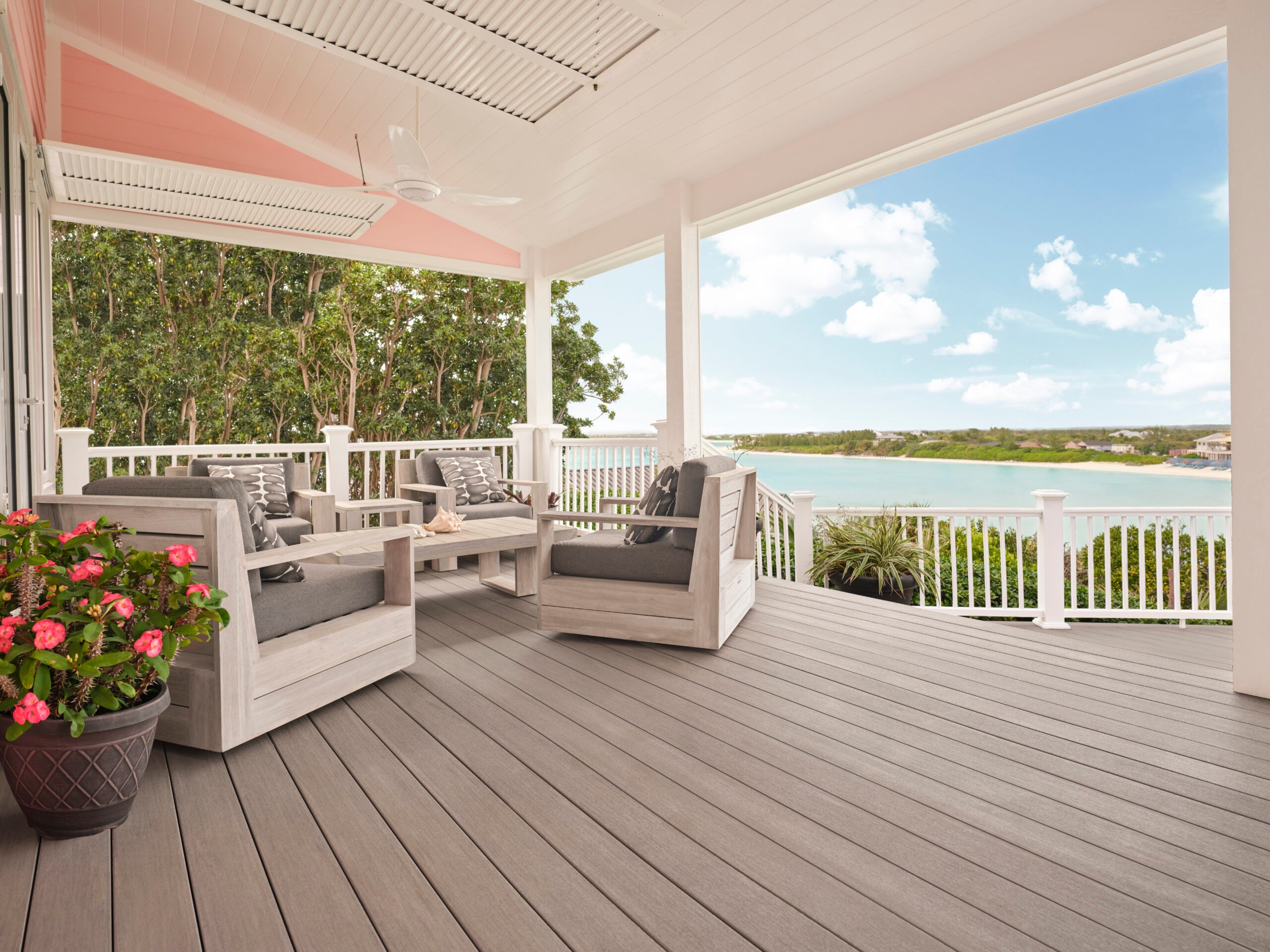
When comparing low-maintenance decking, PVC and composite boards can look pretty similar. Both come in a range of colors and wood-grain finishes, and neither requires the regular staining or sealing that traditional wood decking often does. So, what actually sets them apart?
The biggest difference is what they’re made of. Composite decking typically combines wood fibers and plastic, while PVC decking is made entirely from synthetic plastic. That distinction affects moisture resistance, weight, cost, and other aspects of performance.
Neither material is automatically the better choice for every deck. Understanding how they are different can help you find the right fit for your project, climate, and budget.
What Is Composite Decking?
Composite decking is made from a combination of wood fibers and plastic polymers. Many manufacturers use recycled materials in their boards, although the exact composition varies by product.
Most modern composite decking also features a protective outer cap designed to resist moisture, stains, fading, and everyday wear. However, not every product has the same construction, so it’s worth checking the manufacturer’s specifications before making a decision.
One reason composite decking remains popular is its balance of appearance, durability, and maintenance. The boards can mimic the look of natural wood without requiring routine sanding, staining, or sealing.
Composite decking does have some limitations. Because it contains wood-based material, it can be more susceptible to moisture-related issues than PVC, depending on the board’s construction and how well the surface and edges are protected. Proper installation and drainage still matter, even with capped products.
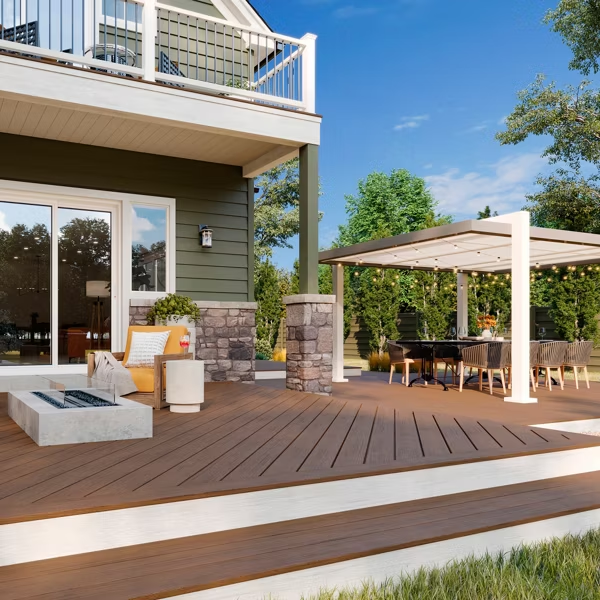
What Is PVC Decking?
PVC decking is made from polyvinyl chloride, a synthetic plastic that contains no wood fibers. Some products have a solid construction, while others use a cellular structure to reduce weight. The exact design depends on the manufacturer and product line.
Because PVC contains no wood-based material, it doesn’t absorb moisture in the same way that wood-plastic composite decking can. This makes it a practical option for pool decks, waterfront properties, and other areas where moisture resistance is a priority.
PVC decking is also available in a wide range of colors and realistic wood-grain finishes. Modern products have come a long way in replicating the look of natural wood, although the appearance and texture can vary between collections.
Like composite decking, PVC doesn’t need routine staining or sealing. It still requires occasional cleaning, and its long-term performance depends on the quality of the product, installation, and care.
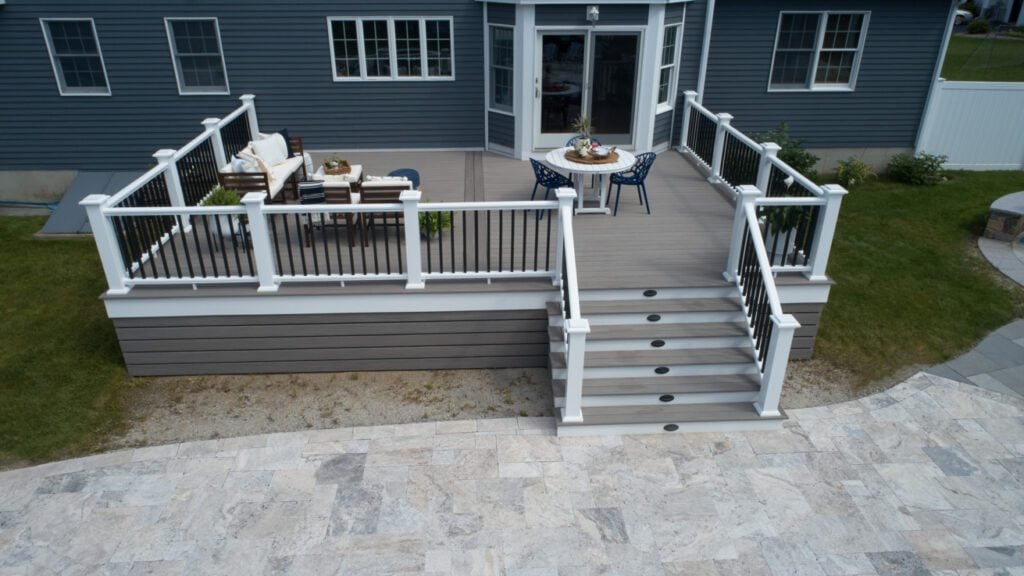
PVC vs. Composite Decking: What’s the Difference?
Both materials offer low-maintenance alternatives to traditional wood decking, but they have a few important differences.
| Feature | PVC Decking | Composite Decking |
| Material | Synthetic plastic | Wood fibers and plastic |
| Moisture Resistance | Highly moisture-resistant | Varies by product construction |
| Appearance | Wood-inspired colors and grain | Wood-inspired colors and grain |
| Maintenance | Occasional cleaning; no routine sealing | Occasional cleaning; no routine sealing |
| Cost | Often higher than entry-level composite | Available at a wide range of price points |
The biggest distinction is moisture resistance. Beyond that, the differences become more product-specific. A premium capped composite board may outperform a lower-priced PVC product in some areas, so it’s worth comparing individual product lines rather than relying on material type alone.
Which Is More Durable: PVC or Composite Decking?
Both PVC and composite decking can provide years of outdoor use with relatively little maintenance. However, durability depends on more than the material listed on the product label.
PVC has an advantage when moisture resistance is the main concern. Since it contains no wood fibers, the boards won’t absorb water through organic material in the way that a wood-plastic composite can. That can be especially useful around pools or in consistently damp environments.
Composite decking, particularly capped products, can also offer excellent resistance to moisture, fading, and stains. The protective cap helps shield the core, although the level of protection varies by manufacturer and product construction.
Neither material is immune to every form of wear. Scratches, surface damage, fading, and changes caused by temperature can vary between products. Installation also plays a role, especially when it comes to proper joist spacing, drainage, and the expansion and contraction of the boards.
Does PVC decking last longer than composite? Not necessarily in every case. PVC offers an advantage in moisture resistance, but you should compare the specific products, warranty coverage, and installation requirements before drawing conclusions about their expected service life.
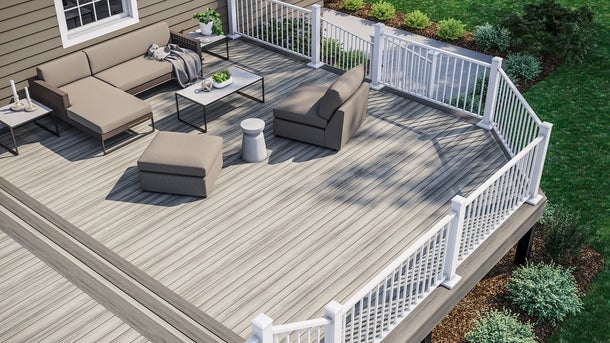
Does PVC or Composite Decking Get Hotter in the Sun?
Both materials can become hot under direct sunlight, particularly in darker colors. PVC decking isn’t automatically cooler than composite, despite what some product comparisons might suggest.
Surface temperature depends on several factors, including color, material formulation, direct sun exposure, and the surrounding conditions. Some manufacturers have developed decking lines with heat-reducing technology, which can make a noticeable difference.
If your deck gets full afternoon sun, look at the performance of the specific colors and collections you’re considering. Lighter colors are generally a good place to start, although some newer products are designed to reduce heat retention even in darker shades.
For a closer look at how different materials perform in direct sunlight, see our guide to composite, PVC, and hardwood decking for full-sun areas.
Is PVC or Composite Decking More Expensive?
PVC decking often costs more upfront than entry-level composite decking, although prices vary considerably across product lines. Premium composite boards can also fall within a similar price range as some PVC options.
When comparing prices, look beyond the material category. Board thickness, surface finish, protective technology, warranty coverage, and fastening systems can all affect the cost.
It’s also worth considering installation expenses. Different products have specific requirements for joist spacing, fasteners, board gapping, and cutting. Those details can influence the overall project cost, particularly if you’re working with an existing deck frame.
Rather than assuming PVC is always more expensive or composite always offers better value, compare products with similar features and performance expectations.

Which Should You Choose: PVC or Composite Decking?
The right choice depends on what matters most for your deck.
PVC decking may be the better fit if:
- Moisture resistance is a top priority, particularly around pools or waterfront properties.
- You want a synthetic material without wood fibers.
- You’re comfortable with the upfront cost of the particular PVC product you’ve selected.
Composite decking may be the better fit if:
- You want a low-maintenance deck with a broad selection of price points.
- You like the appearance and feel of wood-inspired composite boards.
- You want to compare several product tiers to balance cost, aesthetics, and performance.
Of course, these aren’t hard-and-fast rules. A well-made composite deck can be an excellent choice for a damp climate, and PVC can work well in a wide range of settings beyond pools and waterfront properties.
Whichever material you choose, follow the manufacturer’s installation instructions and maintenance recommendations. Those details can make a real difference in how your deck performs over time.
Find the Right Decking for Your Project
PVC and composite decking both offer practical ways to create a beautiful outdoor space without the upkeep of traditional wood. The key is finding the material and product line that fit your needs.
Explore the PVC and composite decking options at Advantage Lumber to compare colors, collections, and specifications for your next project.
