
If you’ve been shopping for a new deck, you’ve probably heard the phrase “maintenance free composite decking” more times than you can count. After all, decking manufacturers love to talk about how little work their products need compared to traditional wood decking. No sanding, no staining, and no sealing. Sounds pretty good, doesn’t it?
Well, before you throw away your deck brush and pressure washer, there’s something you should know.
Composite decking isn’t maintenance free. It’s low maintenance.
There’s a pretty big difference between the two, and understanding it can save you some frustration down the road.
Don’t get me wrong. Modern composite decking has come a long way over the years. In fact, brands like Trex, TimberTech, and Deckorators make some excellent products. However, just because you don’t have to stain your deck every few years doesn’t mean you can completely ignore it.
I’ve talked to plenty of homeowners who thought buying composite decking meant they’d never have to touch their deck again. I can understand why they’d think that. When you spend thousands of dollars on premium decking, you expect it to make your life easier. And it certainly can. But there’s a difference between making your life easier and doing all the work for you.
With that in mind, let’s look at what kind of maintenance composite decking actually needs, what happens when you neglect it, and how it compares to natural hardwood decking.
Why Do Manufacturers Call Composite Decking Low Maintenance?
Traditional wood decking, especially pressure treated pine, typically needs regular care to keep it looking good.
Depending on the wood, climate, and finish, you might need to clean, stain, or seal your deck every few years. Otherwise, if you neglect it long enough, the wood can start to splinter, crack, or rot.
Composite decking, on the other hand, eliminates several of those chores.
Most modern composite deck boards have a protective polymer cap that helps resist moisture, fading, and stains. Unlike traditional wood decking, you don’t need to apply a protective stain or sealer to maintain the factory finish.
Naturally, that’s a major advantage, especially for homeowners who would rather spend their weekends enjoying their deck instead of working on it.
And who can blame them? I’ve spent enough weekends working on outdoor projects to understand why someone would rather fire up the grill than spend Saturday afternoon staining deck boards.
However, there’s a catch.
Low maintenance doesn’t mean self cleaning.
After all, your composite deck still sits outside through rainstorms, snow, pollen season, falling leaves, and whatever else Mother Nature decides to throw at it.
Eventually, all that stuff has to go somewhere.
And more often than not, it ends up on your deck.
I sometimes tell people that composite decking is a lot like the siding on their house. You don’t need to paint vinyl siding every few years, but would you expect it to stay perfectly clean for 30 years without washing it? Of course not. Your deck isn’t much different.
1. Composite Decking Still Needs Regular Cleaning
One of the biggest misconceptions about composite decking is that rain will wash away all the dirt.
Unfortunately, it doesn’t work that way.
Sure, rain might rinse off some loose dust, but it won’t necessarily remove pollen, grease, mildew, bird droppings, or dirt that has worked its way into the textured surface of your deck boards.
In fact, rain can sometimes make matters worse when it mixes with pollen and dirt, leaving a film on the decking.
If you’ve ever walked outside during spring pollen season and found everything covered in that yellow powder, you know exactly what I’m talking about. That stuff gets everywhere. And once it mixes with rainwater, it can turn into a stubborn mess.
For that reason, I recommend cleaning your composite deck thoroughly at least twice a year.
Generally speaking, spring and fall are the best times.
Here’s how I recommend cleaning a composite deck:
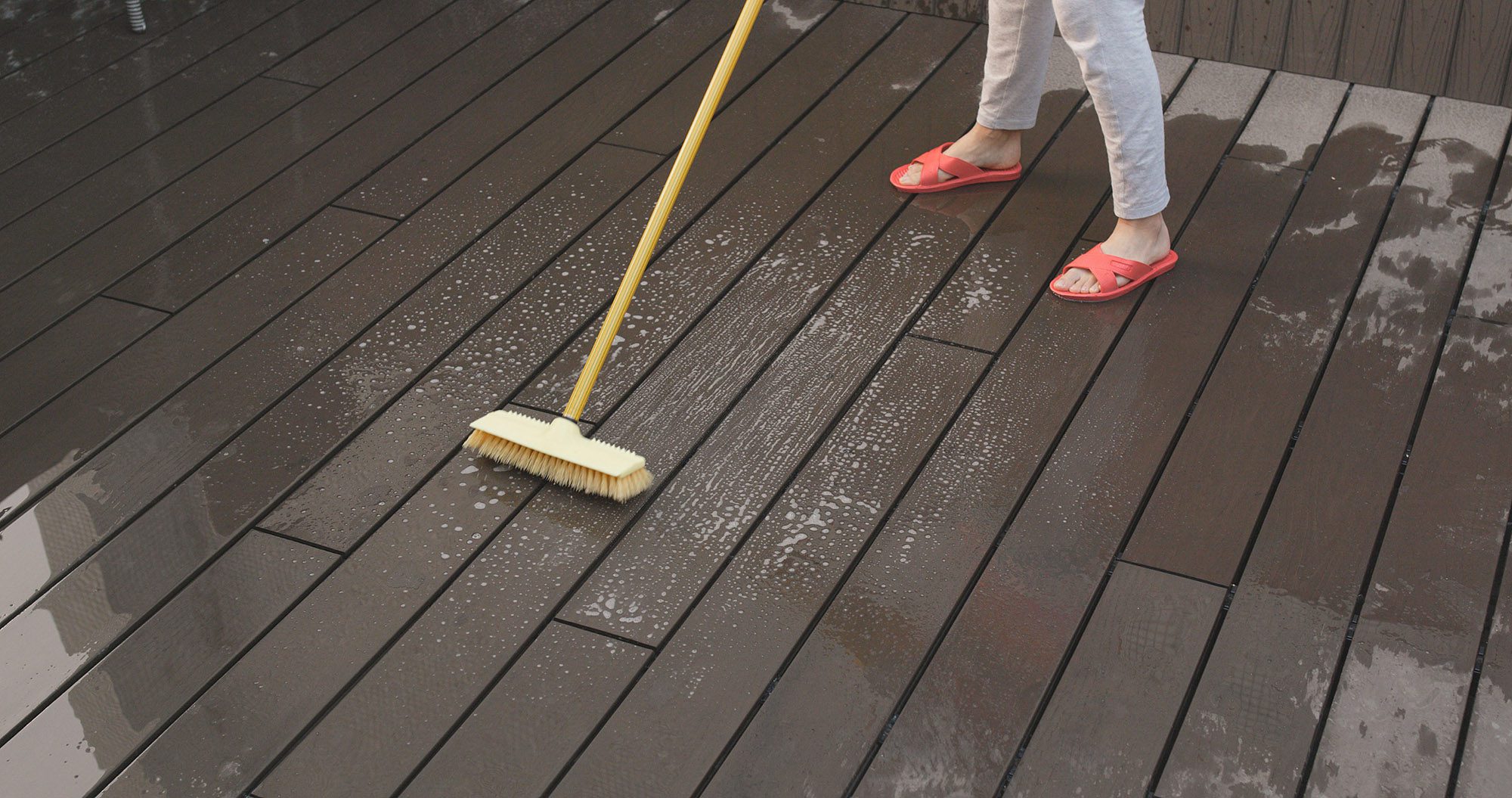
- First, sweep away leaves, dirt, and loose debris.
- Next, rinse the deck with a garden hose.
- Then, scrub stubborn dirt with warm, soapy water and a soft bristle brush.
- While you’re at it, clear debris from between the deck boards so water can drain properly.
- Finally, rinse thoroughly to remove any remaining soap.
Of course, always follow the decking manufacturer’s cleaning instructions. Some products allow specific composite deck cleaners or carefully controlled pressure washing, while others have more restrictions.
Personally, I prefer starting with the gentlest cleaning method that gets the job done.
After all, there’s no reason to blast your expensive new deck with a pressure washer if a brush and some soapy water will clean it.
I’ve seen what happens when someone gets a little too aggressive with a pressure washer. They figure if 1,000 PSI cleans well, 3,000 PSI must clean three times better. Unfortunately, that’s not how it works. You can end up damaging the surface you’re trying to clean.
Sometimes a little elbow grease is still the best tool for the job.
2. Mold and Mildew Can Still Grow on Composite Decking
Here’s something that surprises a lot of homeowners.
Composite decking can still develop mold and mildew.
Now, that doesn’t necessarily mean the decking itself is rotting.
Modern capped composite decking generally resists moisture much better than traditional wood decking. However, mold and mildew can still grow on organic material that collects on the surface.
Just think about all the things that land on your deck throughout the year.
Pollen, dirt, leaves, food crumbs, and other debris can provide the nutrients mold needs to grow.
Then, add moisture and shade, and you’ve created a pretty comfortable environment for it.
I’ve seen decks in heavily wooded areas develop dark spots and green buildup simply because the homeowner allowed wet leaves and dirt to sit on the boards for months.
And believe me, it doesn’t take a jungle to create these conditions. A few large trees, a shaded backyard, and poor airflow can be enough. I’ve seen homeowners spend a fortune on decking materials only to overlook something as simple as keeping the space beneath their deck clear.
However, this problem isn’t exclusive to composite decking. PVC decking, concrete patios, and even outdoor furniture can develop similar surface growth.
How to Prevent Mold and Mildew on Composite Decking
Fortunately, the best approach is pretty simple. Keep the deck clean and allow it to dry.
Start by sweeping away leaves regularly, especially during the fall. Also, trim back vegetation if it blocks airflow or keeps the decking shaded and damp.
If mold or mildew does appear, use a cleaner that the decking manufacturer approves.
Although household bleach and generic mold removers might seem like easy solutions, certain chemicals can discolor or damage some decking surfaces.
I’ve always been a little cautious about using strong chemicals on expensive building materials. Why take the chance when the manufacturer usually provides a cleaning method that works?
And remember, if your deck stays wet for days after a rainstorm, you may have a drainage or ventilation problem that needs attention.
In my opinion, fixing the moisture problem is far more important than repeatedly cleaning the same mildew stains. Otherwise, you’re just treating the symptoms while ignoring what’s causing them.
3. Wet Leaves Can Leave Stains on Composite Decking
Fall is one of my favorite times of the year to enjoy a deck.
The weather cools off, the bugs start disappearing, and sitting outside with a cup of coffee becomes a whole lot more enjoyable.
Unfortunately, fall also brings one of the biggest maintenance problems for composite decking.
Wet leaves.
If you’ve ever left a pile of maple or oak leaves sitting on a driveway or patio, you’ve probably noticed the brown stains they can leave behind.
Those stains come partly from natural compounds called tannins.
And unfortunately, composite decking isn’t immune to this problem.
Although many capped composite boards resist stains very well, wet leaves can still leave marks or stubborn residue when you allow them to sit on the surface for extended periods.
Naturally, the longer those leaves remain wet, the harder some stains may be to remove.
I’ve seen people spend hours scrubbing stains from their deck when a five minute cleanup every few days could’ve prevented most of the trouble. That’s the kind of maintenance nobody enjoys, especially when it could’ve been avoided.
Fortunately, you can prevent most of these problems pretty easily.
Simply sweep or blow leaves off your deck regularly.
Now, you don’t have to run outside every time a leaf lands on the decking. However, I wouldn’t recommend letting thick piles of wet leaves sit there for several weeks.
This is especially important if your deck sits beneath large oak, maple, or other deciduous trees.
And let’s be realistic. If you’ve got three giant maple trees hanging over your deck, you’re probably not going to keep every leaf off it. Nobody expects that. Just don’t let them pile up and stay wet for weeks.
In the end, a few minutes with a leaf blower can save you a lot of scrubbing later.
4. Composite Decking Can Still Get Grease and Food Stains
One of the great things about having a deck is being able to cook and entertain outdoors.
Unfortunately, grilling also introduces another maintenance issue.
Grease.
While modern capped composite decking resists stains better than older uncapped products, cooking grease and oil can still leave marks.
I’ve seen homeowners assume they can spill just about anything on composite decking and simply wash it off whenever they get around to it.
However, that’s not a good idea.
Grease, cooking oil, sunscreen, and certain foods can become more difficult to remove the longer they sit on the surface.
Think about the last time you cooked burgers or steaks on the grill. A little grease splashes here, somebody drops a piece of food there, and before you know it, you’ve got a few spots on the decking. It happens. Nobody’s going to stop grilling just because they bought a composite deck.
For that reason, the best advice is to clean spills as soon as possible.
Also, use a cleaning method that the manufacturer approves, and avoid aggressive scrubbing tools that could damage the protective cap.
While you’re at it, consider placing a manufacturer approved grill mat beneath your barbecue.
Just make sure the mat allows moisture to escape and doesn’t trap excessive heat against the decking.
After all, you don’t want to solve one problem while creating another.
Personally, I’d rather spend a few minutes cleaning up after a barbecue than spend the next weekend trying to figure out how to remove an old grease stain.
5. Composite Decking Can Scratch
Another common misconception is that composite decking is scratch proof.
Unfortunately, it isn’t.
Although some composite products resist scratches better than others, dragging heavy patio furniture across the deck can still leave visible marks.
Likewise, metal chair legs, heavy planters, and even sharp debris beneath furniture can scratch the surface. This is particularly noticeable on darker deck colors, where lighter scuff marks may stand out.
And here’s something worth thinking about. How often do people drag patio chairs across their deck without even realizing it? Every time somebody gets up from the table, they might slide their chair backward. Do that hundreds of times over several summers, and those little scratches can start adding up.
Unlike natural wood, composite decking generally can’t be sanded to remove scratches. That’s something homeowners should understand before purchasing it.
With natural hardwood decking, for example, you can often sand away minor surface damage when necessary. However, sanding capped composite decking will permanently damage the protective surface and change its appearance.
I’ve always appreciated that about real wood. If you scratch a piece of Ipe or Cumaru, you can often work on the damaged area and bring it back. With composite decking, your repair options are usually very limited.
How to Reduce Scratches on Composite Decking
Fortunately, a few simple precautions can help.
Use protective pads beneath patio furniture, lift heavy objects instead of dragging them, and keep the surface free of sand and grit. Also, if you have large dogs, it’s worth considering how their nails might affect the decking.
Some products resist scratches better than others, so comparing actual samples before purchasing is a smart move. For example, Deckorators Surestone mineral based composite decking uses a different material technology from conventional wood plastic composites and aims to provide excellent durability.
Even so, no decking material is completely scratch proof.
My advice? Don’t just look at how pretty the sample looks in the showroom. Think about how you’re actually going to use your deck. If you’ve got three kids, two dogs, and patio furniture that gets moved around every weekend, scratch resistance probably deserves a little more attention.
6. Snow and Ice Still Need Attention
Homeowners in northern states have another maintenance issue to consider.
Winter.
Although composite decking can handle cold weather when you install it properly, snow and ice can still create slippery conditions. And despite what some advertisements might lead you to believe, composite decking doesn’t magically melt snow.
I know, wouldn’t that be nice? A deck that cleans itself and melts its own snow. Unfortunately, we’re not quite there yet. So, if you need to clear your deck during winter, use a plastic shovel rather than a metal one.
Otherwise, metal shovel edges can scratch or gouge the decking. Also, be careful when choosing ice melting products.
Some manufacturers permit certain calcium chloride based ice melts, while others have specific restrictions. Meanwhile, products that contain abrasive materials or dyes may cause additional problems.
For that reason, always check the manufacturer’s recommendations before applying anything to your deck.
One more thing worth mentioning: composite decking can become slippery when ice, algae, or other residue covers the surface.
So, don’t assume that a textured wood grain surface makes a deck slip proof. Although composite decking generally handles winter weather well, you still need to keep the surface clean and clear snow and ice carefully.
I’ve always felt that winter maintenance is one of those things homeowners don’t think much about until the first big snowstorm hits. Then suddenly they’re standing at the back door wondering whether they can use the same shovel and ice melt they use on the driveway.
A little planning before winter can save you from making an expensive mistake.
7. Your Deck Framing Still Requires Maintenance
Here’s a subject that doesn’t get nearly enough attention when homeowners shop for composite decking.
The framing underneath it.
You can purchase a premium composite deck board with a 25, 30, or even 50 year limited warranty, depending on the product and collection.
However, what happens if the pressure treated lumber supporting those boards starts rotting long before the decking wears out?
Unfortunately, this happens.
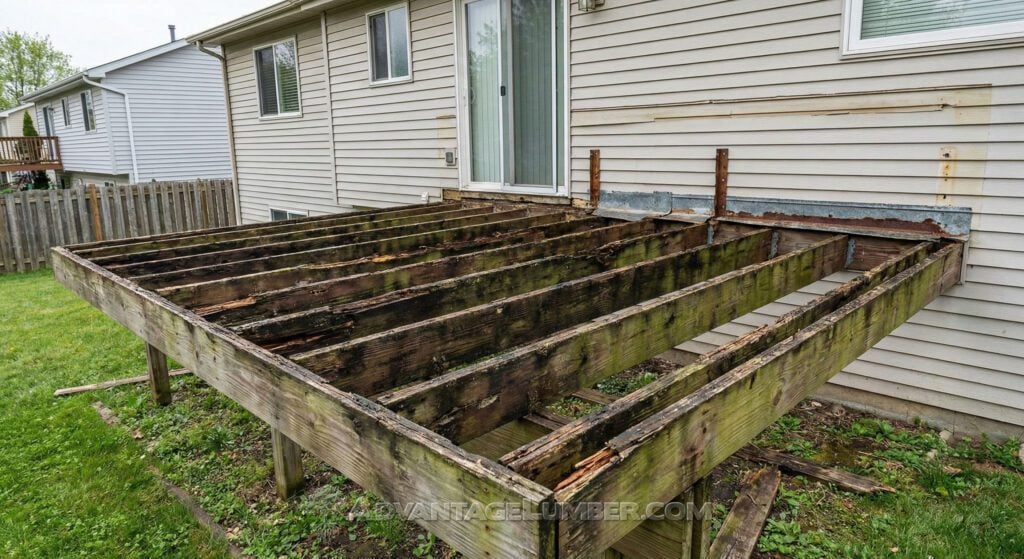
Modern pressure treated lumber can provide many years of service when you choose the correct treatment rating, install it properly, and protect it from excessive moisture.
However, the climate, drainage, ventilation, and construction details all affect how long it lasts. In fact, I’ve seen pressure treated framing develop serious rot in as little as 10 to 15 years, especially in damp locations where water collects around the joists.
And this is one of my biggest frustrations with the way some decks get built. Homeowners will spend a small fortune on premium decking boards, expensive railing, and fancy lighting, but nobody wants to talk about the framing underneath it.
That’s a little like buying a luxury car and putting the cheapest tires you can find on it. Sure, you saved some money, but was that really the right place to cut corners?
That’s why I always recommend thinking about the entire deck structure rather than focusing only on the decking boards. If you’re investing in premium composite decking, consider framing materials that can provide a comparable service life.
Fortunately, you have several options:
- Steel deck framing: Systems such as New Castle Steel offer a durable alternative to traditional wood framing when you install them according to the manufacturer’s requirements.
- Aluminum deck framing: Products from TimberTech and Outdure eliminate the risk of wood rot in the framing members.
- Treated LVL framing: Properly rated products, such as PWT treated LVL, provide another engineered framing option.
- Pressure treated lumber with joist tape: Products such as DeckWise JoistTape help protect the tops of wood joists from moisture that can enter around fasteners.
However, keep in mind that joist tape doesn’t make wood framing waterproof. Likewise, metal framing still needs proper connections, corrosion protection, and periodic inspections.
No matter what framing material you choose, inspect the structure occasionally for loose connections, drainage problems, corrosion, or other signs of trouble.
After all, what good is a 50 year deck board if the framing underneath it only lasts 15 years?
I’ve said this for years: if you’re building a deck to last several decades, the framing deserves just as much attention as the decking. Maybe even more.
8. Composite Decking Doesn’t Eliminate Every Maintenance Expense
When comparing decking materials, it’s easy to focus on the cost of staining and sealing.
And yes, composite decking can save homeowners considerable time and money because they no longer need to perform those recurring chores. However, other maintenance expenses don’t disappear.
For example, you may still need to clean the decking, remove stubborn stains, replace damaged boards, inspect railings, tighten loose hardware, and maintain the framing.
Furthermore, the deck’s location plays a major role. A composite deck in a sunny, open backyard may require relatively little cleaning.
On the other hand, the same decking beneath several large trees in a damp, shaded backyard might need attention much more frequently.
I’ve noticed that people sometimes compare decking materials without considering where the deck will actually sit. A deck in sunny Arizona faces very different conditions from one tucked beneath oak trees in a humid Florida backyard.
And what about a deck near the ocean? Salt, moisture, and windblown debris can create their own maintenance concerns. That’s why I don’t like giving homeowners the impression that every composite deck will require the same amount of upkeep.
Ultimately, the environment matters just as much as the material.
Composite Decking vs. Hardwood Decking: Which Requires More Maintenance?
Now, this is where the conversation gets interesting.
A lot of homeowners assume tropical hardwood decking requires constant maintenance.
However, that’s not necessarily true.
Premium hardwoods such as Ipe, Cumaru, and Teak naturally resist decay and don’t require stain or sealer to protect them under normal conditions when you install them properly.
For example, Ipe decking can last 50 years or longer with proper installation and suitable conditions, even if you never apply deck oil.
So why do people oil Ipe decking? Primarily to help preserve its rich brown color.
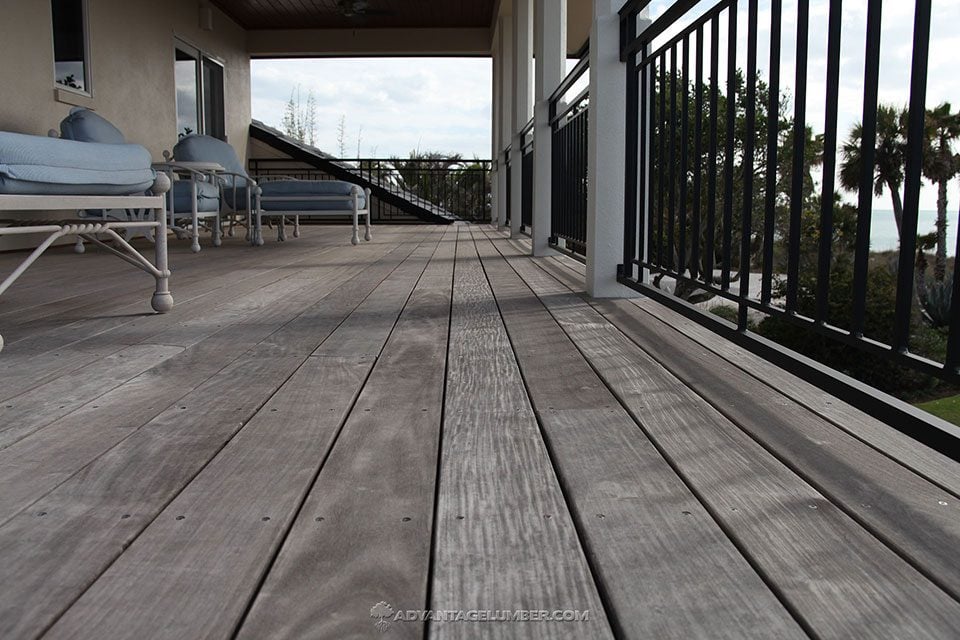
Without regular UV protective oil treatments, Ipe naturally weathers to a silver gray patina.
Some homeowners love that weathered appearance. Others, however, prefer the original brown color and choose to oil their deck periodically. Either way, neither choice is necessarily wrong.
Personally, I’ve always liked the look of naturally weathered Ipe. There’s something about that silver gray color that looks great on a coastal home or a modern deck. Of course, I also understand why someone would want to preserve the rich brown color they fell in love with when they first bought the wood.
That’s really a matter of personal preference.
The important distinction is that you oil Ipe primarily to preserve its color, not to prevent the naturally durable wood from rotting.
That said, hardwood decks still need regular cleaning, and their long term performance depends on proper installation, ventilation, drainage, and fastening.
With that in mind, here’s how the maintenance requirements generally compare.
| Maintenance Task | Capped Composite Decking | Tropical Hardwood Decking |
|---|---|---|
| Regular sweeping | Yes | Yes |
| Periodic washing | Yes | Yes |
| Staining required | No | No, for naturally durable species |
| Oiling to preserve original color | No | Optional |
| Mold and mildew cleanup | Sometimes | Sometimes |
| Wet leaf and tannin stain cleanup | Sometimes | Sometimes |
| Surface scratch repair | Limited options | Often possible through sanding |
| Periodic framing inspection | Yes | Yes |
| Periodic railing and hardware inspection | Yes | Yes |
So, is composite decking lower maintenance than hardwood?
Well, if you want your hardwood deck to maintain its original rich brown color, composite decking will generally require less ongoing work.
However, if you’re happy allowing Ipe or another naturally durable hardwood to weather to gray, you might find that both materials require a fairly similar amount of routine cleaning.
I’ve always thought this was one of the most overlooked points in the whole composite versus hardwood debate. People sometimes talk as though hardwood decking requires constant staining just to survive outdoors. With naturally durable tropical hardwoods, that simply isn’t the case.
Either way, that’s something worth considering before making your decision.
Are Some Composite Decking Brands Easier to Maintain Than Others?
Absolutely.
After all, not all composite decking is manufactured the same way.
Older uncapped composite products generally absorb stains and moisture more readily than modern capped boards.
Meanwhile, today’s premium composite and PVC decking products use different surface materials, protective caps, textures, and technologies to resist stains.
Naturally, these differences affect how easily you can clean the decking and how well it handles everyday wear.
And here’s where I’d encourage homeowners to spend a little extra time doing their homework. Two deck boards might look almost identical in a showroom, but that doesn’t mean they’ll perform the same way after five years of kids, dogs, patio furniture, and backyard barbecues.
Trex Composite Decking and PVC Decking
Trex offers several capped composite decking collections, including Enhance, Select, Transcend, and Signature.
Their protective surfaces help resist fading and stains while eliminating the need for routine sanding, staining, or sealing.
However, Trex decking still needs periodic cleaning, and homeowners should follow the care instructions for their specific collection.
I’ve always thought Trex does a good job offering products at different price points. However, don’t assume every collection performs exactly the same way just because it carries the Trex name.
New for 2026 Trex has introduced a PVC decking line called Trex Refuge to compete with TimberTech’s PVC line.
TimberTech Composite and Advanced PVC Decking
TimberTech offers both composite decking and Advanced PVC decking.
Although both are low maintenance options, the materials aren’t identical.
For example, TimberTech’s Advanced PVC products contain no wood fibers in the deck boards and offer strong resistance to moisture related deterioration.
However, PVC decking can still collect dirt, develop surface mildew on organic debris, and suffer scratches or stains.
So, you’ll still need to clean it.
Personally, I think it’s important for homeowners to understand the difference between composite and PVC before choosing one. They’re often grouped together as low maintenance decking, but the materials behave differently, and those differences may matter depending on where you live.
Deckorators Composite and Surestone Decking
Deckorators offers traditional composite decking as well as its Surestone mineral based composite products.
Unlike conventional wood plastic composites, Surestone uses a different material technology and aims to provide excellent durability and moisture resistance.
Depending on the collection, these products may offer advantages in surface wear, dimensional stability, and moisture exposure.
However, just like Trex and TimberTech, Deckorators decking still needs regular cleaning.
I’ve been impressed with how decking manufacturers continue to develop new materials. Products like Surestone show just how much the industry has changed from the early days of composite decking.
For that reason, when comparing these brands, I recommend looking beyond the warranty length.
Instead, pay attention to how well each product resists stains and scratches, what the manufacturer recommends for cleaning, and how the decking will perform in your particular environment.
And if you’re visiting a decking showroom, don’t be afraid to ask questions. That’s what the decking experts are there for. Ask about scratches, stains, heat, and cleaning. Those things matter a whole lot more once the deck is installed than they do when you’re looking at a small sample.
How Often Should You Clean Composite Decking?
There’s no single cleaning schedule that works for every deck.
However, here’s a practical starting point based on the conditions around your home.
| Deck Location | Suggested Cleaning Schedule |
|---|---|
| Open, sunny backyard | Thorough cleaning twice per year |
| Beneath large trees | Clean seasonally and remove leaves frequently |
| Shaded or damp location | Inspect and clean every few months as needed |
| Near a swimming pool | Rinse and clean as needed to remove residue |
| Outdoor kitchen or grilling area | Clean food and grease spills promptly |
| Snowy northern climate | Clean in spring and fall, and remove snow as needed |
Of course, these are general recommendations rather than manufacturer requirements. Always follow the instructions for your particular decking product.
After all, one thing I’ve learned over the years is that a little preventive maintenance usually beats trying to scrub away months of accumulated grime.
I like to think of deck cleaning the same way I think about washing a car. You don’t necessarily need to do it every weekend, but you probably shouldn’t wait until you can barely recognize the original color, either.
Is Composite Decking Worth It If It Still Needs Maintenance?
For many homeowners, absolutely.
After all, composite decking eliminates some of the most time consuming chores that come with traditional wood decking.
For example, you don’t have to worry about periodically sanding and staining the entire deck just to maintain its factory appearance.
And that’s a significant benefit.
Modern composite decking also offers consistent colors, attractive wood grain patterns, and a wide selection of products at different price points.
However, it isn’t perfect.
Composite decking can scratch, stain, become dirty, and develop surface mildew. Furthermore, some products become quite hot in direct sunlight, especially darker colors.
And unlike natural hardwood, you generally can’t refinish a capped composite board by sanding away surface damage.
Still, these aren’t necessarily reasons to avoid composite decking.
They’re simply things you should understand before spending thousands of dollars on a new deck.
I’ve always believed there’s no single decking material that’s perfect for everyone. Some homeowners love the natural beauty and durability of Ipe. Others prefer the consistent color and reduced upkeep of composite decking.
And you know what? Both can be excellent choices.
The trick is understanding what you’re buying instead of relying on a marketing slogan.
Final Thoughts: Low Maintenance Is Not No Maintenance
If someone tells you composite decking is completely maintenance free, I’d take that statement with a grain of salt.
After all, there’s no outdoor decking material that you can install and completely forget about for the next 30 years.
Not composite. Not PVC. Not even Ipe.
Every deck needs occasional cleaning, and every deck structure deserves periodic inspections.
However, the real advantage of composite decking is that you don’t need to stain, seal, or refinish the manufactured surface regularly.
For homeowners who want to reduce their outdoor chores, that’s a pretty compelling reason to choose it.
On the other hand, if you’re considering composite decking because you never want to sweep, wash, or inspect your deck again, you might be disappointed.
I’ve always told homeowners to be realistic about how much work they’re willing to put into their outdoor space. If you enjoy working with wood and don’t mind occasionally oiling a hardwood deck, natural decking might be a great fit. If you’d rather spend that time relaxing with family and friends, composite decking could make more sense.
Neither choice is wrong.
My advice? Choose your decking based on how you want it to look, how you plan to use it, your budget, and how much maintenance you’re realistically willing to perform.
At AdvantageLumber.com, we offer Trex, TimberTech, and Deckorators decking, along with premium tropical hardwoods such as Ipe, Cumaru, Tigerwood, and Teak.
Our decking experts can help you compare the advantages and disadvantages of each material, review samples, and estimate how much material you’ll need for your project.
Ultimately, the best deck isn’t necessarily the one that manufacturers advertise as maintenance free.
It’s the one that fits your home, your expectations, and the way you actually live.
