
When you’re building a deck, summer is when your investment gets put to the test. Long days, intense UV exposure, triple digit surface temperatures, backyard barbecues, pool parties, bare feet, kids, and pets all reveal how well your decking material really performs.
The three most popular premium decking options today are:
Each has advantages, but how do they compare when the temperature climbs?
At AdvantageLumber.com, we wanted real answers not marketing claims.
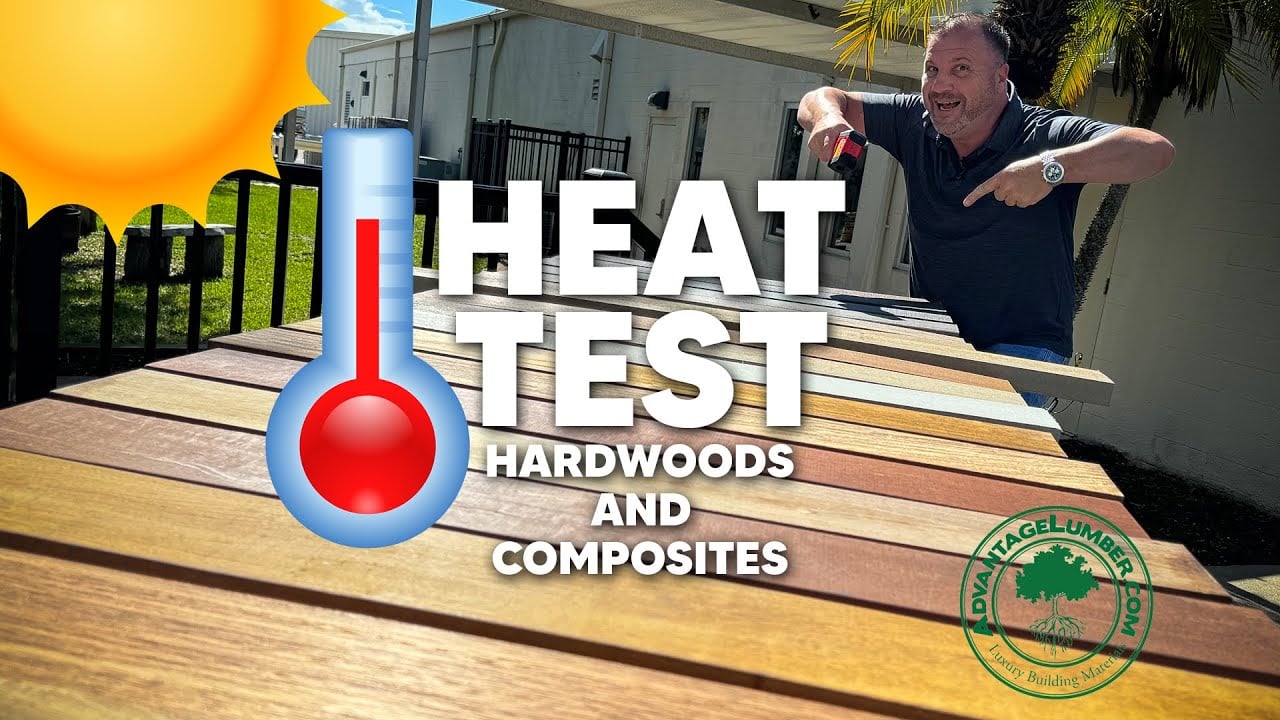
So, we filmed our own side by side heat test in Sarasota, Florida using an infrared thermometer to compare several exotic hardwood decking species alongside Trex® and TimberTech® decking in direct sunlight.
Watch our heat test here:
Let’s take a closer look at how each material performs during the hottest months of the year.
What Matters Most in Summer?
When evaluating decking for hot climates, there are several factors homeowners should consider:
- Surface temperature
- Barefoot comfort
- UV resistance
- Expansion and contraction
- Moisture performance
- Maintenance requirements
- Long term durability
While every decking material gets warm in direct sun, some handle summer conditions much better than others.
Hardwood Decking
Best Overall Summer Performance
Nothing beats real wood when it comes to staying naturally comfortable in the sun.
In our Sarasota heat test, every hardwood species we tested stayed cooler than the composite boards.
Among the hardwoods tested were:
- Ipe
- Cumaru
- Tigerwood
- Brazilian Redwood
- Mahogany
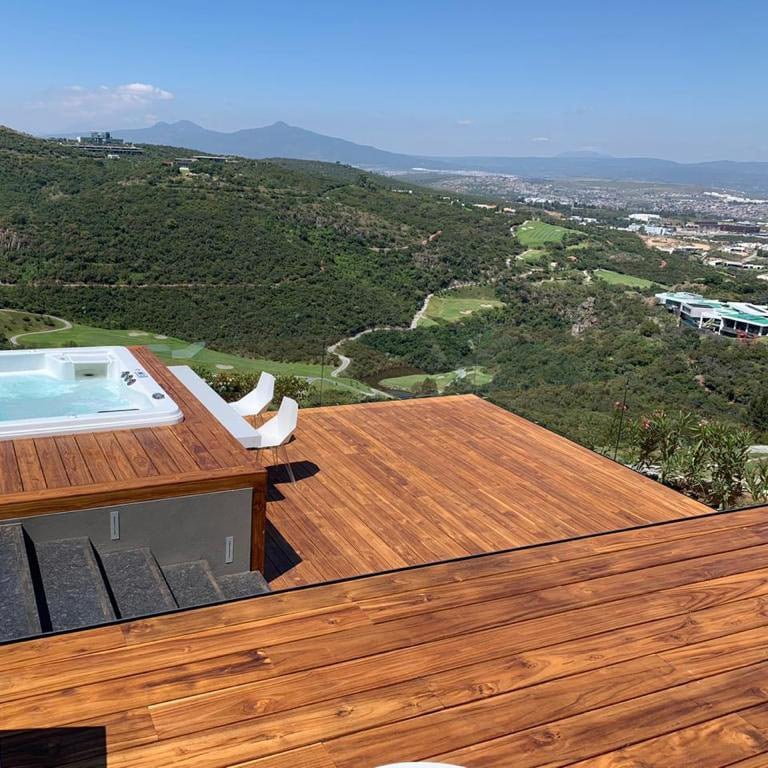
- Plantation Teak
The standout performer?
It recorded a surface temperature of approximately 120°F, making it the coolest material we tested more than 20°F cooler than many composite decking products.
Why Hardwood Stays Cooler
Unlike synthetic decking, hardwood contains no plastic.
Instead, its natural cellular structure dissipates heat more efficiently rather than storing it.
Species like Teak also benefit from:
- Lighter natural coloration
- Natural oils
- Dense grain structure
- Excellent thermal characteristics
That difference is something you’ll actually notice when walking barefoot.
Summer Advantages
✔ Naturally cooler underfoot
✔ Doesn’t retain heat as long after sunset
✔ Outstanding UV stability
✔ Minimal expansion and contraction
✔ 50+ year lifespan for premium species like Ipe
Considerations
Hardwood does require occasional maintenance if you’d like to preserve its original color. If left untreated, it develops an attractive silver gray patina while retaining its structural integrity.
For standard hardwood deck boards, we recommend approximately 18 inches of ventilation beneath the deck. For low clearance applications or installations over concrete, hardwood deck tiles are often the better solution.
Composite Decking
Low Maintenance with Great Appearance
Composite decking has become one of America’s most popular decking materials.
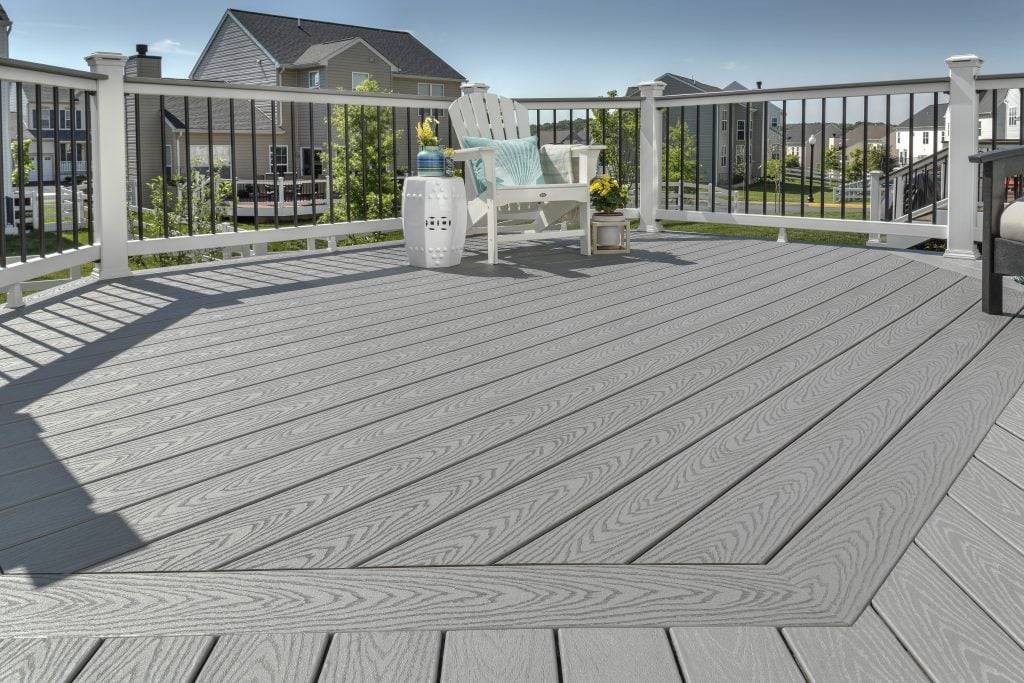
Brands like Trex and TimberTech Composite combine recycled wood fibers with plastic to create durable, attractive deck boards that require very little maintenance.
Advantages include:
- No staining
- No sealing
- Excellent fade resistance
- Easy cleaning
- Wide variety of colors
Summer Performance
Composite decking performs well structurally in summer.
It won’t crack or split like pressure treated lumber can.
However, because composite contains plastic, it tends to absorb and retain more heat than natural wood.
Our infrared thermometer testing showed several composite boards reaching 140°F or higher in direct Florida sunshine.
That’s not unique to any one manufacturer it’s simply a characteristic of plastic containing decking materials.
Heat Mitigation Technologies
Manufacturers continue improving heat performance.
For example:
- Trex® Transcend® Lineage incorporates heat mitigating technology designed to stay cooler than traditional Trex composite boards.
- Some lighter colored TimberTech Composite boards also perform better than darker colors.
Even so, darker composite colors will generally become much hotter than lighter ones.
Summer Advantages
✔ Very low maintenance
✔ Excellent color retention
✔ Won’t splinter
✔ Great long term warranties
Considerations
Composite can become uncomfortable for bare feet in full sun, particularly in darker colors.
PVC Decking
The Best Synthetic Option for Hot Climates
PVC decking is often confused with composite decking.
While they may look similar, they’re very different products.
PVC decking contains no wood fibers.
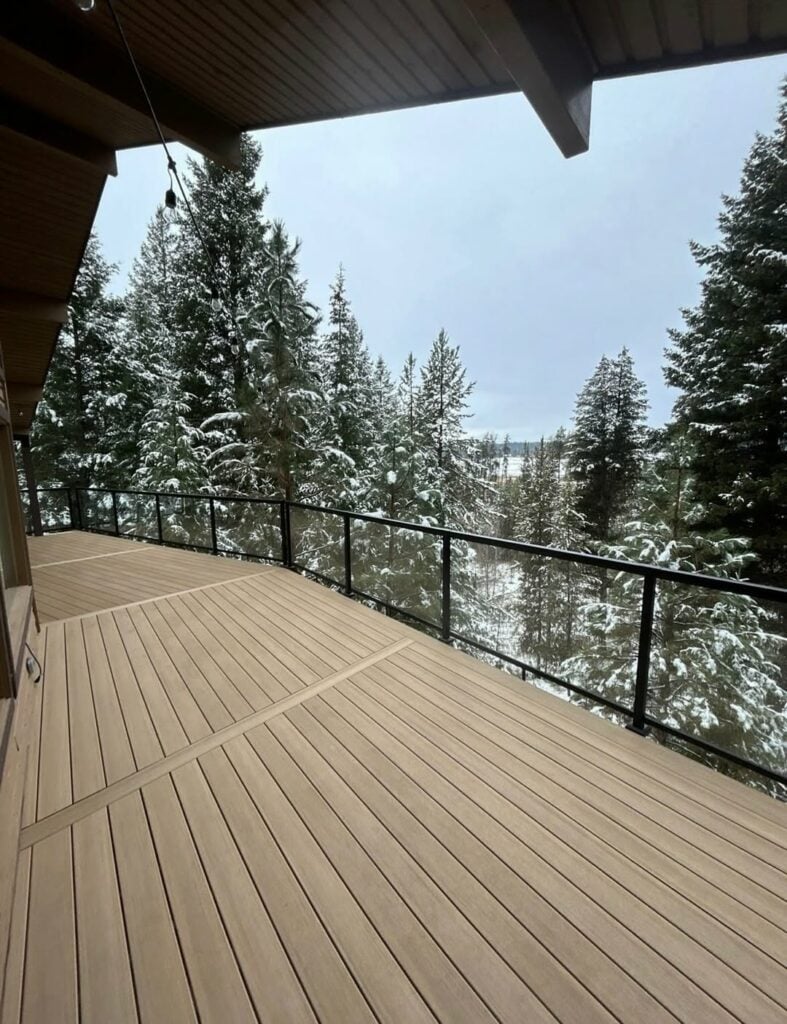
Instead, it’s made entirely from engineered polymers.
Popular options include:
Because there is no organic wood content, PVC offers superior resistance to:
- Moisture
- Mold
- Mildew
- Rot
Many homeowners near pools, beaches, docks, and humid coastal climates prefer PVC for this reason.
Summer Performance
PVC decking still gets hot.
There’s simply no way around that when plastic sits in full sun.
However, some premium PVC manufacturers have developed technologies that reduce surface temperatures compared to conventional composite decking.
TimberTech Advanced PVC, for example, advertises improved barefoot comfort compared with many competing composite products, and lighter colors generally perform better than darker shades.
That said, our own testing found that natural hardwoods still produced the coolest surface temperatures overall.
Summer Advantages
✔ Outstanding moisture resistance
✔ Excellent around pools
✔ Very low maintenance
✔ No wood fibers to support mold growth
Considerations
PVC expands and contracts more than hardwood because of temperature changes, making proper installation and manufacturer spacing requirements especially important.
Our Real World Heat Test Results
Here’s what we observed during our Florida testing.
| Material | Summer Heat Performance | Maintenance | Moisture Resistance | Barefoot Comfort |
|---|---|---|---|---|
| Exotic Hardwood | Excellent | Moderate/Very Low for Gray | Excellent | ⭐⭐⭐⭐⭐ |
| PVC Decking | Very Good | Very Low | Excellent | ⭐⭐⭐⭐ |
| Composite Decking | Good | Very Low | Very Good | ⭐⭐⭐ |
Remember that color matters almost as much as material. A light colored board whether hardwood, composite, or PVC will typically stay cooler than a dark colored version of the same product.
Which Decking Should You Choose?
Choose Hardwood If:
- Barefoot comfort is a priority.
- You live in a hot climate.
- You want maximum longevity.
- You appreciate the beauty of real wood.
Choose Composite If:
- You want minimal maintenance.
- You prefer a wide selection of colors.
- You don’t mind warmer deck temperatures.
Choose PVC If:
- Your deck surrounds a pool.
- You live in a very humid climate.
- You want the highest moisture resistance.
- You prefer virtually maintenance free ownership.
The Bottom Line
Every decking material gets hot in direct sunlight.
The real question is which gets the least hot while still delivering the durability and appearance you want.
Based on our own side by side testing in the Florida sun:
- Hardwood decking delivered the coolest surface temperatures overall.
- PVC decking is the best performing synthetic option for moisture prone environments.
- Composite decking remains an excellent low maintenance choice but generally retains more heat because of its plastic content.
There isn’t a single “best” decking material for every homeowner. The right choice depends on your climate, maintenance preferences, budget, and how you plan to use your outdoor space.
If staying comfortable on a hot summer afternoon is high on your list, our testing shows that premium hardwood decking deserves serious consideration.
Watch the Heat Test Yourself
Want to see the results firsthand?
Watch our complete infrared thermometer comparison here:
▶ https://youtu.be/3OOT6tgsLLw?si=ilANP7UTlXP_mmkR
If you’d like help choosing the best decking material for your climate, contact the decking experts at AdvantageLumber.com. We offer premium hardwood, composite, and PVC decking solutions to fit virtually any outdoor project.
