

When planning a new composite deck, color is often one of the first decisions homeowners make. But beyond aesthetics, deck color can also impact comfort especially during the summer months.
One of the most common questions homeowners ask is:
What Composite Decking Colors Stay Cooler in the Sun?
In general, lighter composite decking colors stay cooler than darker colors because they reflect more sunlight and absorb less heat. Light grays, soft browns, beige tones, and weathered wood colors are typically more comfortable under bare feet during hot summer days.
Darker decking colors like deep browns, charcoal grays, and black tones tend to absorb more solar heat, causing the deck surface to become noticeably hotter in direct sunlight.
However, color is only part of the equation. Modern decking technology now plays a major role in heat retention as well.
Why Composite Decking Gets Hot
Like concrete, stone, pavers, and many other outdoor surfaces, composite decking can become hot in full sun. The amount of heat buildup depends on several factors, including:
- Deck color
- Material composition
- Sun exposure
- Climate
- Airflow beneath the deck
- Time of day
A south-facing deck in Florida will naturally retain more heat than a partially shaded deck in a northern climate. While no decking material remains completely cool in direct summer sun, choosing the right decking color and technology can significantly improve comfort.
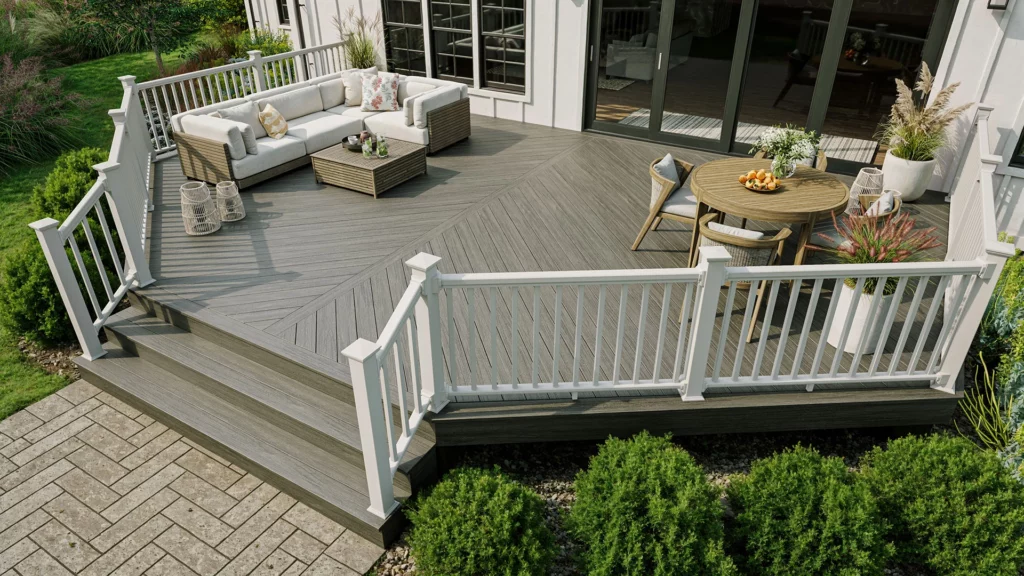
Do Lighter Composite Decking Colors Really Stay Cooler?
Yes. Lighter colors generally stay cooler because they reflect more sunlight instead of absorbing it. If barefoot comfort and pet safety are priorities, lighter composite decking colors are usually the best choice.
Some popular cooler-toned decking colors include:
- Light gray
- Sand
- Beige
- Weathered driftwood tones
- Soft brown
- Light walnut
- Natural oak-inspired colors
These shades can help reduce surface temperatures while still providing the realistic wood-look appearance many homeowners want.
Composite Decking Technology Matters
Today’s premium composite and PVC decking manufacturers have developed technologies specifically designed to help reduce heat buildup. This means homeowners no longer have to choose only very light colors to get better heat performance.
Some modern decking lines are engineered to reflect more solar energy and retain less heat compared to traditional composite decking.
Trex Transcend® Lineage® and SunComfortable™ Technology
Trex has developed heat-mitigating technology designed to help reduce heat buildup on sunny days.
Their Trex Transcend® Lineage® decking collection features SunComfortable™ Technology, which is engineered to reflect more solar energy and reduce heat absorption compared to traditional composite decking boards.
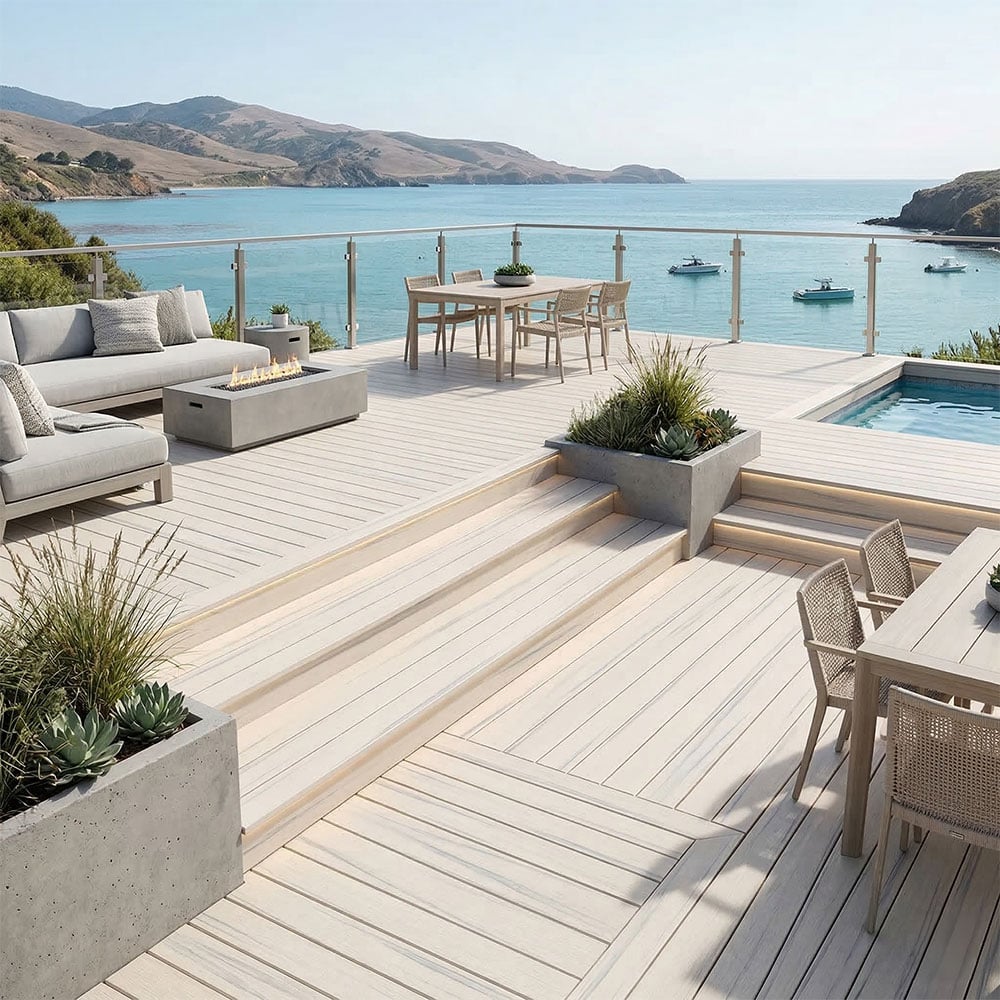
According to Trex, Transcend Lineage® is their coolest decking collection yet, helping create a more comfortable deck surface in direct sunlight compared to many standard composite boards.
One advantage of this technology is that homeowners are not limited to only very light decking colors. Trex offers several mid-tone and darker shades within the Lineage® collection that are designed to stay cooler than similar colors in traditional composite decking lines.
That said, Trex still notes that all decking materials can become hot in full sun, especially during extreme summer temperatures. For the best barefoot comfort, lighter colors are generally still recommended for decks with heavy sun exposure.
TimberTech Cool Touch Performance
Their Advanced PVC decking is engineered to reflect more sunlight, retain less heat, and cool down faster compared to many traditional composite decking products.
According to TimberTech, several Advanced PVC decking colors can stay noticeably cooler to the touch compared to many competitive composite boards, making them a popular option for barefoot comfort and pet-friendly outdoor spaces.
TimberTech also highlights additional comfort and safety benefits, including improved traction in both wet and dry conditions and a splinter-free surface.
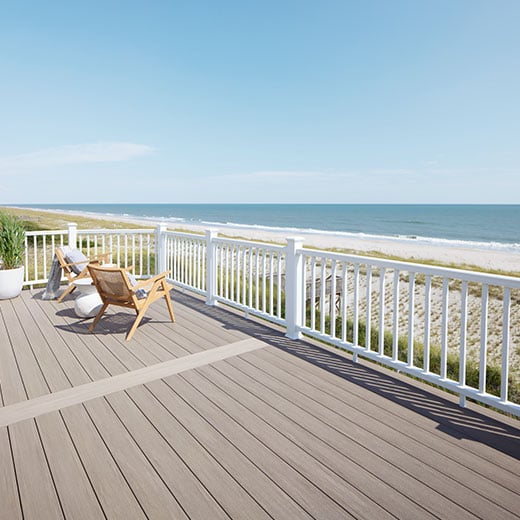
As with most decking materials, lighter colors generally provide the best heat performance. Several lighter shades within TimberTech’s Advanced PVC collections are specifically designed for improved heat mitigation in full sun environments.
For homeowners who want realistic wood aesthetics with better barefoot comfort, PVC decking can be an attractive option because it typically retains less heat than many traditional wood-plastic composite boards.
Deckorators Surestone® Technology
Deckorators approaches heat reduction differently with its mineral-based Surestone® technology.
According to the manufacturer, decking made with Surestone technology is designed to reduce heat buildup through infrared reflective materials integrated into the cap layer. The mineral-based core also contributes to lower heat retention compared to traditional wood-fiber composite decking.
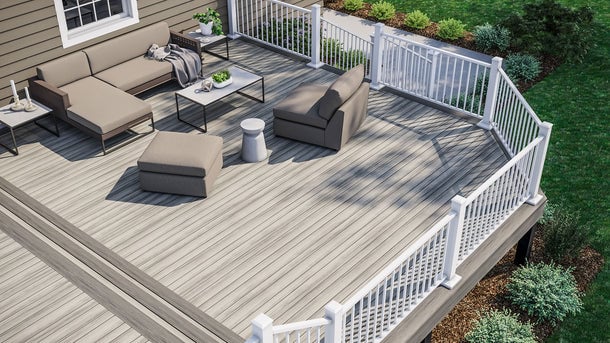
Deckorators Voyage decking is often highlighted for barefoot-friendly comfort, especially in sunny outdoor living spaces.
The company also notes that its micro-embossed surface texture can help reduce heat buildup while maintaining traction and realistic wood visuals.
Best Composite Decking Colors for Hot Climates
If you live in a warm region or your deck receives full sun throughout the day, these color categories are typically the best choices:
Best Cooler Decking Colors
- Light gray
- Sandy beige
- Driftwood tones
- Light brown
- Weathered oak
- Soft walnut
- Natural cedar-inspired colors
Colors That Tend to Get Hotter
- Dark brown
- Espresso
- Charcoal gray
- Black
- Deep walnut
- Tropical hardwood-inspired dark tones
Choosing the Right Decking for Comfort and Style
The best decking choice balances appearance, durability, maintenance requirements, and comfort.
If heat retention is a major concern, homeowners should focus on:
- Lighter decking colors
- Heat-mitigating technologies
- PVC or mineral-based decking options
Modern decking manufacturers now offer far more options for homeowners who want both realistic wood aesthetics and improved barefoot comfort.

Final Thoughts
All decking materials can become warm in direct sunlight, but choosing the right color and decking technology can make a noticeable difference.
For the coolest deck surface possible, lighter colors combined with advanced heat-mitigating decking technologies are typically the best solution.
If your deck receives full sun throughout the day, investing in lighter shades and premium decking materials can help create a more comfortable outdoor living space for family, guests, and pets.
Explore Cooler Composite Decking Options
Looking for composite or PVC decking designed for comfort in sunny climates? AdvantageLumber.com offers a wide selection of premium decking materials in colors and technologies engineered to help reduce heat buildup while delivering long-lasting performance and realistic wood aesthetics.
