
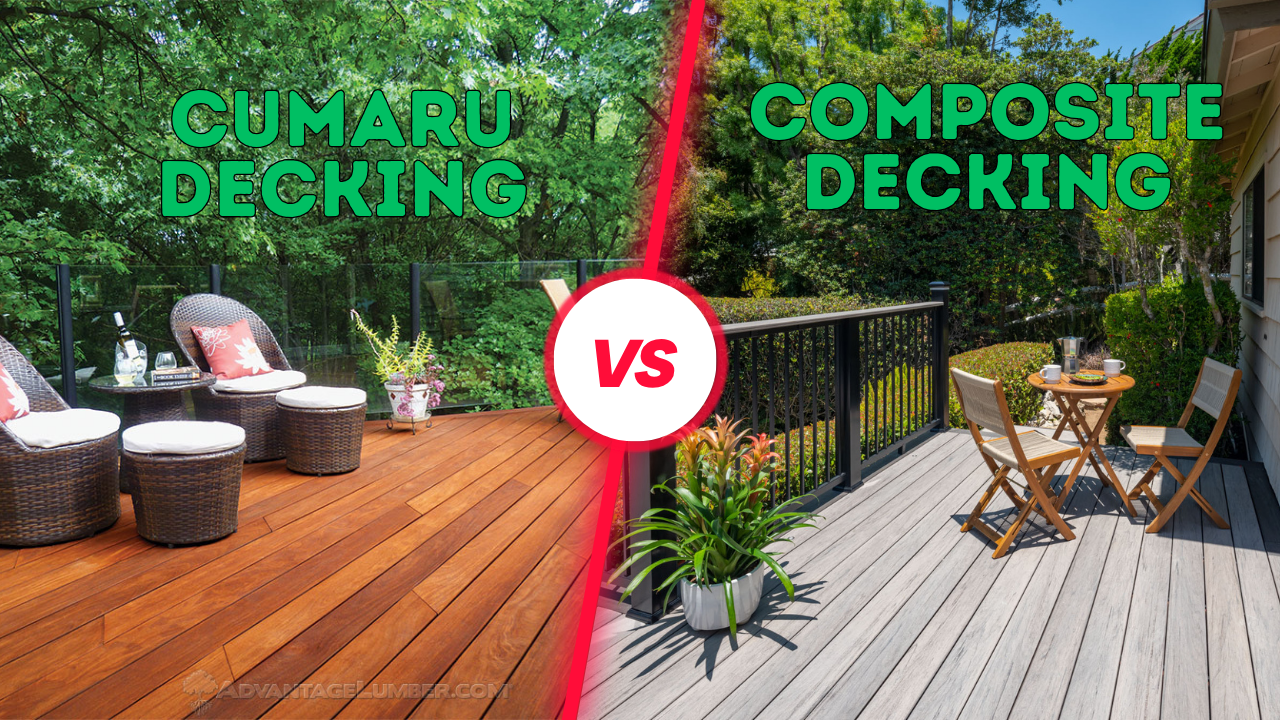
When you’re planning a new deck, one of the biggest decisions you’ll face is choosing the right decking material. After all, most homeowners want a deck that looks great, lasts for decades, and doesn’t require them to spend every weekend cleaning, sanding, or staining. And really, who wants to spend their Saturday maintaining a deck when they could be sitting on it with a cold drink?
Two popular options are Cumaru hardwood decking and composite decking. Although both offer some impressive benefits, they differ quite a bit in cost, maintenance, and long term durability.
Cumaru, also known as Brazilian Teak, is an extremely dense tropical hardwood that naturally resists rot, insects, and decay. Composite decking, on the other hand, typically combines wood fibers and plastic to create boards that resist moisture and require less upkeep.
You’ve probably heard people say composite decking is maintenance free. Well, that’s not exactly true. At the same time, you may have heard that hardwood decking requires constant maintenance. That’s not entirely accurate either. I’ve heard both claims more times than I can count, and frankly, neither tells the whole story.
So which material makes more sense for your home?
Let’s compare Cumaru and composite decking based on three things every homeowner should consider before building a deck: cost, maintenance, and lifespan.
What Is Cumaru Decking?
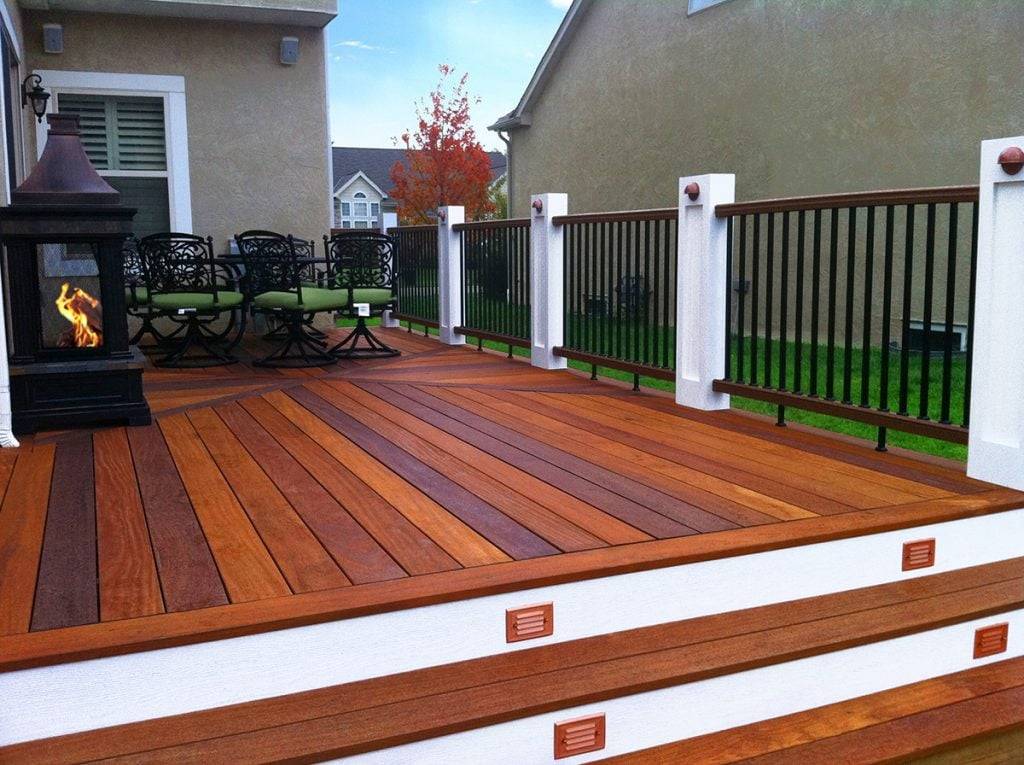
Cumaru is a tropical hardwood that grows throughout parts of South America, particularly Brazil. Lumber suppliers often call it Brazilian Teak, although it comes from a completely different tree than genuine Teak.
One reason homeowners love Cumaru is its beautiful natural appearance. In fact, the wood features golden brown, reddish brown, and darker brown tones, along with interesting grain patterns that give each board its own character. If you’ve ever seen a freshly installed Cumaru deck in the afternoon sunlight, you know what I’m talking about. The colors really come alive.
However, Cumaru offers much more than good looks.
With a Janka hardness rating of approximately 3,300 pounds of force, Cumaru ranks among the hardest decking woods available. As a result, it’s considerably harder than pressure treated pine, Western Red Cedar, and many other traditional decking materials.
That exceptional hardness also helps Cumaru withstand dents, scratches, and everyday foot traffic. And believe me, you’ll appreciate that when somebody drags a heavy patio chair across the deck instead of picking it up. We’ve all seen it happen.
Even better, Cumaru naturally resists insects and decay without chemical treatments. Although the environment and installation methods affect how long any deck lasts, properly installed Cumaru decking can potentially last 40 to 50 years or longer.
That’s pretty impressive when you consider how much abuse an outdoor deck takes from rain, snow, sunshine, and changing temperatures. Personally, I think that’s one of Cumaru’s biggest selling points. You’re buying a material that has the potential to outlast several generations of ordinary decking.
What Is Composite Decking?

Composite decking has become increasingly popular over the past couple of decades.
Today, manufacturers such as Trex, TimberTech, and Deckorators offer numerous decking collections that give homeowners the appearance of wood without requiring regular staining or oiling.
Traditional composite decking combines wood fibers with plastic materials. In addition, many newer boards feature a protective polymer cap that helps resist fading, stains, and moisture.
However, not every manufactured decking product uses the same materials.
For example, some manufacturers offer mineral based decking, while others produce PVC decking without wood fibers. Although these products share some benefits with traditional composite decking, they have different properties.
For this comparison, we’ll focus primarily on capped wood plastic composite decking.
Composite boards come in numerous colors and price ranges. Generally speaking, entry level products feature simpler grain patterns, while premium collections offer more realistic wood textures and color variations. And I have to give the manufacturers credit here. Some of today’s premium composite boards look considerably better than the products we were selling 15 or 20 years ago.
One major advantage is color consistency. Although some fading may occur, quality capped composite decking generally holds its original color much longer than unfinished natural hardwood.
Even so, composite decking also has limitations, especially when it comes to surface repairs and certain installation requirements. No decking material is perfect, regardless of what the advertising might lead you to believe.
Cumaru vs. Composite Decking: Which Costs More?
For most homeowners, price plays a major role when choosing decking.
However, comparing costs isn’t always as simple as looking at the price per linear foot. I can’t tell you how many times someone has compared two decking prices without realizing the boards have different widths, thicknesses, or installation requirements.
Scalloped composite deck boards are typically the cheapest option you can buy. These boards have hollowed out channels in the back of the deck boards. This saves the manufacturer money so they can sell it cheaper than a solid board. These scalloped boards are less stiff and it’s a good idea to consider moving your joist framing from 16″ on center to 12″ on center to give them more support.
So they might be cheaper but adding more joists for additional support might offset the cost savings. The cheapest board usually have less attractive colors and embossed faux wood grain which some home owners find less visually appealing.
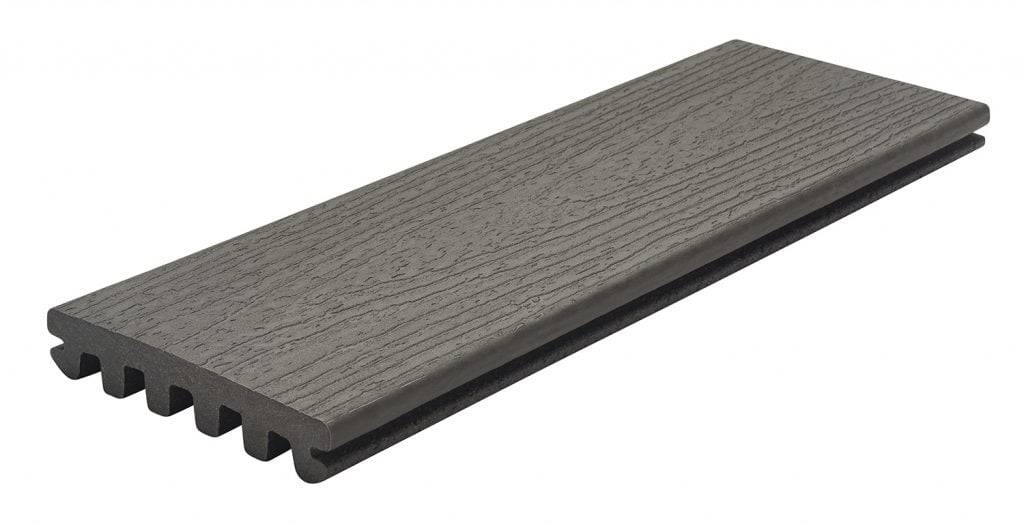
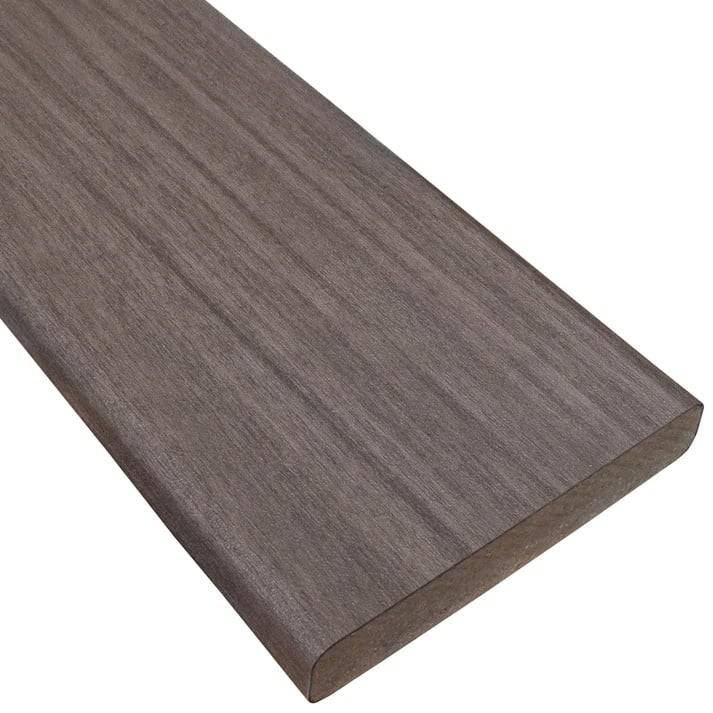
The picture above shows a Trex Signature deck board which is the very best collection of composite decking that Trex makes. Trex Signature decking is a solid deck board so these offer more rigidity compared to a scalloped deck board. In addition many find these deck boards to be much more visually appealing as well.
Composite decking prices vary considerably depending on the manufacturer and collection. For instance, entry level products can be relatively inexpensive, while premium composite boards sometimes cost more than tropical hardwoods.
Cumaru generally falls into the premium hardwood category, although it often costs significantly less than Ipe.
With that in mind, here’s a rough comparison of what homeowners might pay for decking boards.
| Decking Material | Approximate Cost Per Square Foot |
|---|---|
| Entry Level Composite | $3–$6 |
| Mid Range Composite | $6–$10 |
| Premium Composite | $10–$15+ |
| Cumaru Hardwood | $4–$6 |
These figures represent general budgeting estimates rather than current quotes. Actual prices vary by manufacturer, collection, board dimensions, grade, and availability. They exclude framing, fasteners, labor, and freight.
As you can see, Cumaru can compete with entry level range composite decking on price. In most cases, it may even cost considerably less than premium composite collections.
That’s something many homeowners don’t expect.
People often assume natural tropical hardwood must cost more than manufactured decking. Although that’s sometimes true, premium composite products can carry surprisingly high price tags. I’ve seen homeowners come in convinced they can’t afford tropical hardwood, only to discover that Cumaru fits comfortably within the budget they had set aside for composite. It’s always worth comparing actual prices before ruling anything out.
Don’t Forget Installation Costs
Cumaru’s incredible hardness offers excellent durability, but it also makes the wood more challenging to cut and drill.
Because of this, you’ll want quality carbide tipped saw blades, proper drilling equipment, and fasteners designed for dense hardwood. Trust me, Cumaru isn’t the kind of wood you want to tackle with a dull saw blade that’s been sitting in your garage for ten years.
If you plan to face screw Cumaru boards, you’ll generally need to predrill the holes. Alternatively, you can use compatible hidden fastener systems such as Ipe Clip to create a cleaner appearance without visible screws across the decking surface. Personally, I prefer hidden fasteners on premium hardwood decks whenever the application allows them. Why spend good money on beautiful wood grain only to cover the surface with rows of screw heads?
Composite decking, on the other hand, is generally easier to cut and drill, although manufacturers have their own fastening and framing requirements.
For example, many composite decking products allow 16 inch on center joist spacing for standard residential installations. However, some products and applications require 12 inch spacing, especially when boards run diagonally across the joists.
Cumaru decking can span joists spaced 16 inches on center, depending on board thickness, orientation, and local building codes.
Meanwhile, composite decking expands and contracts as temperatures change. As a result, installers must follow the manufacturer’s instructions for end gaps, spacing, and fasteners. I’ve seen what happens when someone ignores those instructions, and let’s just say fixing a deck with buckled boards isn’t anyone’s idea of a fun weekend.
So although composite boards may be easier to cut, the entire project won’t necessarily cost less to build.
Cumaru vs. Composite Decking Maintenance
Here’s where things get interesting.
Composite manufacturers frequently promote their products as low maintenance alternatives to natural wood.
And to be fair, composite decking does have an advantage when homeowners want to preserve a consistent color without applying oil.
However, low maintenance doesn’t mean no maintenance. If somebody tells you they’ve found a completely maintenance free outdoor deck, I’d be interested to see what it looks like after a few years beneath a maple tree.
Maintaining a Cumaru Deck
Cumaru naturally resists rot and decay, so you don’t need to paint or stain it to protect it the way you would with ordinary pressure treated pine.
This is an important distinction.
Many homeowners assume every wood deck needs a protective finish to survive outdoors. Although that may be true for certain wood species in demanding conditions, Cumaru contains natural properties that help it withstand the elements without regular chemical treatments.
If you leave Cumaru unfinished, sunlight and weather will gradually turn the surface silver gray.
Interestingly, some homeowners actually prefer this weathered appearance. And I can understand why. A weathered hardwood deck can look fantastic alongside natural stone, landscaping, and a more traditional home.
If you’re happy with the silver gray color, maintaining Cumaru becomes relatively simple. In most cases, you’ll just need to sweep away leaves, remove dirt, and wash the deck periodically. That’s not much different from what you’d do with composite decking anyway.
However, if you want to preserve the wood’s original brown and reddish tones, you’ll need to apply a UV inhibiting hardwood oil occasionally.
For example, products such as DeckWise Ipe Oil work well with dense tropical hardwoods and help preserve their natural color.
Depending on sunlight, weather, and foot traffic, you may need to apply oil approximately every one to two years. Of course, decks with intense sun exposure may require more frequent oiling. I’ve always thought this comes down to personal preference. Some people enjoy spending an afternoon bringing that rich hardwood color back to life. Others would rather do just about anything else.
Here’s the important part: You’re primarily oiling Cumaru to preserve its color, not to keep the wood from rotting.
That’s a major difference between Cumaru and many traditional softwood decking materials.
Maintaining a Composite Deck
Composite decking eliminates the need for regular oiling or staining.
For homeowners who want their deck to maintain a fairly consistent appearance without applying a finish, that’s a genuine advantage. If you absolutely hate the idea of oiling a deck, I get it. Composite may be exactly what you’re looking for.
However, composite decking still gets dirty.
Over time, leaves, pollen, food spills, dirt, and moisture can collect on the surface. Although modern composite boards resist many stains, organic debris can still support mold and mildew growth, particularly in damp or shaded areas. Anyone who’s left wet leaves sitting on a deck through the fall knows how quickly that mess can build up.
As a result, you’ll still need to sweep and wash the deck periodically.
Most manufacturers recommend mild cleaning products and a soft bristle brush. Some also permit pressure washing, although you’ll need to follow their instructions to avoid damaging the surface.
Another important difference involves scratches.
With Cumaru, you can often sand out minor scratches and refinish the wood. Composite decking, however, generally doesn’t offer that option.
If you deeply scratch or gouge a composite board, sanding may damage its protective cap or change the surface texture. Depending on the damage, you might need to replace the entire board. And if that particular color or collection has been discontinued, finding a matching replacement could become another headache.
Personally, I think homeowners overlook this advantage of natural hardwood.
Although Cumaru requires more work if you want to preserve its original color, you can often restore its surface years down the road. To me, there’s something reassuring about owning a material you can actually repair instead of having to throw away a damaged board.
Which Decking Material Lasts Longer?
When you’re spending thousands of dollars on a new deck, you probably don’t want to replace it after 15 or 20 years.
That’s why lifespan deserves just as much attention as the initial price. After all, nobody builds a new deck hoping they’ll get to tear it apart and start over again in a decade.
Cumaru Decking Lifespan
Cumaru has earned an excellent reputation for long term outdoor durability.
When installers provide proper drainage, ventilation, and fastening, Cumaru decking can potentially last 40 to 50 years or longer.
In particular, the wood’s natural resistance to insects and decay helps it withstand outdoor conditions without relying on chemical pressure treatments.
However, even extremely durable hardwood can develop problems when installers ignore basic construction practices.
For example, poor ventilation beneath a deck can trap moisture and encourage excessive wood movement, cupping, and other problems. I’ve seen homeowners spend a small fortune on beautiful decking only to install it inches above damp soil with almost no airflow underneath. That’s asking for trouble, no matter how durable the wood happens to be.
That’s why proper board spacing, airflow, drainage, and fastening all play important roles.
Although Cumaru handles demanding outdoor environments exceptionally well, it still needs room to dry after rain.
When you install it correctly, Cumaru offers an impressive potential lifespan for homeowners who want their deck to last several decades. And frankly, that’s the kind of long term thinking I like to see when someone invests in premium building materials.
Composite Decking Lifespan
Composite decking lifespan varies considerably depending on the manufacturer and collection.
For example, many modern composite products carry residential limited warranties ranging from approximately 25 to 50 years.
However, homeowners should understand the difference between a warranty and the actual lifespan of a deck. I always encourage people to read the warranty instead of simply looking at the big number printed on the brochure.
A manufacturer may offer a 50 year warranty, but that doesn’t necessarily mean every board will look or perform like new for 50 years.
Typically, warranties cover specific manufacturing defects, while others include separate provisions for fading and staining.
At the same time, they may exclude scratches, improper installation, normal wear, or damage from environmental conditions.
Many warranties also provide reduced coverage as the product ages. It’s worth spending a few minutes reading those details before you make a purchase. Nobody enjoys discovering what their warranty doesn’t cover after a problem develops.
Cumaru, on the other hand, relies on the natural durability of the wood itself rather than a manufactured protective cap.
Although that doesn’t guarantee Cumaru will outlast every composite product, it gives homeowners another excellent option when long term durability matters.
Cumaru vs. Composite Decking: Quick Comparison
| Feature | Cumaru Hardwood | Composite Decking |
|---|---|---|
| Potential Lifespan | 40–50+ years | Often 25–50 years, depending on product |
| Routine Cleaning | Yes | Yes |
| Oiling or Staining | Optional to preserve color | Not required |
| Rot Resistance | Naturally excellent | Engineered to resist decay |
| Insect Resistance | Naturally resistant | Generally resistant |
| Color Changes | Weathers to silver gray | Designed to resist fading |
| Scratch Repairs | Can often be sanded | Limited repair options |
| Installation | Harder to cut and drill | Generally easier to cut |
| Appearance | Natural hardwood grain | Manufactured wood appearance |
Actual performance depends on the specific product, climate, installation, and maintenance.
Looking at the comparison, you can see why there isn’t one perfect decking material for everyone. It really depends on what matters most to you.
What About the Cost Over 30 Years?
Here’s something I wish more homeowners would consider before choosing decking.
The cheapest material today isn’t necessarily the cheapest material over the life of the deck. I’ve always believed it’s better to spend a little more upfront on the right materials than to save a few dollars now and regret it later.
For example, let’s say you’re building a 400 square foot deck.
We’ll compare Cumaru with a mid range composite product using hypothetical material prices. We’ll also assume the Cumaru homeowner wants to preserve the wood’s natural brown color rather than let it weather gray.
| Expense Over 30 Years | Cumaru | Composite |
|---|---|---|
| Initial Decking Boards | $3,600 | $3,200 |
| Cleaning Supplies | $450 | $450 |
| Oil and Application Supplies | $1,500 | $0 |
| Total | $5,550 | $3,650 |
These figures illustrate possible costs rather than predict actual expenses. They exclude labor, framing, fasteners, repairs, inflation, and the homeowner’s time. Neither example assumes board replacement.
In this example, composite decking costs less over 30 years because the Cumaru homeowner chooses to oil the deck periodically.
However, what happens if that homeowner decides to let the Cumaru weather naturally?
Without the oiling expenses, Cumaru’s total drops to approximately $4,050.
Now Cumaru costs slightly less than composite. Not bad for a premium tropical hardwood, right?
Of course, actual expenses will vary depending on the products you choose and how you care for them.
Still, the point is simple: Cumaru doesn’t automatically cost more than composite decking over the long run.
In fact, Cumaru may offer considerable savings when you compare it with premium composite products, especially if you don’t mind the natural silver gray patina. And if you ask me, a nicely weathered Cumaru deck can look every bit as attractive as one that gets oiled regularly.
Don’t Overlook the Deck Framing
One mistake I frequently see homeowners make is spending thousands of dollars on premium decking while overlooking the structure underneath it.
Think about it.
If you’re installing Cumaru because you want a deck that could last 50 years, why would you build the frame with materials that might deteriorate long before the decking needs replacing? It doesn’t make much sense to put a 50 year decking material on a frame that might only last a fraction of that time.
Pressure treated lumber remains the most common framing material for residential decks. It’s affordable and easy to find, although its lifespan depends heavily on moisture exposure, treatment quality, and construction methods.
Unfortunately, in damp environments, poorly protected pressure treated framing can develop serious rot problems within 10 to 15 years, sometimes sooner. I’ve seen decks where the hardwood boards still looked fantastic, but the framing underneath had deteriorated so badly that the entire structure needed major repairs. That’s a frustrating situation, especially when the decking itself has plenty of life left.
Fortunately, proper flashing, drainage, and quality joist tape can help protect wood framing and extend its useful life.
However, homeowners who want a deck to last several decades should also consider steel or aluminum framing.
Although metal framing typically costs more upfront, a properly designed system can provide excellent long term durability. Personally, I think metal framing makes a lot of sense when you’re already investing in premium hardwood decking.
Of course, you’ll still need to choose compatible fasteners and follow the manufacturer’s installation requirements.
Whether you choose Cumaru or composite, remember that your decking can only perform as well as the structure supporting it.
What About Heat in Direct Sunlight?
Another factor worth considering is how hot your decking gets during summer.
Anyone who’s walked barefoot across a dark deck on a sunny July afternoon knows exactly what I’m talking about. There’s nothing quite like stepping onto a scorching deck and immediately looking for the nearest patch of shade.
Unfortunately, both Cumaru and composite decking can become uncomfortably hot under direct sunlight.
However, certain composite products, especially darker colors, can reach higher surface temperatures than some natural hardwoods under similar conditions.
That doesn’t mean Cumaru will always stay cooler.
After all, board color, sunlight, wind, air temperature, and the particular composite formulation all affect surface temperatures.
Some newer composite collections also incorporate technology that helps reduce heat buildup.
If you’re building a pool deck or an outdoor space that receives intense afternoon sunlight, I’d recommend comparing actual samples outside before making your final choice.
Although manufacturers can provide useful technical information, standing barefoot on samples during a hot afternoon may tell you more about how comfortable each material feels. Just check their temperatures safely before stepping on them. Better yet, test the samples with your hand first. You don’t need to burn your feet to figure out which material runs hotter.
Which Looks Better: Cumaru or Composite Decking?
Appearance comes down to personal preference.
However, if you love the look of natural hardwood, Cumaru is difficult to beat.
Every board features its own grain pattern and color variations. For instance, some boards have golden brown tones, while others display deeper reddish brown colors.
Together, those natural differences give Cumaru decks their distinctive character. I’ve always liked that no two hardwood decks look exactly alike. You get natural variations that manufacturers simply can’t reproduce perfectly.
Composite manufacturers, on the other hand, have made tremendous improvements over the years. Today, premium collections from Trex, TimberTech, and Deckorators offer realistic wood grain textures and attractive color combinations.
Still, composite decking uses manufactured colors and grain patterns.
Some homeowners prefer that consistency, especially when they’re trying to coordinate the deck with siding, trim, and railings.
Others, however, prefer the natural variation of genuine hardwood.
Neither preference is wrong. I’ve met plenty of homeowners who wouldn’t consider anything but real wood, and I’ve met others who wouldn’t dream of installing a deck they’d need to oil. That’s why it’s nice to have choices.
Personally, I think Cumaru looks especially attractive alongside natural stone, brick, and wood siding. Its rich colors complement those materials beautifully.
However, if you’re looking for a specific gray, black, or contemporary color scheme, composite decking may give you more options without requiring the wood to weather naturally.
Which Should You Choose: Cumaru or Composite?
After comparing cost, maintenance, and lifespan, I think both materials deserve consideration.
I’d recommend Cumaru decking for homeowners who appreciate genuine hardwood, want exceptional durability, and like having the option to repair or refinish the surface as it ages.
In addition, Cumaru makes an excellent choice if you’re comfortable letting the wood develop a natural silver gray patina.
Although Cumaru requires more effort to cut and install, its natural durability and beautiful appearance can make that extra work worthwhile. If you’re the kind of homeowner who appreciates quality hardwood furniture, natural stone countertops, or solid hardwood floors, there’s a good chance you’ll appreciate Cumaru decking too.
On the other hand, I’d recommend composite decking for homeowners who want consistent color without periodic oiling.
Composite also offers a wide selection of colors, textures, and coordinated railing options. Furthermore, many homeowners appreciate the manufacturer’s warranty and the convenience of routine cleaning without applying wood finishes. And let’s face it, some people simply don’t want another maintenance project on their to do list. There’s nothing wrong with that.
However, I wouldn’t recommend choosing composite simply because someone told you all wood decking requires constant maintenance.
That might be true for certain softwoods, but Cumaru is a very different material.
Likewise, I wouldn’t choose Cumaru simply because it’s natural hardwood. Its hardness, weight, moisture related movement, and installation requirements need to suit your project.
Final Thoughts: Is Cumaru Better Than Composite Decking?
If you’re looking for a deck that could last 40 to 50 years, Cumaru deserves a serious look.
It’s naturally resistant to rot and insects, exceptionally hard, and offers the authentic wood appearance that composite manufacturers work so hard to reproduce.
Best of all, you don’t need to oil Cumaru just to keep it from rotting. Although periodic oiling helps preserve its original color, you can let the wood weather naturally and still enjoy a durable hardwood deck. Personally, I think that’s one of the biggest misconceptions about tropical hardwood decking. People hear the word “wood” and immediately picture themselves staining the deck every summer.
However, if maintaining consistent color without applying oil matters most to you, composite decking may be the better choice.
Ultimately, the decision comes down to what you value most.
Would you rather have genuine hardwood that changes color over time but allows you to refinish its surface? Or would you prefer a manufactured decking product that maintains its color more consistently but offers fewer options for repairing deep scratches?
Either way, both can make excellent decks when you install and maintain them properly. I’ve always felt that the best decking material isn’t necessarily the most expensive one. It’s the material that fits your home, your budget, and how you actually plan to use the space.
At AdvantageLumber.com, we stock Cumaru hardwood decking along with composite decking from Trex, TimberTech, and Deckorators.
If you’re comparing materials for an upcoming project, our experienced team can help you estimate the decking, fasteners, and framing materials you’ll need.
After all, a new deck is a substantial investment. So it’s worth taking the time to choose materials you’ll be happy with for decades. Nobody wants to spend thousands of dollars building a deck only to wish they’d chosen something else a few years later.
Visit AdvantageLumber.com to explore your options and start planning your next deck.
