
Start shopping for Ipe decking and you’ll probably see terms such as Premium, Select, First Grade, FAS, Clear, B-Grade, Rustic, and Select Mill Run.
Sounds pretty straightforward, right?
Well, not exactly.
The problem is that those terms don’t always mean the same thing from one lumber supplier to another. One company’s “Premium” Ipe may look different from another company’s Premium material.
And that’s where people can get tripped up when they shop strictly by price.
I’ve worked with enough hardwood over the years to know that the name printed next to the grade matters a whole lot less than the boards that actually show up on your jobsite.
Ipe isn’t manufactured decking. A machine doesn’t spit out thousands of identical boards with the same color, grain, and appearance. It’s real wood, so you’ll see natural variation from tree to tree and even from one board to the next.
Although that variation gives Ipe much of its beauty, there’s still a big difference between natural character and defects you probably don’t want scattered across an expensive deck.
So, when you’re comparing Ipe, don’t just ask, “What grade is this?”
Ask what the supplier actually allows in that grade.
That’s the question that matters.
There Isn’t One Universal Ipe Decking Grade System
People sometimes assume there’s one universal grading rule for Ipe and everybody follows it.
There isn’t.
Terms such as “Premium” and “Select” can tell you how a supplier categorizes its lumber, although you shouldn’t assume every supplier uses the same standards.
That’s especially important when you start comparing prices.
You might find Ipe somewhere else for quite a bit less money and think you’ve found the deal of the century. Maybe you have.
But maybe you haven’t.
Sometimes you’re comparing similar lumber. Other times you’re comparing two very different sorting standards under similar grade names.
Personally, when I look at hardwood, I care less about the fancy grade name and more about what I’m actually getting.
Are there large knots?
Are there open defects?
How much checking does the supplier allow?
Did the mill cut the boards cleanly?
Are the boards reasonably straight?
How much of each board can I actually use?
Those questions tell me far more than the word “Premium” ever will.
What Should Premium Ipe Decking Actually Look Like?
When I order premium Ipe, I expect clean, sound lumber with a good usable face.
Does that mean every board should look identical?
Absolutely not.
Actually, I wouldn’t want them to.
Ipe naturally ranges from medium brown to very dark brown. You can see olive tones, lighter streaks, dark streaks, and some really interesting grain patterns.
That’s part of the appeal.
If every board looked exactly the same, you might as well buy something manufactured to imitate wood.
Although premium Ipe will still show natural variation, I generally expect a supplier to sort aggressively for characteristics such as:
- Large or unsound knots
- Open holes
- Major splits
- Excessive checking
- Severe wane
- Significant milling problems
- Major twist, bow, or crook
- Other defects that make a large section of the board unusable
Notice I said sort aggressively. I didn’t say every board needs to look perfect.
We’re still dealing with wood.
I’ve seen people inspect a long Ipe board and focus on one tiny natural characteristic as though somebody scratched a new car.
You have to keep things in perspective.
If you’re expecting every 20 foot Ipe board to look like a piece of brown PVC fresh from an extrusion machine, you’re probably going to drive yourself crazy.
Don’t Confuse Color Variation With Poor Grade
This comes up all the time with tropical hardwood.
Someone opens a bundle and sees a chocolate brown board next to one with an olive cast. Another board looks lighter.
Then comes the phone call:
“Did I get different grades?”
Probably not.
Color alone generally doesn’t determine Ipe grade.
Remember, these boards came from trees. You’re going to see natural variation.
Personally, I think that’s one of the reasons a real Ipe deck looks so good. You get depth and movement across the deck instead of one perfectly repeated color.
If you apply a penetrating hardwood oil such as Ipe Oil®, you’ll usually bring out more of that grain and color. If you leave Ipe unfinished, sunlight and weather will eventually move the boards toward a silver gray patina.
Both looks can be beautiful.
It really comes down to what you want.
Let’s Talk About Knots
This is where grading starts getting more interesting.
You’ll sometimes hear people describe Ipe as “knot free.”
I wouldn’t put it that way.
It’s wood. Ipe can have knots.
The better question is:
What size and type of knots does the supplier allow in its premium grade?
That’s a much more useful question.
A tiny, tight pin knot isn’t the same thing as a large knot sitting right in the middle of a deck board.
Could you still use a board with a larger knot?
Sure.
But if I’m building a high end deck and most of the boards have beautiful, clean grain, that large knot is going to stick out.
And this is where the amount of lumber a supplier keeps in stock starts to matter more than people might think.
Why Inventory Size Matters When Grading Ipe
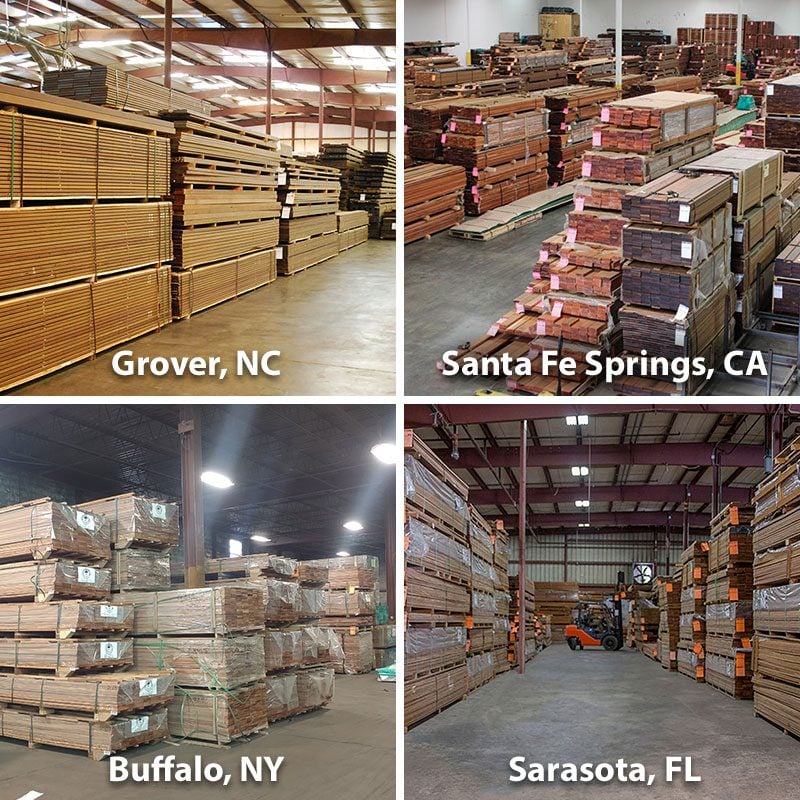
AdvantageLumber.com is one of the largest importers of tropical hardwood decking species such as Ipe, Cumaru, Tigerwood, Teak, Garapa, Brazilian Redwood (Massaranduba), and Mahogany (Red Balau).
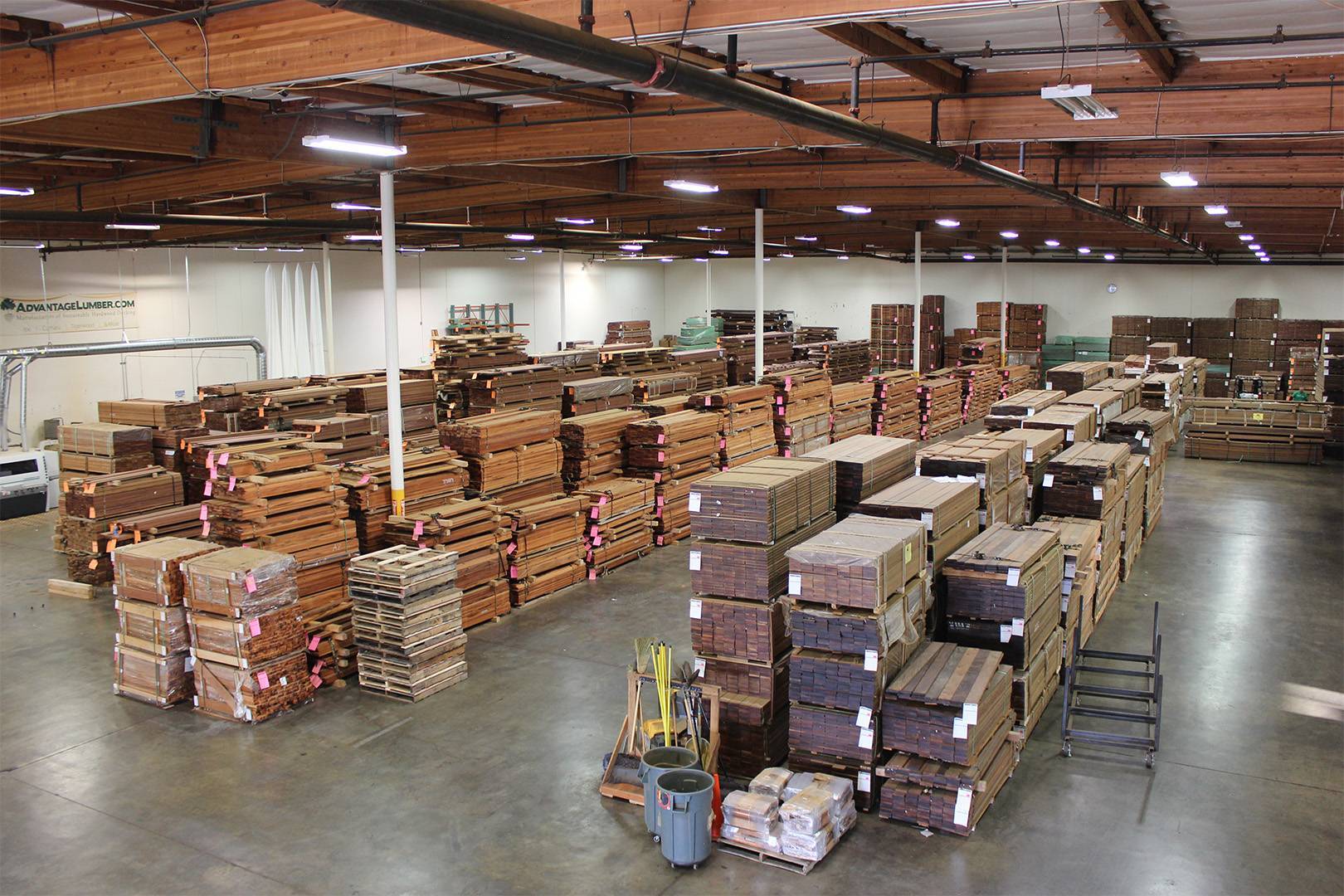
Across our four U.S. warehouses, we stock millions of lineal feet of tropical hardwood lumber. You can also stop in any of our warehouses and inspect the material you are receiving. Some smaller sellers only have a website and drop ship from a third party and they can’t even verify what is being shipped to their customer or let a customer inspect their wood.
Why does that matter to somebody buying a deck?
Because a large inventory lets us be picky.
Here’s an easy way to think about it.
Suppose a smaller lumber yard needs to fill an order for 800 lineal feet of 5/4 x 6 Ipe. They have 1,000 lineal feet available in the lengths the customer needs.
They don’t have much breathing room.
If they start pulling every board with a larger knot or another undesirable characteristic, they might not have enough lumber left to fill the order.
Now imagine sorting that same order from a much larger inventory.
You can reject more boards from the premium pile because you have plenty of other material available.
That’s a big deal.
Our inventory lets us maintain stricter grading standards because we don’t need to squeeze every borderline board into a premium order just to get enough footage out the door.
Over the years, we’ve also found plenty of boards that don’t quite meet our premium standard but are still much better than typical B-grade lumber.
So, rather than pretending those boards are premium or throwing them into B-grade, we created another category.
We call it SMR, or Select Mill Run.
What Is SMR Ipe Decking?
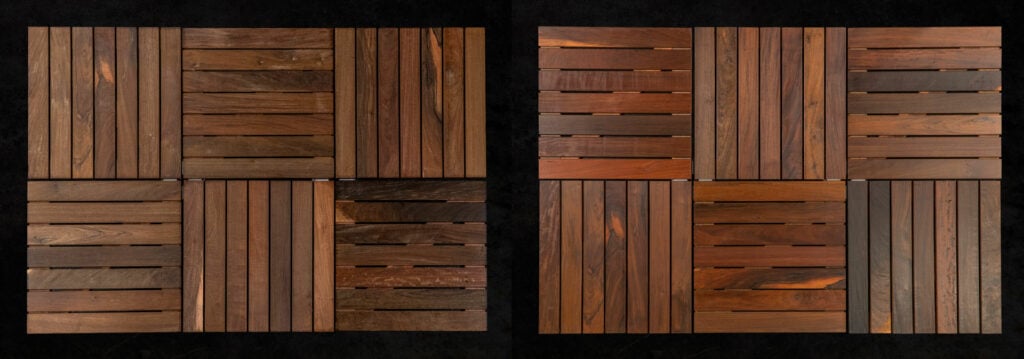
SMR stands for Select Mill Run.
This is material that doesn’t quite meet our premium grading standards but still falls above what we would consider B-grade.
And, frankly, I’m glad we have this category.
Sometimes a board has one characteristic that keeps it out of a premium bundle, even though most of the board looks great.
What do you do with it?
Calling it premium wouldn’t be fair to the customer who paid for premium lumber.
Calling it B-grade doesn’t really tell the whole story either.
So we sort it as SMR.
For the right customer and the right project, SMR can offer some excellent value.
You may see more natural characteristics. You may need to sort the boards a little more. You might have to make a strategic cut here or there.
But if you’re comfortable doing that, you can often get beautiful Ipe while spending less money.
As a carpenter, I like having that option.
Sometimes I want the cleanest boards I can get because I’m building a showpiece deck where every detail matters.
Other times, I know my cut list and can work around a few characteristics without wasting much material.
Why pay premium pricing if the project doesn’t require it?
When Does B-Grade Ipe Make Sense?
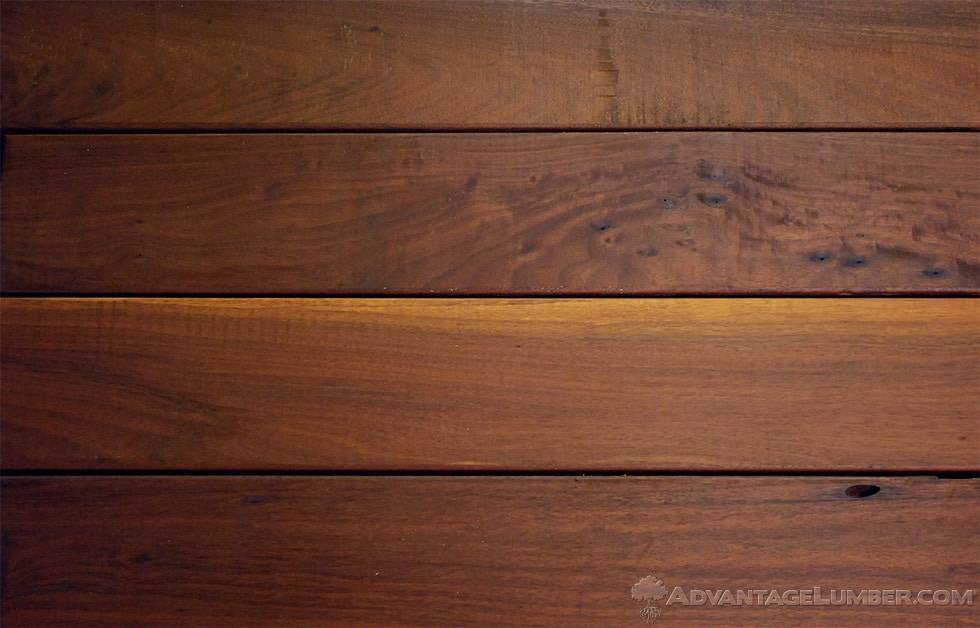
B-grade Ipe can also be a very good buy.
But you need to know what you’re getting into.
You’ll generally see more characteristics and defects than you would with premium or SMR material. Depending on the lumber, you may find larger knots, checking, splits, milling imperfections, or areas you’ll want to cut around.
Does that make the entire board junk?
Not necessarily.
Let’s say I have a long board with an ugly section near one end, but I need several short pieces for stair components.
Perfect.
I’ll cut off the section I don’t want and use the good material.
The same idea can work for benches, planters, privacy screens, short deck runs, and plenty of other projects.
Although B-grade can save you money, I probably wouldn’t choose it for a big luxury deck where I want long, uninterrupted boards and minimal sorting.
At some point, your labor starts eating up your material savings.
I’ve seen that happen plenty of times. Saving money on lumber feels great until somebody spends half a day sorting boards and cutting around defects.
Don’t Forget About Board Length
Here’s another thing people overlook when comparing Ipe prices.
Board length matters.
Don’t just compare the price per lineal foot or square foot.
Look at the lengths you’re actually getting.
Suppose you’re building a deck that’s 16 feet wide. If you can buy good 16 foot boards, you may be able to run full boards across the deck without butt joints.
That’s a nice looking deck.
Now suppose the cheaper supplier mainly has 8, 10, and 12 foot boards.
Suddenly, you need more butt joints, more layout work, and possibly more waste.
Is the cheaper lumber still cheaper?
Maybe.
Maybe not.
This is why I always recommend looking at the whole project instead of one number on a price sheet.
Milling Quality Matters Just as Much as Grade
I also pay close attention to milling.
You can have a beautiful piece of Ipe, but if the milling is lousy, you’re going to fight that board during installation.
And Ipe is not the wood I want to fight all afternoon.
It’s incredibly dense.
Deck boards need reasonably consistent thickness and width so neighboring boards sit properly and your finished surface stays even.
I look at things such as:
- Board thickness
- Board width
- Surface quality
- Edge quality
- Groove consistency on grooved decking
- End condition
- Straightness
Poor milling creates all kinds of little headaches.
Your gaps start wandering. One board sits proud of the next. Hidden fasteners don’t line up the way you want. Suddenly you’re spending extra time correcting problems that shouldn’t have been there in the first place.
Good milling may not sound exciting, but you’ll appreciate it when you’re halfway through installing the deck.
Grooved vs. Ungrooved Ipe Isn’t a Grade Difference
Here’s another point worth clearing up.
Grooved Ipe isn’t a different grade from ungrooved Ipe.
The groove simply lets you use a compatible hidden fastening system, such as Ipe Clip®.
You can also buy ungrooved boards and face screw them or use another approved fastening method.
You can have premium grooved Ipe and premium ungrooved Ipe.
So, don’t use the edge profile as an indication of quality.
Choose grooved or ungrooved boards based on how you plan to fasten the deck.
Even Premium Ipe Is Still Wood
Ipe has earned its reputation as an exceptionally durable and stable decking wood, although it still behaves like wood.
It reacts to moisture.
Store it correctly.
Give it proper airflow.
Follow the supplier’s recommendations for jobsite storage and acclimation.
And please don’t leave a tightly wrapped bundle sitting in wet grass for days and then wonder why the boards don’t behave exactly the way you expected.
I’ve seen versions of that story more times than I’d like.
Even the best lumber can’t overcome bad storage or bad installation practices.
What Happens If You Get a Bad Board?
Here’s a question I’d ask before placing a big order:
What happens if a board clearly doesn’t meet the grade I bought?
That’s important.
Even good lumber suppliers can occasionally miss something. When people sort thousands and thousands of boards, you’re never going to remove every questionable board with absolute perfection.
The important part is how the supplier handles a legitimate problem.
If you receive a board that you believe doesn’t meet the grade, take pictures and contact the supplier before you cut or install it.
Don’t cut it into six pieces, screw four pieces onto the deck, and then call about the original board.
At that point, everybody has a harder problem to solve.
The Cheapest Ipe Isn’t Always the Cheapest Ipe
This is probably the biggest takeaway.
Let’s say one supplier quotes Ipe at a lower price.
Great.
But what are you actually getting for that money?
If the cheaper material requires more trimming, more sorting, and more waste, you’re paying someone to deal with all of that.
And if you’re building the deck yourself, you’re paying with your Saturday.
Neither one is free.
I’ve worked with enough lumber to know I’d rather look at usable material than chase the cheapest advertised price.
Although cleaner lumber may cost a little more up front, it can save labor and reduce waste.
On the other hand, lower grade lumber can save you quite a bit when you know how to use it efficiently.
There’s no single answer for every project.
Buy the grade that makes sense for what you’re actually building.
Questions I’d Ask Before Buying Ipe
If I were shopping for Ipe from a supplier I hadn’t worked with before, I’d ask:
- What defects do you allow in your premium grade?
- How large can knots be?
- Do you sort the lumber yourselves?
- What lengths will I actually receive?
- Is the decking surfaced on four sides?
- Can I get both grooved and ungrooved boards?
- Do you offer intermediate or lower grades such as SMR or B-grade?
- Can I order specific lengths?
- What should I do if a board doesn’t meet the advertised grade?
- How much extra material should I order for my particular deck?
- Can I visit your warehouse and inspect the material? Major red flag if they say NO!
Those answers will tell you a whole lot more than somebody simply saying, “Don’t worry, it’s Premium.”
So, What Ipe Grade Should You Actually Buy?
If I’m building a high end residential deck where appearance matters, I’m usually starting with premium grade Ipe.
If you’re already spending good money on framing, railing, hardware, and labor, saving a little on the decking while accepting noticeably more defects may not make much sense.
However, I wouldn’t automatically buy premium for every project.
SMR Ipe can be a great middle ground. You get material that doesn’t quite meet our premium sorting standards, although it still sits above B-grade. If you’re willing to accept a little more natural character and do some selective cutting, the savings can make a lot of sense.
B-grade Ipe also has its place. Experienced builders who know their cut lists can sometimes get tremendous value from it, especially when they need shorter pieces or can easily work around defects.
The big thing is to stop shopping by grade name alone.
Ask how the supplier actually sorts the lumber.
Ask what they allow.
Ask what lengths you’ll receive.
Look at the milling.
Think about how much of the lumber you’ll actually be able to use.
Because at the end of the day, you’re not building your deck out of a grade name printed on an invoice.
You’re building it out of the boards that come off the truck.
