
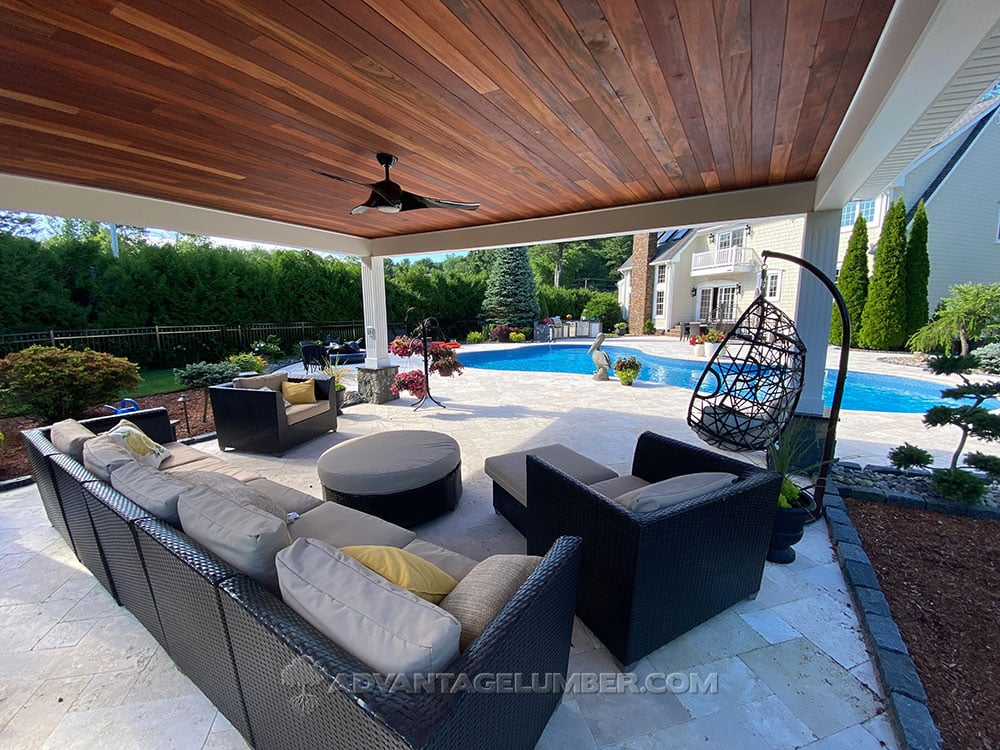
August can be an interesting month in the building material business, especially for those starting Home Renovation Projects.
I’ve always thought August tends to sneak up on people. One minute you’re talking about Memorial Day projects, and the next minute somebody’s asking whether they can get their deck finished before Labor Day.
For one thing, summer projects are often still going strong, contractors may be trying to finish decks before fall, and plenty of homeowners suddenly realize they probably don’t have as much summer left as they thought. Although summer isn’t over, Labor Day can start looking awfully close. At the same time, people may start thinking about fall projects and anything they’d like to finish before cold weather arrives.
Sound familiar? If you’ve ever had a home improvement project stretch a little longer than planned, you probably know exactly what I’m talking about. They have a funny way of doing that.
So, if you’re buying hardwood decking, siding, lumber, or other specialty building materials during this part of the season, it may be worth looking at who you’re actually buying the material from.
After all, we’ve been in the lumber business for more than 30 years, and I’ve seen how quickly extra costs can creep into a project. In particular, every additional company that handles a piece of lumber between the mill and your job site generally needs to make money on it.
And really, who do you think ultimately pays for all those extra stops? It’s not complicated. Eventually, those costs can work their way down to the person buying the material.
As a result, buying from a company that imports, stocks, mills, and ships its own material can potentially save you money.
What Does “Direct from the Mill” Actually Mean?
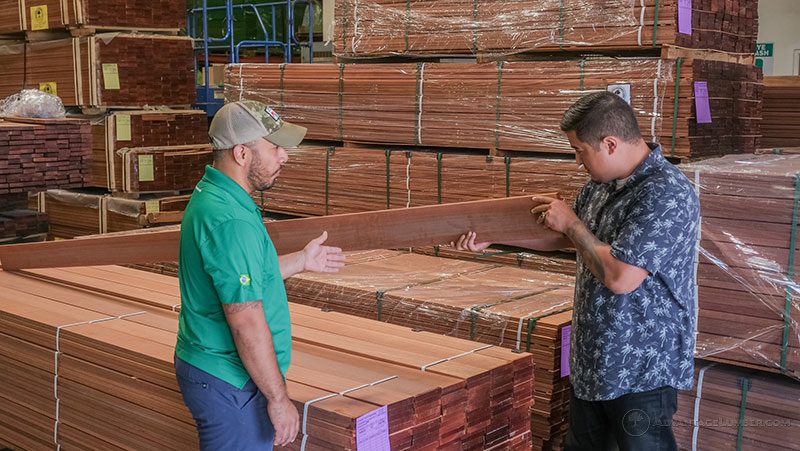
First, the lumber supply chain can get surprisingly long.
Most homeowners probably never think about this stuff, and frankly, I don’t blame them. You want decking, you buy decking. Why would you spend your Saturday afternoon studying the lumber supply chain?
For example, a traditional building material purchase might involve an importer, distributor, regional wholesaler, dealer, and finally the lumberyard where you buy the material.
Of course, everybody in that chain has bills to pay. They may pay for freight, warehouses, employees, equipment, and handling. Naturally, each business also needs to make money.
I’ve got no problem with anybody making money. We’re all trying to keep the lights on. The issue is how many times the same board might get marked up before it reaches your house.
Although there’s nothing wrong with that system, all those steps can raise your final price. At the same time, local lumberyards can provide a valuable service, especially when you need a few boards immediately.
Actually, I’m a big believer in having a good local lumberyard. Need two boards at 3:30 on a Friday afternoon? That’s when your local yard can probably be your best friend.
However, when you’re buying thousands of dollars of material for a deck, siding project, porch, or other large job, those extra layers may add up quickly.
At AdvantageLumber.com, for example, we import large quantities of tropical hardwoods and mill many of our products ourselves. So, instead of buying Ipe decking from another distributor, adding another markup, and then selling it to you, we’re much closer to the source.
That’s potentially a pretty important distinction when you’re talking about a large deck package instead of three boards for a weekend repair.
As a result, a shorter supply chain can help us keep prices competitive.
No Middlemen Means Fewer Markups
Here’s probably the simplest way to look at it.
I tend to prefer simple explanations anyway. If I need a flowchart and three cups of coffee to understand why a board costs what it costs, we’re probably making this harder than it needs to be.
For example, imagine a piece of Ipe changes hands three or four times before you buy it. Each time, a company may pay freight, store the lumber, handle it, and then add enough margin to stay in business.
Now, compare that process with buying material from a company that imports lumber in large quantities, mills the decking, keeps it in stock, and ships it directly to the customer.
Simply put, you may have cut out several steps.
On one hand, if you’re buying a couple of boards, you may not care.
On the other hand, if you’re buying 500, 1,000, or 2,000 square feet of decking, you probably will.
Wouldn’t you? A small difference per board might not look terribly exciting until you multiply it across an entire project. Then you may start paying attention.
Over the years, I’ve seen customers spend a tremendous amount of time shopping around to save a few dollars on screws while potentially overlooking where their lumber comes from. Yet, on a large project, the decking often ranks among your biggest expenses. So, that’s where smart buying can really move the needle.
I’ve seen this more times than I can count. Somebody might debate a $15 accessory for half an hour and barely blink at a major difference in the lumber quote. Human nature, I guess.
Although saving $20 on a box of fasteners may feel good, saving money across an entire truckload of decking can feel a whole lot better.
Buying in Volume Matters Too
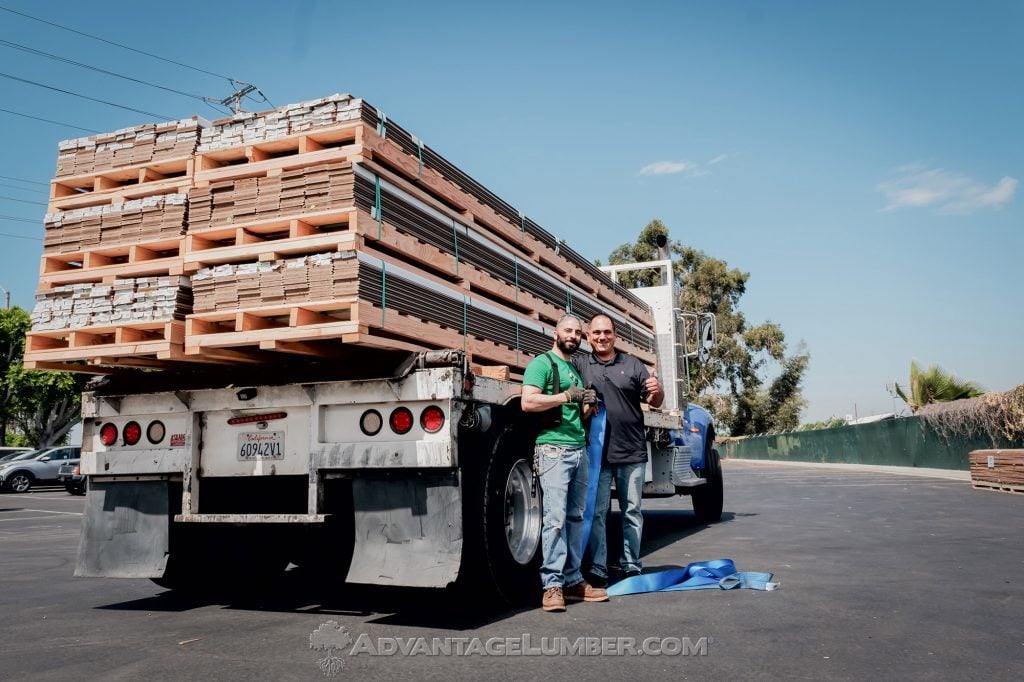
There’s another side to direct buying that people may not always think about.
Quite simply, volume can matter in the lumber business.
It matters in almost every business, really, but lumber can make the difference pretty easy to see. A few boards and a container of boards aren’t the same purchase.
In many cases, buying a handful of boards may cost more per board than buying truckloads or container quantities. As a result, when a lumber company buys large volumes, it can often lower its cost before the lumber ever reaches the customer.
This may become particularly important with tropical hardwoods such as Ipe, Cumaru, Tigerwood, Garapa, Brazilian Redwood, Teak, and Mahogany.
After all, these aren’t products that every neighborhood lumberyard is likely to keep stacked out back.
I’d be pretty impressed if I walked into every lumberyard in America and found piles of Ipe, Cumaru, and Tigerwood waiting for me. That’s probably not how the specialty lumber business works in most places.
Often, a dealer may need to order the material from somebody else after you place your order. Although the dealer may offer great service, another markup and another freight charge could enter the picture.
By comparison, when you buy from a company that already has the material sitting in its own warehouse, the math can change.
And I tend to like math a lot better when it works in the customer’s favor.
August Is a Great Time to Keep Your Project Moving
Of course, price isn’t the only thing that may matter in August. Time matters, too.
I’ve worked around enough construction projects to know how quickly a schedule can get away from you.
Ask any contractor when a project is going to start, and then ask again after three weeks of rain, a permit delay, and one subcontractor getting backed up. Things can happen.
For example, you plan to start in June. Then, something gets delayed. Now it’s July.
Next, the contractor gets backed up. Now it’s August.
Suddenly, Labor Day isn’t very far away, and everyone probably wants to know when the decking is showing up.
That’s usually when the phone calls can start getting a little more urgent. “Any idea when my decking ships?” Yes, we’ve heard that one before.
Although nobody can control every freight delay, buying material from stock may remove some unnecessary steps.
For instance, if a dealer needs to order your material from a distributor, who then needs to get it from another warehouse, you’ve potentially added more places where your schedule can slow down.
By contrast, when the material is already in stock, the supplier may be able to start working on your order much sooner.
Of course, that doesn’t mean every order magically arrives tomorrow. After all, long length decking isn’t a small parcel that somebody can toss into the back of a delivery van. Instead, large orders may need proper packaging, handling, and freight service.
A 20 foot Ipe board doesn’t exactly fit in the mailbox. I wish shipping long lumber were that easy, but it probably never will be.
Still, fewer stops may give you fewer opportunities for delays.
Fast Shipping Matters Even More with Long Length Material
Along those same lines, shipping decking isn’t quite the same as shipping a box of deck screws.
For example, a 16 or 20 foot Ipe board may need a completely different freight setup.
Anybody who’s ever tried moving 20 foot boards around a job site probably knows what I’m talking about. Now imagine moving thousands of them across the country.
Over the years, we’ve spent decades shipping long length building materials directly to homes, businesses, and job sites throughout the country. Although people sometimes focus almost entirely on board price, freight can change the final number quite a bit.
As a result, comparing prices online can get tricky.
At first glance, one supplier may advertise a lower board price, but what happens when you add freight? Likewise, does the company actually have the lengths you need? How will they package the material? Is there some B-grade material mixed in? And, finally, where will it ship from?
Those aren’t glamorous questions, but they’re probably the questions I’d ask if I were spending my own money.
Obviously, those questions can matter.
So, you may want to look at the total delivered cost, not simply the price printed next to one board.
Indeed, I’ve seen plenty of “cheap” material become a lot less cheap once freight enters the conversation.
Funny how that can work, isn’t it? Ultimately, the price that matters most is probably the one you actually pay when the material reaches your job.
You Can Also Get More Sizes and Profiles
Beyond price and shipping, buying direct from the mill can give you another advantage that I appreciate as a woodworker: options.
This is where the woodworker in me probably gets a little more interested than the average person. Give me good lumber and the ability to mill it properly, and suddenly you’ve potentially got a lot more possibilities.
When you buy through several layers of distribution, you’re usually limited to the standard profiles everyone decided to stock.
Although a standard profile may work perfectly for many projects, high end projects aren’t always standard.
For instance, maybe you need grooved Ipe decking for hidden fasteners. Or, maybe you want a particular siding profile. Perhaps you’re trying to match an existing tongue and groove ceiling, or you need an unusual piece of trim.
Anyone who’s ever tried matching 20 year old trim probably knows how much fun that can be. You hold up six samples, squint at all of them, and somehow none of them are quite right.
In those situations, a supplier with milling capabilities may have considerably more flexibility.
Instead of treating every board as a finished SKU sitting on a shelf, we can start with lumber and potentially mill what the project calls for.
For contractors, architects, and homeowners who work on custom projects, that flexibility can solve some real headaches.
Direct Buying Doesn’t Mean You Should Buy Blindly
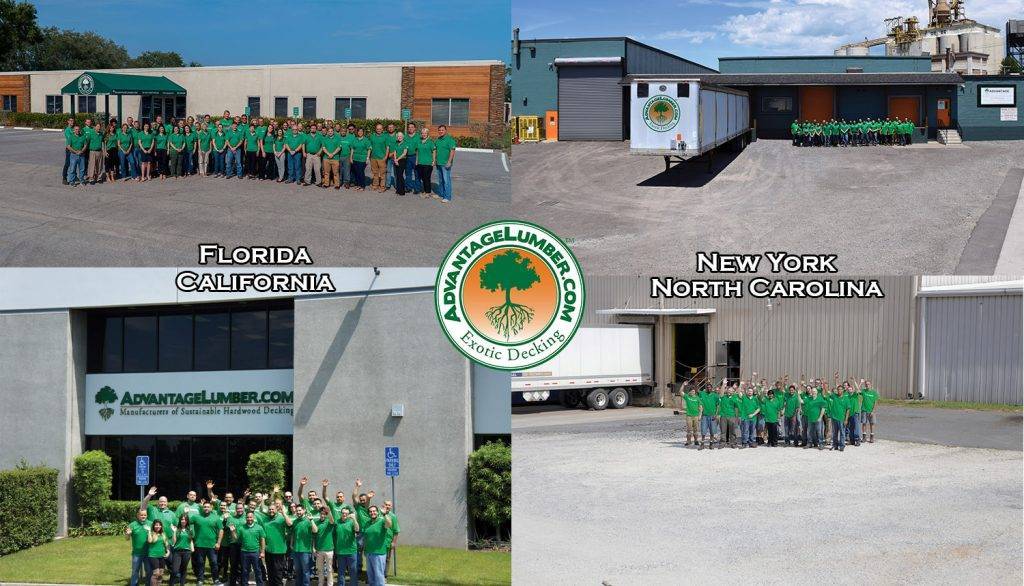
However, I do want to make one point here.
Don’t choose a lumber supplier solely because somebody says they’re “direct.”
Personally, I tend to get a little skeptical whenever one word is supposed to tell me everything I need to know about a company.
Although the phrase sounds impressive, companies can use it pretty loosely.
Instead, ask practical questions.
For example, does the company physically stock the material? Do they mill lumber themselves? Can they supply the lengths and profiles your project needs? Do they know how to ship long material? And, perhaps most importantly, can somebody answer technical questions about installation?
Call them and ask a real question. How should I fasten this? What spacing should I use? Can you get me 20 footers? You’ll probably learn pretty quickly who actually knows the product.
Then, compare the final delivered price for the material you actually need.
After all, saving $500 on lumber may not help much if you receive the wrong profile, can’t get enough long boards, or potentially leave a crew waiting for a week.
In other words, the cheapest quote isn’t always the least expensive project.
There’s a difference.
That’s something experience tends to teach you sooner or later, and usually the lesson isn’t free.
Order the Whole Project, Not Just the Deck Boards
Along with buying the right lumber, another mistake I sometimes see is ordering the decking and forgetting everything else.
We’ve all probably done some version of this. You get focused on the big ticket item and forget the $30 part that you absolutely need to keep working.
Then, installation day arrives.
Suddenly, where are the fasteners?
And what about the fascia?
Also, did anybody order the joist tape?
Finally, do we have stainless steel screws?
You can almost hear the crew groaning at this point, can’t you?
Although those items may seem small compared with the decking, forgetting them can stop the job.
For example, if you’re installing tropical hardwood decking, you’ll generally want appropriate stainless steel fasteners. Likewise, for a hidden fastener installation, we commonly recommend the Ipe Clip system. And, if you’re building over pressure treated framing, joist tape can help protect vulnerable areas where water tends to sit.
I’ve never liked spending good money on long lasting decking and then potentially cutting corners on the little things holding the project together. That doesn’t make much sense to me.
So, work through these details while you’re ordering your main material.
Otherwise, paying separate freight because you forgot one important component probably isn’t my favorite way to save money.
Don’t Forget Waste
While you’re at it, you should also order enough material the first time.
Generally, most decking estimates include some extra material for cuts, layout, defects, and waste. However, how much you’ll need can depend on your design.
For instance, a simple rectangular deck may create relatively little waste. Although a diagonal layout can look great, it will usually create more cuts. Likewise, picture frames, staircases, breaker boards, and complicated layouts may require additional material.
Sure, nobody gets excited about paying for waste. I don’t either. But you know what’s potentially worse? Paying another freight bill because you tried to save yourself from ordering five extra boards.
Because of that, trying to order the absolute minimum number of boards can backfire.
If you’re short five boards at the end of the project, you’ve potentially created another order, another shipment, and another delay.
Personally, I’d probably rather have a few usable boards left over than have a crew standing around because we’re five boards short.
Besides, keeping a couple of matching boards may not be the worst idea in the world. You never know when you’ll want one later.
August Is Still Building Season
Finally, some people may mentally check out of summer once August arrives.
Contractors generally don’t.
There’s probably still sawdust flying, nail guns popping, and somebody somewhere trying to finish a deck before the next family cookout. That’s August.
In fact, there’s still plenty of building season left in much of the country, and August can be an excellent time to get a deck, siding, porch, or outdoor project underway.
Although price always matters, you probably shouldn’t ignore the supply chain behind that price.
When you buy from a company that imports, mills, stocks, and ships specialty lumber, you may be able to cut out unnecessary markups and shorten the path between the mill and your project.
In particular, that approach can become useful with products such as Ipe, Cumaru, Tigerwood, Garapa, Brazilian Redwood, Teak, and Mahogany, since your local dealer may not keep much inventory on hand.
After more than 30 years in this business, I’ve learned to look beyond the advertised price of a board.
Maybe that’s not the most exciting advice you’ll hear about building a deck, but it’s practical advice. And in my experience, practical advice can often save you more money than flashy advice does.
Ultimately, I want the right material. I also want the right lengths. At the same time, I want enough material to finish the job. Of course, I want a competitive delivered price. And, especially during a busy month like August, I want the lumber headed toward the job site as quickly as possible.
In the end, if you can cut out a few middlemen, you may be able to save both money and time.
And if you’ve ever had a crew waiting around for material while the weather is perfect, you probably already know that saving time can sometimes be every bit as valuable as saving money.
