
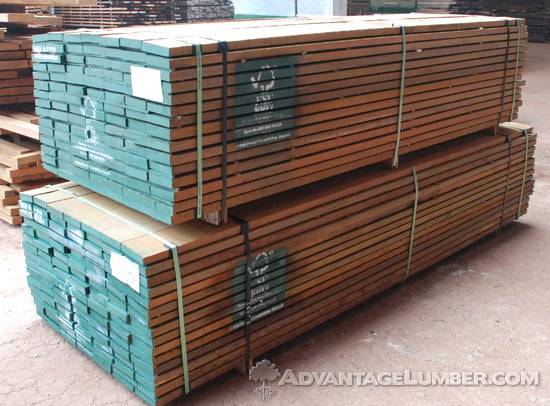
August can be a pretty busy month for construction and home improvement.
There’s still plenty of summer left, but fall is getting closer. If you’ve spent enough time on job sites, you probably know how quickly those last few weeks of summer can disappear. One minute you’re looking at the calendar thinking you’ve got plenty of time, and the next you’re rushing to get the last outdoor projects wrapped up before the weather turns.
If you’re building a deck, replacing siding, finishing a porch ceiling, or putting together a pergola, you probably don’t want your lumber order slowing everything down.
That’s why August can be a good time to think about more than just dimensions, quantities, availability, and price. Where does the lumber come from? How was it sourced? And does that matter to you or the project you’re working on?
For some homeowners, builders, and architects, it does. In that case, FSC-certified wood may be worth a closer look.
What Is FSC-Certified Wood?
FSC stands for the Forest Stewardship Council, an international nonprofit organization that establishes standards for responsible forest management and forest-product supply chains.
Although some people may think FSC certification simply means someone plants another tree after harvesting, the system looks at considerably more than that. FSC forest management standards address environmental, social, and economic factors, including forest health, biodiversity, worker protections, and the rights of local and Indigenous communities.
FSC also uses Chain of Custody certification to trace certified material as it moves from the forest through processing, manufacturing, distribution, and eventually to the companies selling the finished product. That’s an important distinction because a board doesn’t automatically become FSC-certified simply because it came from a certified forest.
Companies that process, manufacture, distribute, or sell FSC-certified material need to follow the applicable Chain of Custody requirements if they want to make an FSC claim about the product.
It sounds like a small technical detail, but it matters.
When you look at a finished board, you’re only seeing the end of the journey. There may have been several businesses and processes involved before that piece of wood reached your job site. FSC certification can give you more information about that journey.
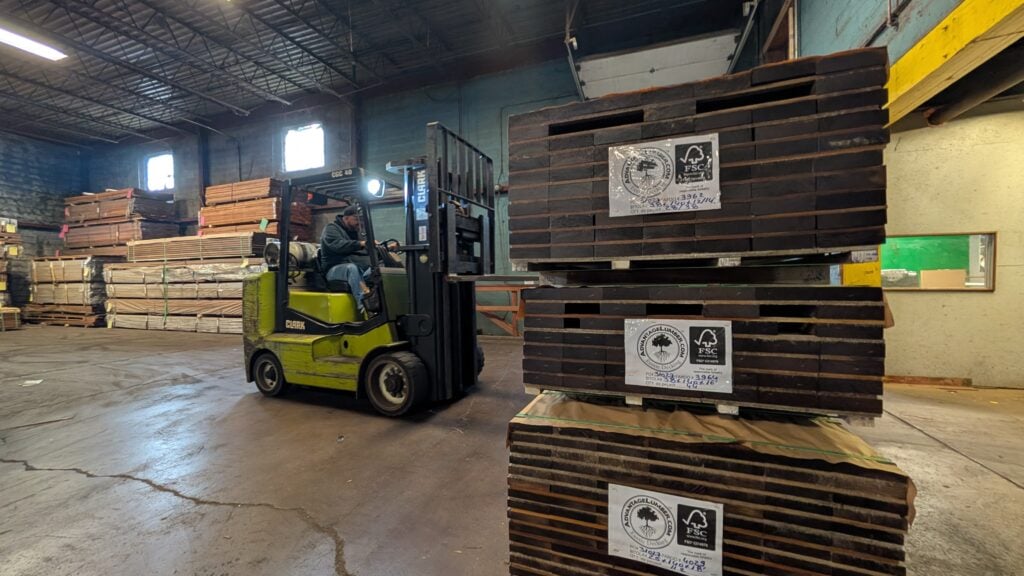
Why Should You Consider FSC-Certified Lumber?
FSC certification provides information about how the wood was sourced and how certified material moved through the supply chain.
Responsible Forest Management
FSC forest management standards address environmental and social concerns while establishing guidelines for responsible forest practices.
For example, FSC standards consider biodiversity, forest health, water resources, worker safety, and community rights. Independent certification bodies also audit and evaluate certified operations, rather than simply accepting a company’s word for it.
Of course, no certification system can answer every question about a forest or lumber product. Still, FSC can give you another useful piece of information when you’re comparing materials.
Supply Chain Traceability
Supply chain traceability can become particularly useful when you’re buying tropical hardwood.
Tropical hardwood can travel a considerable distance before it reaches a job site. A sawmill may process the logs, another company may manufacture the profile, and a distributor may handle the material again before it reaches the supplier you buy from.
You might never see any of those steps.
That’s where FSC Chain of Custody requirements can help companies track certified material through those stages. It’s a little like looking under the hood instead of judging a car only by the paint.
Maybe that’s more information than most homeowners expect when they start shopping for decking. But when you’re talking about potentially thousands of dollars in premium lumber, knowing where the material comes from can be worth the extra attention.
Does FSC Certification Change How Wood Performs?
FSC certification doesn’t alter the physical characteristics of a species. FSC-certified Ipe still has the same basic characteristics that make Ipe popular. The same goes for Cumaru, Tigerwood, Garapa, and Teak.
So, when you’re choosing decking, start with the wood itself.
What do you want the finished deck to look like? How durable does it need to be? Do you want a darker color, or would something warmer and lighter work better?
Those questions still matter.
For example:
- Ipe is exceptionally dense and durable, with a rich brown appearance.
- Cumaru provides excellent durability along with warm tones and natural variation.
- Tigerwood features a dramatic grain pattern with orange-to-reddish coloring.
- Garapa offers a lighter, golden appearance for a brighter-looking deck.
- Teak has a long history of outdoor use and a reputation for natural durability.
Although these species can all work well for outdoor applications, they don’t look or perform exactly the same way.
The “right” species usually comes down to what you want from the finished project and how you expect it to perform. There’s no need to make the decision more complicated than it has to be.
Where Can You Use FSC-Certified Wood?
FSC-certified wood isn’t limited to decks or other outdoor projects. Depending on the species, grade, profile, and product, it can work for both exterior and interior applications.
Outside, FSC-certified hardwood can be used for decking, siding, porch ceilings, soffits, pergolas, privacy screens, and other architectural details. Inside, the same approach can apply to flooring, wall paneling, ceilings, trim, furniture, cabinetry, and custom woodworking.
The important thing is to choose the material based on the requirements of the project. A hardwood that works well for a deck may have completely different considerations when you’re using it for flooring or furniture.
For example, you might care more about dimensional stability, hardness, appearance, and finish compatibility for an interior project. On a deck, meanwhile, exposure to moisture, sunlight, insects, and weather becomes much more important.
That’s where FSC certification fits into the picture. It doesn’t tell you whether a particular board is appropriate for your application. Instead, it gives you another way to evaluate where the wood came from and how certified material moved through the supply chain.
So, whether you’re building a deck, finishing a porch ceiling, installing hardwood flooring, or making a piece of furniture, you can start by choosing the material that fits the job. Then, if responsible sourcing matters to you, look for an FSC-certified option.
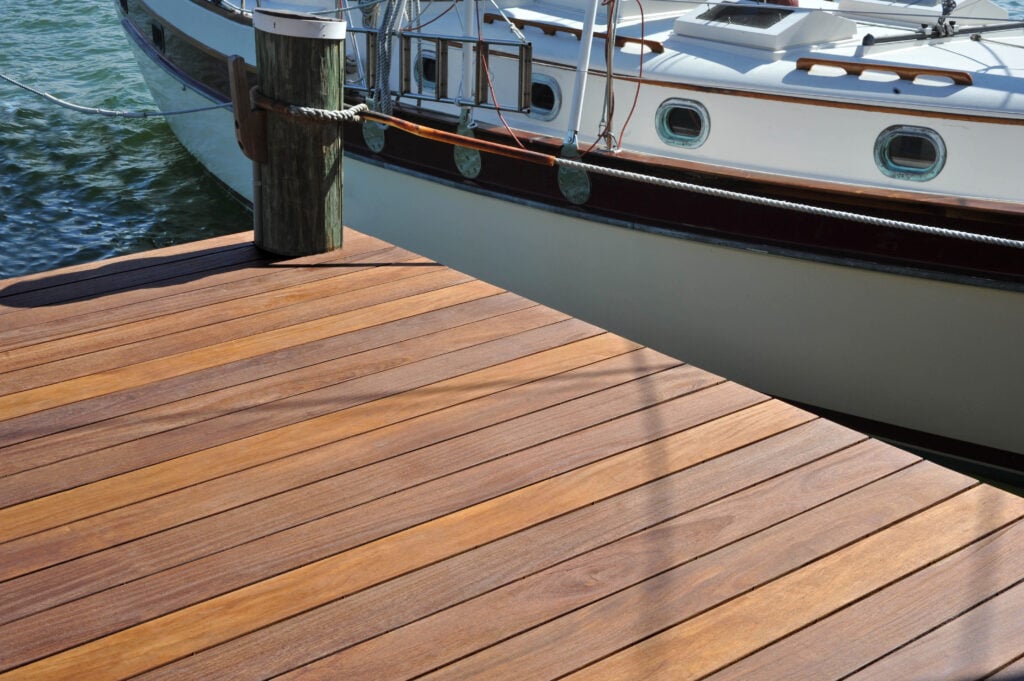
How Do You Know If Wood Is FSC-Certified?
Don’t assume a particular species is FSC-certified because of where it grows. Likewise, don’t assume every product from a supplier carries FSC certification.
Instead, look for an FSC claim or certification information associated with the specific product you’re buying.
If your project requires proof of FSC certification, ask the supplier what documentation they can provide. Then verify that the supplier’s Chain of Custody certification covers the product you’re purchasing.
That might feel like overkill on a small residential project. However, if the project specifications specifically call for FSC-certified lumber, it’s much easier to sort this out before the material arrives.
This can become especially important for commercial construction, green building projects, and jobs where an architect or project specification specifically calls for FSC-certified material.
If FSC certification is part of the project requirements, confirm what documentation you need before placing the order.
A quick conversation up front can save you a headache later.
Does FSC-Certified Wood Cost More?
FSC-certified lumber may cost more depending on the species, availability, certification requirements, and supply chain. However, you shouldn’t assume every FSC-certified product will carry a substantial premium.
If you’re already shopping for premium hardwood, compare the actual products rather than assuming certification will add a major cost.
If your project requires FSC-certified material, the certification and documentation may simply be part of the material specification.
Either way, FSC certification shouldn’t replace the other things you consider when buying lumber.
Species, grade, dimensions, appearance, availability, and performance still matter.
Can FSC-Certified Wood Help With LEED Certification?
It can, depending on the project and the specific LEED requirements.
FSC-certified wood can contribute to certain LEED criteria for responsible sourcing of wood products. However, buying FSC-certified lumber doesn’t automatically mean your project will receive a LEED credit.
If you’re working with an architect, builder, or project team pursuing LEED certification, check the requirements for the specific credit you’re trying to achieve.
You’ll also want to keep the appropriate product and purchasing documentation. Depending on the LEED application, the FSC Chain of Custody status of the supplier and the information on your purchasing documents may matter.
This is another situation where it’s better to ask questions early.
If LEED is part of the project, don’t wait until the end to start gathering paperwork. It may not be the most exciting part of the job, but getting the documentation right can save some frustration later.
A Closer Look at FSC-Certified Wood
Choosing lumber involves more than finding a species you like and figuring out how much you need. The source of that material can matter, too, particularly when you’re working on a project where responsible sourcing is part of the goal.
FSC certification gives you a way to look beyond the finished board and learn more about the forest management practices and supply chain behind certified material. It doesn’t tell you whether Ipe is a better choice than Cumaru, or whether hardwood is right for your particular application. Those decisions still come down to the project.
Looking for FSC-certified hardwood? Explore Advantage Lumber’s FSC-certified options to find a species and product that fits your project.
