
Flooring fashions drift in and out, but hardwood has an amusing habit of outlasting most of them.
Across the years, I’ve watched plenty of flooring looks gain traction, spread through homes everywhere for a few seasons, and then abruptly make those same homes feel stale. If you’ve spent enough time around construction, you’ve probably witnessed the cycle yourself.
For instance, remember when nearly every renovated house seemed to have gray flooring? I certainly do. For a stretch there, you’d step into one house after another and might wonder if everyone had selected flooring from the same swatch board. It almost felt like somebody had circulated a memo saying, “Gray floors everywhere, please.”
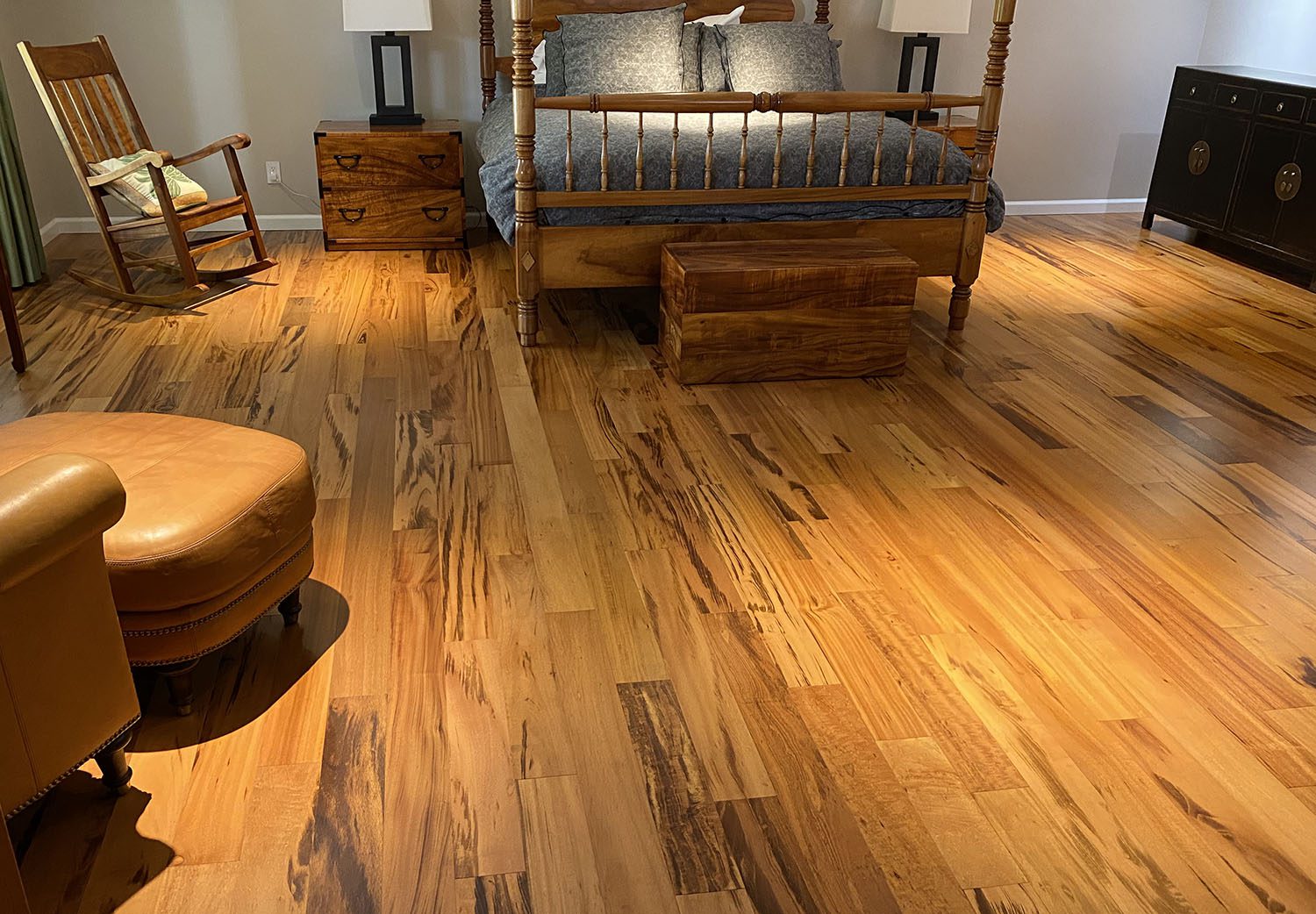
Although gray floors haven’t vanished, the pendulum appears to have swung fairly hard in the opposite direction for fall 2026. Instead, homeowners and designers now seem to favor warm hues, visible wood grain, broader boards, softer sheen finishes, and floors with genuine character. Put another way, the overall direction seems warmer and a little less flat.
Personally, I think that’s probably a welcome shift. I’ve never quite understood spending serious money on handsome hardwood and then doing everything possible to conceal what makes the wood compelling. If I’m being candid, natural wood deserves to resemble natural wood.
After all, if you’re paying for authentic hardwood flooring, why make it resemble something else? You might as well allow the wood to carry some of the visual load. That’s the sensible approach anyway.
So, here are some of the hardwood flooring tendencies we’re noticing as we move into fall 2026.
1. Warm Hardwood Floors Are Back
To begin, probably the most noticeable shift involves color.
For years, cool gray and heavily washed out floors dominated. Although they can still suit certain homes, more homeowners now appear to choose warmer wood shades. I’ve walked through plenty of attractive houses where gray flooring worked beautifully, so I’m not going to claim it’s suddenly incorrect.
Still, there’s something about a warm natural hardwood floor that, to me, may feel a little more enduring. Maybe it’s the way the grain reads beneath warm lighting, or maybe people have simply grown tired of chilly looking interiors.
For example, consider:
- Natural brown
- Honey
- Caramel
- Chestnut
- Cognac
- Medium brown
- Chocolate
- Warm walnut tones
From a hands on standpoint, I like this direction because you may be cooperating with the wood instead of wrestling against it. Why make the job more difficult than it needs to be?
After all, handsome hardwood already has color. Likewise, it already has grain. And, naturally, it already carries variation from board to board. So, a good finish can amplify those qualities rather than smother them beneath a fashionable stain.
I’ve seen boards come through the shop where you almost dislike applying anything because the raw color can look that striking. Sometimes you just stand there with the plank in your hands and think, “Yep, that’s pretty much all it needs.”
Although warm flooring can work throughout the year, it may feel especially fitting as fall approaches. For instance, pair natural hardwood with stone, leather, creamy walls, darker cabinetry, or organic fabrics, and you can potentially create a welcoming room without making it seem old fashioned.
You know the sort of room I mean. You walk in, sit down, and it simply seems to feel comfortable without straining for effect. Add a solid chair, a couple of lamps, and you’ve got a space where people may genuinely want to stay awhile.
2. Wide Plank Flooring Continues to Grow
Next, let’s discuss board width.
Wide plank flooring isn’t exactly novel, though it appears to keep showing up in more upscale homes.
And there’s probably a sound reason for it.
Simply put, wide boards can let you actually appreciate the wood. That’s really what you’re paying for, isn’t it? The surface looks less fragmented, and the grain gets more room to travel across each plank.
With narrow strip flooring, your eye may naturally focus on all the individual seams. With wider boards, however, you can notice more grain, more color fluctuation, and more of the traits that make every board distinctive. I’ve always enjoyed laying out wider hardwood because every few boards you might uncover one with grain or figure that makes you stop and inspect it again. Sometimes a plank has a particular streak or color accent that almost looks hand painted.
At the same time, broad boards can potentially make a large room feel calmer and less cluttered.
However, here’s where I’d add a contractor’s caution: you probably shouldn’t select plank width based entirely on looks. I’ve had this discussion more times than I can count. Somebody falls for an extra wide board and doesn’t want to hear anything about moisture, movement, or the subfloor. Unfortunately, the wood doesn’t care what looked impressive on Pinterest after one click.
Wood moves.
In other words, it can swell and shrink as moisture levels shift. Although wider solid boards can look terrific, they may demand more attention to moisture content, acclimation, subfloor conditions, fastening, and indoor humidity. Anyone who’s worked with solid wood long enough has probably learned to respect that movement, occasionally the unpleasant way. A floor that’s too damp, too dry, or hurried into place can create problems later.
Because of that, engineered hardwood can make plenty of sense when you want especially broad planks because its layered structure may help restrain movement.
So yes, wide flooring can look excellent. Just make sure the flooring suits the house. That’s not the glamorous part of choosing a floor, but it’s probably the part you’ll care about five years down the road.
3. Longer Boards Matter Just as Much as Wider Boards
Along the same lines, everybody talks about wide plank flooring. However, fewer people seem to discuss board length.
Frankly, I think that’s probably an oversight. Board length is one of those details people don’t always recognize until you place two floors beside each other. Then it can become surprisingly clear.
For example, take two floors made from the exact same species and grade. Then, place long boards in one room and a bunch of short boards in the other. Although you’re working with the same wood, the completed floors can look dramatically different. Don’t believe me? Lay out ten feet of each on the floor before you begin installing and step back. You’ll probably spot it. The picture becomes clearer almost immediately.
That’s because longer boards can create fewer end joints and may give your eye a smoother path across the room. You’ll likely notice the contrast even more in large kitchens, great rooms, corridors, and open concept homes. A long hallway in particular can really reveal the effect of board length.
So, when you’re shopping for flooring, don’t just ask about the width.
Instead, ask about the lengths too. It’s a small question, but it can tell you quite a bit about how the completed floor may read.
4. White Oak Is Still Extremely Popular
Of course, we can’t discuss hardwood flooring trends without mentioning white oak.
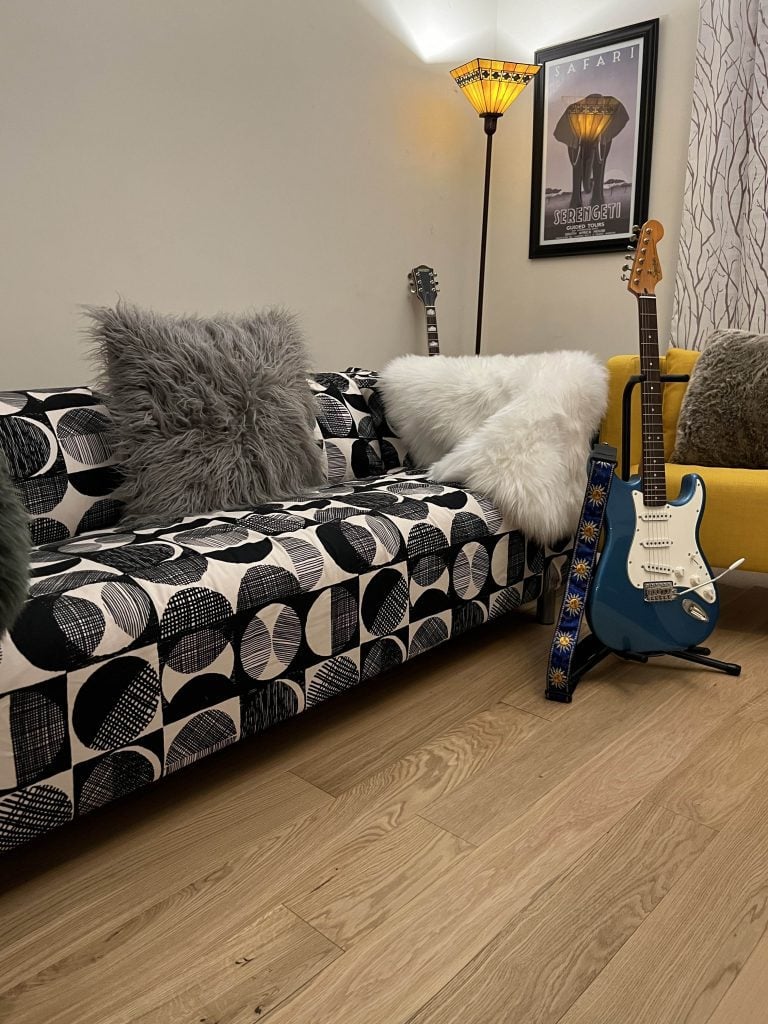
White oak appears to remain among the most sought after hardwood flooring choices in 2026.
And that’s probably not especially surprising. There’s a reason builders, flooring installers, cabinetmakers, and furniture makers have relied on white oak for generations.
For one thing, white oak can offer a strong blend of durability, attractive grain, and design flexibility. Leave it fairly natural, and you may get a light, contemporary floor. On the other hand, give it a warmer finish, and it can fit beautifully into traditional or transitional interiors. It also seems to cooperate nicely with everything from painted cabinetry to darker furniture.
Also, it’s familiar enough that homeowners may usually feel at ease committing to it. Sometimes that matters. Not everybody wants their floor to be the first thing visitors ask about when they step through the door.
Although white oak probably earns its popularity, it isn’t the only option worth considering.
Instead, homeowners who want something more distinctive might explore species such as Brazilian Cherry, Brazilian Walnut (Ipe), Tigerwood, and Brazilian Teak (Cumaru). Each species can lend a room a completely different personality. If you place samples of all four alongside each other, nobody is likely to confuse them.
And, in my view, that’s where flooring can become interesting. I like white oak, but I also like a floor that might make somebody pause and ask, “What kind of wood is that?” That’s the sort of response some of these species can create.
5. Richer Exotic Hardwoods Fit the Fall 2026 Look Extremely Well
Speaking of warmer colors, the movement toward richer interiors may make hardwood species with inherent color even more attractive.
Brazilian Cherry provides a good example. Naturally, it can introduce deep red and brown tones into a room. Those shades fell out of favor while homeowners pursued pale and gray interiors, though warmer colors seem to have circled back. Funny how that works, isn’t it? Give a design fashion enough time and somebody will probably rediscover it. What felt dated ten years ago may suddenly seem fresh once people view it in another setting.
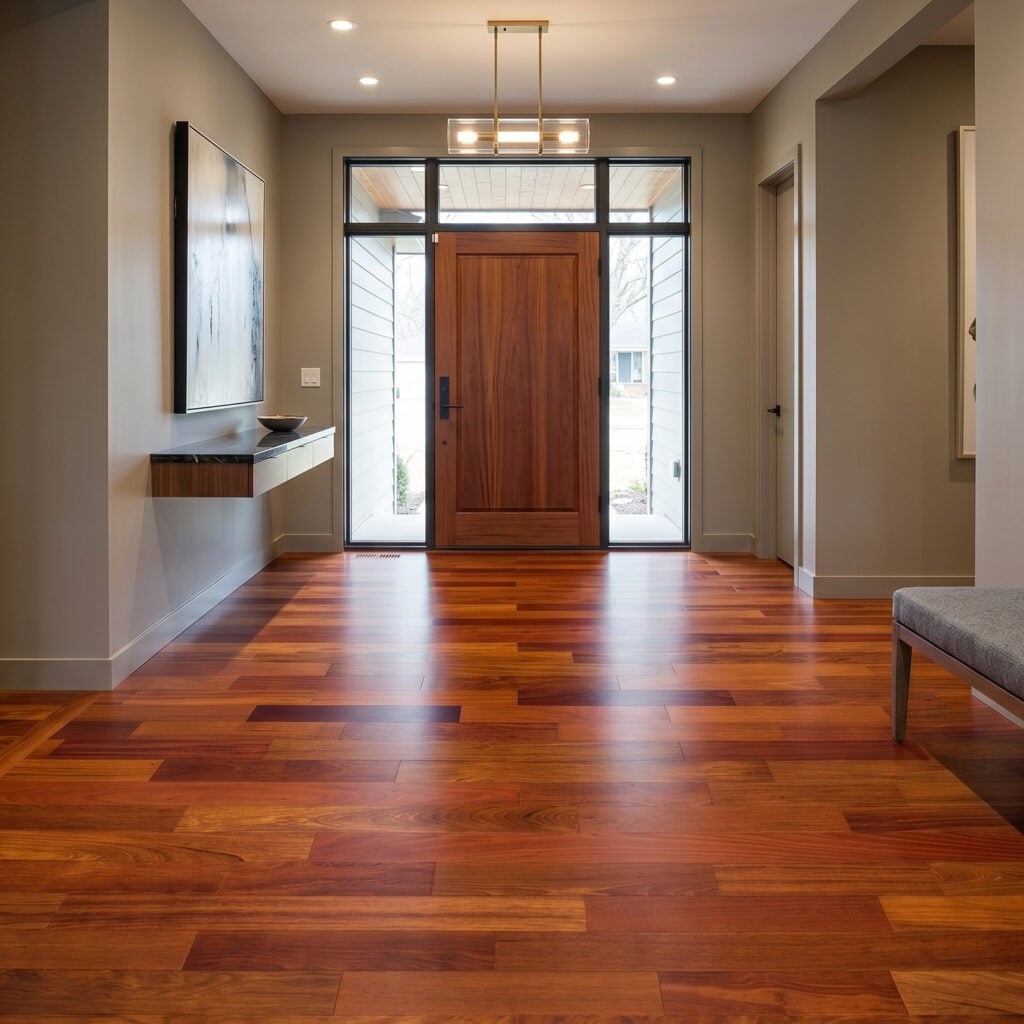
Likewise, Cumaru can give you handsome brown, reddish brown, and amber tones.
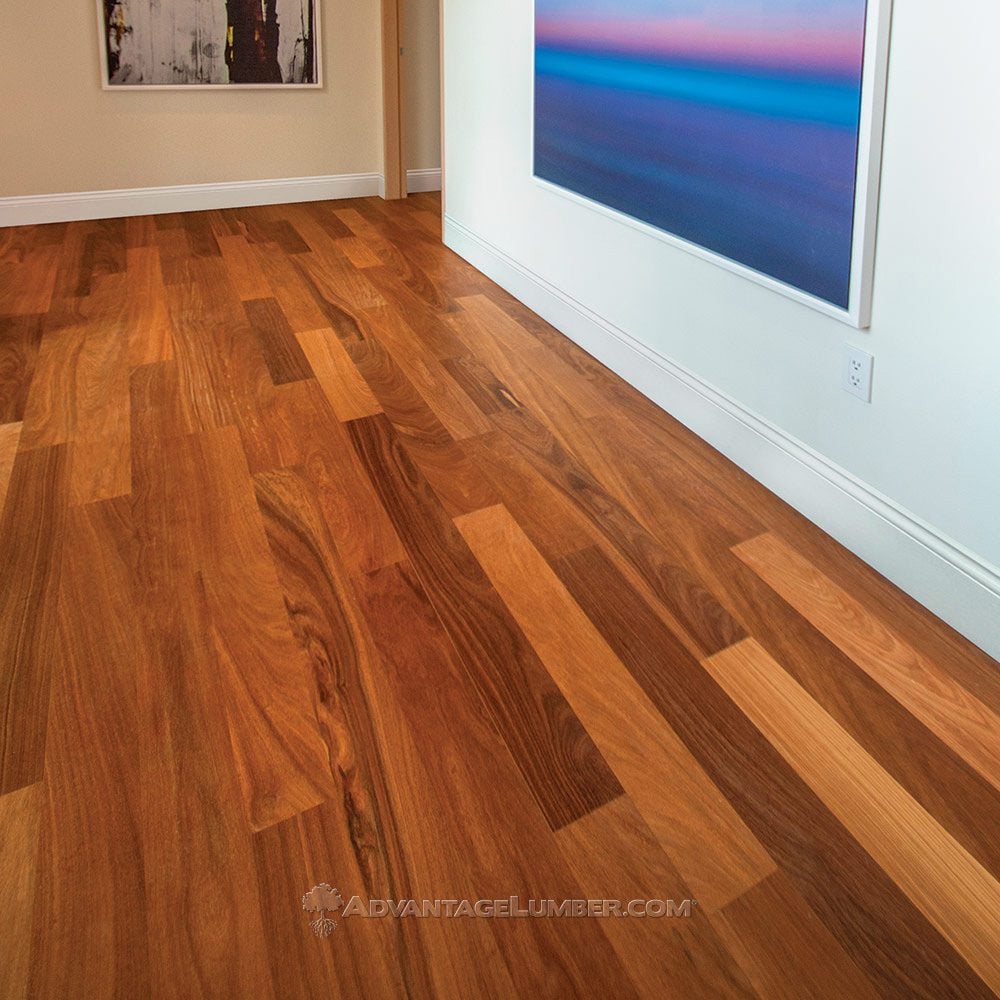
Meanwhile, Tigerwood can introduce considerably more visual motion, with dramatic striping and color shifts. Tigerwood is one of those species people tend to react to immediately. They may either love that expressive look or they don’t, and that’s perfectly fine. Some boards can even show orange or golden accents that really stand out beneath the right finish.
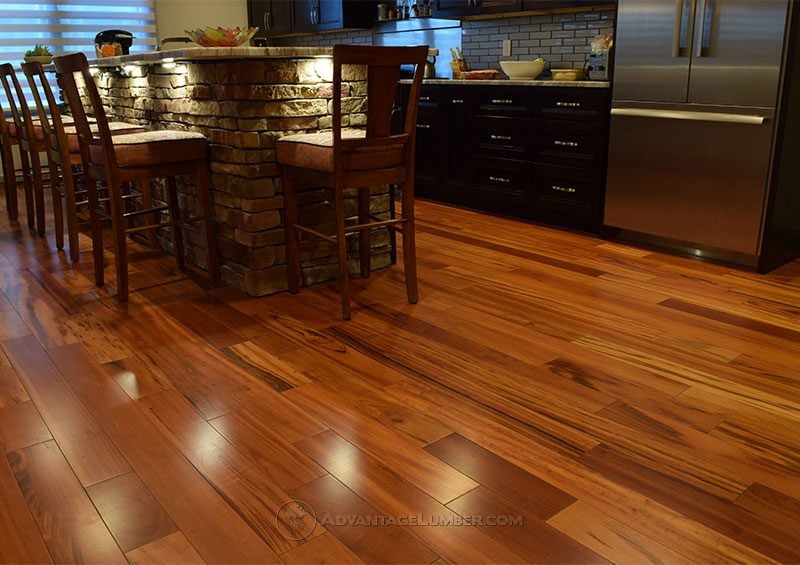
Ipe, on the other hand, can provide rich brown tones along with remarkable density. Anyone who’s ever cut or drilled Ipe probably understands exactly what I mean when I say dense. Your tools probably understand too. It can feel like a contest if you’re trying to hurry through it with a tired blade.
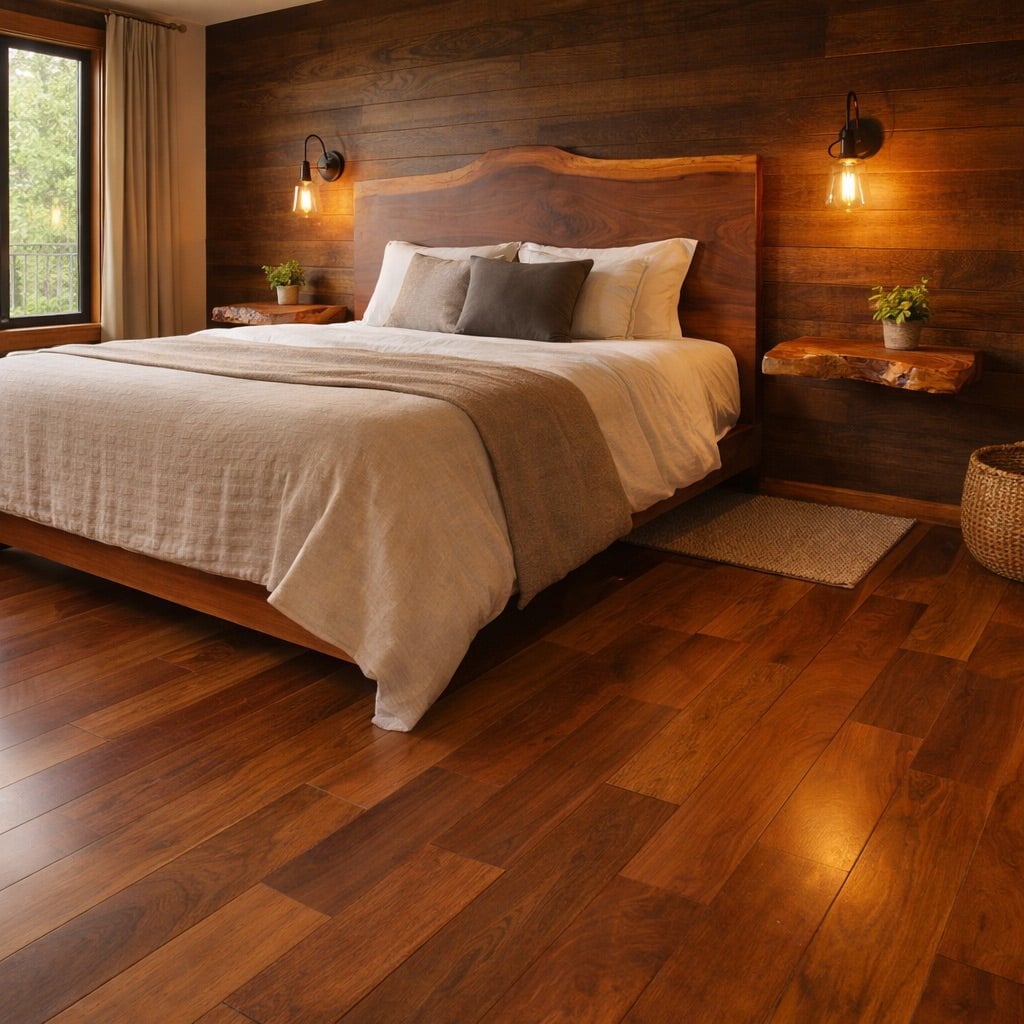
Still, these may not be the floors for somebody who wants every board to appear precisely alike.
And that’s probably the point.
Although some homeowners still prefer a highly uniform floor, others may want natural color shifts, visible grain, and individuality. Personally, I lean more toward the second camp. Give me some variation. Give me a board with grain that doesn’t resemble the one next to it.
Personally, I’ve always believed good hardwood should resemble wood. After all, if every board appears identical, you may have stripped away much of what makes a natural material appealing in the first place. At that point, what exactly are we trying to achieve?
6. Matte and Low Sheen Finishes Are Winning
Next, here’s another tendency I hope might stay around.
High gloss floors can reveal just about everything.
Seriously, we’re talking dust. Footprints. Fine scratches. Pet traffic. Chair movement. And, of course, that one person who somehow walks through the house with dirty shoes five minutes after you cleaned the floor. There’s always one. Sometimes it’s the dog, and at least the dog has an excuse. One scratch beneath strong lights can appear far worse than it really is.
By comparison, matte, satin, and low sheen finishes can tend to disguise everyday wear much more effectively. That’s a practical benefit I probably value more than any trend report.
Although glossy floors once suggested luxury, many homeowners now seem to favor matte, oiled, and lightly textured surfaces.
More importantly, lower sheen can let you appreciate the grain instead of staring at reflections from the ceiling lights. Isn’t seeing the wood supposed to be the point?
For premium hardwood, especially, that can be a worthwhile benefit.
7. Natural Variation Is Becoming a Feature, Not a Defect
Along with lower sheen finishes, we’re also seeing what looks like more appreciation for natural variation.
For years, many homeowners wanted flooring where every board matched.
In other words, they wanted the same hue. The same grain. No knots. No surprises. I’ve sorted enough lumber over the years to know how unrealistic that expectation can become when you’re working with a natural product. Nature isn’t following a piece of paper with a color code.
Although there’s nothing wrong with that look, more homeowners now seem to want character heavy floors.
For example, that might mean:
- More color variation
- Mineral streaks
- Natural grain shifts
- Occasional knots
- Sapwood and heartwood contrast
- Boards with distinctive figure
Beyond appearance, there can be another advantage.
A floor with some natural variation may tend to disguise ordinary wear. After all, a tiny scratch or dent probably doesn’t shout at you from across the room because the floor already carries plenty of visual activity. Anyone with kids, pets, or both can probably appreciate that.
Sometimes, perfection can be tougher to live with. I’ve seen homeowners spend more time worrying about preserving a flawless floor than actually enjoying the room. At some point, you’ve got to let people walk on the stuff.
8. Herringbone and Patterned Floors Are Showing Up Again
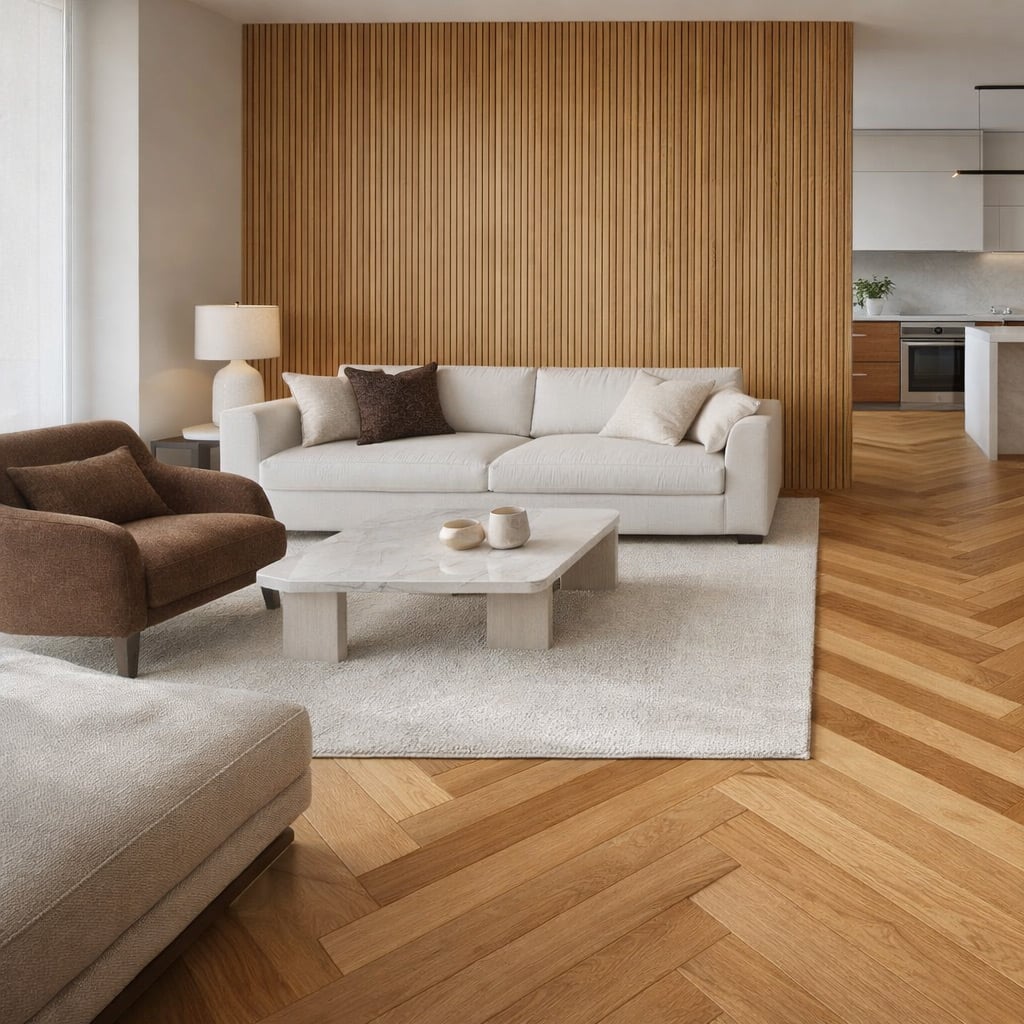
At the same time, herringbone and chevron floors seem to have made a strong return, particularly in higher end interiors.
When installers use these patterns in the right setting, they can look exceptional. There’s really no getting around it. A well laid herringbone floor can potentially make an entryway feel like a completely different room. Even a modest office or hallway can get a substantial visual lift from the pattern.
Personally, I’m particularly fond of using them selectively instead of covering every square foot of a large house. For example, an entryway, dining room, library, office, or other defined space might give you an excellent place for a patterned hardwood floor.
However, there is a catch. Isn’t there always?
Installation matters.
Although a standard straight hardwood layout can give an installer some room to make corrections while working across a room, herringbone and chevron may offer much less forgiveness. As a result, small layout errors can compound quickly, and your eye will probably catch them. I’ve seen enough layout mistakes in woodworking to know that an eighth of an inch doesn’t sound like much until it repeats across an entire room. Get the starting line slightly wrong, and the error can travel farther than you’d expect.
On top of that, you’ll generally make more cuts, potentially generate more waste, and probably spend more on labor.
So yes, herringbone can be beautiful. However, don’t budget for it like a standard straight laid floor. Your installer certainly won’t.
9. People Are Mixing Wood Tones Instead of Matching Everything
Meanwhile, here’s another design shift I’ve noticed.
There used to be a tendency to coordinate everything.
For example, walnut floor? Better make the cabinets walnut. Then match the furniture. After that, match the trim.
Before long, the room could begin to resemble a furniture showroom set. You know the look. Everything technically coordinates, but somehow nothing seems to have much personality.
Although matching wood tones can create a tidy appearance, today’s better interiors don’t seem afraid to mix them.
For instance, you might have a warm hardwood floor with painted cabinets, a walnut island, white oak furniture, and darker wood accents. Maybe there’s a darker cabinet in one corner or a walnut table somewhere close by.
The challenge, however, is finding some connection among the materials without forcing them to look identical. That’s easier said than done, but when it works, it can work beautifully.
Fortunately, natural hardwood can make this easier because the floor itself usually contains several tones. Sometimes the wood may hand you the color palette before you even begin selecting everything else.
10. Hardwood Is Moving Up the Walls and Onto Ceilings
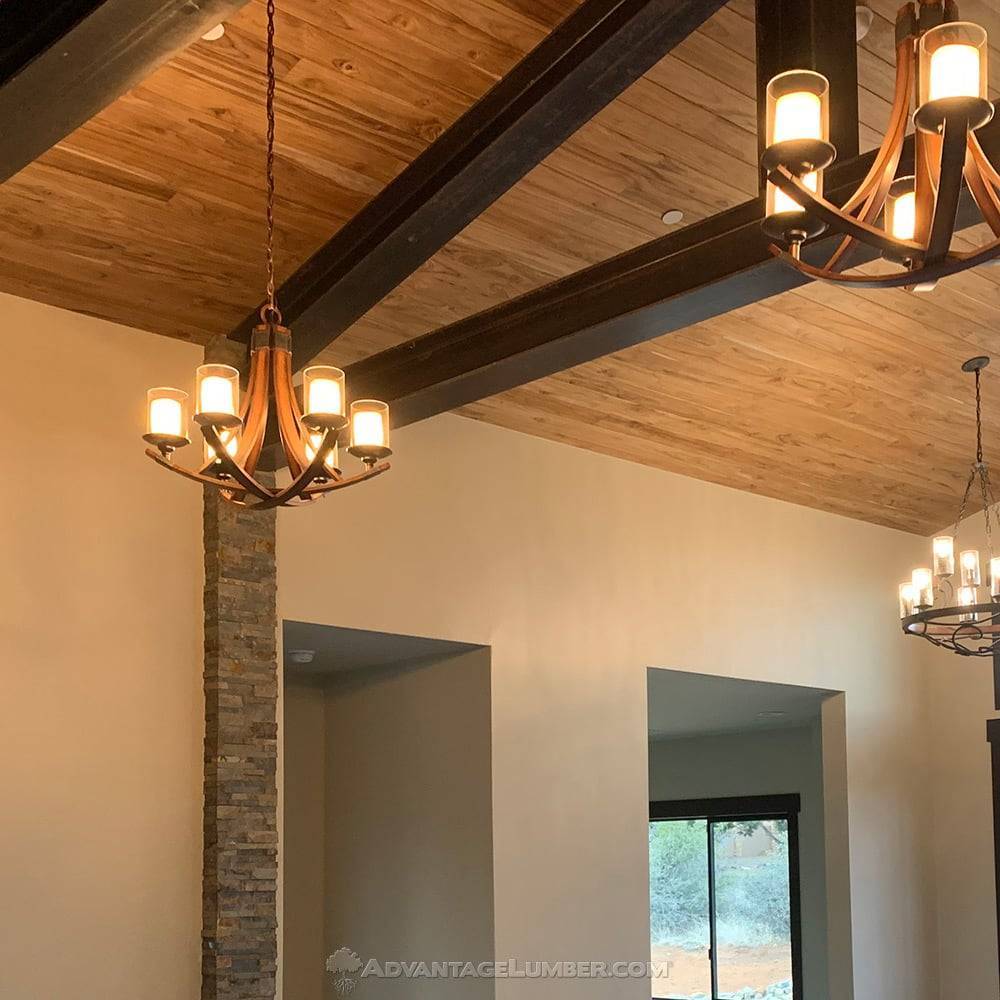
Now, this is technically a flooring article, but it’s worth mentioning because we’re seeing hardwood appear more often throughout interior spaces.
Increasingly, designers and homeowners seem to use wood on floors, walls, ceilings, beams, stair components, and other architectural details. As someone who enjoys working with wood beyond just flooring, I like seeing this.
Personally, I like this approach when people exercise some restraint.
For one thing, you don’t necessarily need the exact same wood everywhere. In fact, I’d usually rather see complementary materials. I’ve built enough wood heavy rooms to know there’s probably a point where warm and welcoming can turn into “we bought the entire lumberyard.” You walk in, look around, and think, “Okay, that’s a lot of wood.”
Although a hardwood floor combined with a wood ceiling or feature wall can make a room feel remarkably warm and complete, covering every surface with the exact same species may overwhelm the room fairly quickly.
As usual, a little contrast can go a long way.
11. Engineered Hardwood Is Becoming More Important in Luxury Projects
Next, let’s clear up a misconception about engineered flooring.
There’s still an idea that engineered flooring automatically means lower quality flooring.
However, that’s simply not accurate. I’ve handled engineered flooring that I’d install in a high end house without hesitation, and I’ve seen solid flooring I probably wouldn’t want in my garage.
You can buy inexpensive engineered flooring, just as you can buy inexpensive solid flooring. At the same time, you can buy extremely high quality engineered hardwood with a substantial real wood wear layer. Some of the more advanced products can be pretty impressive when manufacturers build them correctly.
For wide plank floors, engineered hardwood can offer some genuine advantages.
In particular, it may be worth considering for:
- Very wide boards
- Concrete slabs
- Homes with large seasonal humidity swings
- Radiant heating systems
- Large open floor plans
That said, I’m still a big fan of solid hardwood where the application makes sense. Although a quality solid hardwood floor can potentially last generations and often allows several refinishing cycles, engineered flooring may perform better under certain conditions. Why force solid wood into an application where another construction might perform better?
So, neither construction method always wins.
Instead, choose the one that seems to fit the house. It’s not as exciting as choosing a color, but it’s probably much more important.
12. Homeowners Are Thinking More About How a Floor Will Age
Finally, this may be my favorite development of all.
Increasingly, people seem to think about how flooring might look ten or twenty years from now instead of concentrating only on the day it goes down. I’ve always believed that’s probably the better way to think about any quality building material.
And that’s important because hardwood isn’t supposed to be disposable. If you install a good hardwood floor correctly, you probably shouldn’t be thinking about tearing it out simply because the next decorating fashion came along.
Over time, a quality hardwood floor can collect small scratches, develop color shifts, and show evidence of use. Of course, that’s normal. Although you can maintain and refinish hardwood, you don’t necessarily need to fight every sign of age. A house gets lived in. That’s kind of the idea. Someone drags a chair, somebody drops something, and eventually the floor starts to carry a little history.
In fact, with the right species and finish, those changes may add personality instead of ruining the floor. I’ve seen old hardwood floors with decades of wear that I’d probably choose over a brand new imitation wood floor any day.
That’s another reason natural colors and matte finishes can make sense.
Generally speaking, they tend to age gracefully.
What I Would Choose for Fall 2026
So, if I were choosing hardwood flooring for my own house this fall, I probably wouldn’t chase the most fashionable floor on social media. I’ve been around building materials long enough to know how quickly “the latest thing” can become yesterday’s thing.
Instead, I’d start with the house.
First, how much natural light does it receive?
Then, do you have kids or pets?
Also, what’s the architecture?
Next, are you installing over plywood or concrete?
Just as importantly, how stable is the indoor humidity?
Finally, do you want the floor to settle quietly into the room, or do you want people to notice it?
Those questions aren’t as entertaining as flipping through beautiful room photos, but they’re probably the questions I’d want answered before spending thousands of dollars on flooring. A pretty picture can sell an idea in an instant, but the actual room still has to live with the choice.
For a clean and versatile interior, I’d have a hard time arguing against a wide plank white oak floor with a natural warm tone and low sheen finish. It’s not exactly a daring choice, but sometimes there may be a reason the safe choice is safe.
On the other hand, for something richer, I’d probably look at walnut tones or naturally darker hardwoods.
And for a house where the flooring itself should become a design feature, I’d consider species such as Brazilian Cherry, Cumaru, Tigerwood, or Ipe instead of making another wood mimic those colors. Why stain one species five different ways trying to imitate the natural color of another species?
Whatever you choose, though, I’d strongly suggest getting several flooring samples and placing them in the actual room before ordering. I can’t emphasize this enough. You can request free hardwood flooring samples from our website to help you make your selection.
Then, move them around.
For example, look at them in morning light. After that, look again in the afternoon. Finally, switch the lights on at night. Leave them there for a couple of days if you can. You’ll probably find yourself preferring one sample in the morning and another one at night. Place one by the cabinet, another near the hall, and maybe one beside the furniture to see how the relationship plays out.
Although a sample may look ideal in a showroom, it can potentially look entirely different once you bring it into your house. After all, light, wall colors, cabinetry, furniture, and even the direction of the windows can change how you perceive the wood.
It’s a simple step, but it might spare you an expensive surprise. And nobody enjoys an expensive surprise halfway through a flooring project.
The Bottom Line
Overall, fall 2026 hardwood flooring trends seem to be moving toward something we’ve appreciated for a long time: letting real wood resemble real wood.
For starters, homeowners appear to be drifting away from cold grays and choosing warmer hues. At the same time, they’re using broader and longer boards that can create calmer looking rooms. Meanwhile, they seem to be selecting matte finishes instead of glossy surfaces. They’re also welcoming natural variation instead of trying to erase it. And finally, they’re giving hardwood a larger role throughout the home.
Although trends will almost certainly shift again, good hardwood doesn’t necessarily have to follow them. I’ve watched enough trends arrive, disappear, and occasionally return again to put much faith in chasing every new one.
That’s why I probably wouldn’t choose a hardwood floor just because it’s fashionable in 2026.
Instead, choose a species, grade, board size, and finish you’ll likely still enjoy looking at in 2036. Ask yourself a simple question: will I still like this floor after the magazines have moved on to something else?
After all, a good hardwood floor should last long enough to witness plenty of trends come and go. And if you choose it carefully, you may end up liking it more after twenty years than you did on the day you installed it.
