
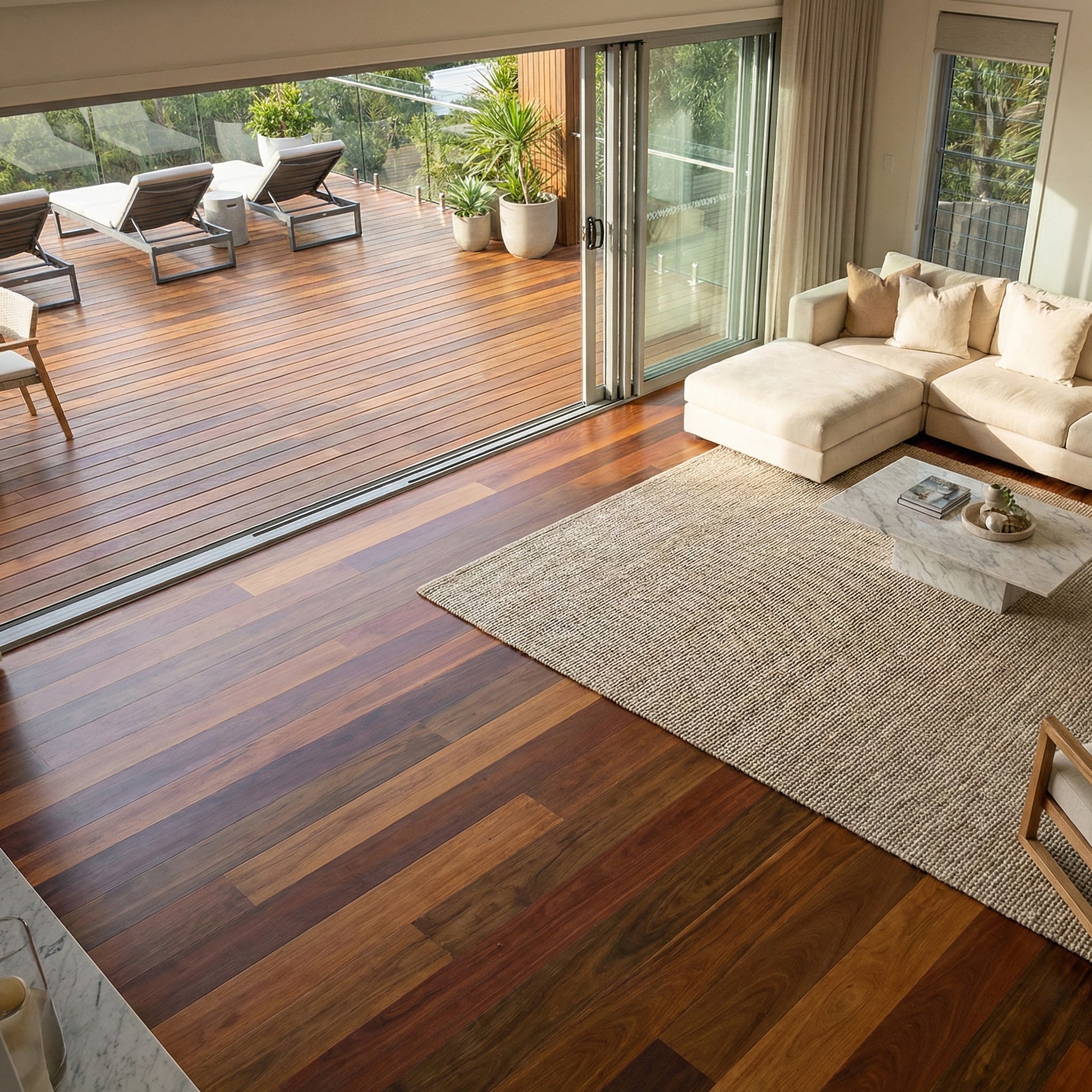
When winter arrives, it’s not unusual for homeowners to notice that their floors feel colder underfoot. If you’re deciding between hardwood flooring and luxury vinyl plank (LVP), you may be wondering which option will feel more comfortable during the colder months.
The short answer is that hardwood flooring generally feels warmer underfoot than LVP, even though neither material is a true insulator. The difference comes down to how each material transfers heat, what it’s installed over, and the overall construction of your home.
Here’s a closer look at why hardwood often wins when winter comfort is a priority.
Does Hardwood Flooring Feel Warmer Than LVP?
Yes, in most homes, hardwood flooring feels warmer than LVP.
While the actual temperature of the floor is usually the same as the room, hardwood doesn’t pull heat away from your feet as quickly as vinyl. Because of this, solid and engineered hardwood often feel more comfortable to walk on barefoot during the winter.
LVP, on the other hand, tends to take on the temperature of the subfloor more readily. If it’s installed over a concrete slab or an uninsulated floor, it can feel noticeably cooler underfoot.
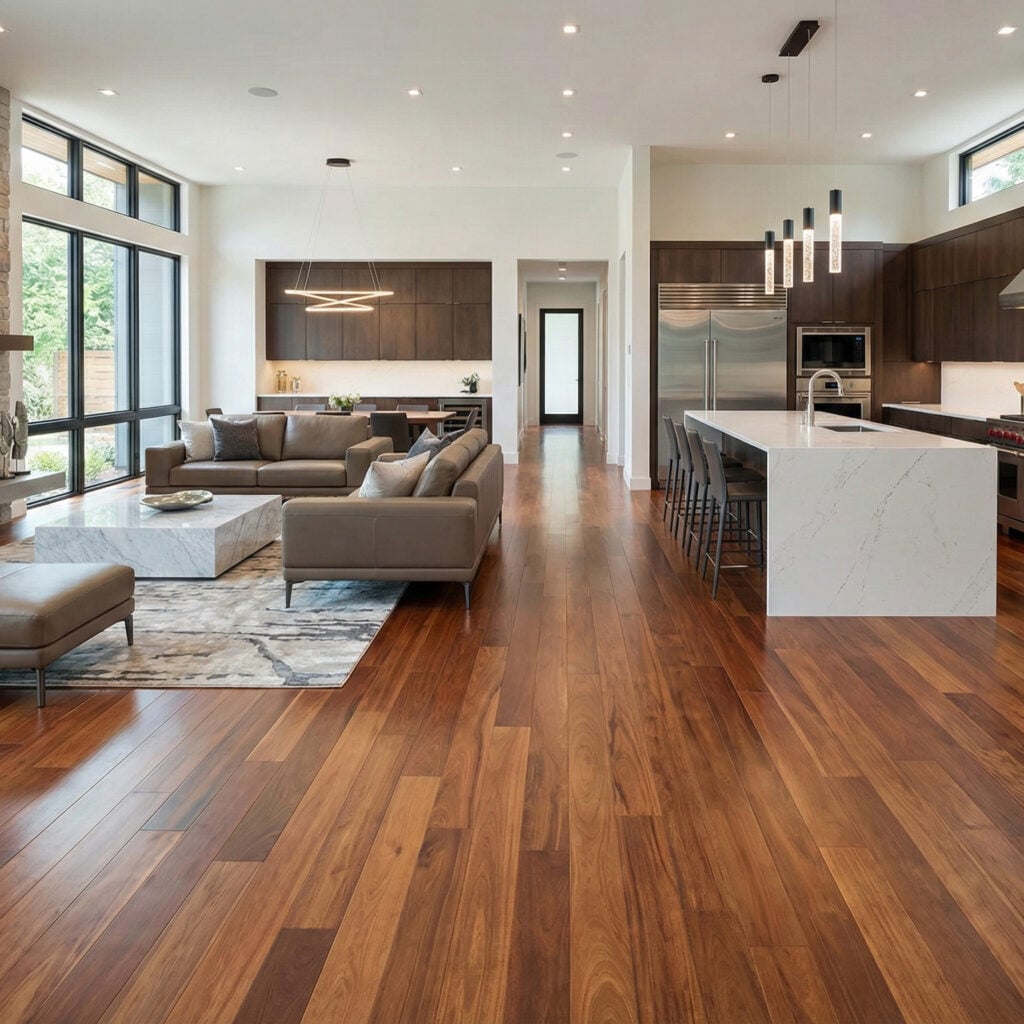
Why Hardwood Feels More Comfortable
The difference isn’t that hardwood generates heat. It’s that it transfers heat differently.
Wood is a natural material with lower thermal conductivity than vinyl. That means it doesn’t absorb heat from your feet as quickly, creating a warmer, more comfortable feeling when you walk across it.
Many homeowners also appreciate hardwood’s natural texture, which can make a room feel warmer and more inviting during colder months.
What Has the Biggest Impact on Floor Temperature?
The flooring itself is only part of the equation.
Several factors have a much greater impact on how warm your floors feel, including:
- The amount of insulation beneath the floor
- The type of subfloor
- The underlayment used during installation
- Your home’s indoor temperature
For example, hardwood installed over a well-insulated wood subfloor will usually feel much warmer than LVP installed directly over an uninsulated concrete slab.
If your home has cold floors regardless of the flooring material, improving insulation underneath may make the biggest difference.
How Does LVP Perform in Winter?
Luxury vinyl plank has become popular because it’s durable, water-resistant, and relatively easy to maintain. However, winter comfort isn’t always one of its strongest qualities.
Depending on the installation, LVP can feel firmer and cooler than hardwood, particularly in rooms built on concrete slabs. Some manufacturers recommend insulated underlayments to help improve comfort, but the flooring may still feel cooler than natural wood.
That doesn’t mean LVP is a poor flooring choice. It simply has different strengths.
Can Hardwood Be Used With Radiant Floor Heating?
Absolutely.
Many engineered hardwood flooring products are designed to work with radiant heating systems, making them an excellent option for homeowners looking for maximum winter comfort.
Solid hardwood can also be compatible in some applications, but engineered hardwood is generally the preferred choice because it’s more dimensionally stable as temperatures and humidity levels change.
Always follow the flooring manufacturer’s installation recommendations when pairing hardwood with radiant heat.
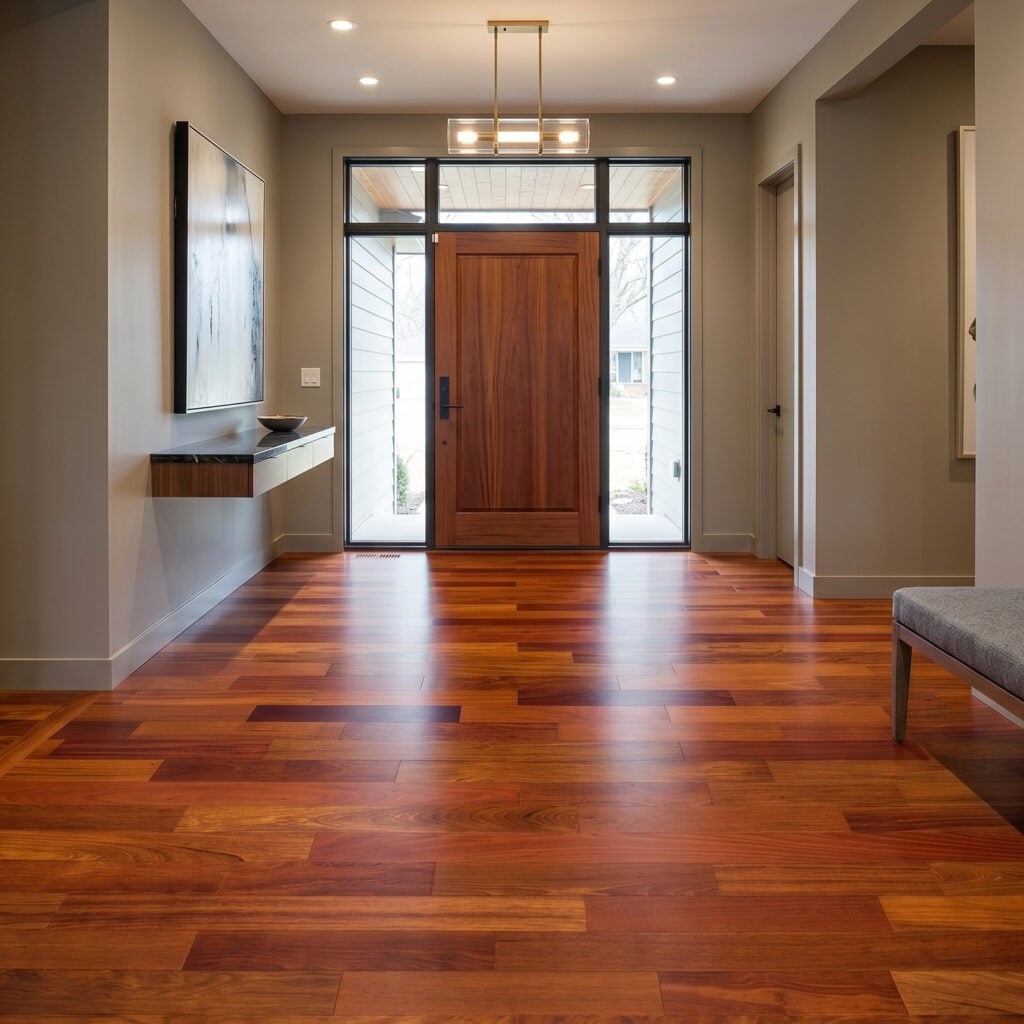
Winter Comfort Isn’t the Only Advantage of Hardwood
While warmth is an important consideration, it’s only one reason homeowners continue to choose real wood flooring.
Hardwood also offers several long-term benefits:
- Timeless, natural beauty
- Exceptional durability
- The ability to be refinished multiple times
- Long service life with proper care
- Strong resale appeal
Unlike LVP, which typically needs to be replaced once it wears out, hardwood can often be restored instead of replaced, making it a long-lasting investment.
Hardwood vs. LVP for Winter Comfort
| Feature | Hardwood Flooring | Luxury Vinyl Plank |
|---|---|---|
| Feels warm underfoot | ✓ Excellent | ✓ Good |
| Natural appearance | ✓ Excellent | ✓ Very Good |
| Compatible with radiant heat | ✓ Many products | ✓ Many products |
| Refinishable | ✓ Yes | ✗ No |
| Water resistance | ✓ Good (species and finish dependent) | ✓ Excellent |
| Long-term lifespan | ✓ Decades with proper care | ✓ Good |
Frequently Asked Questions
Does hardwood flooring get cold in winter?
Hardwood adjusts to your home’s indoor temperature, but it generally feels warmer underfoot than vinyl because it doesn’t transfer heat away from your feet as quickly.
Is LVP colder than hardwood?
In many homes, yes. LVP installed over concrete or poorly insulated subfloors often feels cooler than hardwood flooring.
Which flooring is best for cold climates?
Both hardwood and LVP perform well in cold climates when installed correctly. If your goal is maximum comfort underfoot, hardwood is often the preferred choice. Proper insulation beneath the floor also plays a major role.
Can underlayment make LVP feel warmer?
Yes. A quality underlayment can improve comfort and reduce heat loss through the floor, especially when installing over concrete. However, it won’t completely change the way vinyl feels compared to natural hardwood.
Final Thoughts
If winter comfort is high on your list of priorities, hardwood flooring is hard to beat. Its natural properties help it feel warmer underfoot than LVP, and when paired with a well-insulated subfloor or radiant heating system, it creates a comfortable living space all season long.
While LVP remains an excellent choice for areas where moisture resistance is the primary concern, hardwood continues to stand out for homeowners who value warmth, beauty, longevity, and timeless appeal.
Find the Right Hardwood Flooring for Your Home
Whether you’re remodeling a single room or building a new home, choosing the right hardwood flooring can make your space more comfortable year-round. Explore Advantage Lumber‘s selection of premium hardwood flooring to find a species and style that fits your home and your lifestyle.
