
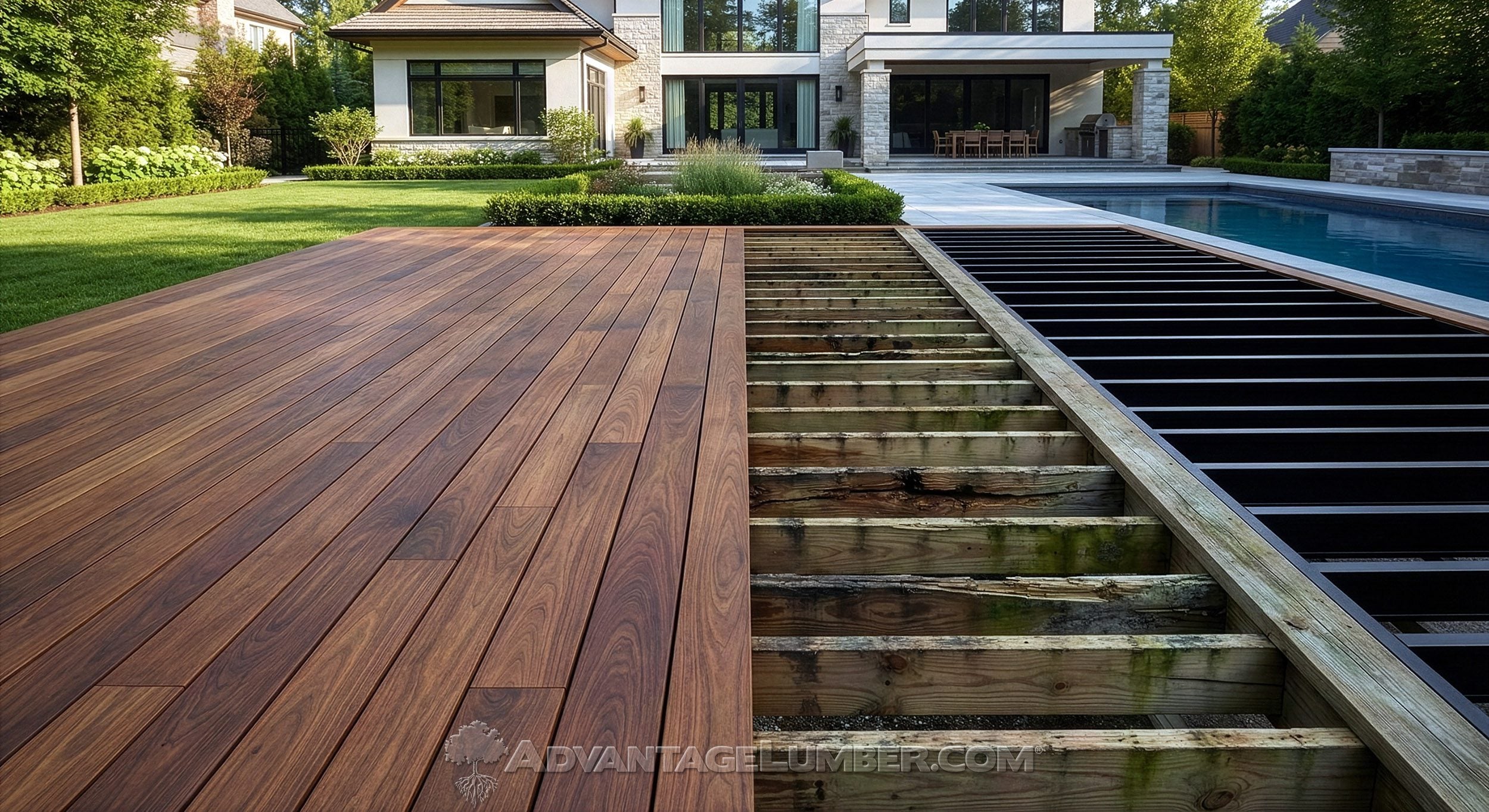
Your deck is more than outdoor flooring it’s where family gatherings happen, morning coffee is enjoyed, and summer evenings stretch late. Over time, sun, rain, foot traffic, and temperature swings take their toll. Boards fade, crack, or splinter. Railings loosen. Suddenly you’re asking the big question: Should you resurface the deck or replace it entirely?
At AdvantageLumber.com, we’ve helped thousands of homeowners and contractors navigate this exact decision since 1992. The right choice depends almost entirely on the condition of the structure underneath the surface boards. Here’s a clear, practical guide to help you decide.
What Is Deck Resurfacing?
Deck resurfacing (also called re-decking) means removing the existing surface boards and often the railings and stairs while keeping the underlying frame (joists, beams, posts, and footings) in place. New decking material is then installed on the sound structure.
This approach works well when the framing is solid, properly fastened, and free of significant rot or structural issues. It’s faster, less disruptive, and typically costs 40-60% less than a full replacement.
What Is Deck Replacement?
Deck replacement (or a full rebuild) involves complete demolition. The old structure comes out, and a brand new deck is built from the footings up new posts, beams, joists, decking, railings, and stairs. This is the route when the frame has compromised integrity, no longer meets current building codes, or you want a completely different layout, size, or elevation.
Replacement delivers maximum longevity and design freedom but requires more time, labor, and investment.
How to Assess Your Deck: The Critical First Step
Never assume the surface problems are the only problems. Hidden framing issues are the leading cause of deck failures. Before choosing a path, perform (or hire a professional for) a thorough inspection:
- Walk the entire surface. Note soft, bouncy, or uneven spots.
- Probe joists, beams, and posts with a screwdriver. Soft or crumbling wood indicates rot.
- Examine the ledger board (where the deck attaches to the house). Look for gaps, missing or improper flashing, rusted fasteners, or water stains.
- Check posts and footings for leaning, sinking, or rot at ground level.
- Test railings and stairs for stability and code compliance (baluster spacing, height, etc.).
- Consider the age of the framing. Pressure treated lumber frames often last 10-20 years with good maintenance. Installing premium decking that can last 50-75+ years on a short lived frame rarely makes long term sense.
If more than a small percentage of the structural members show damage, or if the ledger or footings are failing, replacement is the safer and smarter choice. When in doubt, bring in a licensed inspector or experienced deck builder.
Pros and Cons at a Glance
Resurfacing Pros
- Lower cost
- Faster completion (often days instead of weeks)
- Minimal disruption to landscaping and daily life
- Opportunity to upgrade to high performance materials while keeping a proven frame
Resurfacing Cons
- Only viable with a structurally sound, code compliant frame
- Does not fix outdated design, inadequate footings, or major code issues
- Remaining frame life limits the overall project lifespan
Replacement Pros
- Brand new structure that meets today’s safety codes
- Full design flexibility (size, shape, levels, materials)
- Maximum longevity and peace of mind
- Chance to upgrade to rot resistant aluminum or steel framing
Replacement Cons
- Higher overall cost
- Longer timeline and more site disruption
- Requires permits in most jurisdictions
Cost Considerations
Exact numbers vary by region, deck size, material choice, access, and labor rates, but resurfacing generally runs significantly less because it avoids full demolition, new footings, and complete framing. Full replacement includes those costs plus disposal.
The bigger picture matters more than the initial price tag. Pairing long lasting decking (exotic hardwoods or quality composites) with a frame that has only a few years left often means you’ll face another project sooner than you’d like. Matching material lifespan to structural lifespan delivers better value.
Material Options That Make Either Choice Shine
Whether you resurface or replace, the surface material determines appearance, maintenance, and durability for decades.
AdvantageLumber.com offers premium options suited to both approaches:
- Exotic hardwood decking such as Ipe, Cumaru, Tigerwood, Garapa, and plantation Teak deliver natural beauty, exceptional density, and resistance to insects, rot, and weather. Many of these species have proven lifespans of 50-75+ years with simple maintenance.
- Composite and PVC decking from trusted brands including Trex, TimberTech, and Deckorators provide low maintenance performance, consistent color, and strong warranties.
- Thermally modified wood and Accoya add dimensional stability and sustainability for modern projects.
During resurfacing, protect the existing frame by applying joist and ledger tape. This simple step dramatically reduces future moisture intrusion. For full replacements, consider upgrading to aluminum or steel framing for superior longevity in wet or coastal environments.
When Resurfacing Is the Right Choice
Choose resurfacing if:
- The frame, ledger, posts, and footings are solid and meet current codes.
- Surface boards are the primary issue (fading, cracking, splintering, or worn appearance).
- You’re happy with the existing layout and size.
- Budget and timeline favor a quicker upgrade.
- You want to install premium, long lasting decking on a frame with substantial remaining life.
When Full Replacement Makes More Sense
Opt for replacement if:
- There is widespread rot, insect damage, or structural movement in the frame.
- The ledger board is compromised or improperly attached.
- Footings have shifted or are inadequate.
- The deck no longer meets safety codes or your lifestyle needs (you want a larger footprint, multi level design, better accessibility, or integrated features).
- The existing frame is near the end of its useful life and won’t support the decades of service your new decking can provide.
Ready to Decide? We’re Here to Help
The best outdoor living spaces start with informed choices and quality materials. At AdvantageLumber.com we supply sustainably sourced, Lacey Act compliant hardwood decking, leading composite brands, framing systems, fasteners, and accessories shipped direct to your home or job site. Our team offers free project planning and material takeoff assistance to make the process straightforward.
Whether you’re resurfacing with dense Ipe for a lifetime of beauty or building a completely new structure with low maintenance composite, the right materials make all the difference.
Inspect thoroughly, match the solution to the structure, and choose materials built to last. Your next deck should give you years of enjoyment not another renovation project down the road.
Contact us at 1-877-232-3915 or visit AdvantageLumber.com to request free samples, get expert advice, or start your project estimate today. Let’s build (or rebuild) outdoor living the right way.
