
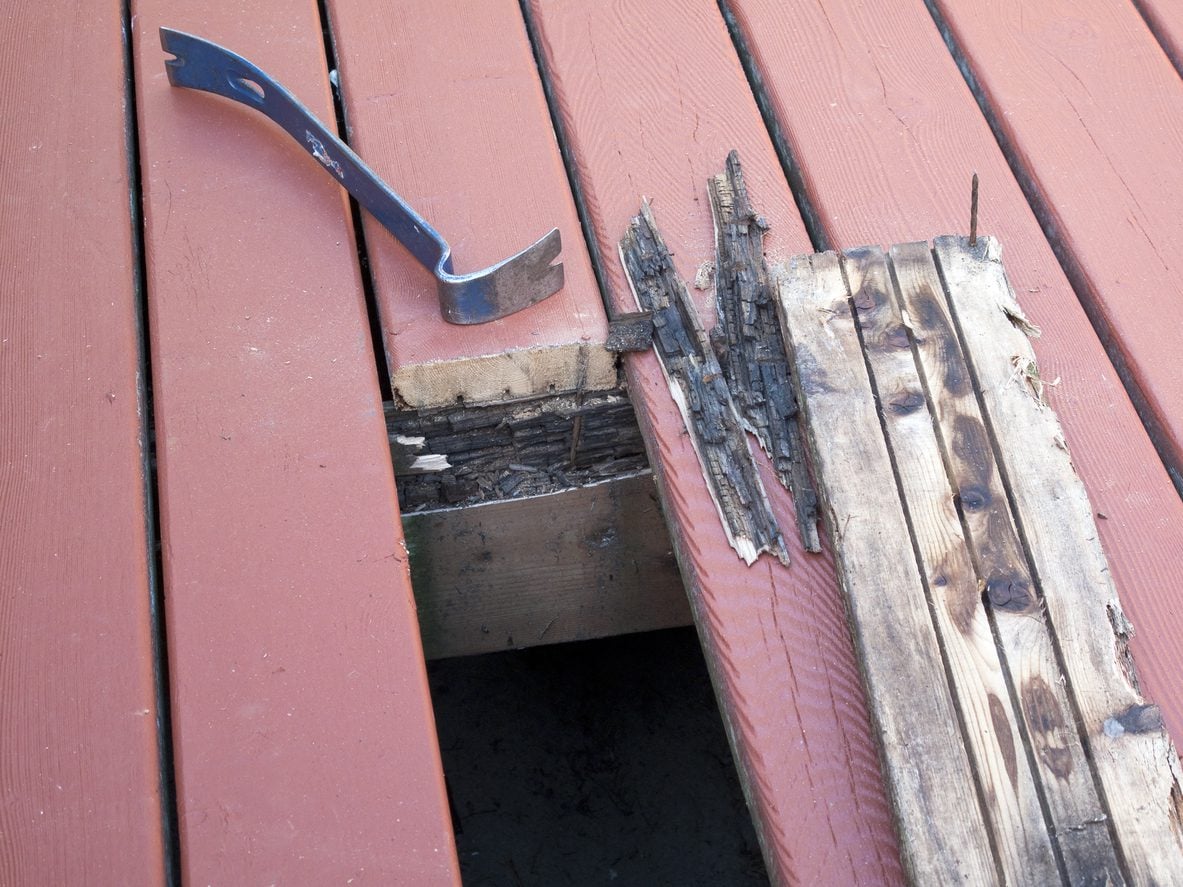
Your deck is more than just an extension of your home—it’s where memories are made, barbecues happen, and quiet evenings unfold. Over time, though, even the sturdiest deck shows its age. The surface boards may crack, splinter, or fade, leaving you wondering: Should I simply try wood deck resurfacing with new boards, or is it time for a full rebuild?
At AdvantageLumber.com, we help homeowners make informed decisions every day. Deck resurfacing (also called re-decking) replaces only the top deck boards while keeping the existing frame intact. A full rebuild tears everything down and starts fresh with new framing, footings, and decking. Both options can deliver a beautiful, functional outdoor living space—but the right choice depends on one critical factor: the condition of your deck’s underlying structure.
Resurfacing vs. Rebuilding: Quick Pros & Cons
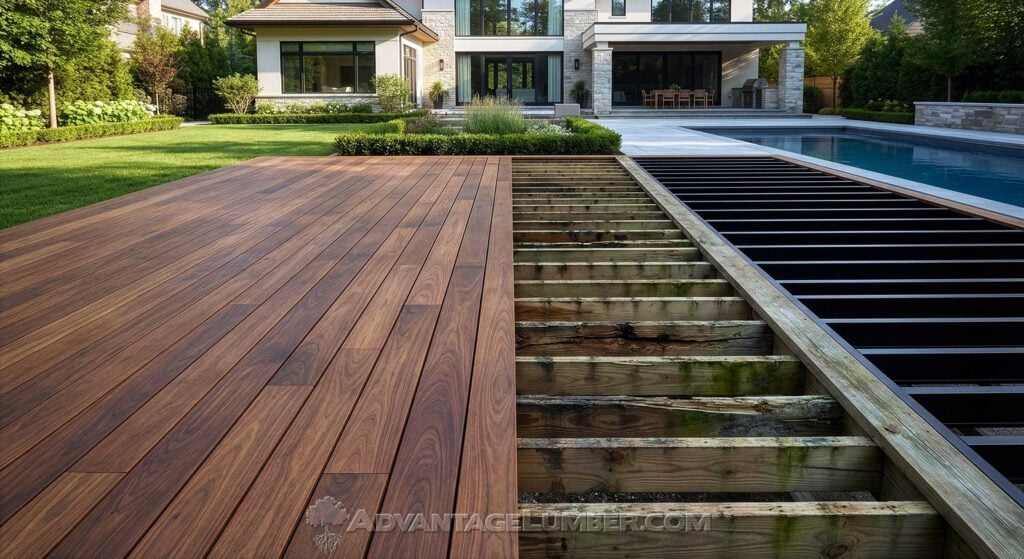
Resurfacing Pros
- Significantly lower cost (often 40-60% less than a full rebuild).
- Faster completion—usually just a few days instead of weeks.
- Minimal disruption to your yard and daily life.
- Fresh, modern look with premium decking materials.
Resurfacing Cons
- Only viable if the frame is structurally sound.
- Doesn’t address hidden issues like outdated code compliance or failing footings.
Rebuilding Pros
- Brand-new structure that meets today’s strictest safety codes.
- Opportunity to upgrade to rot-resistant framing (steel deck framing or aluminum deck framing) and long-lasting decking.
- Maximum longevity and peace of mind.
Rebuilding Cons
- Higher cost and longer project timeline.
- More invasive to your landscaping.
The decision almost always comes down to safety and longevity. Before you invest in beautiful new deck boards, you must know whether your existing frame can support them.
Safety First: How Homeowners Should Inspect Their Deck
Never assume your deck is safe just because it “looks okay” from the surface. Deck collapses cause thousands of injuries every year, often because the framing underneath has quietly deteriorated. A thorough inspection is non-negotiable before resurfacing.
Here’s a homeowner-friendly checklist you can follow (ideally twice a year, and always before a resurfacing project):
- Clear the deck and do a visual walk through. Remove furniture, grills, and planters. Walk the entire surface and look for soft, spongy, or bouncy spots. Listen for creaking or shifting.
- Inspect the decking surface. Check for cracks, cupping, warping, splinters, or popped fasteners. These are easy to replace—but they can also signal moisture problems that have reached the joists below.
- Get underneath (or as close as possible). This is where the real evaluation happens.
- Ledger board (where the deck attaches to the house): Look for rot, improper or missing flashing, and loose bolts or improper fastening. Water trapped here is the #1 cause of catastrophic failure.
- Joists and beams: Probe the wood with a screwdriver or ice pick. If the tool sinks in easily, the wood is rotting. Check for cracks, splits, sagging, or insect damage. You can also use a moisture meter and probe different areas of your joists, beams and posts.
- Posts and footings: Ensure posts are plumb, solidly anchored, and not showing rot at ground level. Footings should be below the frost line and properly sized.
- Fasteners and hardware: Tug on screws, bolts, and joist hangers. Rusty, corroded, or missing connectors must be replaced.
- Stairs, stringers, and railings: Push firmly on railings (they should feel rock-solid). Check stair treads and stringers for the same rot or looseness issues. Balusters must be spaced no more than 4 inches apart.
- Evaluate every aspect of the framing against current building codes. Even if your deck was built just a few years ago, local codes evolve. Requirements for ledger attachment, flashing details, joist hangers, beam sizing, railing height (minimum 36 inches in most areas), and load-bearing capacity change regularly. What was code-compliant in 2018 may no longer meet 2026 standards. If any part of the framing falls short, resurfacing alone is not enough—you’ll need repairs or a rebuild to stay safe and legal.
- Assess the remaining lifespan of your deck frame. This is the make-or-break question many homeowners overlook. Pressure-treated lumber frames typically last 10–20 years with good maintenance. Exotic hardwoods and composite decking from Advantage Lumber, however, are engineered for 30, 50, or even 75+ years of service with minimal upkeep. It simply doesn’t make financial or practical sense to install premium, long-life deck boards on a frame that may only have 5–10 years left. You’d be repeating the project far sooner than necessary.
Pro tip: If you’re uncomfortable inspecting the underside, notice any of the red-flag issues above, or live in an area with strict permitting rules, hire a licensed deck inspector or contractor. The small cost of a professional evaluation is nothing compared to the safety risks of guessing.
When Resurfacing Makes Perfect Sense
If your inspection shows a solid, code-compliant frame with plenty of life left—and the only real problems are worn-out surface boards—resurfacing is an excellent, money-saving choice. It’s the perfect time to upgrade to low-maintenance, high-performance decking like Ipe, Cumaru, Tigerwood, or composite lines from Trex, TimberTech, or Deckorators that Advantage Lumber carries. These materials resist fading, splintering, and rot far better than traditional pressure-treated boards and come with impressive warranties.
For extra protection on an existing pressure-treated frame, consider adding DeckWise joist tape and ledger tape during resurfacing. These simple barriers prevent water from penetrating the top of the joists—the exact spot where most rot begins.
Ready to Transform Your Deck?
At AdvantageLumber.com, we stock premium decking materials and framing solutions designed for decades of beauty and performance. Whether you choose resurfacing with our exotic hardwoods and composites or decide on a complete rebuild with rot-resistant steel or aluminum framing, our team is here to help you select the right products for your climate, budget, and vision.
Don’t risk your family’s safety on guesswork. Inspect thoroughly, evaluate your frame’s true condition and remaining lifespan, and then choose the option that gives you years of worry-free enjoyment.
Have questions about your specific deck? Contact our knowledgeable team or browse our full selection of decking and resurfacing supplies today at AdvantageLumber.com. Your dream deck is closer than you think—let’s build it right.
