
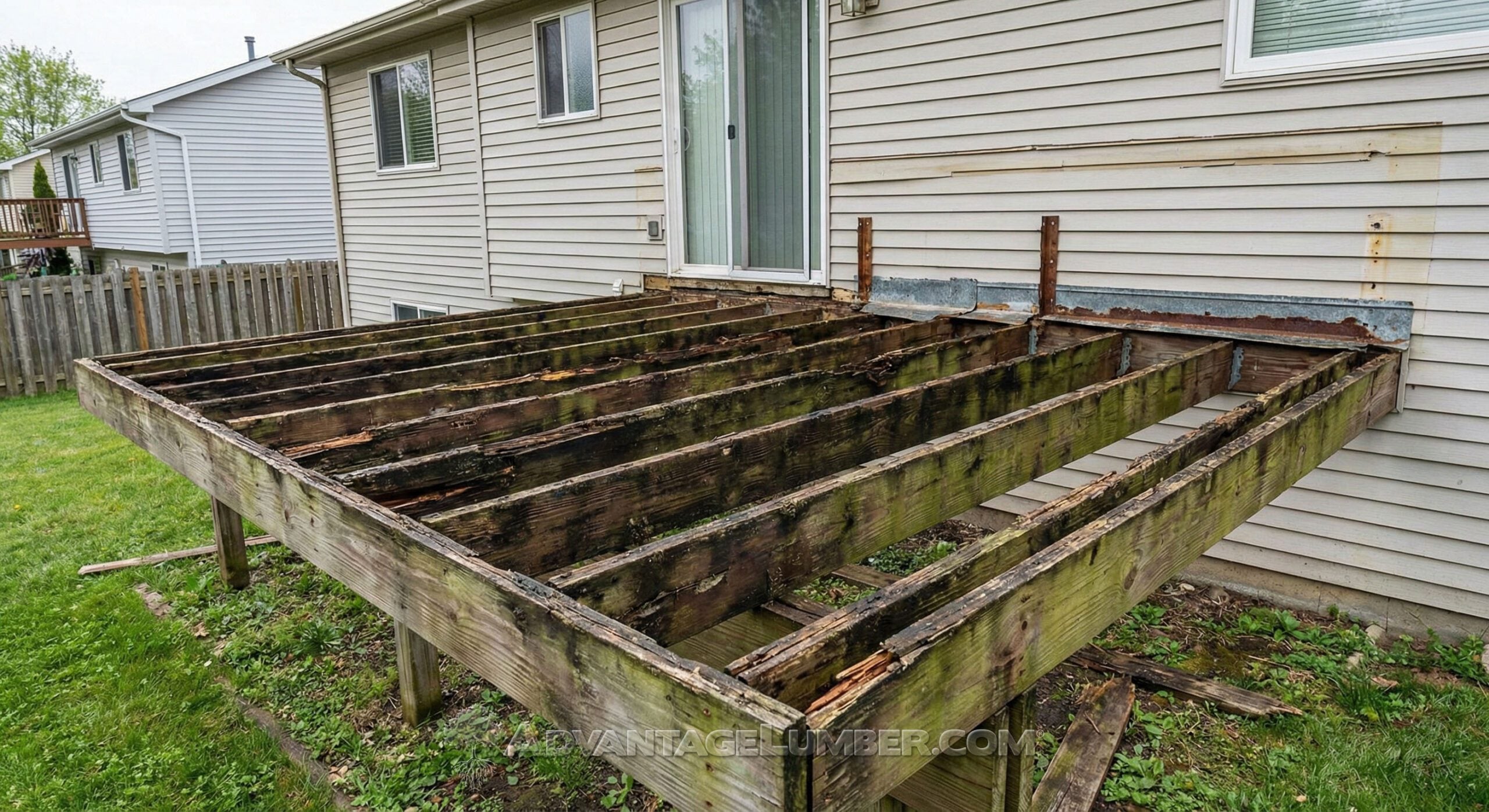
Your deck might look perfectly fine on the surface—but what’s underneath matters far more. Deck framing is the structural backbone of your deck, and when it starts to rot, it can lead to serious safety risks, costly repairs, or even complete deck failure.
If you’re a homeowner or contractor, knowing the warning signs of a rotting deck frame can save you time, money, and prevent dangerous situations. Here’s what to look for—and what to do next.
Why Deck Frame Rot Is a Big Deal
Deck frames are most commonly built with pressure-treated lumber, which is designed to resist rot—but not forever. Modern pressure-treated wood, in particular, has shown a tendency to deteriorate faster than many homeowners expect.
When the frame begins to rot:
- Structural integrity is compromised
- Fasteners loosen or fail
- Deck boards may feel unstable
- The risk of collapse increases
According to safety studies, thousands of injuries occur every year due to deck collapses—many of which are linked to failing framing, not the surface boards.
7 Signs Your Deck Frame Is Rotting
1. Soft or Spongy Wood
If you press into a joist or beam with a screwdriver and it sinks in easily, that’s a major red flag. Healthy wood should feel solid and resist pressure.
2. Visible Cracks and Splitting
Some cracking is normal, but deep splits—especially along joists or support posts—can allow moisture to penetrate and accelerate rot from the inside out.
3. Discoloration or Dark Spots
Dark patches, black staining, or greenish areas can indicate mold, mildew, or water damage—all of which are signs that rot may already be developing.
4. Sagging or Uneven Deck Surface
If your deck feels uneven or bouncy when walking across it, the problem may not be the decking boards—it’s often failing joists or beams underneath.
5. Loose or Rusting Fasteners
Rotting wood can no longer hold screws, nails, or bolts securely. If fasteners are pulling out or rusting excessively, moisture has likely compromised the frame.
6. Water Pooling or Poor Drainage
Standing water around footings or on top of joists speeds up rot. If your deck doesn’t drain properly, your frame is constantly exposed to moisture.
7. Rot at Connection Points
Ledger boards (where the deck attaches to your house) and beam/post connections are the most vulnerable areas. If rot starts here, it can quickly lead to structural failure.
What To Do If You Find Rot
Step 1: Inspect the Entire Frame
Don’t stop at one problem area. Rot tends to spread, so inspect:
- Joists
- Beams
- Posts
- Ledger board
- Stair stringers
If multiple areas are compromised, repairs may not be enough. Sometimes repairing a few damaged spots can be more harmful than good. If your deck frame has several problem areas it’s likely a lot more are lurking right around the corner.
Step 2: Determine Repair vs. Replacement
Minor rot (localized damage):
- Sistering joists (adding new wood alongside damaged ones)
- Replacing individual boards
Moderate to severe rot:
- Replacing entire sections of framing
- Full deck frame replacement
If the structural integrity is in question, replacement is the safest option.
Step 3: Consider Upgrading Your Frame
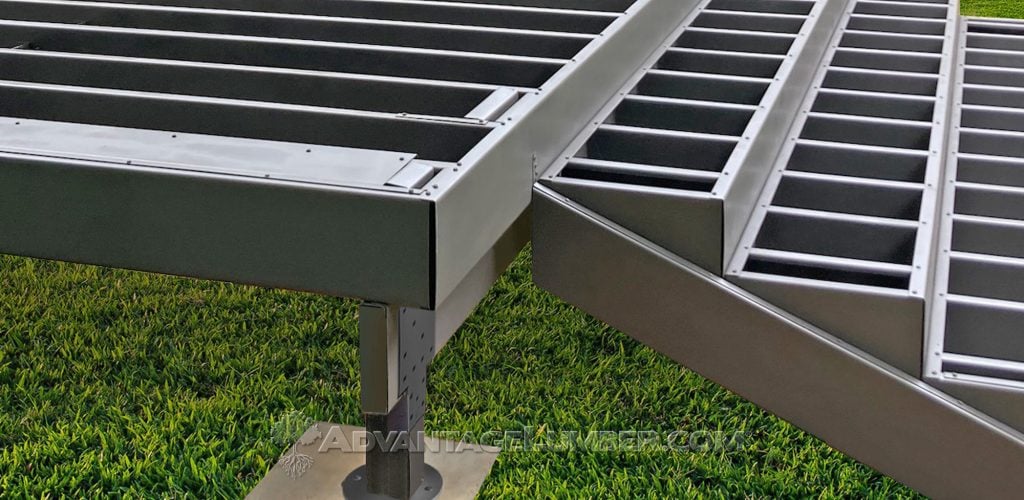
If you’re already dealing with rot, it may be time to upgrade—not just repair.
Steel Deck Framing
- Will not rot, warp, or split
- Extremely strong and long-lasting
- Ideal for elevated or second-story decks
Aluminum Deck Framing
- Lightweight and corrosion-resistant
- Perfect for coastal or high-moisture environments
- Low maintenance and long lifespan
Compared to pressure-treated wood, steel and aluminum framing systems offer a permanent solution to rot-related problems.
Pro Tip: Don’t Just Replace the Surface
Many homeowners resurface their deck with new decking boards but leave the old frame underneath. This is one of the biggest mistakes you can make.
If your frame is already compromised:
- New deck boards won’t fix structural issues
- You may have to tear everything out again in a few years
- It creates a hidden safety hazard
Always inspect—and upgrade if needed—before installing new decking.
Preventing Deck Frame Rot in the Future
Even if your frame is still in good shape, take steps now to extend its life:
- Use joist + ledger tape to protect against moisture
- Ensure proper drainage and airflow
- Seal cut ends of pressure-treated wood
- Keep debris and leaves from accumulating
- Schedule regular inspections
Final Thoughts
A beautiful deck starts with a strong foundation. If your deck frame is rotting, it’s not just a cosmetic issue—it’s a structural one.
Catching the signs early can help you avoid major repairs, but if the damage is extensive, upgrading to steel or aluminum framing can give you peace of mind for decades to come.
At AdvantageLumber.com, we help homeowners and contractors choose the right materials for long-lasting, low-maintenance decks—from premium hardwood decking to advanced framing solutions.
Need Help With Your Deck Project?
AdvantageLumber.com offers free project estimates and expert guidance to help you build it right the first time.
