
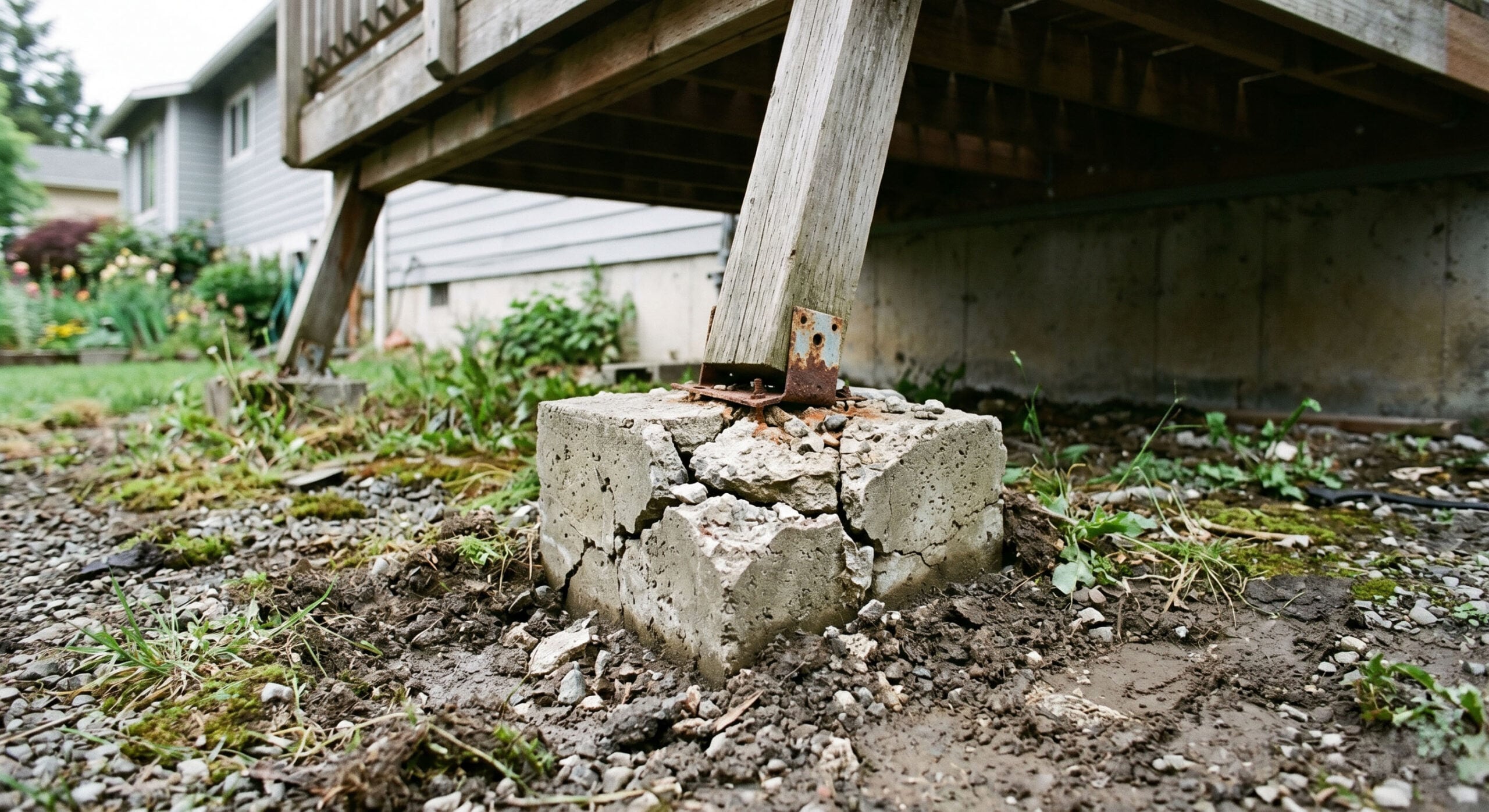
Your deck is more than just an outdoor living space—it’s an extension of your home where family and friends gather, enjoy barbecues, and create memories. But what many homeowners overlook is that the entire structure relies on its foundation: the deck footings. When footings fail, the consequences can be catastrophic, ranging from sagging and instability to full collapse.
At Advantage Lumber, we supply premium decking materials built to last, but we also believe in educating homeowners on best practices for safe, durable construction. Understanding deck footings is the first step toward preventing disaster.
What Are Deck Footings and Why Do They Matter?
Deck footings are concrete bases that support the posts (and ultimately the entire deck). They transfer the weight of the structure, people, furniture, snow, and wind loads into the ground. Properly installed footings provide stability against shifting soil, frost heave, and settling.
Without strong footings, even the highest-quality lumber and expert framing can fail. Footings must:
- Extend below the local frost line (often 12–48 inches or more, depending on your climate).
- Be sized appropriately for the deck’s load and soil bearing capacity.
- Rest on undisturbed, compacted soil or engineered fill.
Common Foundation Issues That Lead to Deck Collapse
Foundation problems are a leading cause of deck failures. Here are the most frequent culprits:
1. Shallow or Undersized Footings
Footings placed above the frost line are vulnerable to freeze-thaw cycles. In winter, frozen soil expands and lifts the footing (frost heave), causing posts to shift. Over time, this leads to uneven settling, cracked beams, and structural failure. Many DIY builds or older decks use small pads or blocks that simply cannot handle the load.
2. Poor Soil Conditions and Improper Preparation
Building on loose, uncompacted, or organic soil (like clay that expands when wet) causes differential settling—one side sinks more than the other. This creates twisting forces that can snap connections or pull the deck away from the house.
3. Incorrect Post Installation
Burying treated posts directly in the ground (instead of setting them on top of footings) invites rot and insect damage at the base. Posts must sit on properly cured concrete, elevated above ground level to avoid moisture wicking.
4. Missing or Inadequate Concrete
Using too little concrete, skipping reinforcement where needed, or pouring in freezing conditions weakens the footing. Over time, cracks form and the foundation loses integrity.
5. Overloading or Code Violations
Adding hot tubs, heavy furniture, or second stories without upgrading footings exceeds the original design capacity. Many collapses trace back to renovations that removed supports or ignored updated building codes.
Real-world data shows that foundation and connection failures contribute to a significant portion of serious deck incidents, often resulting in injuries or worse.
Warning Signs Your Deck Footings May Be Failing
Don’t wait for a collapse. Inspect your deck regularly for these red flags:
- Uneven or sloping deck surface.
- Cracks in concrete footings or around posts.
- Posts that lean, shift, or show rot/soft spots at the base.
- Sagging beams or joists.
- Doors or railings that stick or feel unsteady.
- Visible gaps where the deck meets the house.
If you notice any of these, consult a structural engineer or licensed contractor immediately.
How to Build (or Repair) a Solid Foundation
- Check Local Codes — Requirements vary widely by region. Always verify frost depth, footing size (often 12×12 inches minimum, larger for bigger decks), and spacing.
- Use Quality Materials — Pair strong footings with premium, naturally durable hardwoods like Ipe, Cumaru, or Tigerwood from Advantage Lumber. These resist rot, insects, and weathering far better than standard softwoods.
- Professional Installation — For peace of mind, hire experienced builders who understand soil science and local regulations. Consider helical piers in challenging soils for superior stability.
- Maintenance Matters — Keep footings clear of debris, ensure good drainage away from the foundation, and re-level or reinforce as needed.
Invest in Safety and Longevity
A properly footed deck can last decades with minimal maintenance. Cutting corners on the foundation to save a few dollars upfront often leads to expensive repairs—or far worse.
At Advantage Lumber, we’re committed to helping you build decks that are not only beautiful but structurally sound. Our exotic hardwood decking, deck railing, and accessories are engineered for performance in demanding outdoor environments. Whether you’re building new or upgrading an existing deck, start with the right foundation and the best materials.
Ready to build or repair your deck the right way? Browse our premium decking collection today and contact our team for expert advice. Your dream deck deserves a foundation as strong as the memories you’ll make on it.
Stay safe outdoors—build it right the first time.
