
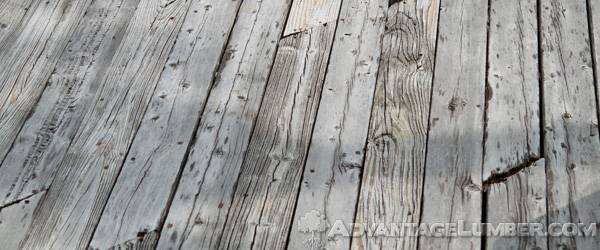
When planning a new deck, it’s completely natural to focus on price. Decking materials can make up a large portion of the overall project cost, and the temptation to choose the least expensive option is strong. Many homeowners are persuaded by low-cost decking materials such as pressure treated pine or imported composite decking with bargain price points.
But what looks like a great deal upfront can often lead to higher costs, more maintenance, and even full replacement far sooner than expected. Understanding the hidden costs of cheap decking can help you make a smarter long-term investment for your home.
The Appeal of Cheap Decking Materials
Low-cost decking options usually fall into two categories:
- Pressure treated pine decking
- Lower-priced imported composite decking
Both are widely available and marketed as budget-friendly solutions. In some situations, they can make sense—but only if homeowners clearly understand the trade-offs.
Pressure Treated Pine: Affordable, But High Maintenance
Pressure treated pine remains one of the most common decking materials in the U.S., largely because of its low initial cost and easy availability. When properly installed and maintained, pressure treated pine can last 10–15 years, making it a reasonable option for homeowners who:
- Need a short- to mid-term solution
- Plan to sell their home in the near future
- Are committed to ongoing maintenance
The Hidden Costs of Pressure Treated Pine
While affordable upfront, pressure treated pine comes with ongoing responsibilities:
- Frequent sealing and staining – Typically every 1–2 years
- Higher risk of rot and decay if moisture penetrates the wood (especially if it freezes)
- Warping, splitting, and checking as the wood dries and ages
- Increased labor costs over time for sanding, repairs, and refinishing
Pressure treated pine can perform adequately if homeowners are diligent about sealing the wood and managing moisture. Without consistent maintenance, however, decks often deteriorate much faster than expected.
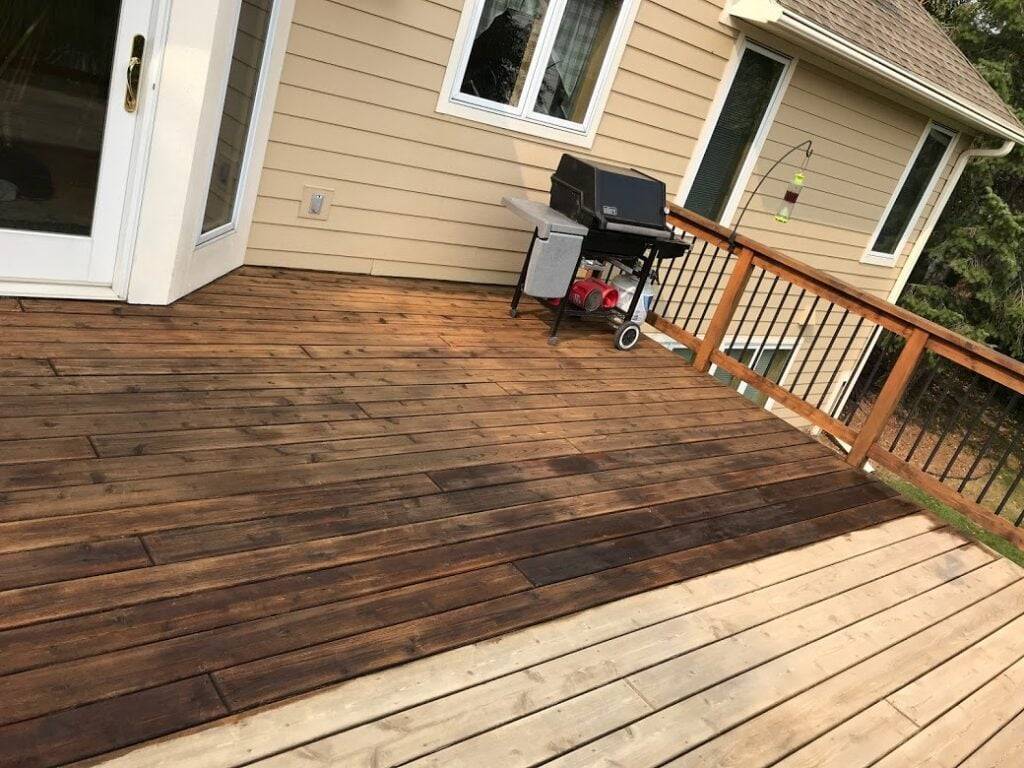
Most homeowners get busy and end up only finding time to refinishing their pressure treated pine deck every 3-5 years. This can significantly shorten the lifespan as it should be done every 1-2 years ideally. The picture above shows a homeowner that faithfully sands, stains and seals his deck every 1-2 years and after 10 year i still looks great. He might be able to get another 10 years out of his deck due to the amount of work he puts into it.
Cheap Imported Composite Decking: A Risky Gamble
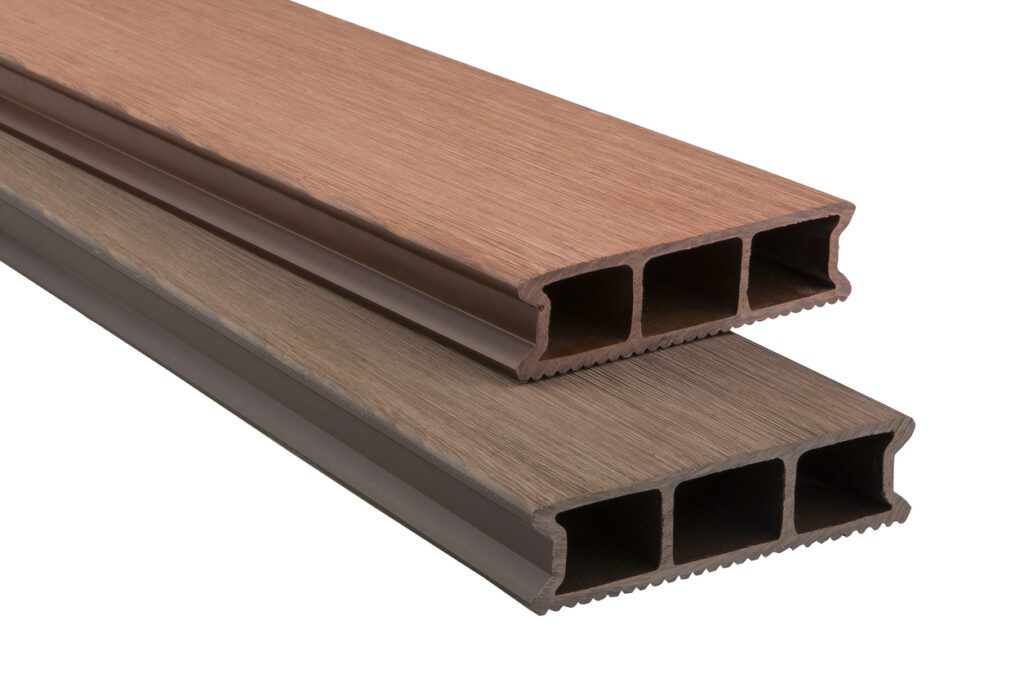
Composite decking is often marketed as a low-maintenance alternative to wood, but not all composite decking is created equal. Lower-priced imported composite decking frequently cuts costs by using:
- Lower-quality recycled plastics
- Inconsistent manufacturing standards
- Thinner protective caps (or none at all)
- Hollow Core Boards
Common Problems with Cheap Composite Decking
Homeowners who choose bargain composite decking may encounter issues such as:
- Fading and discoloration within a few years
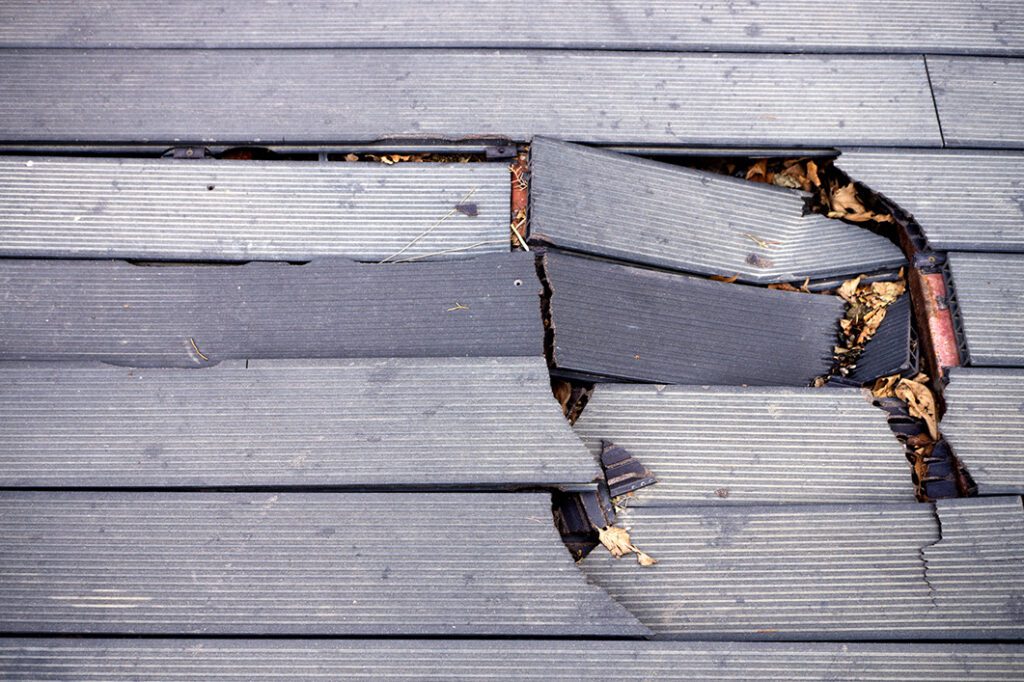
- Surface cracking, delamination, crumbling hollow core boards
- Excessive heat retention
- Structural sagging or failure
- Limited or unreliable warranties
While these products may look good in the first year or two, many fail far earlier than premium composite or hardwood alternatives—often requiring full replacement rather than repair.
The Real Cost of Replacing a Deck Early
One of the biggest hidden costs of cheap decking isn’t the material itself—it’s replacement.
When a deck fails prematurely, homeowners may face:
- Demolition and disposal costs
- Labor costs to rebuild
- Potential damage to framing or the home
- Lost time and inconvenience
- Personal injuries and fatalities
In many cases, replacing a deck after 5–8 years ends up costing more than choosing a higher-quality material from the start.
When Cheap Decking Does Make Sense
To be fair, inexpensive decking isn’t always the wrong choice.
Pressure treated pine can be a good option if:
- You only need 10–15 years of service life
- You are committed to sealing and maintaining the deck
- The deck is low to the ground and easy to access
- Budget constraints are a priority
The key is making an informed decision, not one based solely on the price tag.
Investing in Long-Term Value
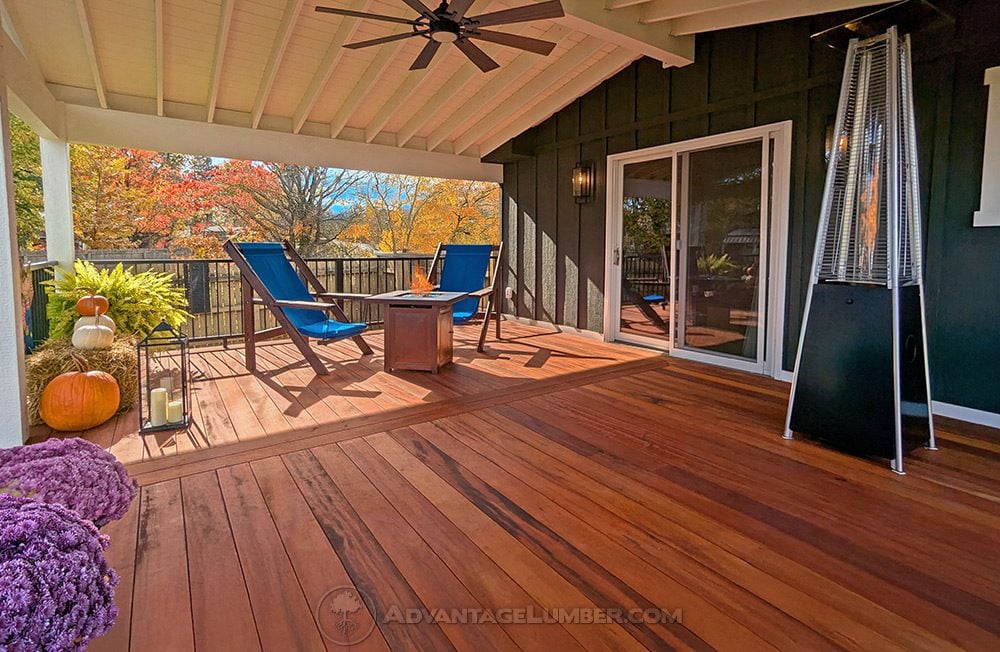
For homeowners planning to stay in their homes long term, investing in more durable decking materials—such as premium composite decking, thermally modified wood, or naturally rot-resistant hardwood decking can significantly reduce maintenance, improve performance, and deliver better overall value.
Higher-quality decking materials typically offer:
- Longer service life
- Lower lifetime maintenance costs
- Better resistance to moisture, insects, and rot
- Stronger warranties and proven track records
Final Thoughts: Look Beyond the Price Tag
Cheap decking materials can be appealing, but the true cost often reveals itself years later through maintenance headaches, repairs, or early replacement. Before buying, homeowners should consider not just the upfront price, but how the material will perform over time.
At AdvantageLumber.com, we believe an informed homeowner makes the best decision. Whether you choose pressure treated pine for short-term use or invest in premium decking for long-term value, understanding the hidden costs ensures your deck remains a source of enjoyment—not regret—for years to come.
