
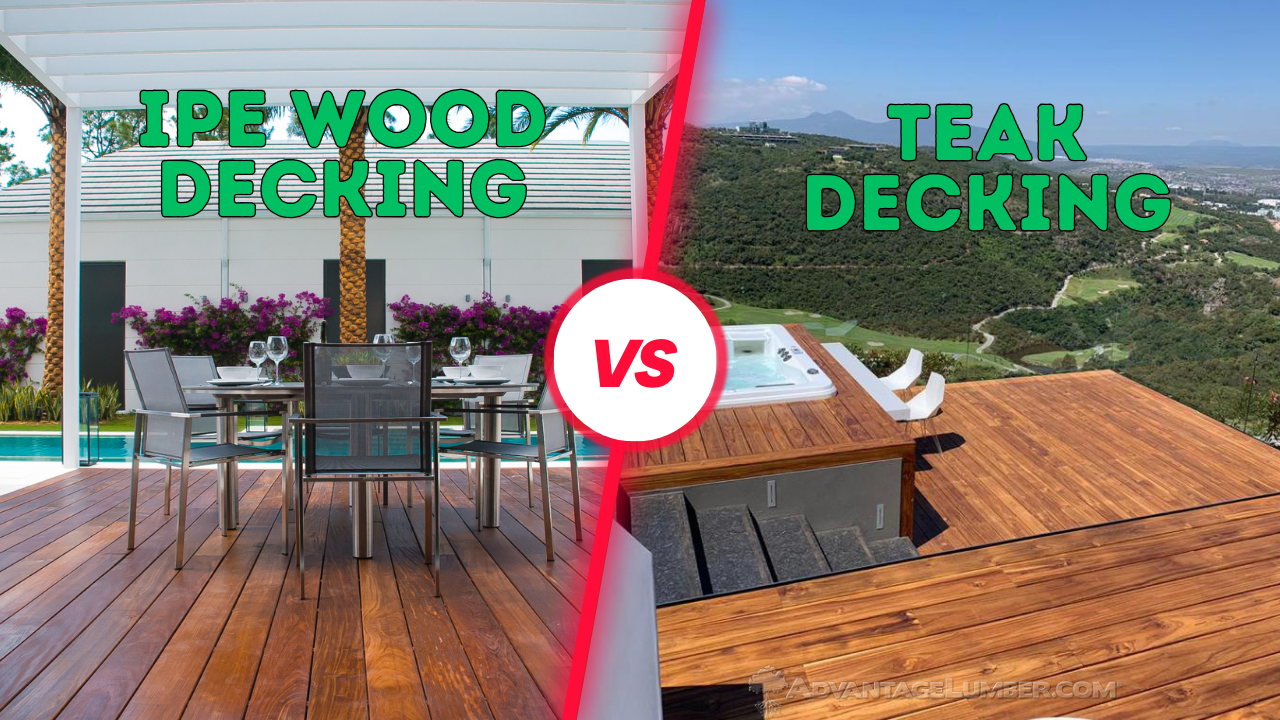
Look, I’ll just say it up front: I’ve had this conversation more times than I can count. Teak carries a reputation that boat builders built over centuries. Indeed, they reached for it because the oils kept hulls from rotting in salt water.
At the same time, furniture makers reached for it because the boards stayed put and looked expensive. As a result, when someone plans a high end deck, teak often comes up first. Can’t blame them. The name might sound like money.
However, Ipe is probably the wood most of those decks actually get. That’s not marketing. That’s what I tend to see on job sites.
On one hand, both woods can last a long time outdoors if you install them correctly. Even so, they do not necessarily swap one for one. In fact, hardness, weight, fire rating, color, how they cut, and price may pull in different directions. Therefore, the project can tell you which one to pick. Meanwhile, the familiar name probably does not. Ever notice how the fancier sounding option isn’t always the one that survives a Minnesota winter?
How the Two Woods Stack Up
Ipe (Tabebuia / Handroanthus, often sold as Brazilian walnut or ironwood) can pack more density into a board than almost any other decking wood you will handle. I’m not exaggerating. Drop a sample on a workbench and you might hear it. Indeed, Janka hardness sits around 3,680 lbf. At the same time, a cubic foot weighs roughly 69 pounds. As a result, untreated ipe can earn a Class A fire rating, the same class concrete and steel earn. In turn, a deck may serve 50 to 75 years outdoors when you frame it right and give it air. Seventy five years. That’s potentially longer than some mortgages.
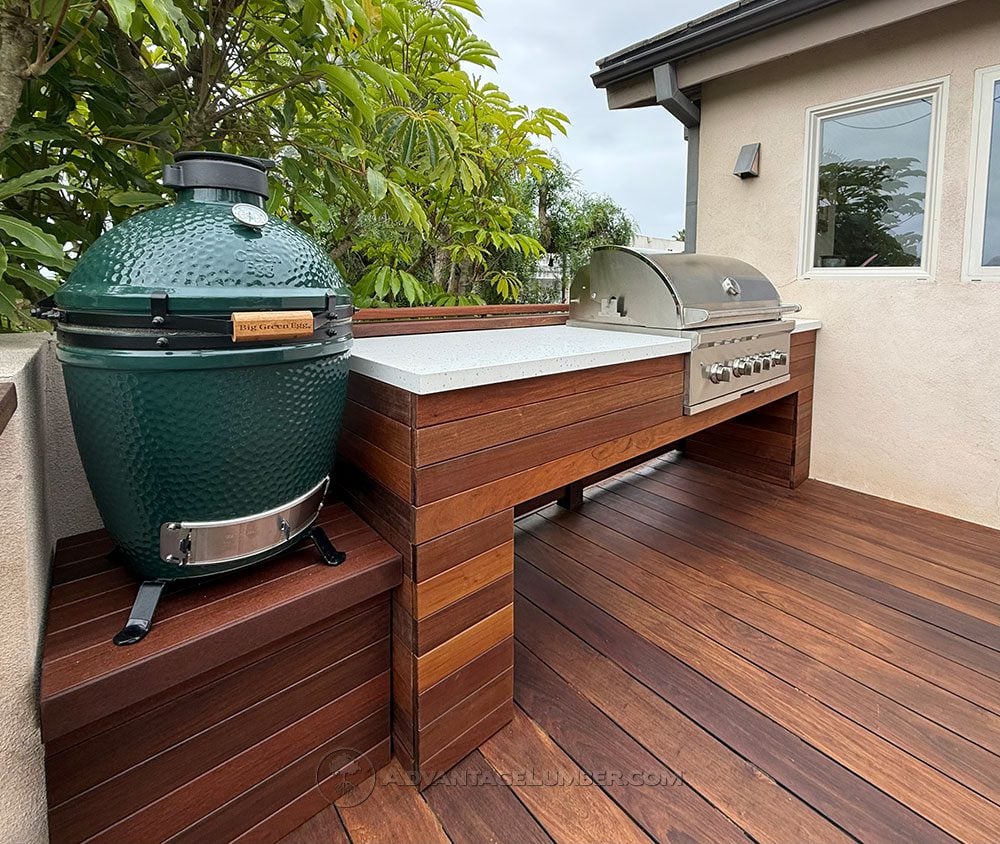
By contrast, Teak (Tectona grandis) may behave differently. For one thing, true old growth Burmese teak is scarce and priced that way. Consequently, most teak yards sell for houses today probably comes from plantations. Even so, plantation teak lands around 1,070 lbf on the Janka scale. Meanwhile, a cubic foot weighs closer to 40 pounds. Still, the oils and silica can fight rot very well. Altogether, outdoors the wood typically lasts 25 to 50 years. Then again, it may last longer if you start with higher grade stock and keep oiling it. I’ve seen both ends of that range, and the cheap plantation stuff doesn’t necessarily get you the boat deck fairy tale people have in their heads.
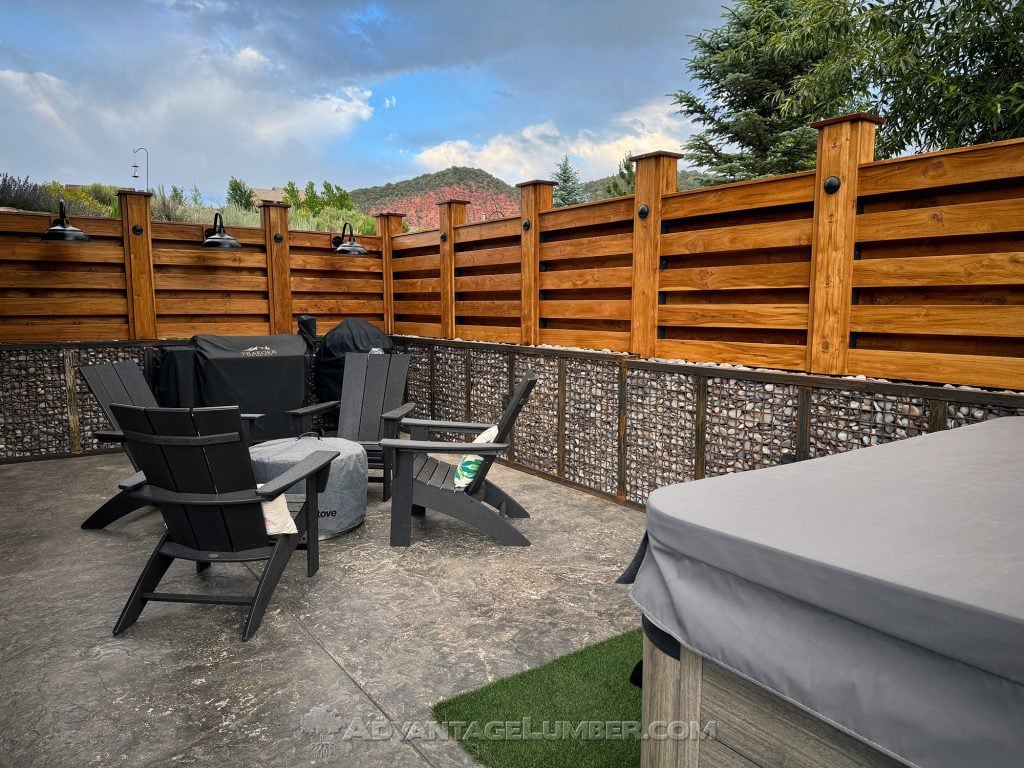
All the same, those numbers can show up on a deck. For instance, ipe may shrug off furniture you drag, sandy feet, and freeze thaw cycles. Teak can hold up, although it might dent and wear faster where people walk the most. Kids, coolers, grill wheels take your pick.
Color and How Each Board Ages
Fresh ipe generally runs dark brown and often carries olive, reddish, or almost black streaks. In addition, the grain tends to stay tight. Left unfinished, however, it can weather to silver gray. Some folks love that gray. Some hate it. That’s fine. On the other hand, oil it on a regular schedule with a penetrating oil like Ipe Oil for dense hardwoods, and it may keep that rich brown for years.
Teak, meanwhile, often starts lighter: golden brown to honey, sometimes with darker streaks. Indeed, plenty of people might want that warmer tone beside a pool or on a roof. Can’t argue with the look if that’s what you want. Even so, it can also turn gray if you leave it alone. At the same time, teak’s oils may sit closer to the surface, so the color can potentially blotch if you oil it unevenly. I’ve seen boards that look like someone started a project and then went on vacation. Don’t be that person.
In any case, neither wood tends to take paint well. Therefore, you probably should not plan to paint either one. Why would you buy this stuff and then hide it under latex? I still don’t get it.
Weight and the Frame Underneath
Ipe is heavy. Ask anyone who’s carried a bunk of it up a set of stairs. Even so, on a standard framed deck that weight rarely causes trouble if you size the joists correctly. However, on a rooftop, balcony, or any structure whose dead load already sits tight, the extra pounds can add up. As a result, you may need more framing, or you may need an engineer to sign off. Yeah, that’s a phone call nobody loves making after the lumber’s already on site.
Teak, by contrast, generally weighs less, and that is one place teak can clearly win for certain jobs. Accordingly, if the structure cannot carry ipe, you might pick teak (or a lighter hardwood such as garapa). No shame in that. Physics doesn’t care about your Pinterest board.
What Installation Actually Asks of You
Ipe can wear out tools. I’ve gone through bits I’d rather not admit. Therefore, you should probably pre drill. Likewise, use sharp carbide bits. At the same time, hidden fasteners makers design for dense hardwoods (Ipe Clip and systems like it) can hold well because the wood does not usually crush around the clip the way softer species crush. As a rule, air dried ipe usually wants about a 3/32 inch gap; kiln dried stock often wants a wider gap. Still, your climate may set the final number. Buffalo isn’t Tampa. Don’t pretend it is.
Teak, on the other hand, can cut and fasten more easily, and that may save labor. Your carpenter will thank you. Even though it works easier, it can also move more than ipe, so you should still set gaps and fasteners with care. In short, do not treat it like pressure treated pine just because it works easier. That’s how you might get a wavy deck and a callback you don’t want.
Meanwhile, both woods generally need air under them. For that reason, we recommend 18 inches of clearance as a baseline. After all, a ground level deck can fight moisture no matter which species you choose. I know the low look is popular. I also know what cupping can look like two summers later.
Upkeep
Neither wood necessarily frees you from upkeep. Indeed, anyone who tells you otherwise is probably selling something. Usually a brochure.
On one hand, ipe can go years with almost no work if you accept the gray weathered look. On the other hand, if you want the dark color, you may need to clean it and oil it on a schedule that matches your sun and rain. Typically, once a year is common in harsh climates, although some decks can go longer. I’ll oil mine when the finish starts looking thirsty. You can overthink this.
Teak’s oils, meanwhile, can help it shed water, though the surface may still benefit when you clean and oil it if you care about color. Even so, skip that work and you might get gray teak, not ruined teak. Gray isn’t necessarily a failure. It’s just gray.
In either case, use Ipe Oil for dense outdoor hardwoods. Otherwise, finishes that form a film can usually fail. I’ve peeled enough sad polyurethane to last me.
Fire, Code, and Salt Air
A Class A fire rating may matter in wildfire country and on decks that attach to a house in some towns. In fact, ipe can qualify. Teak, however, generally does not. As a result, if the inspector or the insurer cares about flame spread, that fact might end the teak conversation by itself. Not much poetry in a rejected permit.
At the same time, both woods can handle salt air. Indeed, boat yards earned teak’s marine reputation. Likewise, boardwalks, docks, and coastal decks have carried ipe for years as well. In ipe, density and extractives may do the work. In teak, by contrast, oils and silica can do it. Different recipes. Same idea: the ocean doesn’t necessarily get a free win.
Price
People often assume teak has to cost more. In fact, plantation teak can run significantly cheaper than ipe, at least in the sizes most homeowners actually buy. For example, 1×6 select grade plantation teak decking is listed at $3.17 per lineal foot, while comparable 1×6 ipe sits at $7.32 per lineal foot. That’s more than twice the material cost for ipe before anyone drives a screw.
Labor on ipe, meanwhile, can run higher because the wood is so dense, so the gap may get even wider once you factor in bits, time, and sore forearms. Do the napkin math before you fall in love with a sample. Even so, grade, length, and the market can move the numbers, so you should probably get current quotes.
Plantation teak random length orders also tend to come in shorter boards—often 5 to 8 feet—while ipe is more likely to show up in the longer lengths a big deck wants. Old growth or marine grade teak can still sit in another league.
Therefore, do not assume “teak” means one price. On a 400 or 500 square foot deck, as a result, choosing plantation teak over ipe can save thousands of dollars in boards alone. That’s potentially a hot tub. Or a really nice grill. Just saying.
Which Wood Should You Use?
You might choose ipe when you want maximum hardness, a long service life, Class A fire performance, and better value on a standard or high traffic deck. Indeed, that probably describes most residential decks in North America. If you’re on the fence, that’s usually where I land.
You might choose teak, however, when weight strains the structure, you specifically want that golden color, or the project acts more like furniture than like a deck (yacht style detailing, pool surrounds where barefoot feel and a lighter tone matter more than dent resistance). Want the boat club look and the structure can take the lighter boards? Fair enough.
If you weigh both woods against composites, remember the tradeoff. TimberTech, Trex, and similar products can skip the oiling and the gray weathering. Even though that sounds convenient, they do not necessarily look or feel like real hardwood, and they may not match the years ipe can serve or the fire rating ipe earns. Composites can have their place. I’m not going to pretend a plastic board is teak, though.
After all, a deck may only last as long as the framing you put under it. As a result, ipe that outlives rotten pine joists can waste money. I’ve seen that movie. Therefore, protect the framing, leave room for air, fasten the boards correctly, and either wood can probably do the job you hired it to do. That’s the whole trick, honestly.
