
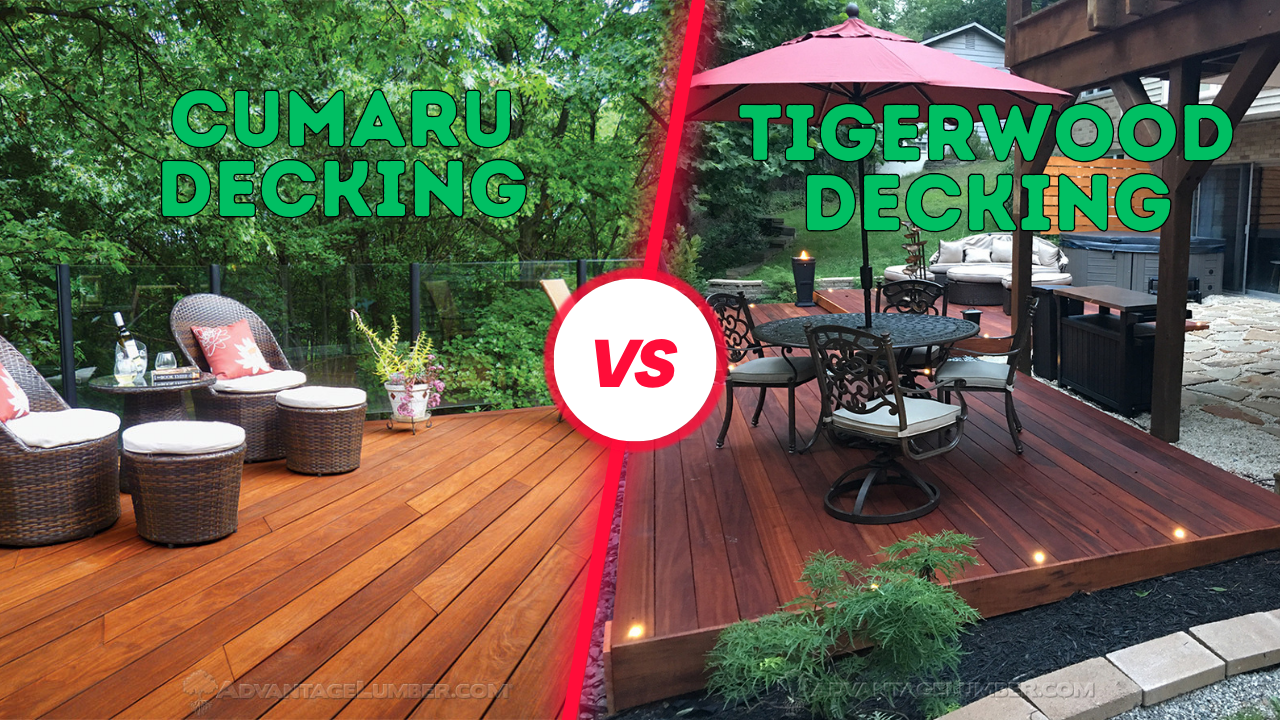
If you like how Ipe looks and performs but the price pushes your project budget a little too far, you may have several tropical hardwoods worth considering. In particular, homeowners often compare Cumaru vs. Tigerwood when deciding between alternatives. And really, who doesn’t have a budget to think about?
In particular, two of the most popular are Cumaru and Tigerwood.
Over the years, we’ve worked with all three woods for decades, and I wouldn’t call Cumaru or Tigerwood “cheap substitutes” for Ipe. I’ve never liked that way of describing them, honestly, because it can make them sound like consolation prizes.
Instead, both can stand on their own as premium hardwood decking materials. In fact, depending on what you want from your deck, you may actually prefer one of them over Ipe. I’ve seen that happen plenty of times.
Ultimately, the biggest differences between Cumaru and Tigerwood generally come down to durability, appearance, and price. That’s usually where the conversation ends up anyway.
So, if you want maximum durability for your money, I’d probably lean toward Cumaru. That’s my instinct after working around these woods for years.
On the other hand, if you want dramatic grain and color, Tigerwood can be tough to beat. I mean, have you ever seen a really good batch of Tigerwood laid out across a large deck?
With that in mind, here’s how they compare.
What Is Cumaru Decking?
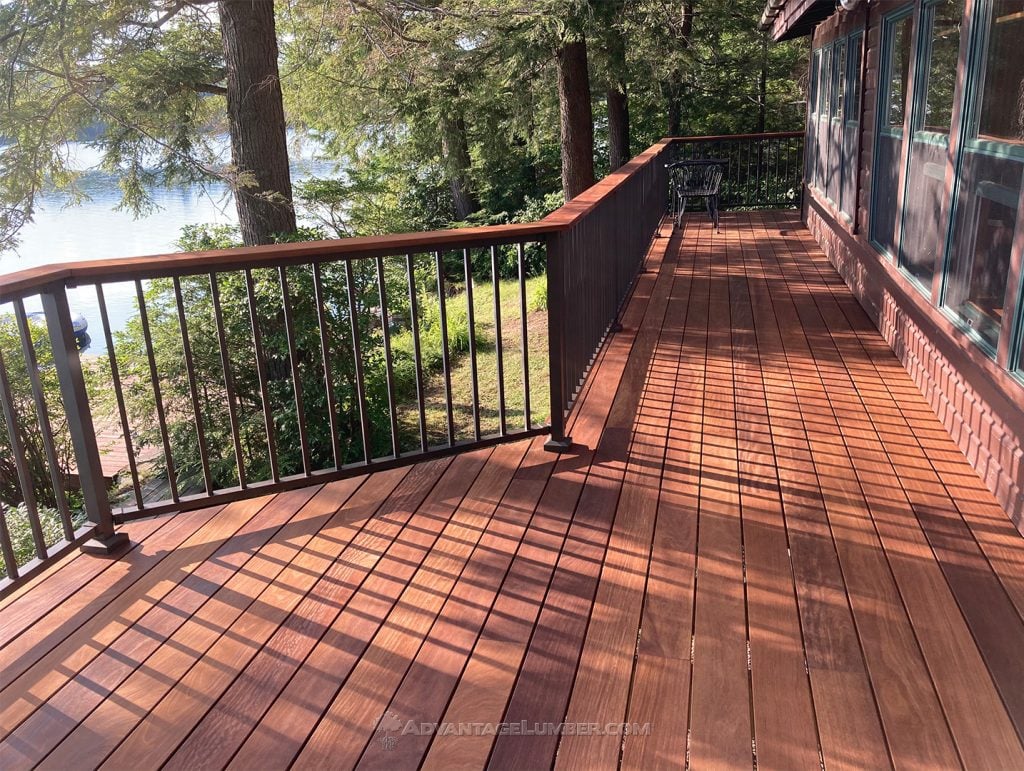
First, Cumaru is a dense South American hardwood commonly called Brazilian Teak, although it isn’t actually a true teak. Wood names can get confusing fast, can’t they?
Even so, it generally ranks among the closest Ipe alternatives when you compare density and durability. More importantly, Cumaru can naturally resist rot, decay, and wood destroying insects without chemical preservatives.
As for appearance, its color may range from golden brown and reddish brown to darker brown. You’ll also usually see some variation from board to board, though generally not nearly as much as you’ll find with Tigerwood. Personally, I like that balance because you can still get natural character without the deck looking too busy.
Personally, one thing I’ve always liked about Cumaru is how much performance you can get for the money. In other words, it may give you a substantial, high end hardwood deck without quite reaching Ipe pricing. That’s a pretty attractive combination in my book.
However, it’s extremely hard, and hardness isn’t always an advantage when you’re the guy who has to cut and drill it. Ask anyone who’s dulled a blade halfway through the day.
What Is Tigerwood Decking?
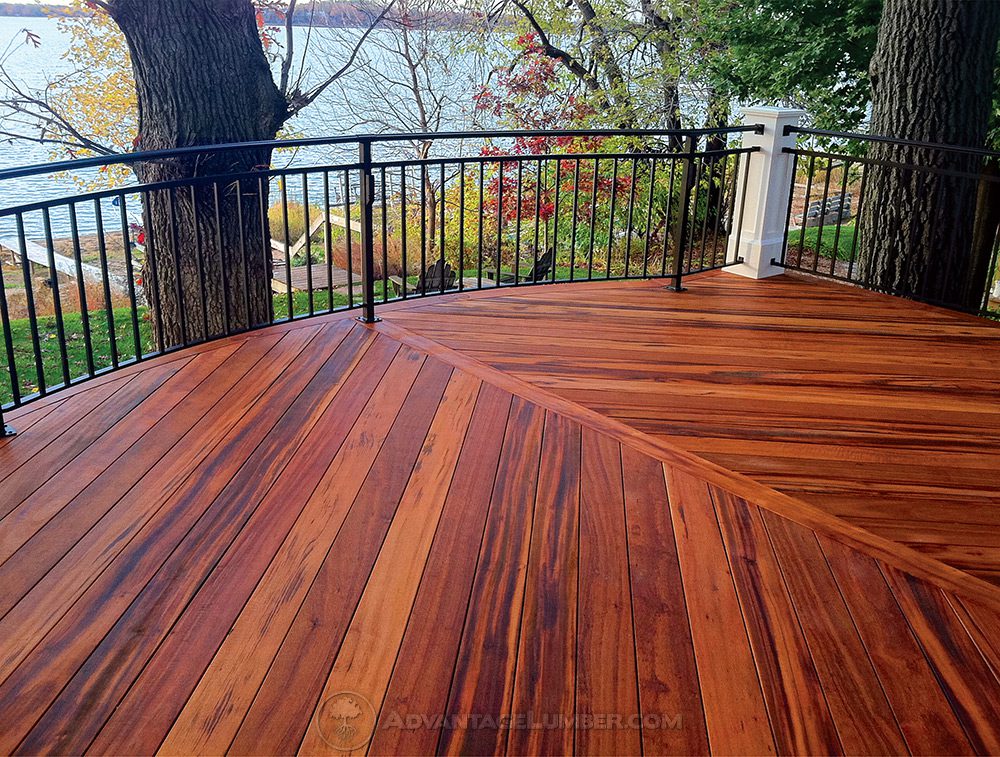
Meanwhile, Tigerwood gets its name from its appearance, and once you’ve seen a nice batch of it, the name will probably make perfect sense. There’s really not much mystery there.
Typically, the wood may show an orange, reddish brown, or golden brown background with dark brown or nearly black streaks running through it. As a result, those stripes can create some spectacular looking deck boards. I’ve seen boards come off the stack that almost look too good to cut.
In fact, no two Tigerwood decks are likely to look exactly alike. That’s part of the fun, if you ask me.
On one hand, some homeowners absolutely love that variation, although others may prefer the quieter, more uniform brown appearance you’ll typically see with Ipe or Cumaru. Neither side is wrong, of course. It really comes down to what you want to look at every day.
Because of that, I’d probably figure out what you prefer before ordering either species because pictures don’t always tell the whole story. After all, when you build a large deck, you’ll likely see natural color and grain differences across hundreds of square feet. A little sample board can only tell you so much.
At the same time, Tigerwood can also naturally resist rot and insects. Although several factors affect lifespan, it may serve you for decades outdoors when you design and build the deck correctly. And that’s really the key, isn’t it? Good material still needs good construction.
Cumaru vs. Tigerwood at a Glance
| Feature | Cumaru | Tigerwood |
|---|---|---|
| Typical Appearance | Golden brown to reddish/dark brown | Orange/reddish brown with dark streaks |
| Grain Variation | Moderate | High |
| Durability | Excellent | Excellent |
| Hardness | Extremely hard | Very hard |
| Rot Resistance | Excellent | Excellent |
| Insect Resistance | Excellent | Excellent |
| Maintenance | Low | Low |
| Best For | Maximum durability and value | Distinctive color and grain |
| Overall Look | More traditional tropical hardwood | Bold and dramatic |
Overall, both woods generally sit firmly in premium hardwood territory. So, you aren’t really choosing between a good wood and a bad wood. That’s worth repeating because people can sometimes get hung up on which one is “best.”
Instead, you’re choosing between two very good woods with different personalities. And yes, I do think woods can have personalities after you’ve worked with enough of them.
Cumaru Is the Harder Wood
Now, here’s where Cumaru really tends to separate itself.
For starters, Cumaru has a Janka hardness rating around 3,540 lbf, while Tigerwood generally comes in around 2,160 lbf.
For some perspective, domestic Red Oak comes in around 1,290 lbf. That’s a pretty eye opening comparison when you put the numbers next to each other.
Even so, don’t look at Tigerwood’s lower number and assume it’s soft. It isn’t. In fact, Tigerwood still ranks substantially harder than many domestic hardwoods you’ll find in construction and woodworking. I’ve worked with enough hardwood to tell you that Tigerwood probably won’t feel delicate under a saw.
Cumaru, however, is simply exceptionally hard.
Because of that, its density can help Cumaru handle heavy foot traffic and resist wear. Although that’s great once the deck goes into service, your saw blades, drill bits, and patience may notice the difference during the build. Your tools don’t care how beautiful the finished deck is.
For that reason, when I work with either of these hardwoods, I generally want good carbide tipped blades and proper pre-drilling where the job calls for it. In other words, don’t approach Cumaru the same way you’d approach pressure treated pine and expect your tools to be happy about it. I’ve seen that lesson learned the hard way more than once.
Which One Lasts Longer?
When it comes to lifespan, Cumaru generally gets the advantage here.
Under the right conditions, a well built Cumaru deck may provide 40 to 50+ years of service, although climate, exposure, ventilation, moisture, and other conditions can affect how long any deck lasts. There’s no magic number carved in stone, and anyone who works outdoors knows Mother Nature gets a vote.
By comparison, Tigerwood can commonly provide roughly 30+ years under suitable conditions.
Either way, those are potentially impressive numbers for both materials. Most homeowners would probably be pretty happy getting that kind of service life out of a deck.
However, here’s the important part: you still have to build the deck correctly. I can’t stress that enough.
Over the years, I’ve seen people spend good money on premium hardwood and then treat ventilation, drainage, framing, and fasteners like minor details. Quite simply, they aren’t. It’s a little painful to see beautiful decking sitting over a frame that may have been treated like an afterthought.
For example, a tropical hardwood deck needs room to dry. Likewise, you need to choose deck board spacing based on the lumber’s moisture content, your local climate, exposure to rain, and the amount of airflow beneath the deck. Sounds picky? Maybe a little, but those details can matter.
So, although these woods naturally resist decay, they may still perform best when you build a deck where moisture can escape. Wood still has to breathe.
Don’t Forget About the Deck Frame
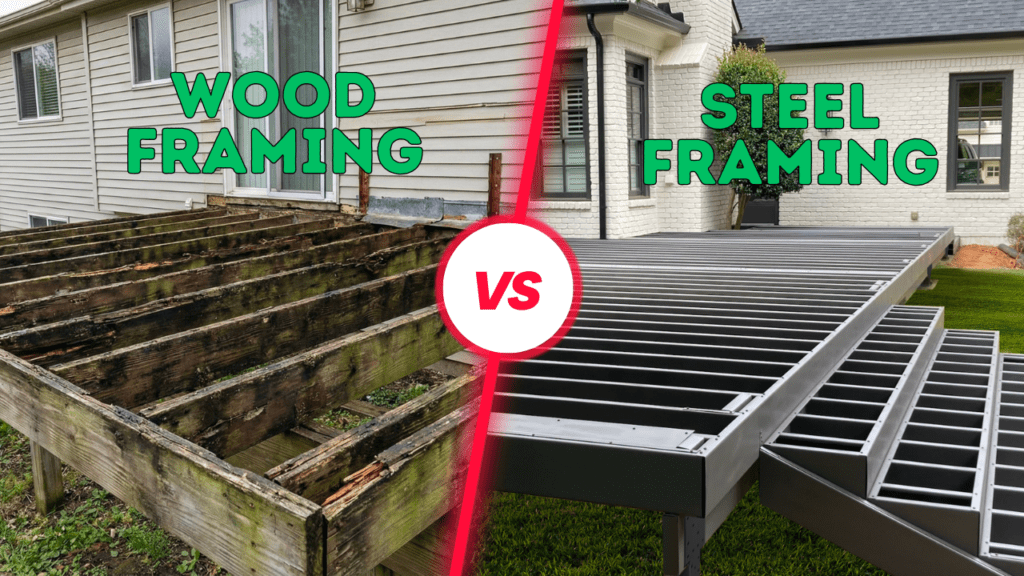
At the same time, there’s another issue people tend to overlook when they compare decking that may last 30, 40, or 50 years.
Namely, what’s underneath it? That’s the question I wish more people asked early.
After all, you don’t gain much when you install decking that can last several decades over a frame that may rot long before the deck boards wear out. What’s the sense in that?
Unfortunately, we’ve seen this problem plenty of times over the years. In some cases, the hardwood decking can still look fantastic while the pressure treated framing underneath starts showing its age. That’s never a fun conversation with a homeowner.
Therefore, if you’re building for the long haul, it may make sense to protect the frame too. At a minimum, properly applied joist and ledger tape can help keep trapped moisture away from vulnerable areas of wood framing. It’s relatively inexpensive insurance compared with tearing apart a deck later.
For higher end projects where longevity matters more than the lowest upfront cost, steel deck framing or aluminum deck framing may also make sense. I’ll admit, once you see a really well built long life framing system under premium hardwood, it’s hard not to appreciate it.
Ultimately, there’s no point bragging about a 50 year deck board if you might have to tear the deck apart early to replace the structure underneath it. That’s just paying twice for the same deck.
Tigerwood Wins If You Want a Dramatic Deck
When it comes to appearance, this is probably the easiest category to judge.
Simply put, Tigerwood doesn’t usually look like most other decking. And that’s exactly why people may fall for it.
In particular, those dark streaks against the orange and reddish brown background can give an entire deck an almost custom look. Even better, Tigerwood may especially shine on larger decks where you have enough square footage to show off its natural variation. I’ve stood back from finished Tigerwood decks before and thought, yeah, that was probably the right choice.
Personally, I’ve always thought Tigerwood looks particularly good when you don’t try too hard with the design. Instead, let the wood do the work. Sometimes the best design decision may be knowing when to stop adding things.
For instance, a simple deck layout with clean railings can already offer plenty of visual interest because the boards bring so much character on their own. Why compete with the wood?
Cumaru, on the other hand, generally gives you a somewhat calmer appearance. Some people hear “calmer” and think boring, but I don’t see it that way at all.
Of course, you’ll still get natural variation because we’re talking about real wood, though Cumaru generally gives you the richer brown appearance many homeowners may want when they first start shopping for Ipe. If that’s the look you had in your head from day one, Cumaru will probably feel very familiar.
So, this part is pretty simple.
If you want understated and traditional, you may want to look harder at Cumaru.
However, if you want people asking what kind of wood your deck is, Tigerwood probably has the advantage. And trust me, they may very well ask.
Both Woods Will Eventually Turn Gray
Now, this comes up constantly with tropical hardwood decking. If I had a dollar for every time someone asked about gray hardwood, I could probably buy a pretty nice stack of decking.
Over time, Cumaru and Tigerwood will both typically weather as sunlight and the elements hit them. As a result, if you don’t maintain their original colors with an appropriate hardwood oil, their surfaces will usually develop a silver gray patina.
However, that doesn’t necessarily mean the wood is rotting. This is one of the most common misconceptions I hear.
Instead, the sun and weather simply change the surface color.
Interestingly, some homeowners love the weathered look and intentionally let their decks gray naturally. If that’s what you want, you may be able to keep maintenance pretty simple. Frankly, a well weathered tropical hardwood deck can look fantastic.
On the other hand, if you want to preserve Cumaru’s rich browns or Tigerwood’s orange tones and dark streaks, you’ll probably need to clean and re-oil the wood periodically. There’s not much way around that if fresh color matters to you.
For example, you can use DeckWise Cleaner and Brightener to prepare weathered hardwood before you apply a finish. Afterward, products such as Ipe Oil or WiseCoat can help maintain the wood’s appearance.
Although it’s tempting to lay the oil on heavy, don’t assume more oil will necessarily give you more protection. I’ve seen people make that mistake because it feels logical.
Quite simply, it usually doesn’t.
Because tropical hardwoods are extremely dense, they will only absorb so much finish. As a result, if you leave excess oil sitting on the surface, you may end up with a sticky mess that grabs dirt and pollen. Nobody wants to walk across a tacky deck in July. So, follow the manufacturer’s directions, and remove excess finish as instructed.
Cumaru Has an Advantage If You Want the Ipe Look
If you originally wanted Ipe but started considering alternatives because of your budget, I’d probably start with Cumaru. That’s usually the first direction I’d point someone.
Of course, it’s not identical to Ipe. After all, no wood is. If somebody tells you two natural species are exactly the same, I’d probably take that with a grain of salt.
Even so, Cumaru can come close when you consider its brown coloring, exceptional density, long lifespan, and durability.
For that reason, we’ve seen many customers choose Cumaru as an Ipe alternative over the years. Once people see the wood in person, the decision can often get easier.
More importantly, you still get genuine tropical hardwood. Likewise, you still get excellent natural resistance to rot and insects. And although no one can promise exactly how long an outdoor deck will last, you may reasonably expect Cumaru to serve you for decades when you build and care for the deck correctly.
At the same time, you may simply spend less than you typically would for Ipe. That’s not a bad trade, is it?
Tigerwood Has an Advantage If Appearance Comes First
Tigerwood, however, takes a different route.
Generally, most people who choose Tigerwood probably aren’t trying to fool anyone into thinking they bought Ipe. And honestly, why would they?
Instead, they choose it because they like Tigerwood.
And really, that’s an important distinction. I’ve always believed you should probably buy the material you actually want to look at, not the one you think you’re supposed to want.
For example, if you’re standing there looking at samples and your eye keeps going back to those dramatic striped boards, there’s probably your answer. In that case, don’t buy a more uniform brown hardwood and spend the next 20 years wishing you’d chosen the wood you actually liked. I’ve seen people overthink material choices that seemed obvious the minute they looked at the samples.
After all, decking isn’t something you change every few years.
So, choose something you’ll probably enjoy looking at. Pretty simple advice, but it’s usually good advice.
What About Hidden Fasteners?
When it comes to fastening, both Cumaru and Tigerwood can work very well with hidden deck fastener systems when you use decking milled with the proper grooves.
For tropical hardwood decking, Ipe Clip hidden fasteners are one of our preferred systems. We’ve had good luck with them over the years.
Of course, the biggest advantage is obvious: you don’t have rows of screws running through the face of every board. On a high-end deck, that cleaner look can matter.
In particular, that’s especially worthwhile with Tigerwood. After all, if you’re paying for dramatic grain and color, I’d rather look at the wood than hundreds of screw heads. Wouldn’t you?
That said, face screwing your deck boards can still work perfectly well. If you go that route, however, use quality stainless steel fasteners suitable for hardwood decking and pre-drill and countersink as necessary.
Simply put, this probably isn’t the place to save a few dollars with cheap coated screws. I’ve seen enough broken and corroded fasteners to feel pretty strongly about that one.
Which Wood Is Easier to Work With?
As far as installation goes, Tigerwood probably gets a slight advantage.
Even so, neither material works like cedar or pressure treated pine. Instead, they’re dense tropical hardwoods, so you need to treat them accordingly. If you’re used to framing lumber, the first few cuts can be an eye opener.
For example, Cumaru’s extreme hardness can make cutting, drilling, and fastening a little more demanding. Fortunately, sharp carbide blades can make a big difference. Dull tools and Cumaru are not a combination I’d recommend to anybody.
Tigerwood is still hard, although it’s generally somewhat friendlier to work with.
Generally, a professional deck builder who regularly works with tropical hardwoods shouldn’t have a serious problem with either species. Once you know what to expect, you can adjust.
For a homeowner tackling their first hardwood deck, however, Tigerwood may feel a little less intimidating. And there’s nothing wrong with making your life easier on a first project.
What About Splinters and Bare Feet?
Fortunately, both woods can make excellent deck surfaces when you install and finish them properly. That’s one of the reasons people like dense tropical hardwoods around pools and outdoor living spaces.
Typically, tropical hardwood decking feels very smooth, and the density of these species can give you a solid feel underfoot that differs noticeably from softer decking materials. You can usually feel the difference pretty quickly when you walk on a well-built hardwood deck.
Even so, you may occasionally find a board edge or freshly cut end that needs some attention. Of course, that’s normal woodworking. Every material needs a little cleanup somewhere. In that case, knock down sharp edges or raised grain where you find them.
Generally, I don’t recommend aggressively sanding the entire surface of new tropical hardwood decking unless you have a reason to do it. Why create extra work when the boards may already look good?
Cumaru vs. Tigerwood: Which Is the Better Value?
When you look strictly at durability per dollar, I’d probably give Cumaru the advantage. That’s the way I see it.
After all, you get an extremely dense hardwood that can handle wear well and naturally fight decay and insects. With good design and proper care, you could potentially get decades of service from it. That’s a lot of deck for the money.
Tigerwood, meanwhile, may offer a different kind of value.
Specifically, you get a premium tropical hardwood with an appearance that’s difficult to duplicate with another species. And sometimes that’s exactly what you’re paying for.
And yes, that can matter. A deck takes up a lot of visual space around a house.
Although it’s easy to compare decking with hardness numbers and expected lifespans, value isn’t always about squeezing the maximum possible number of years from every dollar. Sometimes, you may give up some potential longevity because you simply like another material better. Haven’t we all done that with something?
And really, there’s nothing wrong with that.
So Which One Would I Choose?
If someone came to me and said:
“I wanted Ipe, but I’d like to lower the material cost without giving up too much durability,”
then I’d probably point them toward Cumaru. I wouldn’t hesitate much on that recommendation.
On the other hand, if they said:
“I want a natural hardwood deck that looks completely different from everything else in the neighborhood,”
then I’d likely show them Tigerwood. That’s where Tigerwood can really earn its keep.
And if they still couldn’t decide?
Personally, I’d probably put samples of Cumaru, Tigerwood, and Ipe next to each other and let them look at the actual wood. Sometimes you’ve just got to stop talking and look at the boards.
In my experience, that’s still one of the best ways to choose.
After all, specifications can tell you how a material should perform. However, they can’t tell you which wood you’ll enjoy looking at through the kitchen window every morning. And at the end of the day, isn’t that part of what you’re paying for?
The Bottom Line
Ultimately, Cumaru and Tigerwood can both make excellent choices for homeowners who like Ipe but want another option at a lower price point. You really can build a great deck with either one.
If durability, hardness, and long-term value matter most to you, Cumaru may be the better choice.
On the other hand, if distinctive grain, dramatic color variation, and a unique finished appearance matter more, Tigerwood may be the better fit.
Either way, you can get a naturally durable tropical hardwood rather than trying to make a less durable wood behave like one. That’s a pretty good place to start.
Most importantly, although choosing the right species matters, don’t forget everything underneath and around those boards. After all, good framing, ventilation, drainage, board spacing, stainless steel fasteners, and careful installation can play a huge role in how well the finished deck performs. I’ve seen beautiful lumber saved by good construction and ruined by bad construction.
In the end, get those details right, and either Cumaru or Tigerwood can make one heck of a deck. And really, that’s the whole point.
