
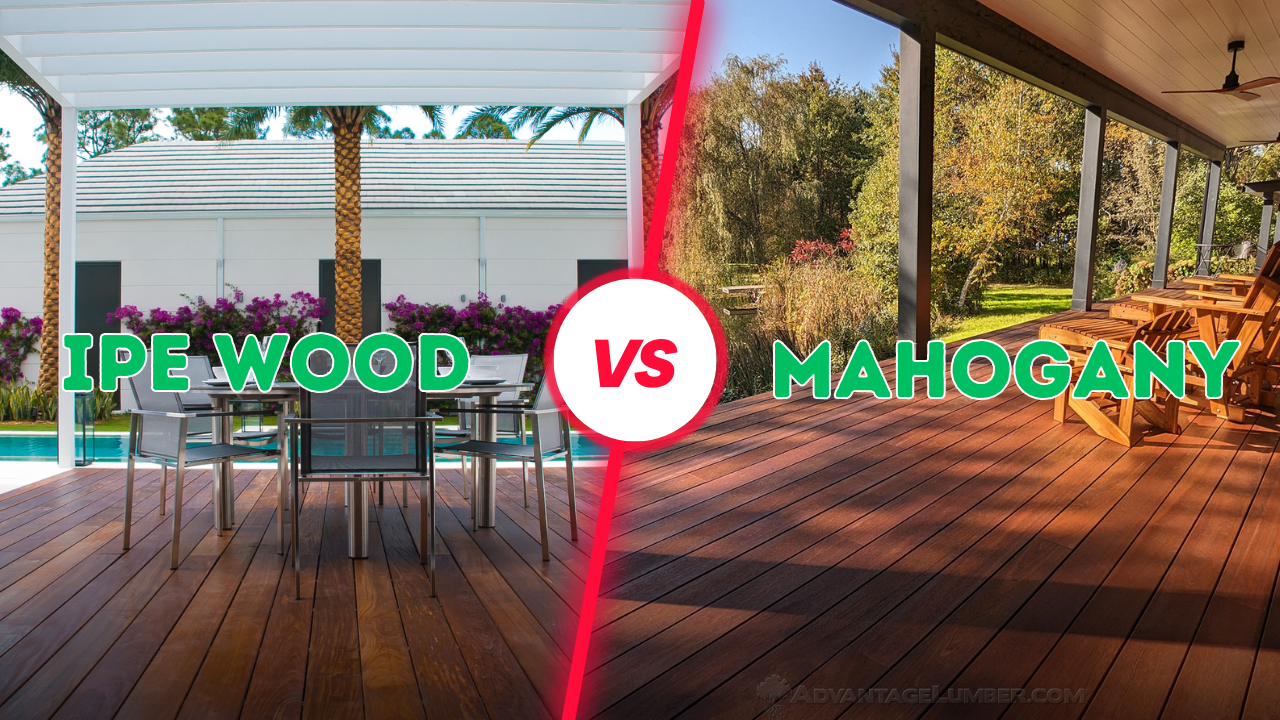
When it comes to building a beautiful, long-lasting outdoor deck, few materials rival the natural beauty, strength, and durability of exotic hardwoods. If you’re deciding between Ipe vs Mahogany Decking, understanding the differences can help you make the best choice for your outdoor space.
At AdvantageLumber.com, we specialize in premium sustainable decking options, including two of the most popular choices: Ipe (also known as Brazilian Walnut) and Mahogany (specifically our Red Balau and Golden Mahogany™ varieties).
Both are naturally resistant to rot, insects, and the elements—making them excellent alternatives to composite or pressure-treated lumber. But which one is right for your project?
In this guide, we’ll break down the key differences in appearance, durability, maintenance, installation, and—most importantly—cost. We’ll also highlight the significant savings you can achieve by choosing Mahogany over Ipe, so you can make an informed decision that fits your budget and vision.
Appearance: Rich Tones That Age Gracefully
Ipe Decking features a deep, rich chocolate-brown color with subtle variations of red and amber. Its fine, tight grain gives it a sleek, modern look that many homeowners love. Left unfinished, Ipe naturally weathers to a striking silver-gray patina over time while retaining its structural integrity.
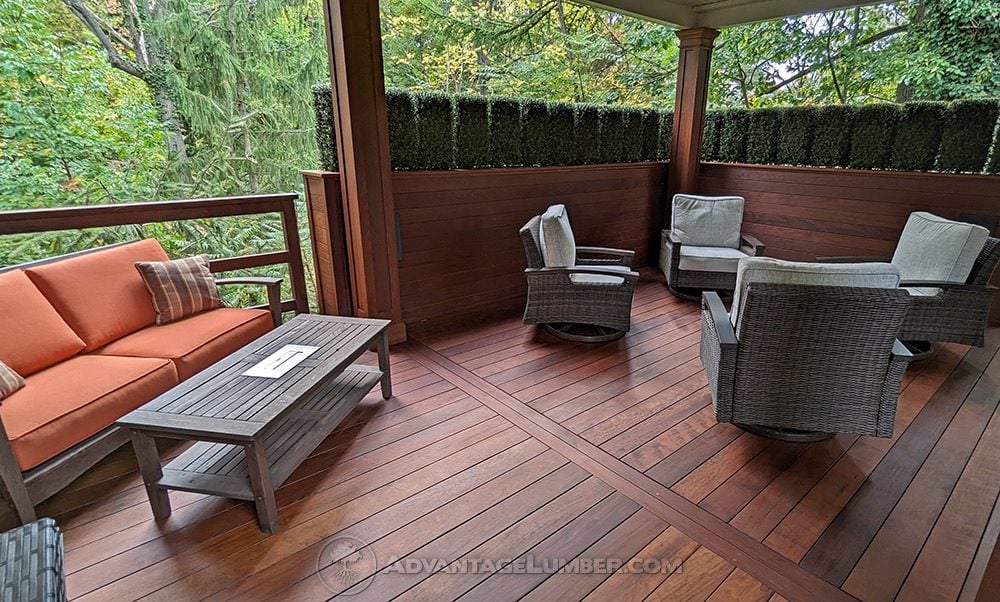
Mahogany Decking (Red Balau) offers warm reddish-brown tones with a straight, even grain that creates a classic, timeless hardwood appearance. Golden Mahogany™ (Yellow Balau) leans toward golden-brown hues. Both varieties develop a beautiful, even patina with exposure and are often praised for their vibrant, welcoming aesthetic that complements a wide range of home styles.
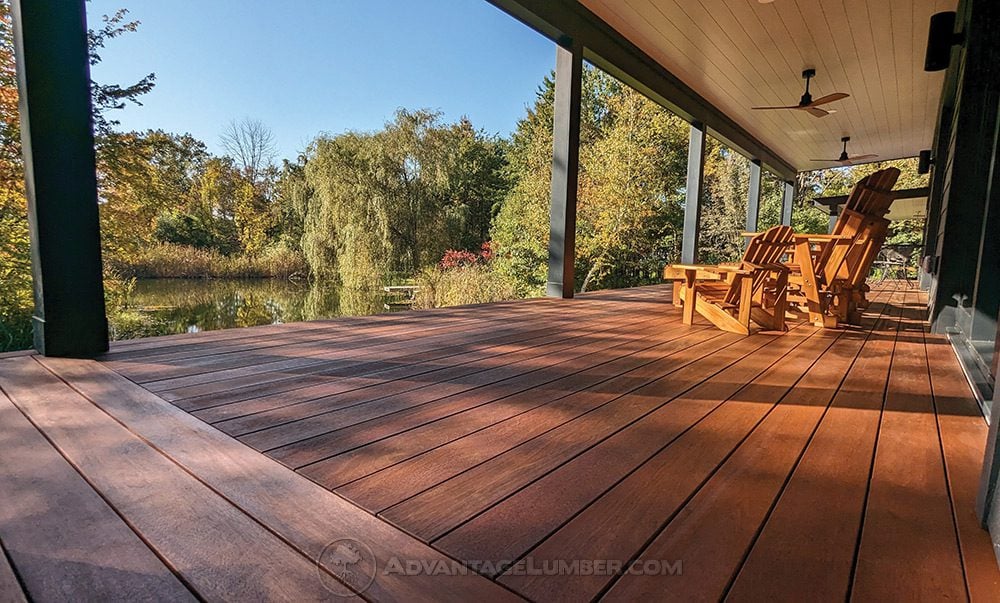
Winner for aesthetics? It’s a tie—both deliver premium curb appeal. Choose Ipe for a darker, more dramatic look or Mahogany for warmer, traditional tones.
Durability and Lifespan: Built to Last
Ipe is one of the densest hardwoods on the market, with a Janka hardness rating of 3,680 lbs—roughly 8 times harder than California Redwood. It boasts exceptional resistance to scratches, dents, mold, decay, and termites. Properly installed, Ipe decks can last 75+ years with minimal intervention.
Mahogany (Red Balau and Golden Mahogany™) is also highly durable and dense, with excellent natural resistance to insects, rot, and weathering. It’s a strong performer for residential decks and docks, typically delivering a 50+ year lifespan when maintained properly. While not quite as hard as Ipe, it stands up exceptionally well to everyday foot traffic and outdoor conditions.
Bottom line: Ipe edges out in extreme long-term durability and high-traffic or harsh environments. Mahogany provides outstanding real-world performance for most homeowners at a much lower price point.
Maintenance: Low Effort for Both
Both woods are naturally chemical-free and require far less upkeep than softwoods.
- Ipe: Ultra-low maintenance. You can leave it unfinished to gray naturally or apply a UV protectant every 1–2 years to preserve the original color. It won’t splinter or cup significantly.
- Mahogany: Similarly low-maintenance but slightly more responsive to seasonal movement. Periodic cleaning and oiling help maintain its rich color and prevent minor surface checking in extreme sun or dry climates.
Neither requires staining or painting for protection—nature does the heavy lifting.
Installation and Workability
Here’s where the differences become practical:
- Ipe is extremely dense and hard, which makes it more challenging (and time-consuming) to cut, drill, and fasten. Professional installers often recommend carbide-tipped blades and pre-drilling. It’s heavier, too, which can affect handling.
- Mahogany is noticeably more workable and forgiving. It cuts, routes, and fastens more easily, potentially reducing labor time and tool wear—another way it saves you money.
Both require proper spacing for expansion (typically 3/32″–1/4″) and perform best with hidden fasteners or stainless steel screws.
Cost Comparison: Real Savings with Mahogany
Material cost is often the biggest factor in deck projects—and this is where Mahogany shines as a smart alternative.
According to our current pricing for standard 5/4 x 6 decking (material only, per lineal foot):
- 5/4 x 6 Ipe: $8.60 per linear foot
- 5/4 x 6 Mahogany (Red Balau): $3.55 per linear foot
- 5/4 x 6 Golden Mahogany™ (Yellow Balau): $4.08 per linear foot
That’s a savings of $5.05 per linear foot when you choose Red Balau Mahogany over Ipe—over 58% less on the wood alone!
For a typical 400-square-foot deck (roughly 870 linear feet of 5/4×6 decking), switching to Mahogany could save you approximately $4,400 on materials. Plus, because Mahogany is easier and faster to install, you’ll often see additional savings on labor costs—sometimes 20–30% lower than Ipe projects.
Over the life of the deck, Ipe’s extreme longevity makes it a strong long-term value for luxury builds. But for most residential projects, Mahogany delivers comparable beauty and performance at a fraction of the upfront cost, freeing up budget for other outdoor living upgrades like furniture, lighting, or landscaping.
Which Hardwood Is Best for Your Project?
- Choose Ipe if you want the absolute longest lifespan, maximum hardness, and are planning a high-end, low-maintenance investment that will last generations.
- Choose Mahogany if you’re looking for excellent durability, classic beauty, easier installation, and significant cost savings—without sacrificing quality. It’s the ideal “best value” hardwood for most homeowners.
Both Ipe and Mahogany decking from AdvantageLumber.com are sustainably sourced from responsibly managed forests, FSC® certified where available, and backed by our expertise since 1992.
Ready to start your deck project? Contact our team at AdvantageLumber.com today for a free quote, custom lengths, pre-grooved options, or anti-slip upgrades. We’ll help you select the perfect hardwood and ship it directly to your jobsite.
AdvantageLumber.com – Premium Hardwood Decking, Delivered.
Prices current as of latest update and subject to change. Contact us for the most up-to-date quotes and project-specific recommendations.
