
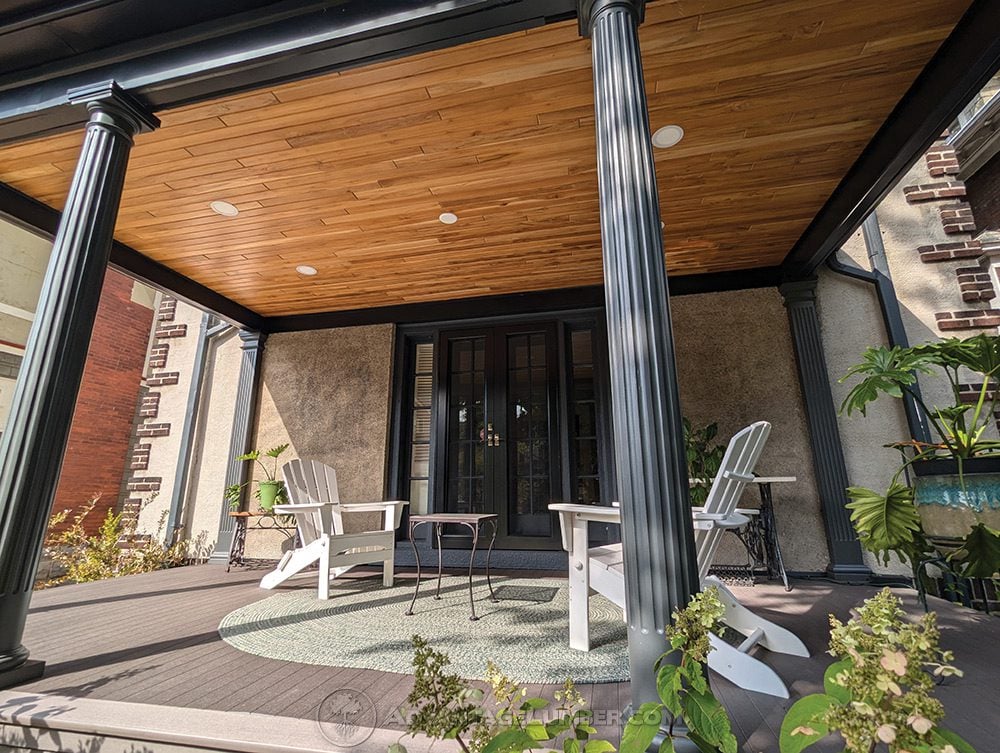
A beautiful tongue and groove porch ceiling can completely transform a covered porch, turning it into a warm, inviting outdoor space that feels like an extension of your home. But while the profile matters, choosing the right wood species is what determines how your ceiling will look, perform, and age over time.
What Makes a Good Wood Species for a Porch Ceiling?
Although porch ceilings aren’t exposed to foot traffic like decking, they still have to withstand humidity, seasonal temperature swings, insects, and occasional wind-driven rain. That’s why choosing a wood that’s naturally durable and dimensionally stable is important.
Here are a few qualities to look for:
- Natural resistance to rot and decay
- Resistance to insects
- Dimensional stability to minimize movement
- Long-lasting performance outdoors
- A color and grain pattern that complements your home’s design
- Maintenance requirements that fit your lifestyle
Fortunately, many hardwoods and modified wood products naturally check all of these boxes.
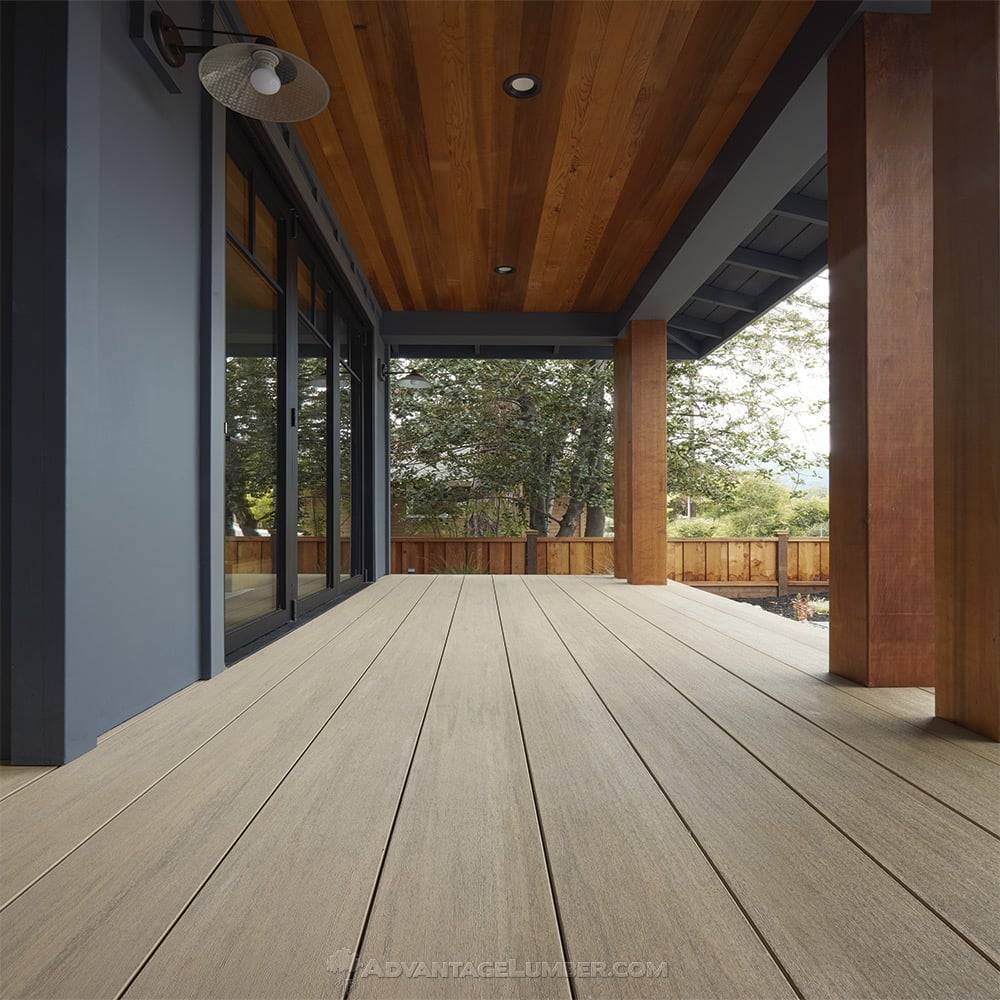
Comparing the Best Wood Species for Tongue and Groove Porch Ceilings
Teak
Teak is one of the world’s most respected outdoor woods thanks to its natural oils, excellent resistance to moisture and insects, and beautiful golden-brown color. Responsibly grown on managed plantations, it’s an excellent choice for coastal homes, luxury porches, and homeowners who want a warm, inviting ceiling with long-lasting performance.
Why Homeowners Choose It
- Beautiful golden-brown color that deepens over time
- Naturally resistant to moisture, insects, and decay
- Easier to work with than many ultra-dense hardwoods
- Plantation grown from renewable forests
- Proven lifespan of 30+ years
Things to Know: Teak naturally develops an attractive silver-gray patina if left unfinished. If you’d like to preserve its warm golden color, periodic oiling or a UV-protective finish is recommended.
Ipe
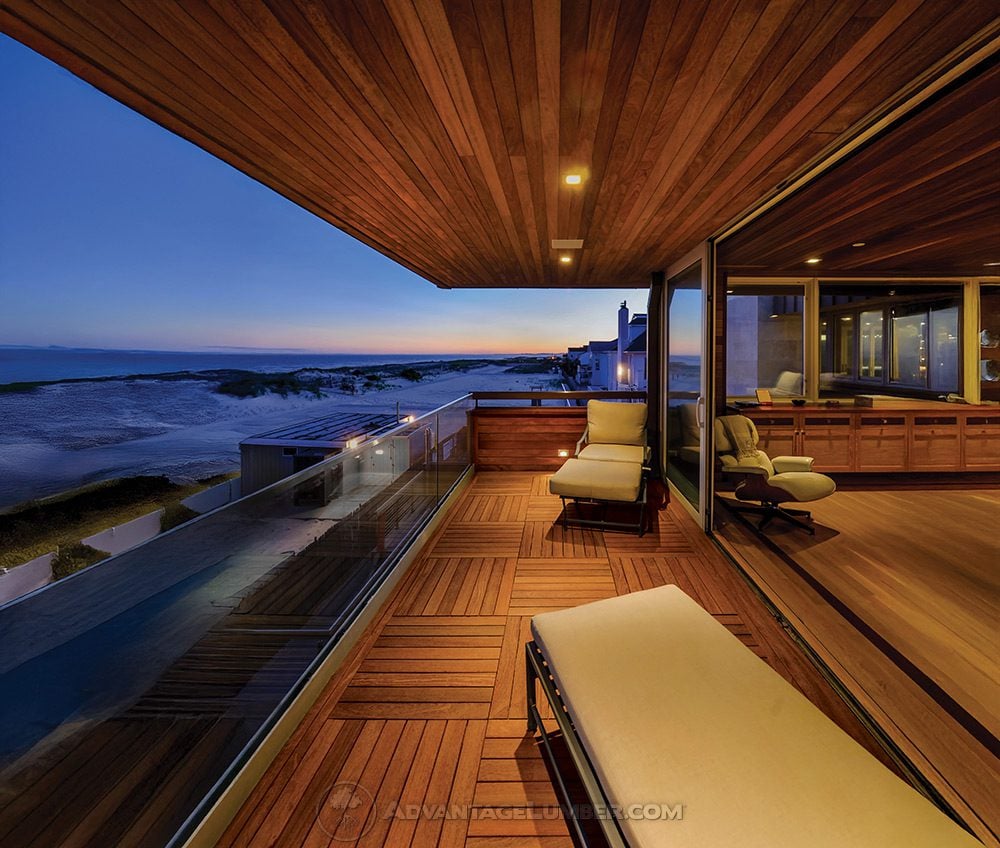
Often considered the gold standard for exterior hardwoods, Ipe is prized for its unmatched durability, exceptional strength, and rich brown color. It’s an ideal choice for homeowners who want maximum longevity and a premium porch ceiling that can perform beautifully for generations.
Why Homeowners Choose It
- Proven lifespan of 75+ years
- Exceptional resistance to rot, insects, and decay
- Extremely dense and dimensionally stable
- Rich, luxurious appearance
- Naturally low maintenance
- Available with up to a Class A flame spread rating for added peace of mind
Things to Know: Due to its exceptional density, Ipe should be installed using proper fastening techniques, including pre-drilling.
Cumaru
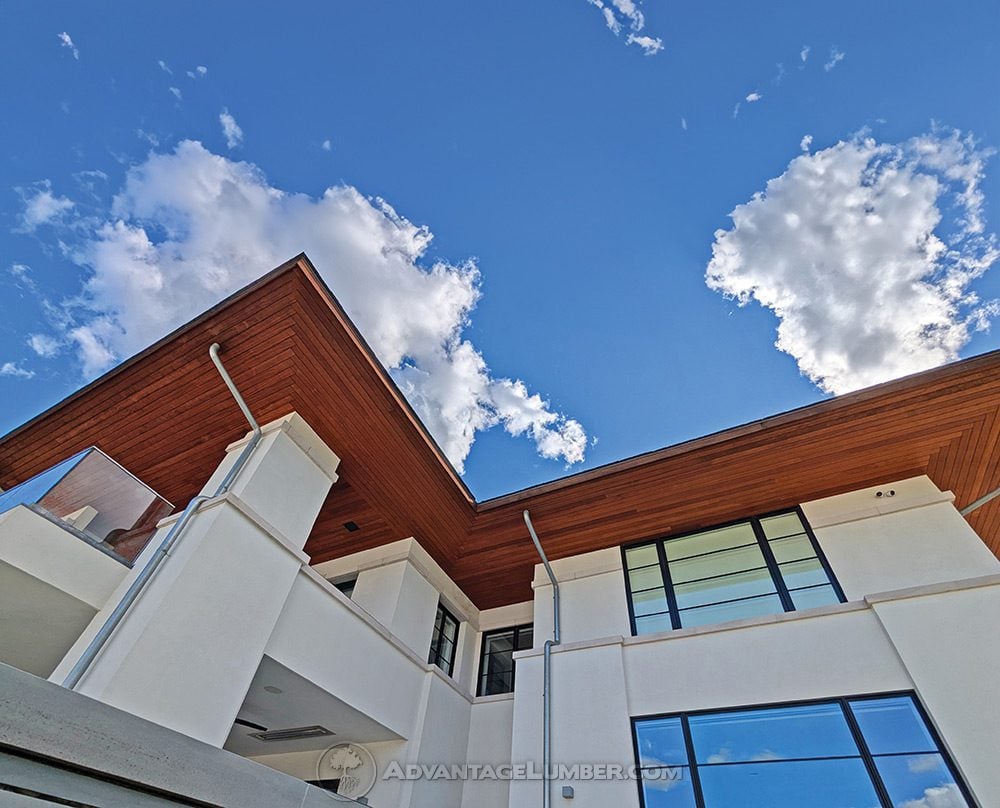
Cumaru delivers many of the same performance benefits as Ipe while showcasing warmer golden-to-reddish-brown tones. It’s a great choice for homeowners seeking premium durability with a slightly warmer, more varied appearance.
Why Homeowners Choose It
- Naturally resistant to rot, decay, and insects
- Beautiful golden-to-reddish-brown appearance
- Excellent weather resistance
- Extremely durable with a lifespan of 50+ years
- Adds warmth and character to outdoor living spaces
Things to Know: Like other tropical hardwoods, Cumaru is very dense and requires pre-drilling during installation. Over time, its rich color will naturally weather to a silver-gray if left unfinished.
Tigerwood
Tigerwood is known for its dramatic striped grain that instantly makes a porch ceiling a focal point. It’s an excellent option for homeowners who want a bold, one-of-a-kind ceiling with lasting durability.
Why Homeowners Choose It
- Unique striped grain found in every board
- Naturally durable and weather resistant
- Low-maintenance performance
- Proven lifespan of 30+ years
- Creates a one-of-a-kind outdoor space
Things to Know: Tigerwood’s dramatic grain variation is part of its natural beauty, making every ceiling unique.
Garapa
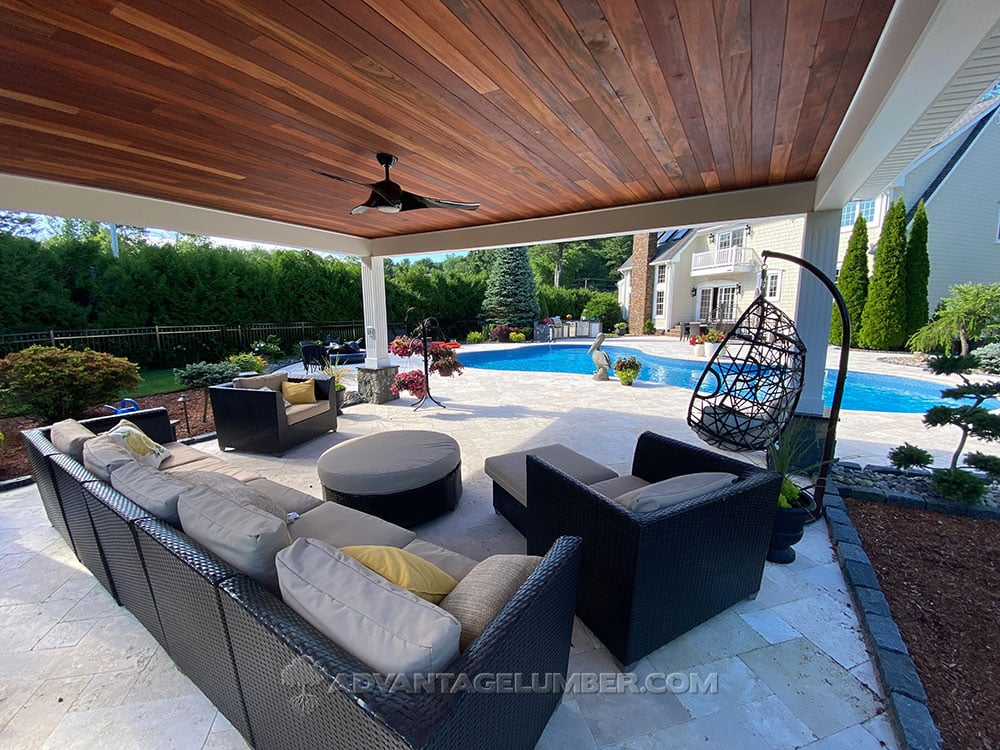
Garapa is an excellent option for homeowners who want a lighter-colored porch ceiling that helps create a bright, open outdoor space. Its warm golden color, fine grain, and natural durability make it a popular choice for covered porches where a lighter aesthetic is preferred.
Why Homeowners Choose It
- Naturally light golden color
- Fine, consistent grain pattern
- Resistant to rot, insects, and decay
- Smooth surface with excellent durability
- Proven lifespan of 30+ years
Things to Know: Garapa is photosensitive, so its golden color gradually deepens before naturally weathering to a silver-gray patina if left unfinished.
Brazilian Redwood (Massaranduba)
Brazilian Redwood (Massaranduba) combines rich reddish-brown color with exceptional strength and durability. It’s an excellent choice for traditional homes and homeowners who appreciate rich color, impressive strength, and long-term performance.
Why Homeowners Choose It
- Deep reddish-brown color with a refined appearance
- Extremely durable and naturally resistant to rot and insects
- Outstanding bending strength
- Low-maintenance performance
- Proven lifespan of 30+ years
Things to Know: Brazilian Redwood is a dense hardwood, so proper installation techniques and quality fasteners are recommended. Like other exterior wood species, it will naturally weather to a silver-gray if left unfinished.
Mahogany (Red Balau)
Mahogany (Red Balau) offers a timeless look with its warm brown color and consistent grain pattern. It’s an excellent choice for homeowners seeking classic curb appeal that complements both traditional and contemporary architecture.
Why Homeowners Choose It
- Rich, uniform brown color
- Excellent resistance to rot, decay, and insects
- Stable, durable hardwood
- Complements a wide range of architectural styles
- Long-lasting outdoor performance
Things to Know: A UV-protective finish can help preserve Mahogany’s rich color. Without one, it will gradually develop a natural gray patina over time.
Western Red Cedar
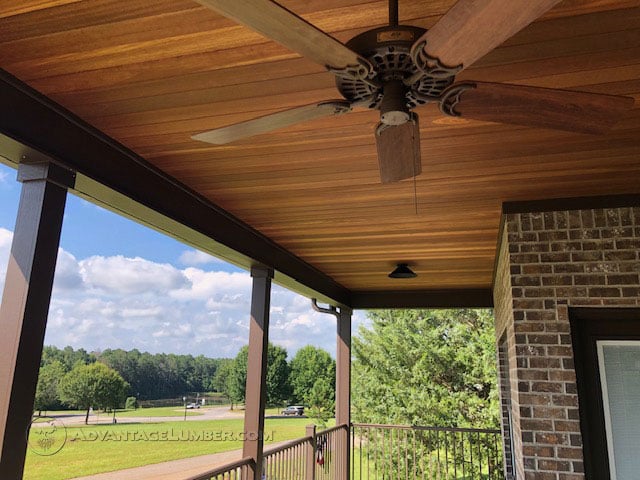
Western Red Cedar has been a trusted choice for exterior ceilings for generations thanks to its natural resistance to rot, decay, and insects. It’s especially well suited for rustic, farmhouse, craftsman, and traditional homes where warmth and natural character are key design elements.
Why Homeowners Choose It
- Naturally resistant to rot, decay, and insects
- Lightweight and easy to install
- Beautiful warm color and grain
- Accepts stains and finishes exceptionally well
- Renewable and sustainably sourced
Things to Know: Western Red Cedar is softer than tropical hardwoods, but because porch ceilings aren’t exposed to foot traffic, this typically isn’t a concern for ceiling applications.
Thermally Modified Wood (Ash & Pine)
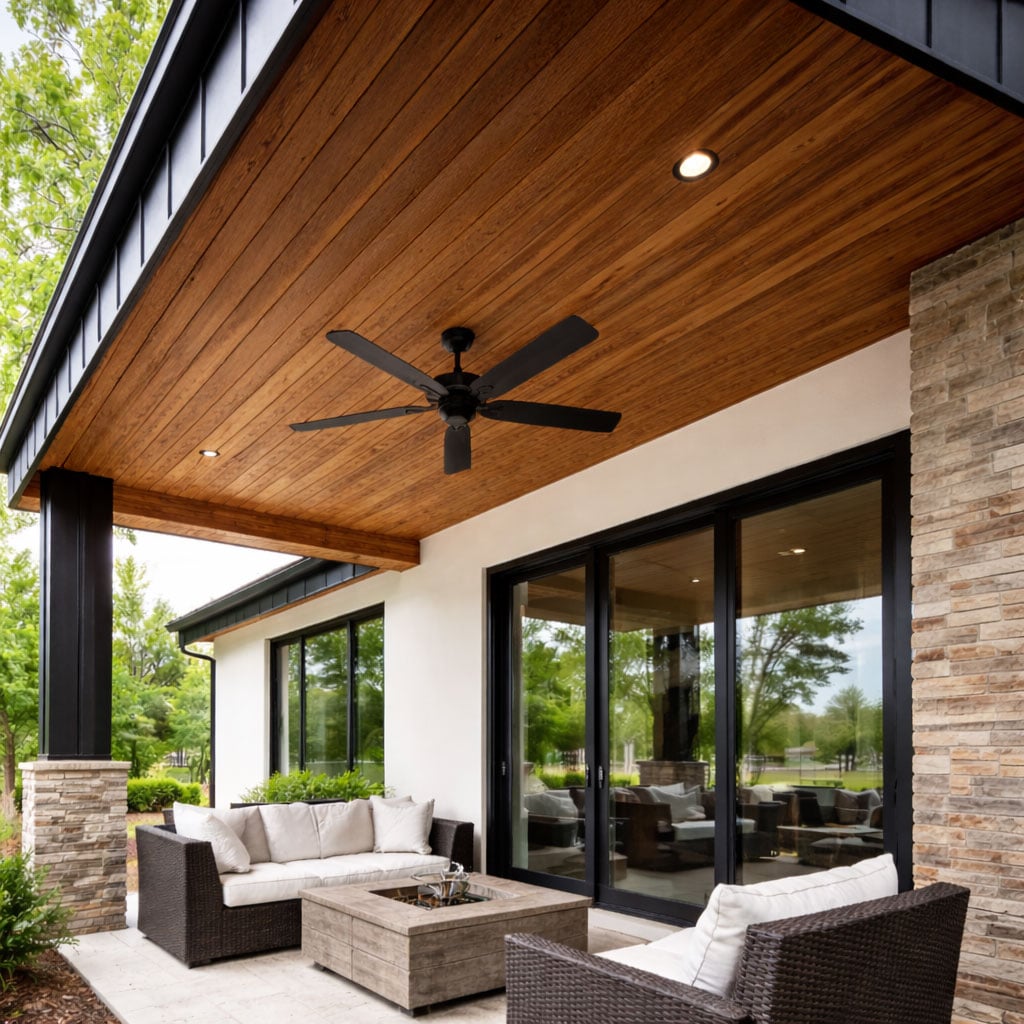
Thermally Modified Ash and Pine combine the beauty of natural wood with enhanced durability and stability through a chemical-free heat treatment process. They’re an excellent choice for modern homes and homeowners looking for a sustainable, low-maintenance wood ceiling.
Why Homeowners Choose It
- Excellent dimensional stability
- Improved resistance to moisture and decay
- Chemical-free modification process
- Sustainably sourced
- Contemporary appearance
Things to Know: Thermally modified wood will naturally weather over time unless protected with a UV-resistant finish.
Accoya
Accoya is a high-performance wood engineered for exceptional stability and durability. Made from responsibly sourced Radiata Pine and enhanced through a proprietary acetylation process, it’s an outstanding choice for homeowners who want maximum dimensional stability and long-term performance in changing climates.
Why Homeowners Choose It
- Outstanding resistance to rot, insects, and decay
- Exceptional dimensional stability
- Sustainably sourced and FSC® certified
- Paints and finishes last longer
- Backed by a 50-year above-ground warranty
Things to Know: Accoya can be left unfinished to naturally weather to gray or finished with paint or stain to complement virtually any home style.
Which Wood Is Right for Your Porch Ceiling?
The best wood species depends on your home’s style, your maintenance preferences, and the overall look you’re trying to achieve.
If your top priority is maximum longevity, Ipe is hard to beat with its proven 75+ year lifespan and exceptional durability.
If you want premium performance with warmer color tones, Cumaru delivers incredible strength while showcasing beautiful golden-to-reddish-brown hues.
For homeowners who prefer light, bright outdoor spaces, Garapa and Teak offer inviting natural colors that help reflect more light into covered porches.
Looking for something truly distinctive? Tigerwood’s dramatic striped grain creates a porch ceiling that’s unlike any other.
If sustainability and dimensional stability are important, Thermally Modified Wood and Accoya combine modern innovation with the timeless beauty of real wood.
And for homeowners seeking classic curb appeal, Mahogany, Brazilian Redwood, and Western Red Cedar continue to be trusted choices that have stood the test of time.
No matter which species you choose, selecting a naturally durable wood will help ensure your porch ceiling remains beautiful for decades.
Frequently Asked Questions
What is the best wood for a tongue and groove porch ceiling?
The best wood depends on your priorities. Ipe is ideal for maximum durability, Garapa is excellent for bright, airy spaces, Thermally Modified Wood and Accoya offer exceptional stability, and Western Red Cedar provides timeless natural beauty.
Can hardwood be used for a porch ceiling?
Yes. Tropical hardwoods like Ipe, Cumaru, Tigerwood, Garapa, Brazilian Redwood, Mahogany, and Teak are naturally resistant to rot, insects, and decay, making them excellent choices for covered porch ceilings.
Will my wood porch ceiling turn gray?
Yes. Most exterior wood species naturally weather to a silver-gray color when exposed to sunlight. If you’d like to preserve the original color, apply a UV-protective finish and maintain it as needed.
Is tongue and groove good for exterior ceilings?
Absolutely. Tongue and groove boards create a clean, finished appearance while concealing fasteners. They’re a popular choice for covered porches, soffits, outdoor kitchens, and other exterior ceiling applications.
Which porch ceiling wood requires the least maintenance?
Ipe, Cumaru, Thermally Modified Wood, and Accoya are all excellent low-maintenance options thanks to their natural durability and resistance to moisture, insects, and decay.
Upgrade Your Outdoor Living Space with the Right Wood
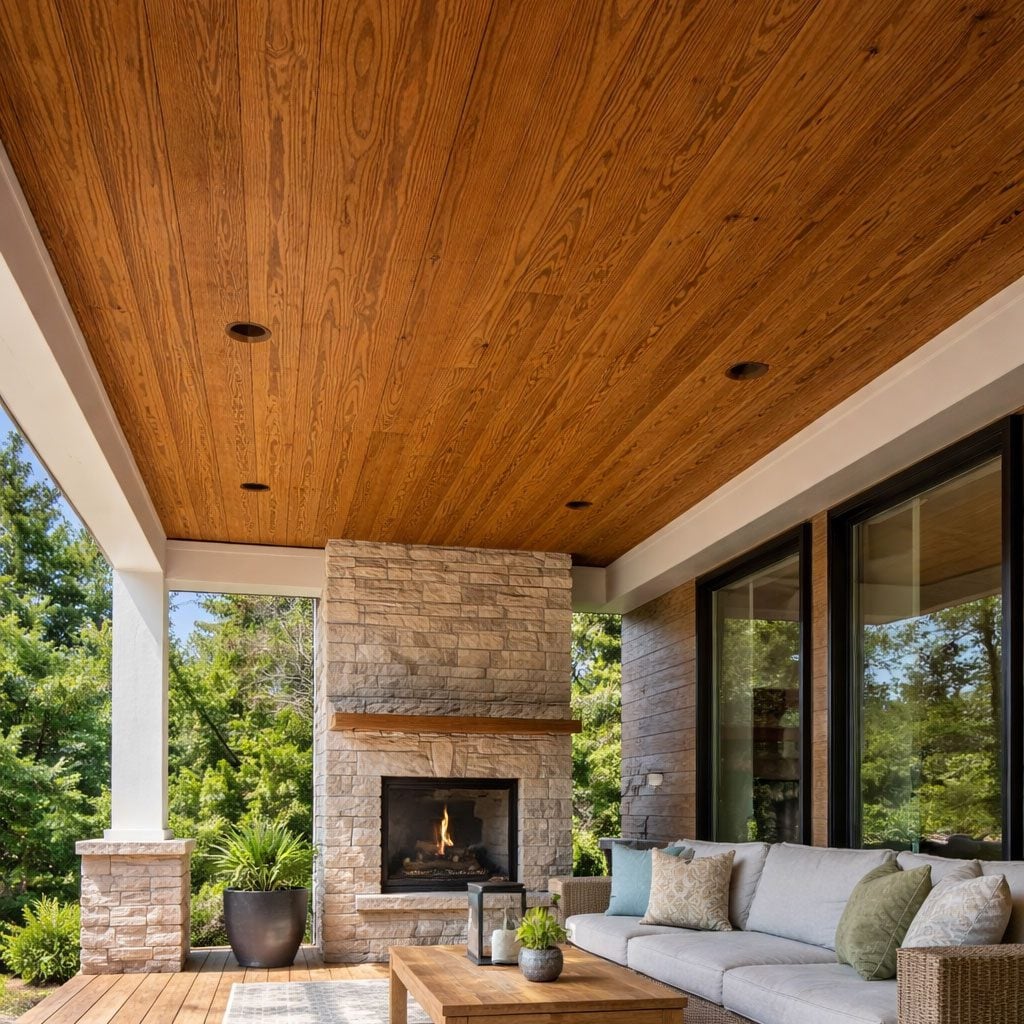
Whether you’re drawn to the unmatched longevity of Ipe, the warm elegance of Teak, the bold character of Tigerwood, or the modern stability of Accoya, investing in a quality wood ceiling is a decision you’ll appreciate every time you step onto your porch. By choosing the species that best matches your home’s style, climate, and maintenance preferences, you can create an outdoor space that stays beautiful for decades.
Ready to get started? Explore Advantage Lumber‘s selection of premium tongue and groove ceiling and soffit products, or contact our knowledgeable team for help choosing the best wood species for your next project.
