
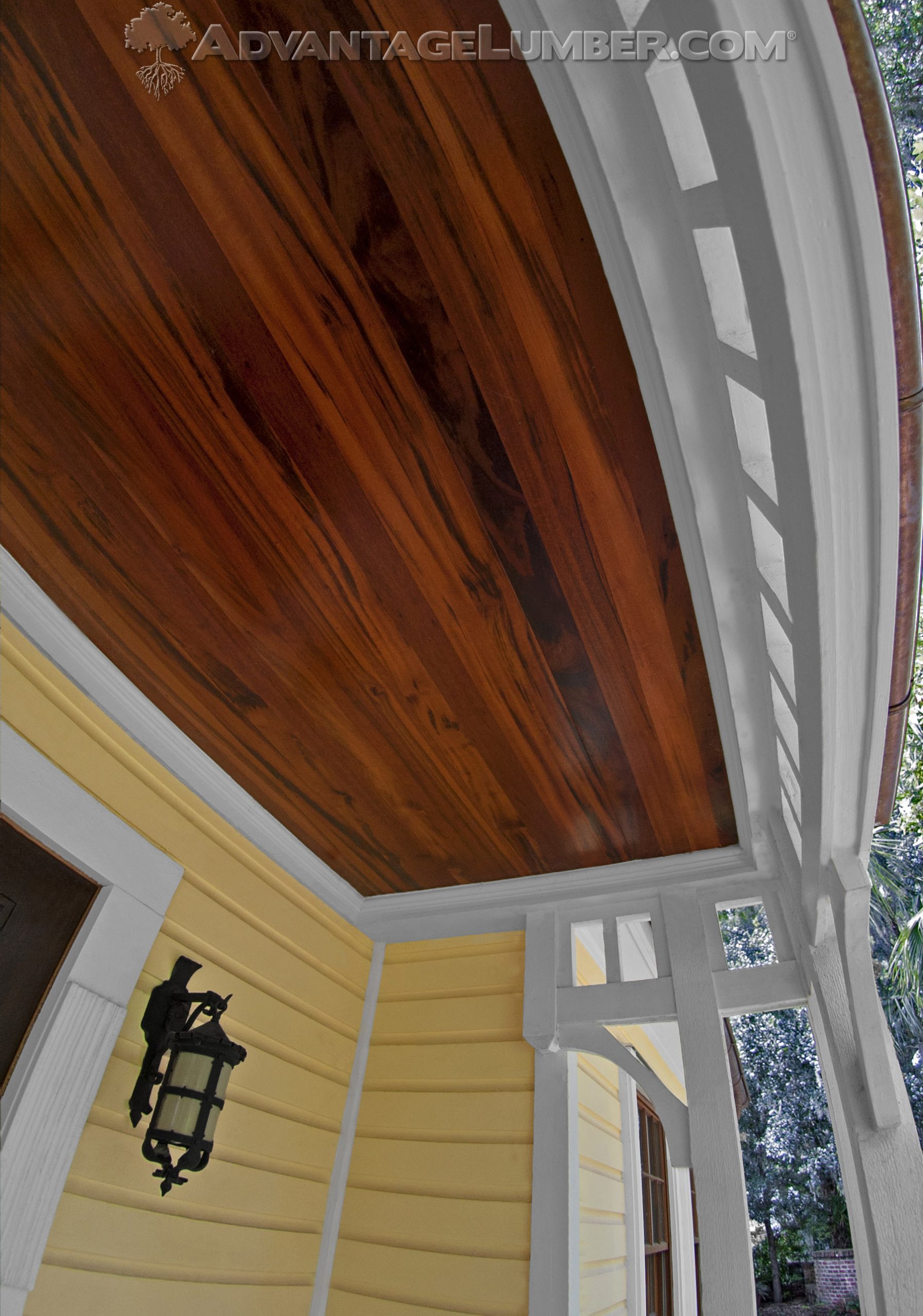
Porch ceilings are a fantastic way to elevate the aesthetic and functionality of your outdoor space. Whether you’re renovating an existing porch or building a new one, questions about materials, installation, and costs often arise.
In this blog post, we’ll address the top five frequently asked questions about porch ceilings, with a focus on tongue and groove designs, to help you make informed decisions.
1. What is a Tongue and Groove Ceiling?
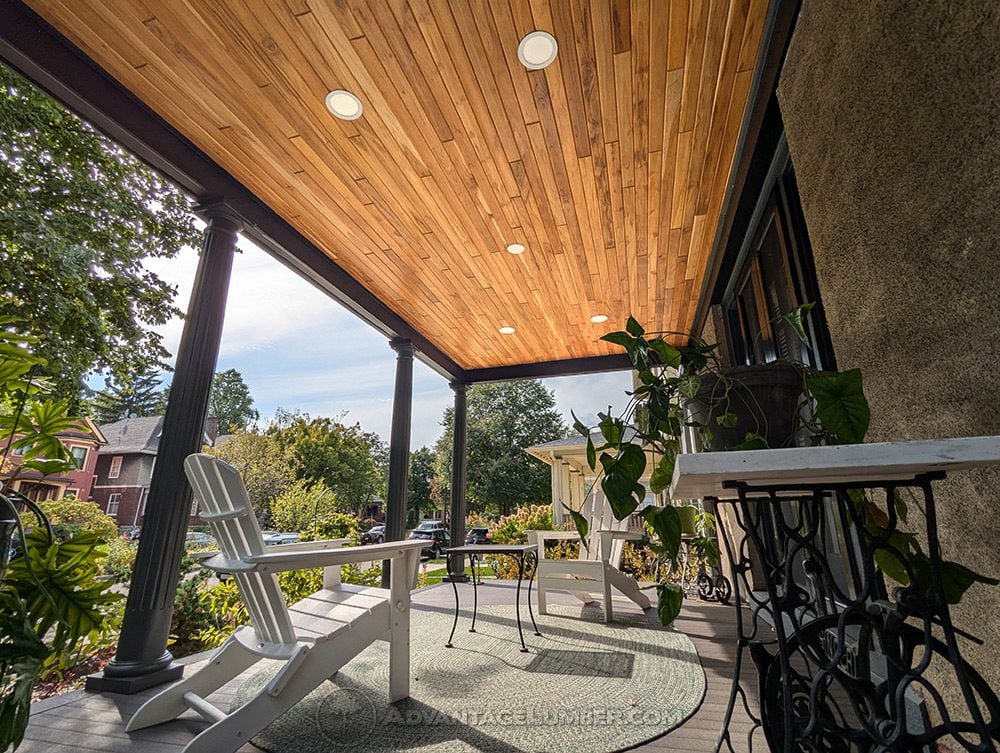
A tongue and groove ceiling is a type of ceiling design where wooden planks are joined together using a “tongue” on one edge that fits into a “groove” on the adjacent plank. This interlocking system creates a seamless, polished look with no visible gaps, making it a popular choice for porch ceilings.
The design provides a clean, classic aesthetic while ensuring structural stability. Tongue and groove ceilings are often made from wood and can be stained, painted, or prefinished for enhanced durability and style. They’re especially favored for porches because they add warmth and charm to outdoor spaces.
2. Can You Use Pine Tongue and Groove on a Porch Ceiling?
Yes, pine tongue and groove is an excellent choice for porch ceilings, particularly for its affordability and versatility. We highly recommend Synergy Southern Pine, a prefinished option that comes in several color choices to suit your design preferences.
Southern Pine is durable, easy to work with, and ideal for outdoor applications when properly treated or sealed to withstand moisture and weather exposure. Its natural grain adds character to your porch, and the prefinished coating saves time during installation while protecting against the elements.
3. How Much Does a Tongue and Groove Ceiling Cost?
The cost of a tongue and groove ceiling varies depending on factors like material, labor, and the size of your porch. On average, expect to pay between $3 and $10 per square foot for materials alone, with premium woods like Ipe or Cumaru on the higher end and pine or other softwoods on the lower end. For example:
- Teak: $4–$5 per square foot for unfinished
- Ipe or Cumaru: $8–$10 per square foot
- Prefinished options (like Synergy Southern Pine): $4–$7 per square foot
Labor costs typically range from $2 to $5 per square foot, depending on your location and the complexity of the installation. For a 200-square-foot porch, total costs (materials and labor) could range from $1,000 to $3,000. To get an accurate estimate, consult local contractors and factor in any additional prep work, such as staining or sealing.
4. What Material is Best for an Outdoor Porch Ceiling?
Choosing the right material for your outdoor porch ceiling is critical to ensure durability and low maintenance in varying weather conditions. Here are some of the best options:
- Ipe: A premium hardwood known for its exceptional durability, resistance to moisture, and rich, dark tones.
- Cumaru: Similar to Ipe, Cumaru is a dense, weather-resistant hardwood with warm, reddish-brown hues.
- Tigerwood: Offers a striking, exotic appearance with natural stripes and excellent resistance to the elements.
- Teak: A high-end choice prized for its natural oils, which make it highly resistant to water and pests.
- Southern Pine: An affordable, versatile option that’s available prefinished for fast and easy installation without the finishing mess and fumes. (e.g., Synergy Southern Pine).
- Red Grandis: A sustainable hardwood with a uniform grain and good weather resistance.
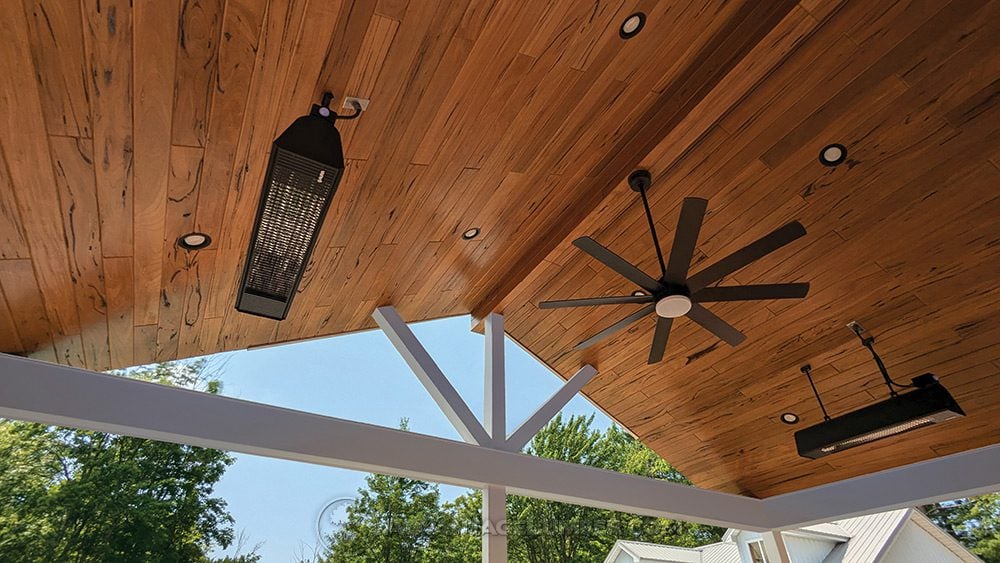
- Pecky Bolivian Walnut: A unique choice with a textured, rustic look that adds character to any porch.
For most climates, Ipe or prefinished Southern Pine are top choices due to their balance of durability, aesthetics, and cost. Ensure the material is properly sealed or prefinished to protect against moisture, UV rays, and insects.
5. What Size Nails for Tongue and Groove Ceiling?
For installing a tongue and groove ceiling, 2-inch to 2.5-inch nails are typically recommended, depending on the thickness of the planks and the substrate you’re nailing into. Here are some guidelines:
- Material: Use corrosion-resistant nails, such as stainless steel or hot-dipped galvanized nails, to prevent rust in outdoor environments.
- Nailing Technique: Nails should be driven through the tongue at an angle (blind nailing) to conceal them and create a clean look. For added strength, you can also face-nail the first and last boards.
- Size Considerations: For standard 3/4-inch thick tongue and groove planks, 2-inch nails are sufficient. For thicker boards (1 inch or more), opt for 2.5-inch nails to ensure a secure hold.
- Alternatives: Some installers prefer finish nails or brad nails with a nail gun for faster installation, but ensure they’re long enough to penetrate at least 1 inch into the joists.
Always check the manufacturer’s recommendations for your specific material and consult with a contractor to ensure proper installation.
Final Thoughts
A tongue and groove ceiling can transform your porch into a stunning, inviting space. By choosing the right material—like Synergy Southern Pine or premium hardwoods such as Ipe—and following proper installation techniques, you can create a durable, beautiful ceiling that enhances your outdoor living area. If you’re planning a porch ceiling project, consider your budget, climate, and aesthetic preferences, and don’t hesitate to consult professionals for tailored advice.
Have more questions about porch ceilings? Drop them in the comments below, or reach out to our helpful staff at 1-877-232-3915 to get help on your tongue and groove ceiling project today!
