

When most homeowners inspect a deck, they focus on obvious problems like cracked deck boards, loose railings, or wood rot. But many deck failures don’t start with the decking surface at all. They start with the hidden fasteners and structural hardware holding the entire deck together.
Corroded screws, failing joist hangers, loose ledger bolts, and improper connectors are some of the most dangerous hidden weak points in deck construction. In many cases, these issues remain unnoticed until a catastrophic failure occurs.
If you’re performing a deck safety inspection, the fasteners and hardware deserve just as much attention as the lumber itself.
Why Deck Hardware Matters
Your deck’s structural hardware is responsible for transferring loads safely throughout the structure. Every screw, bolt, bracket, hanger, and connector works together to keep the deck stable under weight, movement, weather exposure, and years of use.
The problem is that hardware is often overlooked because much of it is hidden underneath the deck or concealed behind framing members.
Even high-end decking materials like Ipe decking, composite decking, or PVC decking can fail prematurely if the underlying hardware system is compromised.
The Most Common Hardware Failure Points
1. Ledger Board Fasteners
The ledger board is one of the most critical structural components of a deck. It connects the deck to the home, and it’s also where many deck collapses begin.
During a deck inspection, look for:
- Loose lag bolts or structural screws
- Missing fasteners
- Rusted bolts or washers
- Signs of movement between the ledger and house
- Water damage around the ledger connection
- Improper flashing
Many older decks were attached using nails instead of proper structural fasteners. Nails can loosen over time and are not acceptable for modern deck construction.
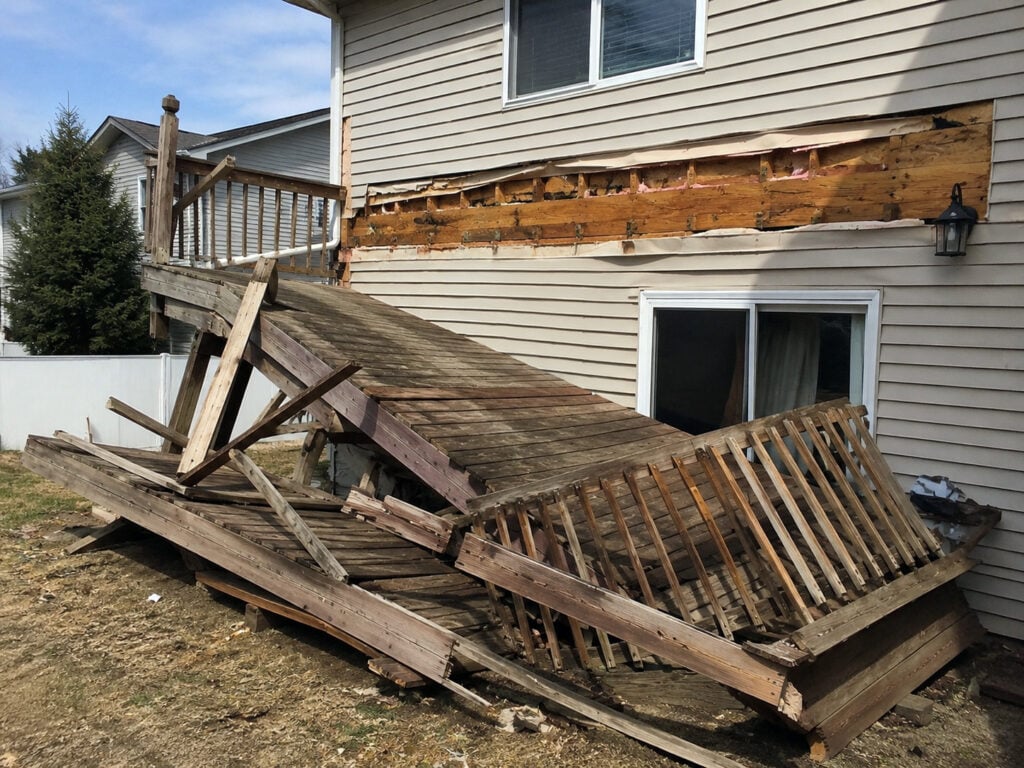
A failing ledger connection can cause the entire deck to pull away from the house.
2. Corroded Fasteners
Fastener corrosion is one of the most common hidden deck problems.
Modern pressure treated lumber contains chemical preservatives that are highly corrosive to standard steel fasteners. When incompatible screws, nails, or brackets are used, corrosion can occur surprisingly fast.
Inspect for:
- Rust stains around screws or bolts
- Flaking metal hardware
- Swollen or deteriorated connectors
- Fasteners that appear thin or weakened
- White corrosion buildup on galvanized hardware
Stainless steel fasteners are often the best choice for hardwood decking like Ipe, Cumaru, Tigerwood, and Teak because hardwoods contain natural tannins that can react with standard metal fasteners.
For pressure treated deck framing, use hardware specifically rated for contact with treated lumber.
3. Joist Hangers & Structural Connectors
Joist hangers play a critical role in supporting the deck frame. A failed joist hanger can lead to sagging, bouncing, or even localized structural collapse.
Check for:
- Missing joist hanger nails
- Incorrect fasteners
- Bent or damaged hangers
- Severe corrosion
- Cracks around hanger attachment points
- Joists pulling away from connectors
One of the biggest mistakes homeowners make is replacing manufacturer approved joist hanger nails with drywall screws or generic deck screws. These fasteners are not designed to handle structural loads and can snap under pressure.
Always use approved structural connector fasteners.
4. Loose or Failing Rail Hardware
Deck railing failures are a major safety hazard, especially on elevated decks.
Inspect all railing hardware carefully, including:
- Bolts connecting railing posts to framing
- Rail brackets
- Baluster fasteners
- Stair rail attachments
- Post anchors
Signs of trouble include:
- Wobbling rail posts
- Loose brackets
- Rusted fasteners
- Cracked wood around bolts
- Movement when pressure is applied
Railing systems should feel solid and rigid. Any movement may indicate hidden hardware failure inside the framing connection.
5. Hidden Moisture Around Hardware
Water intrusion accelerates hardware failure.
Moisture trapped around fasteners and connectors can cause corrosion, wood decay, and weakening of the surrounding framing.
Pay close attention to:
- Areas where debris collects
- Ledger board flashing
- Stair stringer connections
- Beam to post hardware
- Hidden corners under the deck
If hardware is surrounded by rotting wood, even perfectly good fasteners can lose structural holding power.
6. Improper Fastener Spacing
Fasteners installed too close to board edges or spaced improperly can weaken both the hardware and the wood itself.
Look for:
- Splitting around screws
- Fasteners backing out
- Deck boards lifting
- Uneven screw patterns
- Overdriven screws
This issue is especially important with hardwood decking, where improper installation techniques can lead to splitting and premature fastener failure.
7. Mixing Metals & Hardware Types
Different metals can react chemically when used together outdoors, especially in wet environments.
For example:
- Aluminum flashing touching pressure treated lumber
- Standard steel screws paired with stainless steel connectors
- Galvanized hardware combined with incompatible metals
This can create galvanic corrosion, which rapidly deteriorates hardware.
Using matching, compatible hardware systems is critical for long term deck durability.
Warning Signs Your Deck Hardware May Be Failing
Here are several warning signs homeowners should never ignore:
- Deck feels bouncy or unstable
- Railings wobble
- Rust stains appear around screws or bolts
- Visible hardware corrosion
- Deck pulls away from the house
- Sagging beams or joists
- Cracking sounds when walking on the deck
- Loose stair treads or railings
If any of these issues are present, a professional deck inspection may be necessary immediately.
The Importance of High Quality Hardware
Cheap fasteners and low grade connectors may save money upfront, but they can become serious safety liabilities over time.
High quality deck hardware offers:
- Better corrosion resistance
- Higher structural load ratings
- Longer lifespan
- Improved code compliance
- Better compatibility with hardwood and pressure treated lumber
This is especially important in harsh environments like:
- Coastal areas
- Snow heavy climates
- Wet or humid regions
- Pool decks
- Rooftop decks
Don’t Forget the Deck Frame
Many homeowners replace deck boards while leaving an aging frame and hardware system underneath.
Even if the decking surface looks beautiful, the deck may still be unsafe if:
- Fasteners are corroded
- Joist hangers are failing
- Ledger bolts are loose
- Structural connectors are compromised
This is one reason many homeowners upgrading older decks choose steel deck framing or aluminum deck framing systems instead of traditional pressure treated lumber.
Steel and aluminum framing systems offer superior resistance to rot, warping, and hardware related failures.
Final Thoughts
A deck safety inspection should go far beyond the visible deck boards. The hidden fasteners and structural hardware underneath your deck are often the true weak points that lead to failure.
By carefully inspecting ledger connections, joist hangers, structural screws, railing hardware, and corrosion prone areas, homeowners can identify serious safety risks before they become dangerous.
If your deck is older, showing signs of movement, or built with outdated hardware systems, it may be time for a professional inspection or structural upgrade.
At AdvantageLumber.com, we offer premium decking materials, structural fasteners, hidden fastening systems, aluminum railing, and long lasting deck building products designed for safety and durability.
