
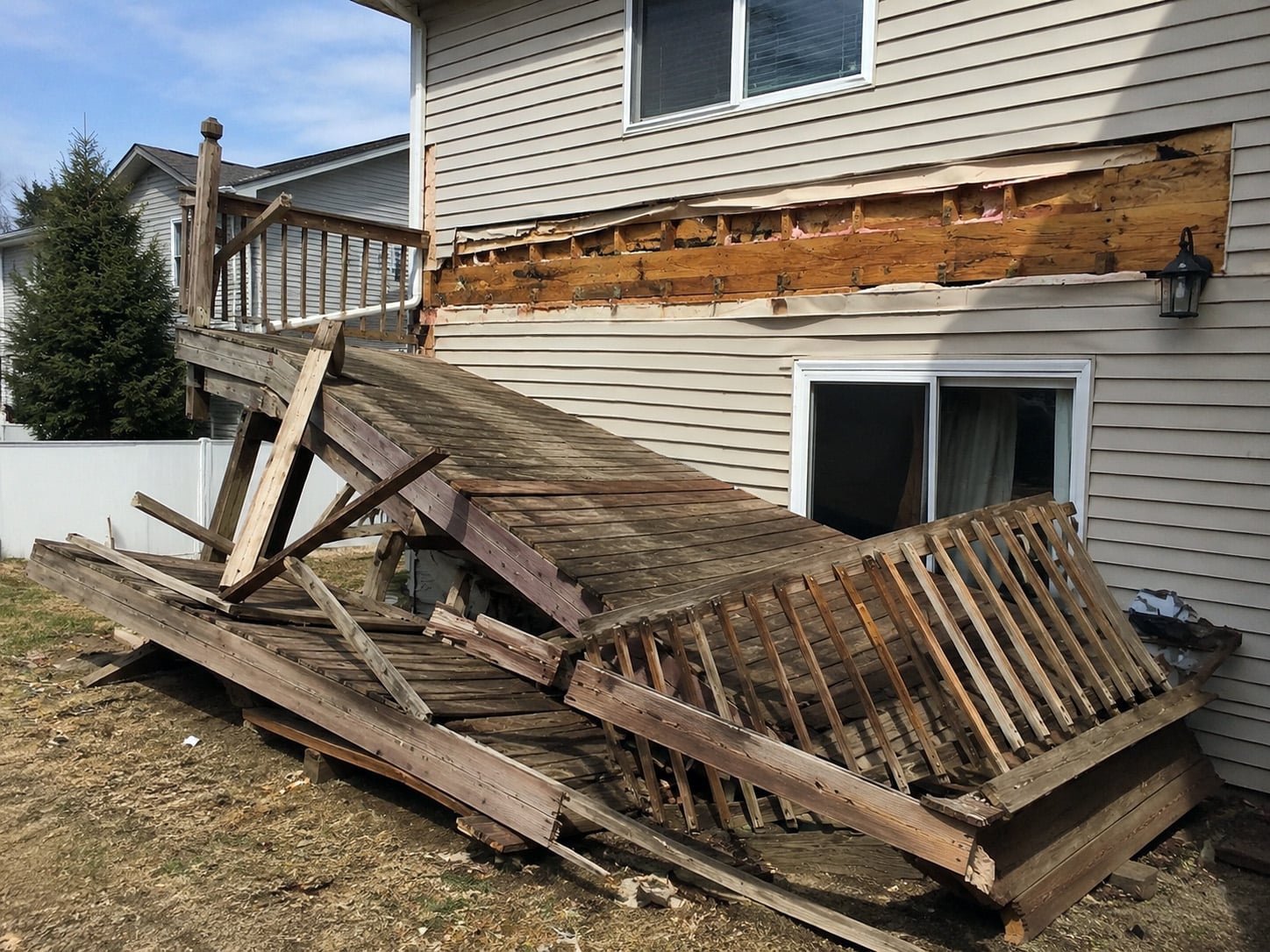
Second story decks offer stunning views and valuable outdoor living space, but they also carry heightened risks. When these elevated structures fail, the consequences can be devastating due to the greater fall distance.
Alarming Statistics on Deck Collapses
Deck failures are more common than many homeowners realize. According to data from the North American Deck and Railing Association (NADRA) and other reports:
- Between 2000 and 2008, at least 30 deaths resulted directly from deck collapses in the U.S., with over 75% of people on a collapsing deck sustaining injuries or worse.
- Since 2003, an estimated 6,500 people have been injured in deck and porch collapses, resulting in 29 deaths.
- Studies indicate around 179 reported deck and railing failures from 2000–2006 alone, injuring over 1,100 people and killing 33.
- The U.S. Consumer Product Safety Commission (CPSC) has documented thousands of emergency room visits annually related to structural deck failures, with many more unreported minor incidents.
Approximately 90% of total deck collapses occur because the deck separates from the house at the ledger board connection, causing the structure to pull away and swing downward. Second-story decks are particularly dangerous in these scenarios.
Many failures involve older decks built before modern codes, but even newer ones can fail due to poor construction, lack of maintenance, or overload (e.g., parties or hot tubs).
Why Second-Story Decks Demand Extra Attention
Elevated decks experience greater leverage and stress on connections. Gravity, wind, snow, and dynamic loads (people moving) amplify risks. Water intrusion is a silent killer—trapped moisture leads to rot in wood components, weakening the entire system over time.
Critical Safety Inspection Checklist for Second-Story Decks
Perform a thorough inspection at least annually (ideally in spring before heavy use). Start from underneath if possible for safety. If anything looks questionable, do not use the deck until a professional evaluates it.
1. Ledger Board (The #1 Failure Point)
- What to check: Look for gaps between the ledger and house (even small ones indicate pulling away). Probe for soft, spongy, or crumbling wood (rot). Check for rust, corrosion, or missing fasteners.
- Fasteners: Should be through-bolts or properly sized lag screws (minimum 1/2-inch diameter with washers), staggered, and spaced according to joist length (a rough guide: on-center spacing in inches ≈ 100 ÷ joist length in feet). Nails alone are inadequate.
- Flashing: Ensure proper metal flashing or tape prevents water from entering between ledger and house. No direct contact with siding or improper spacers (like stacked washers).
- Red flags: Water stains, mold, debris buildup, or ledger sagging.
2. Support Posts and Footings
- Posts (especially 6×6 or larger for taller decks) should not touch soil or sit in puddles. Check for rot at base, twisting, or leaning.
- Footings must be below frost line, on undisturbed soil, and securely connected to posts (no loose piers).
- Look for cracks in concrete or signs of settling/erosion.
3. Beams, Joists, and Framing
- Probe for rot, cracks (>1/8 inch), splits, or sagging. Joists should be level; beams properly notched or supported on posts (not just bolted).
- Blocking between joists adds stability. Check connections for loose or rusted hardware.
- Minimum clearances: Untreated wood well above ground to avoid moisture.
4. Decking Surface
- Inspect boards for rot, splinters, cracks, warping, or loose fasteners (nails/screws protruding or missing).
- For wood decks, check if sealing/staining is needed. Composite decks still require checks for bowing or fastener issues.
5. Guardrails and Balusters
- Rails must withstand significant force (e.g., 200 lbs in many codes). Push-test: No excessive movement.
- Balusters spaced no more than 4 inches apart (to prevent child falls). No loose or damaged sections.
- Top rail height typically 36–42 inches; graspable and secure.
6. Stairs and Stringers
- Check treads for rot, cracks, or loose attachments. Stringers should be supported properly (not resting on ground).
- Handrails required and graspable. Rise/run dimensions must meet code for safe footing.
7. Overall Signs of Trouble
- Unusual bouncing or creaking underfoot.
- Insect damage (e.g., termites, carpenter ants).
- Overloading risks: Hot tubs, large gatherings, or added structures.
- Use tools like a flashlight, screwdriver (for pick test on wood), level, and moisture meter.
Pro Tip: For second-story decks, hire a qualified professional inspector or structural engineer periodically. They can assess load capacity, hidden issues, and code compliance that DIY checks might miss.
Prevention and Maintenance Tips
- Use quality materials: Pressure treated lumber, corrosion-resistant fasteners, and proper flashing. Consider durable composites for longevity.
- Maintain regularly: Clean debris, reseal wood, ensure drainage, and trim vegetation away from structure.
- When in doubt, replace or repair: Older decks (especially pre-2000s) often need upgrades. Advantage Lumber offers high-quality decking materials built for safety and durability—contact us for recommendations suited to your climate and needs.
- Professional build/retrofit: Ensure permits and adherence to local codes, including hold-downs and sway bracing.
Your second-story deck should be a place for relaxation and memories—not a hidden hazard. Taking proactive steps with regular inspections can prevent tragedy and extend your deck’s life for years of safe enjoyment.
At AdvantageLumber.com, we specialize in premium lumber and decking solutions designed for strength and longevity. Whether you’re building new, repairing, or replacing, our team is here to help you create a safe outdoor space. Browse our selection or reach out today—don’t wait until it’s too late.
Stay safe and enjoy the view!
