
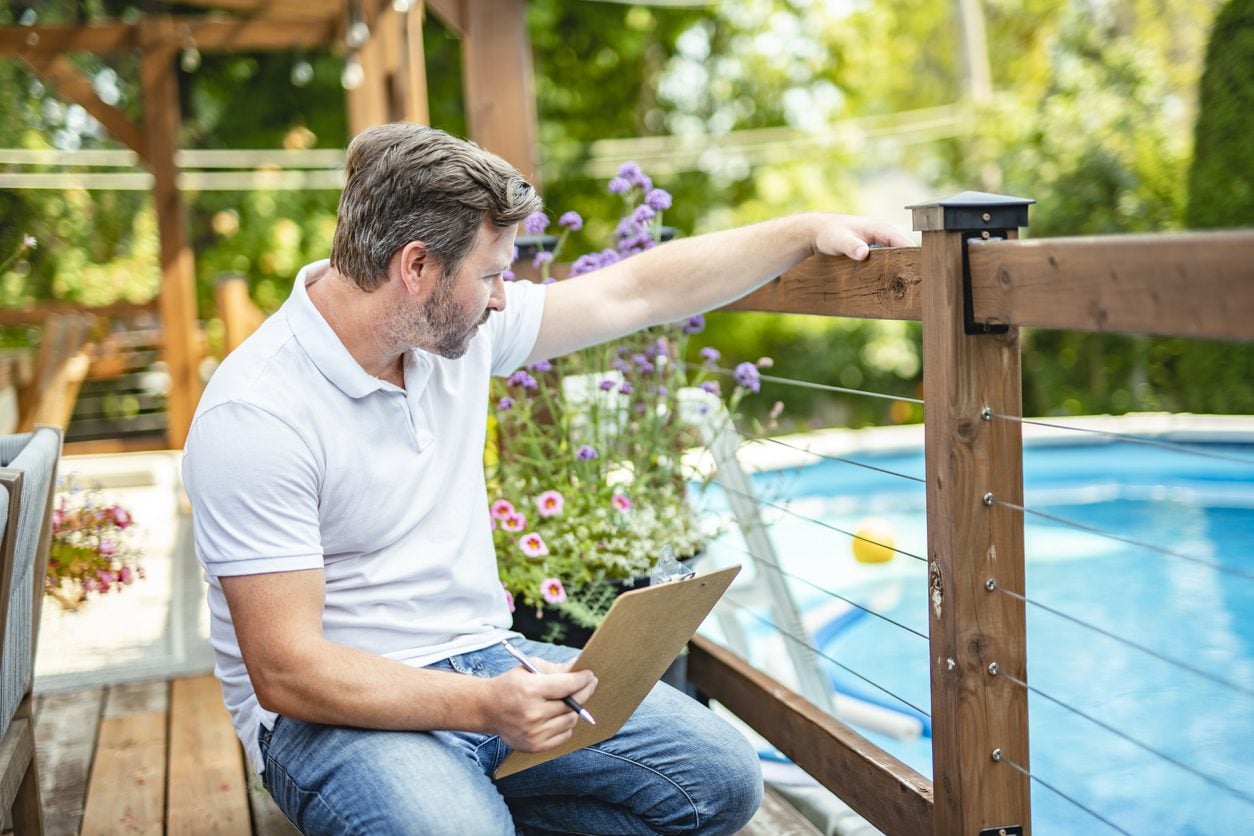
Winter can be brutal on your deck. Snow, ice, freezing rain, and constant moisture exposure can quietly take a toll on decking boards, framing, railings, and fasteners. That’s why a thorough deck inspection in spring is essential. Even if everything looks fine at first glance, hidden damage could lead to costly repairs—or worse, structural failure—if it’s not caught early.
Before you start planning summer barbecues, use this 10-point deck inspection checklist to assess winter damage and make sure your deck is safe, secure, and ready for the season.
1. Inspect Deck Boards for Cracks & Splitting
Freeze-thaw cycles force moisture in and out of deck boards. When water freezes, it expands, which can cause:
- Surface cracks
- End splitting
- Raised grain
- Deep checking in hardwoods
Softwoods like pressure-treated pine are especially vulnerable. If boards are severely cracked, soft, or splintering, they may need replacement.
Tip: Pay special attention to board ends and areas that hold standing water.
2. Look for Signs of Rot
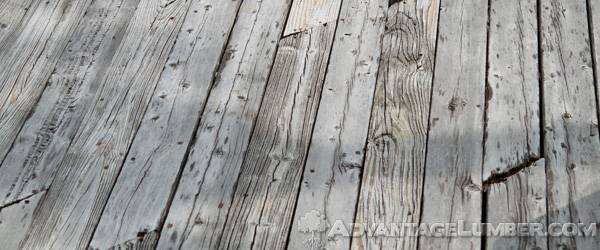
Winter moisture can accelerate rot—especially on older pressure-treated decks.
Check for:
- Soft, spongy spots
- Discoloration
- Flaking or crumbling wood
- Boards that feel weak under foot
Use a screwdriver to gently probe suspicious areas. If it sinks in easily, rot may be present.
Hardwoods like Ipe and Cumaru naturally resist rot, but no deck is immune if water is constantly trapped.
3. Check the Deck Frame (Joists & Beams)
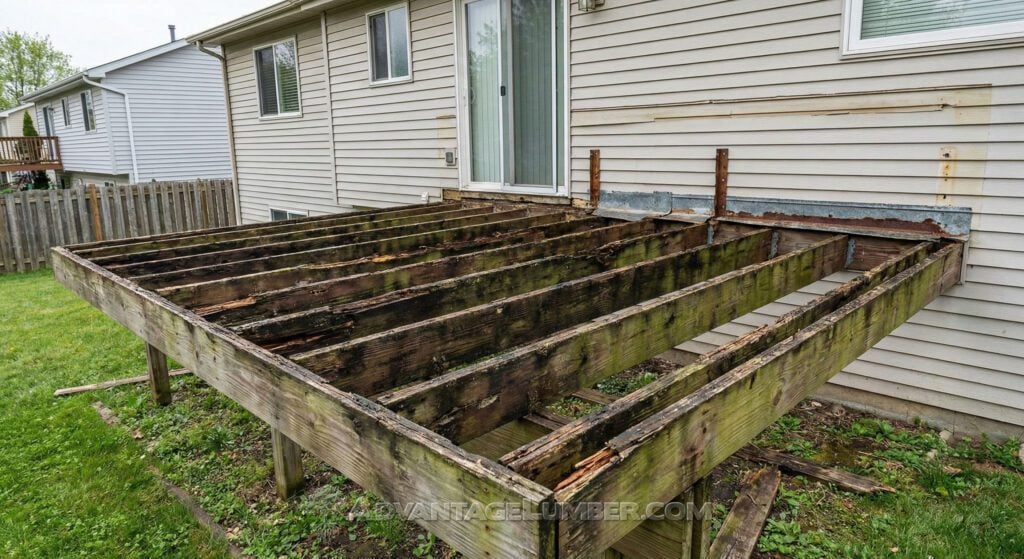
Your deck boards might look fine while the structure underneath is deteriorating.
Inspect:
- Joists
- Support beams
- Rim joists
- Ledger board (where the deck attaches to the house)
This is critical. Many deck collapses happen because of structural failure—not surface decking problems.
Look for:
- Rot
- Rusted hardware
- Sagging
- Cracked lumber
If you see significant structural damage, consult a professional immediately. If your framing is rotted consider rebuilding your deck frame with steel deck framing or aluminum deck framing. These framing materials have a lifespan of 50+ years which match most of the quality deck boards we sell.
4. Examine the Ledger Board Connection
The ledger board is one of the most important—and most failure-prone—parts of a deck.
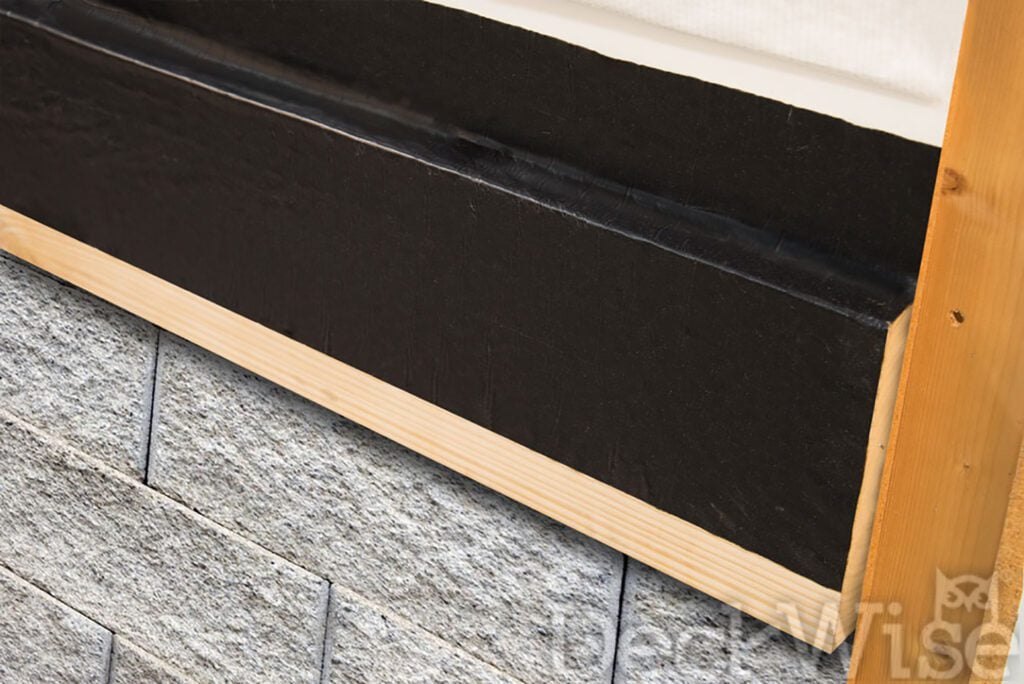
Winter moisture and improper flashing can cause:
- Rot behind the ledger
- Loose bolts
- Gaps between the deck and the home
Make sure:
- Flashing is intact
- Bolts are tight
- There are no signs of water intrusion
This is not an area to ignore.
5. Tighten Loose Fasteners
Cold weather causes materials to contract. As temperatures warm up, boards may shift.
Walk your deck and look for:
- Raised nails
- Backed-out screws
- Loose bolts
- Missing fasteners
Replace corroded hardware with stainless steel or coated fasteners for longer life—especially in high-moisture or coastal areas.
6. Inspect Railings & Balusters
Railings must be secure for safety.
Push gently on:
- Top rails
- Posts
- Balusters
They should feel solid, not wobbly.
Composite and aluminum railings typically hold up well through winter, while wood railings may loosen due to expansion and contraction.
If posts move at all, they need reinforcement before the deck is used.
7. Check Stairs for Movement & Settling
Deck stairs take a beating in winter, especially if exposed to ice melt products.
Inspect:
- Stair stringers
- Treads
- Risers
- Connection points
Look for:
- Cracked treads
- Soft wood
- Loose connections
- Uneven settling
Stairs are one of the most common areas for injuries—don’t overlook them.
8. Look for Mold, Mildew & Surface Staining

Winter moisture creates the perfect environment for mold and mildew growth.
Check for:
- Black or green staining
- Slippery surfaces
- Algae buildup in shaded areas
While surface mold isn’t always structural damage, it can be a slipping hazard and should be cleaned properly.
Avoid harsh pressure washing, especially on softwoods, as it can damage fibers and force water deeper into the wood.
9. Inspect for Surface Finish Failure
If your deck was sealed or stained, winter may have worn down the protective layer.
Look for:
- Fading
- Peeling
- Water no longer beading on the surface
- Dry or gray wood
If water absorbs quickly instead of beading up, it’s time to reseal. A penetrating water-based sealer is ideal because it protects without forming a film that flakes or peels. This is very important for softwoods like pressure treated, cedar and redwood.
These woods are more prone to absorbing water and rotting over time whereas hardwoods are significantly less prone to absorbing water and rotting. Hardwoods like Ipe can last 50+ years without any treatment or water sealers. In fact most commercial applications that install Ipe like boardwalks etc… never treat the Ipe wood.
10. Check for Standing Water & Drainage Issues
Winter can reveal drainage problems that weren’t obvious before.
After a rain:
- Look for puddling
- Check if water pools between boards
- Make sure downspouts aren’t draining onto the deck
Standing water accelerates rot and surface breakdown. If pooling is persistent, you may need to adjust board spacing or improve drainage around the deck.
Bonus: When to Consider Resurfacing Instead of Repairing
If you find multiple damaged boards but the frame is solid, resurfacing may be a smart option.
Many homeowners replace old pressure-treated deck boards with:
- Ipe
- Cumaru
- Tigerwood
- Garapa
- Brazilian Redwood
- Composite decking
However, if the framing is compromised, replacing deck boards alone is not enough. Always inspect the structure first.
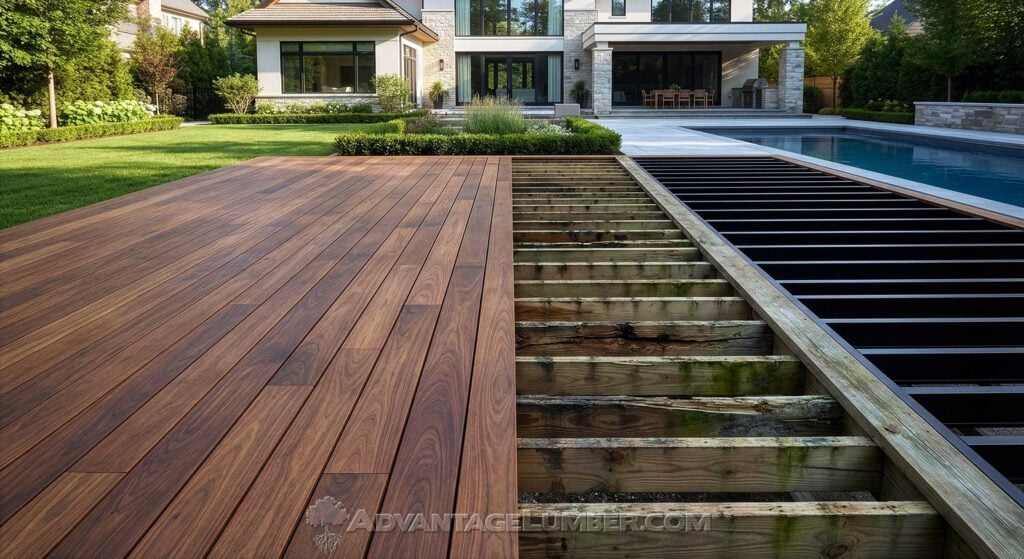
In the picture below you’ll see the Ipe wood deck boards are still like new, the pressure treated framing does not have the same lifespan as the Ipe deck boards so that is rotting already. The pool deck framing was rotting faster from the constant exposure to the water splashing so this home owner started replacing the deck frame with aluminum deck framing.
Final Thoughts: Safety First
Winter damage isn’t always obvious—but ignoring small issues can lead to major repairs later.
Before you:
- Host gatherings
- Move furniture back out
- Let kids and pets run across the deck
Take time to complete this 10-point inspection.
If you’re unsure about the structural integrity of your deck, consult a qualified contractor. And if your deck boards are beyond repair, upgrading to durable hardwood or high-performance composite decking can dramatically extend the life of your outdoor space.
Spring is the perfect time to assess, repair, and protect your deck—so it’s ready to perform all summer long.
