
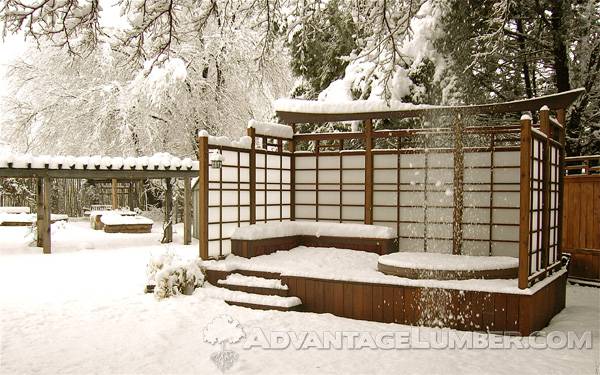
If you live in a northern climate — whether that’s New England, the Upper Midwest, or the mountain regions — your deck needs to withstand repeated freeze–thaw cycles every year.
When water seeps into decking material and temperatures drop, that moisture freezes and expands. As it thaws, it contracts. Over time, this constant expansion and contraction can cause cracking, splitting, cupping, surface checking, and even structural failure.
Choosing the right decking material for freeze–thaw climates isn’t just about appearance — it’s about long-term durability and performance.
Here are the best decking materials that stand up to cold-weather conditions.
1. Tropical Hardwood Decking (Ipe, Cumaru, Tigerwood, Garapa)
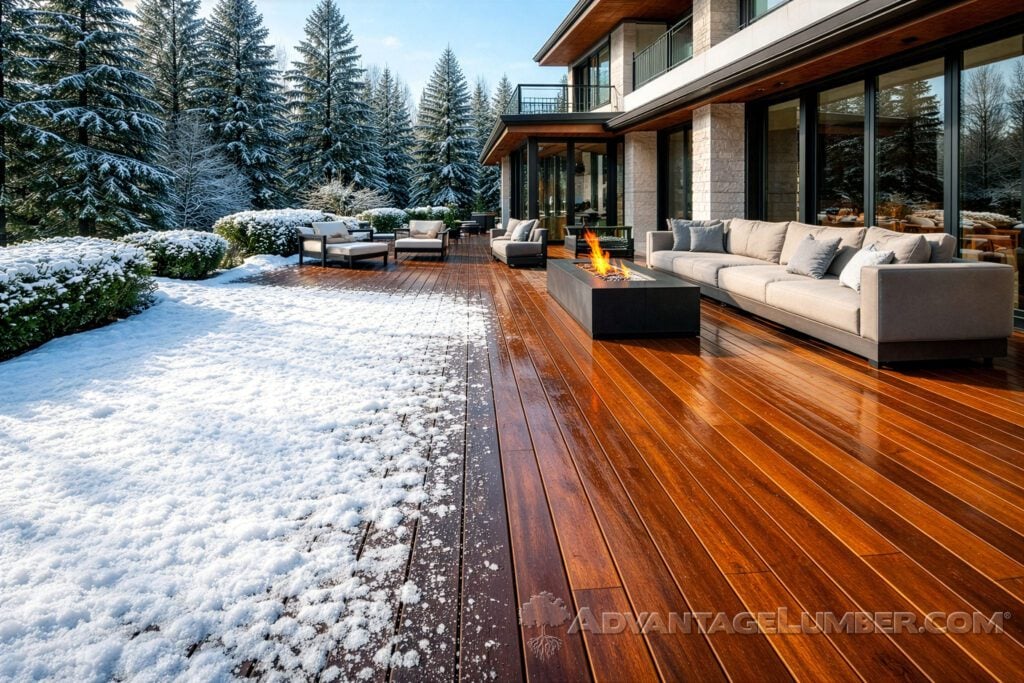
When it comes to freeze–thaw performance, dense tropical hardwoods are among the best choices available.
Species like Ipe (Brazilian Walnut), Cumaru, Tigerwood, and Garapa are extremely dense and naturally resistant to moisture, rot, and insects. Their tight grain structure limits water absorption, which significantly reduces freeze–thaw damage.
Why hardwood decking performs so well:
- Extremely dense and stable
- Low moisture absorption
- Natural resistance to rot and decay
- Holds fasteners securely through temperature swings
- 30+ year lifespan when properly installed
Because these hardwoods are so dimensionally stable, they resist the cupping and cracking that softer woods often experience in cold climates.
For homeowners who want long-term performance and natural beauty, hardwood decking is one of the best investments you can make.
2. Thermally Modified Wood Decking
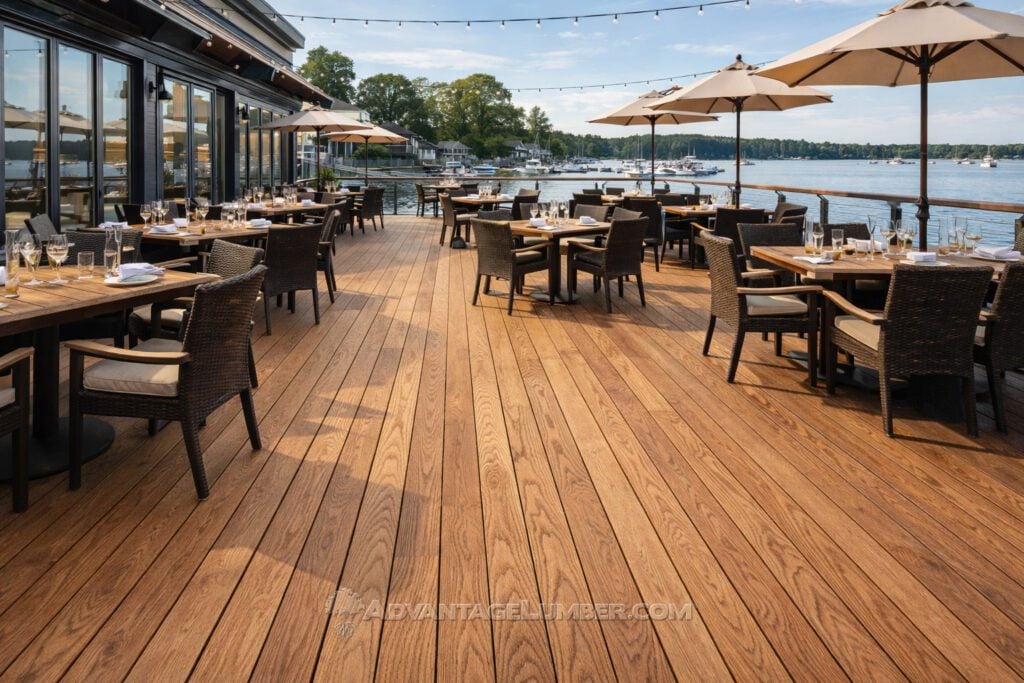
Thermally modified wood is another excellent option for freeze–thaw environments.
Through a high-heat modification process, the wood’s cell structure is permanently altered to reduce its ability to absorb moisture. Less water absorption means less expansion during freezing temperatures.
At AdvantageLumber.com, thermally modified decking such as Pine and Ash offers improved stability compared to untreated softwoods.
Benefits include:
- Improved dimensional stability
- Reduced moisture movement
- Enhanced rot resistance
- Real wood appearance
Thermally modified wood provides a natural look with improved performance in challenging climates.
3. PVC Decking (Low Water Absorption Performance)
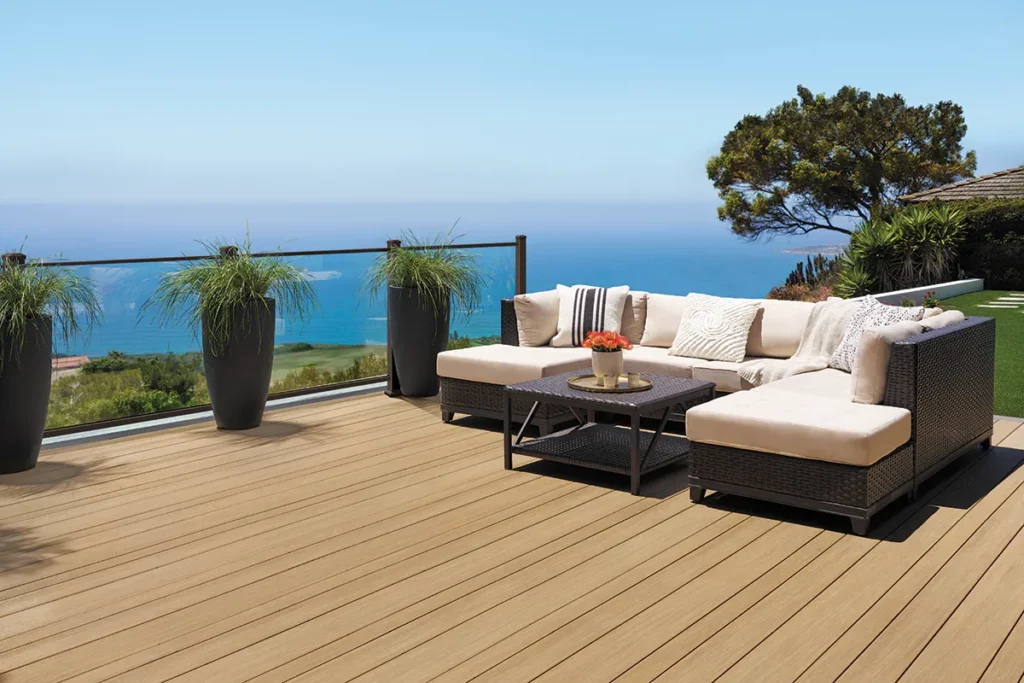
Unlike composite decking, PVC decking contains no organic wood fibers, which means it will not absorb moisture the way traditional wood or wood-plastic composites can.
In freeze–thaw climates, that’s a major advantage.
Why PVC performs well in cold climates:
- Virtually no water absorption
- No risk of rot or fungal decay
- Highly resistant to cracking from moisture expansion
- Minimal seasonal movement
Because PVC boards are engineered from synthetic materials, they don’t rely on wood fibers that can expand and contract with moisture changes. This makes them one of the most stable decking options for areas with snow, ice, and repeated freeze–thaw cycles.
High-quality PVC decking lines from brands like TimberTech PVC are specifically engineered for durability and long-term performance.
4. Composite Decking
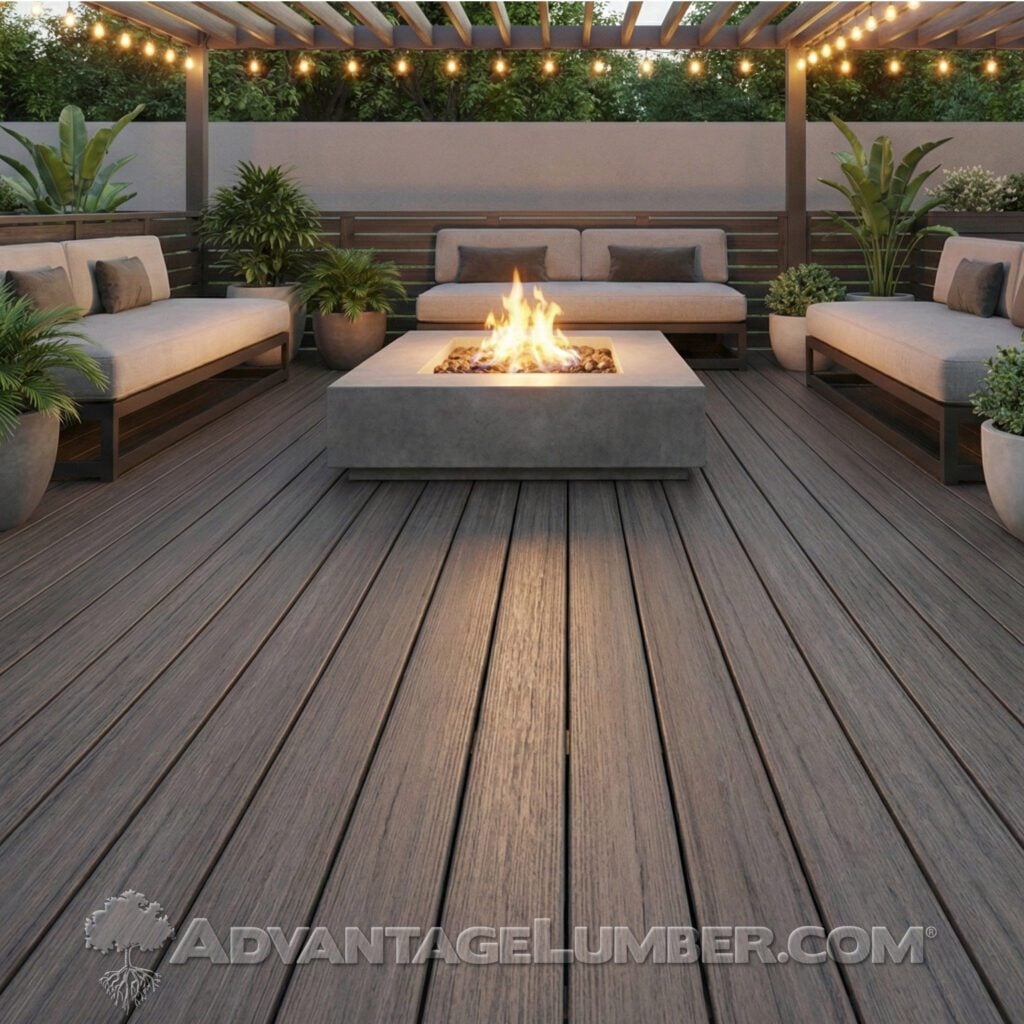
Composite decking — made from a blend of recycled wood fibers and polymers — also performs well in freeze–thaw environments when you choose a high-quality capped composite product.
Advantages:
- Resists rot and insect damage
- Lower maintenance than traditional wood
- Protective cap reduces surface moisture intrusion
However, because composite decking still contains wood fibers, it may absorb small amounts of moisture compared to PVC. That’s why product quality matters. Premium capped composite boards from brands like Trex, TimberTech, and Deckorators are designed to limit water intrusion and provide long-term durability.
5. Cedar (With Proper Maintenance)
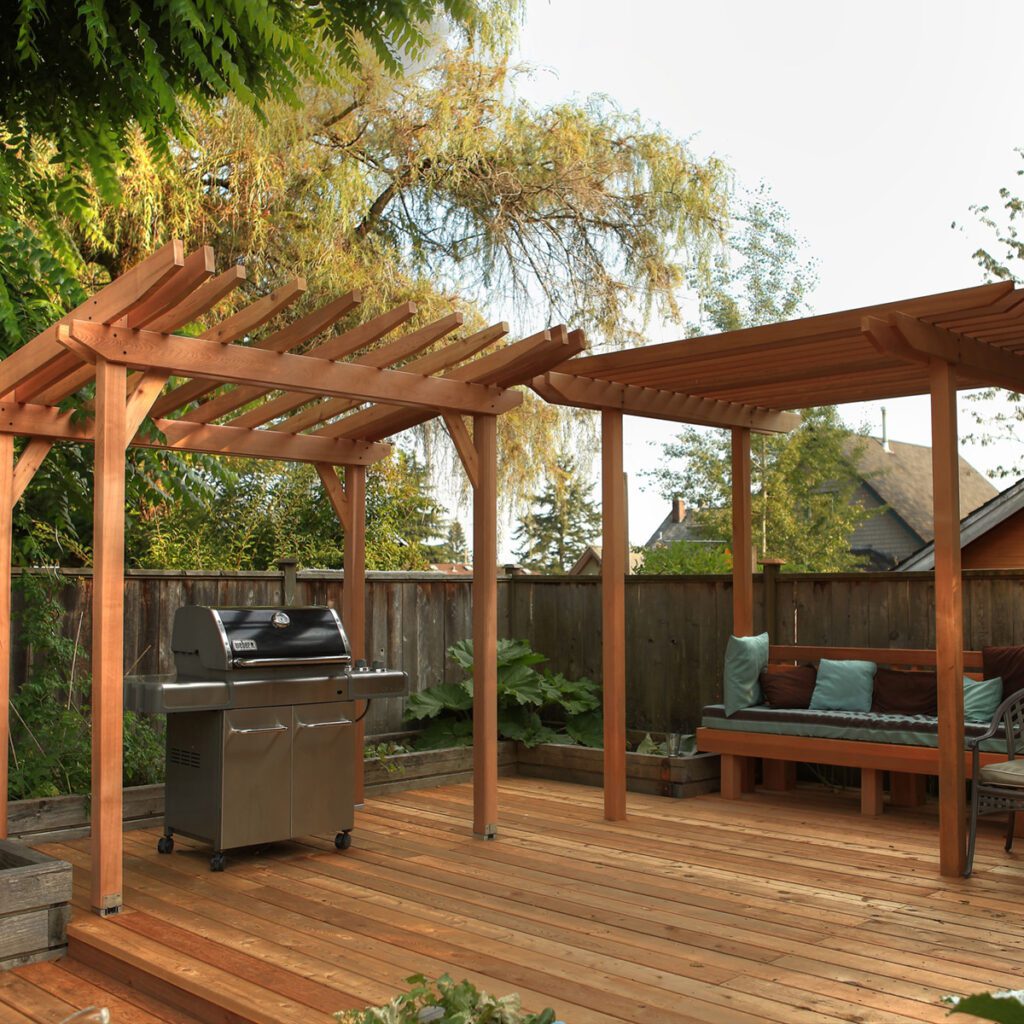
Cedar is naturally resistant to decay and performs reasonably well in cold climates when maintained properly.
However, cedar is a softer wood and can be more susceptible to:
- Cupping
- Checking
- Surface wear
- Moisture absorption if not sealed regularly
If you prefer cedar’s natural warmth and are committed to routine sealing and maintenance, it can be a viable option — but it does not offer the same long-term freeze–thaw resistance as hardwood, thermally modified wood, or PVC.
Important Considerations for Freeze–Thaw Climates
Proper Drainage Is Critical
Even the best decking material can fail if water is allowed to pool.
Be sure your deck includes:
- Proper board spacing for drainage
- Adequate slope away from the home
- Good airflow underneath the deck
Use the Right Fasteners
Freeze–thaw environments accelerate corrosion. Always use stainless steel or approved exterior-rated fasteners, especially with hardwood decking.
Protect the Surface
For wood decking, use a high-quality penetrating sealer like DeckWise WiseCoat® or WiseSeal® to reduce moisture intrusion and extend service life.
Best Decking Materials for Freeze–Thaw Climates – Quick Comparison
| Material | Freeze–Thaw Resistance | Longevity | Maintenance |
|---|---|---|---|
| Tropical Hardwoods | ★★★★★ | 30+ years | Low–Moderate |
| PVC Decking | ★★★★★ | 25–40 years | Very Low |
| Thermally Modified Wood | ★★★★☆ | 20+ years | Moderate |
| Composite Decking | ★★★★☆ | 25+ years | Low |
| Cedar | ★★★☆☆ | 15–20 years | High |
Final Thoughts
Freeze–thaw climates are demanding on outdoor materials. The best decking choices are those that resist moisture absorption, minimize movement, and maintain structural integrity through extreme seasonal swings.
For the highest performance in cold-weather regions, tropical hardwoods and PVC decking are top-tier choices. Thermally modified wood and premium composite decking also provide strong performance when properly installed.
At AdvantageLumber.com, we offer a wide range of hardwood, thermally modified, composite, and PVC decking options to help homeowners build decks that last — even through the harshest winters.
If you’re planning a deck project in a freeze–thaw region, our team can help you choose the right material for your climate and budget.
