
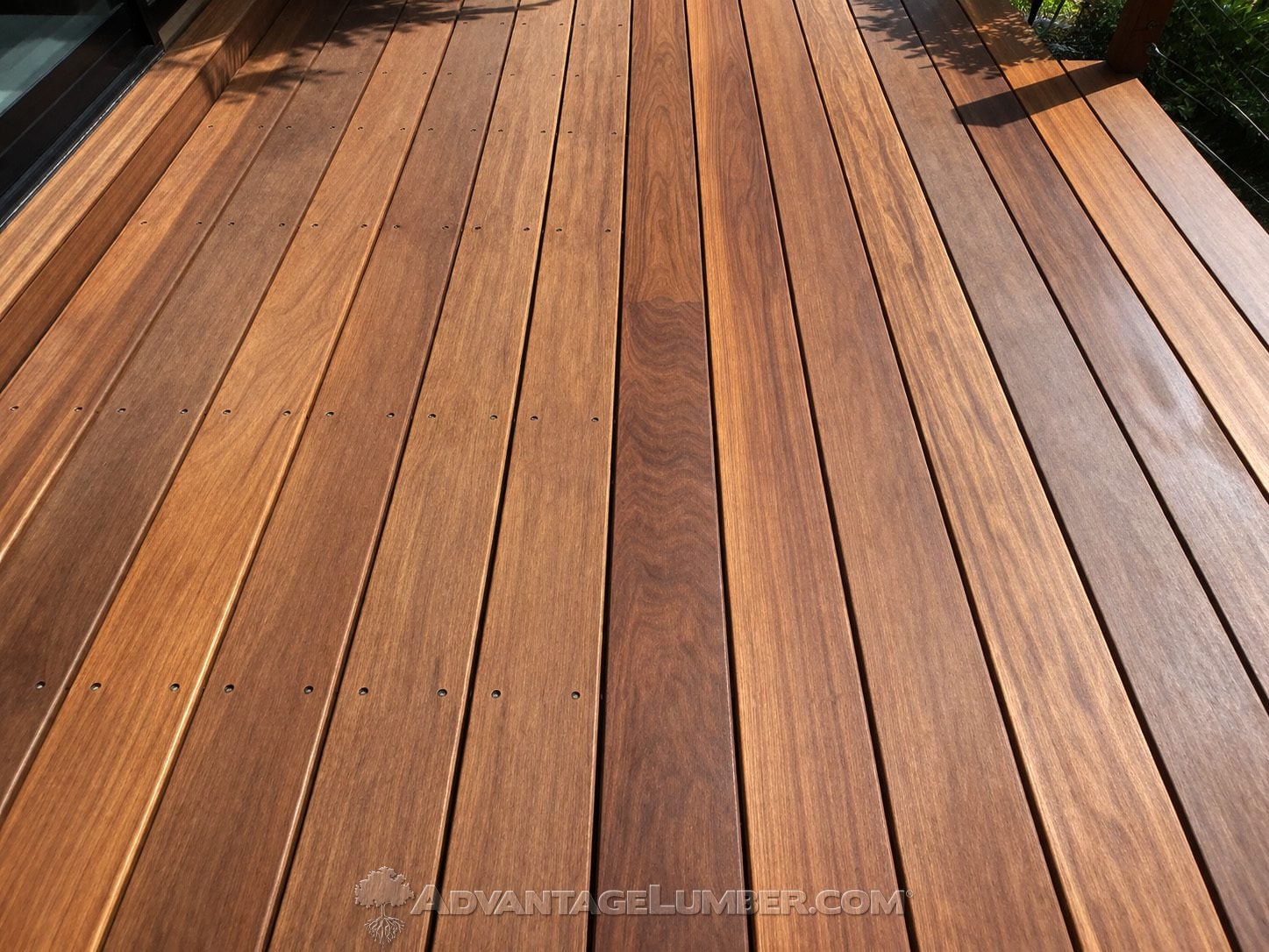
After more than 20 years helping people build decks with everything from Ipe and Cumaru to composites, this is one of the questions I hear most: “Should I order grooved boards or square edge?”
The short answer is almost always “both,” but the details depend on how you want the finished deck to look and how you plan to fasten it. Let me break it down the way I explain it to customers every day.
What’s the Actual Difference?
Square edge boards (sometimes called standard or S4S) are just what they sound like clean, solid edges on all sides. You fasten them the traditional way: screws driven through the face of the board into the joists. You can leave the screw heads showing, use color matched screws, or cover them with matching wood plugs for a cleaner look.
If you want to use hidden fasteners with square edge boards you can use a biscuit cutter to cut a slot over each joist or a slot cutter on a router. This is a time consuming process that will wear out your cutters so most people choose to order their boards pregrooved.
Grooved boards (we call them pregrooved) have a channel milled along one or both long edges. That groove is designed for hidden fastener clips like the DeckWise Ipe Clip system we recommend for hardwoods. The clip slides into the groove and screws down into the joist, so nothing shows on the walking surface.
That’s the whole difference. Same wood, same strength, same lifespan. The edge profile just decides how the board gets attached and where it works best.
When I Recommend Grooved Boards
Most of the main field of a deck looks better with grooved boards and hidden fasteners. No rows of screw heads. Just the grain, the color, and the clean lines of the boards. It also creates a consistent gap automatically, which helps with drainage and lets the wood move a little as humidity changes.
I’ve seen this make a real difference on high end Ipe and Cumaru decks. The surface stays smoother underfoot, and you avoid the little “mushrooming” or surface damage that can happen around face screws over time. For families with kids or anyone who goes barefoot, it’s just nicer.
One practical tip: order a few one sided pregrooved boards for starter boards or areas where only one edge needs the clip. We mill those specifically so your edges stay strong.
When Square Edge Boards Still Win
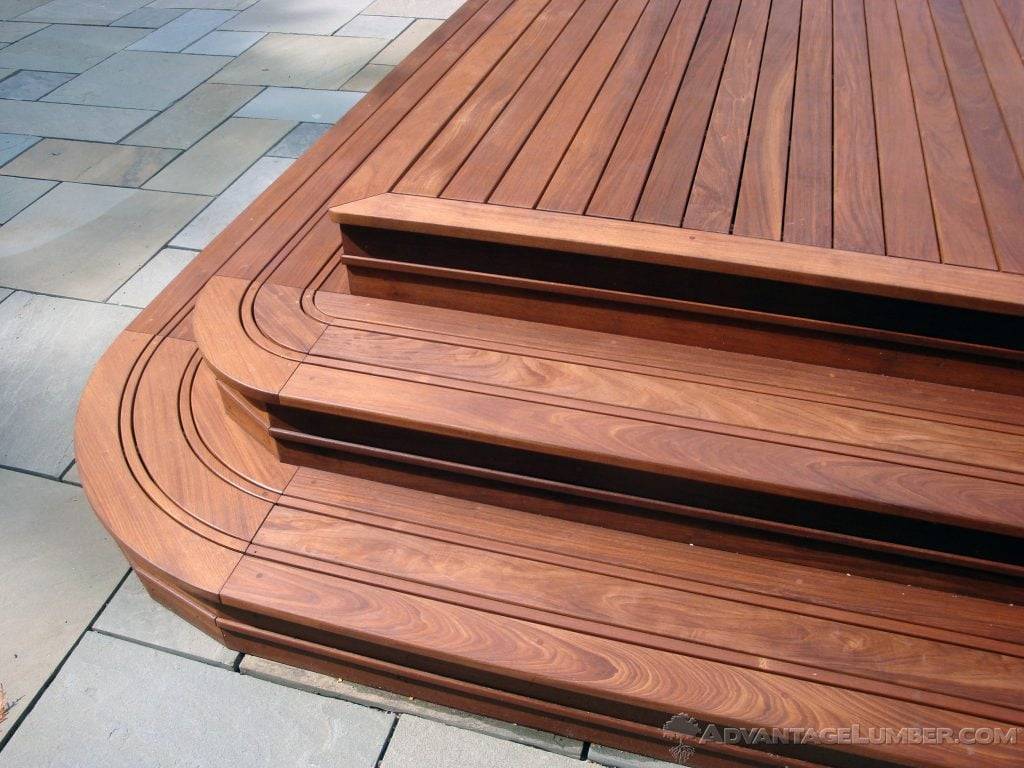
You need square edge boards anywhere the side of the board will be visible:
- Picture frame borders
- Stair treads
- Around posts or openings
- Anywhere the groove would show as an unfinished edge
A grooved board along an exposed perimeter looks unfinished. The solid edge of a square board gives you a clean, intentional look. On stairs, it also makes face fastening (or plug systems) easier and more secure. We also mill deck boards grooved only on one side for this purpose as well.
A lot of people assume square edge is the “cheaper” or “DIY” option. It’s true that the fasteners themselves cost less, and face screwing can be faster if you’re comfortable with it. But on premium hardwood, most of the customers I work with end up using plugs or color matched screws on the borders anyway, so the cost difference shrinks.
The Smart Way Most Decks Get Built
Nearly every well planned deck I see uses both. Grooved boards for the main walking surface with hidden clips, square edge boards or grooved one side boards for the picture frame and stairs.
That mix gives you the clean modern look everyone wants across the field, while the borders and stairs look finished and intentional. It also makes future repairs easier in those high traffic or high visibility spots.
If you’re ordering from us, calculate the field separately from the border and stair material. A lot of people just order total square footage and end up short on one profile. We can help with that send us your layout and we’ll tell you exactly how many of each you’ll need.
A Couple of Real World Considerations
- Cost: The boards themselves are priced a little more because of the labor that goes into milling the grooves. The bigger difference is the fastener system. Hidden clips cost more than screws, but many people decide the look is worth it.
- Installation speed: Face screwing is straightforward. Hidden fasteners take a bit more care on the first few boards, then they go quickly. For most pro crews the time difference is small once they’re used to the system.
- Repairs: Face screwed boards are easier to pull and replace unless they’ve been plugged. Hidden fastener boards require a little different removal, but it’s easily doable.
- Wood movement: Hidden clips give hardwood a little more freedom to expand and contract. On dense species like Ipe this is usually a benefit.
My Recommendation
If you want that clean, high end look with no visible fasteners across the main deck, order pregrooved boards for the field and pair them with a good hidden fastener system (we stock and recommend the DeckWise line for a reason). Use square edge boards for everything that shows on the edge borders, stairs, and any starter pieces that need a finished side.
If you’re on a tight budget, prefer the traditional look, or want the absolute simplest install, square edge with face screws (and plugs if you want them less visible) still builds a beautiful, long lasting deck.
Either way, the wood you choose matters more than the edge profile. Get the species, thickness, and grade right first. Then match the profile and fasteners to how you want the deck to look and perform.
If you want help figuring out the exact mix for your project, give us a call or send the layout. We’ve done this thousands of times. Happy to look at it with you and make sure you order the right boards the first time.
