

Wood and metal might seem like two very different materials, but they can work together to create a beautiful, modern deck railing. Natural wood adds warmth and character, while metal cable infill creates clean lines and an open appearance that doesn’t compete with the surrounding views.
This combination works especially well on decks overlooking lakes, wooded areas, or other scenic surroundings. Instead of traditional vertical balusters, thin horizontal cables keep the railing from feeling visually bulky while allowing the wood posts and top rail to become part of the overall design.
If you’re planning a new deck or updating an existing one, there are plenty of ways to make this combination your own.
Why Combine Wood Railings With Metal Cable Infill?
One of the biggest advantages of this design is the balance between natural and modern materials. Wood provides texture and warmth, while metal cable gives the railing a streamlined appearance that works with a variety of architectural styles.
Cable infill also takes up less visual space than traditional balusters, making it a popular choice for decks where maintaining an open view is important. This can be especially appealing for waterfront properties, elevated decks, and outdoor living spaces surrounded by nature.
Another benefit is the flexibility to customize the look. Different wood species, post styles, top rail profiles, and cable finishes can create anything from a warm, rustic feel to a more contemporary design.
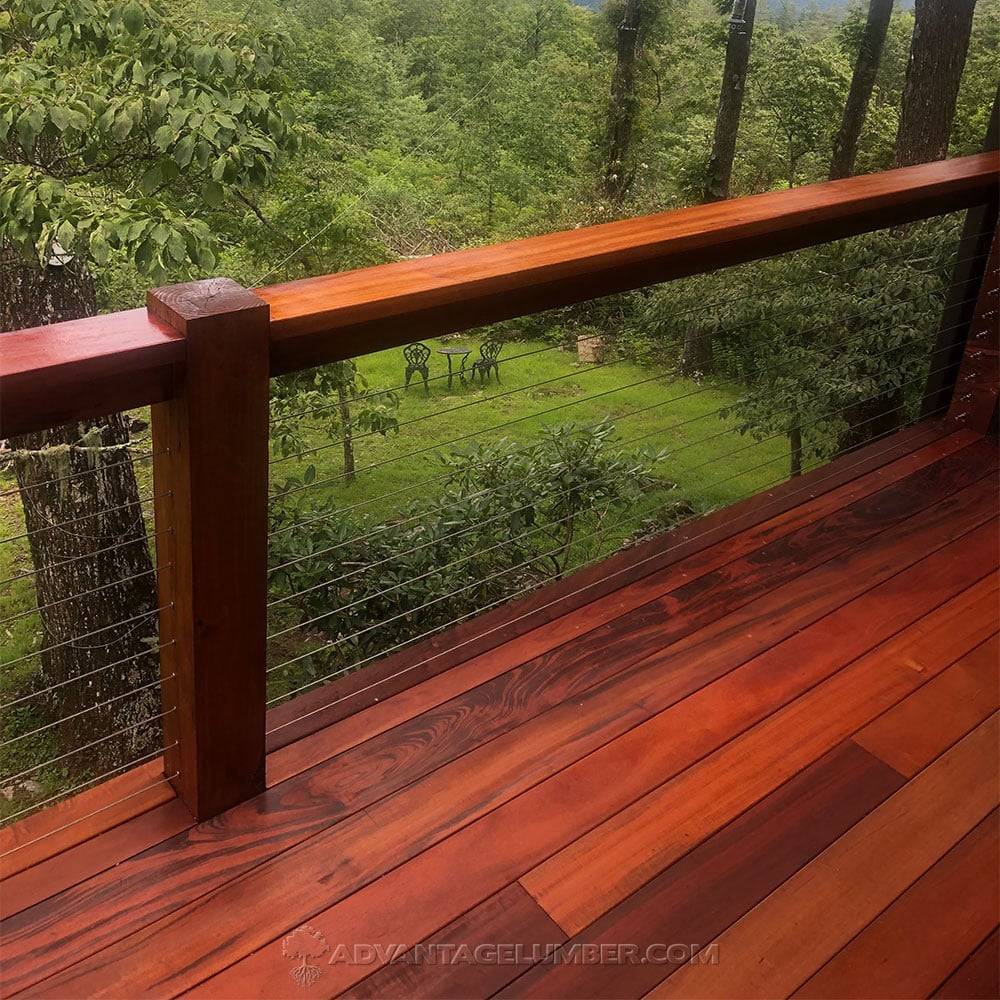
Choosing the Right Wood for Your Railing
The wood you choose will have a big impact on the finished appearance of your railing. Since exterior railings are exposed to sunlight, rain, humidity, and temperature changes, it’s worth considering both durability and appearance.
Tropical hardwoods are a natural fit for this type of project. Many offer attractive grain patterns and natural durability that make them well suited for exterior applications.
A few species to consider include:
- Ipe: Its rich brown tones create a sophisticated look alongside stainless steel or black cable. Ipe is also known for its density and natural durability.
- Cumaru: With warm golden to reddish-brown tones and attractive grain variation, Cumaru adds warmth to a modern railing design.
- Tigerwood: Its distinctive reddish-brown color and dark grain streaks make it a good choice when you want the wood to stand out.
- Garapa: This lighter golden-brown hardwood creates a brighter appearance and provides noticeable contrast against black cable.
You don’t necessarily need to match your railing wood to your deck boards exactly. Using complementary wood tones can add depth and visual interest without making the design feel too busy.
Choosing Between Stainless Steel and Black Cable
Once you’ve settled on the wood, the cable finish is another opportunity to shape the overall look. Both traditional stainless steel and black cable can work beautifully, but they create somewhat different effects.
Stainless Steel Cable
Traditional stainless steel cable has a clean metallic appearance that pairs naturally with wood. It creates a subtle contrast without drawing too much attention away from the railing or surrounding views.
For outdoor applications, the stainless steel grade matters. Marine-grade 316 or 316L stainless steel offers good corrosion resistance, particularly in areas exposed to moisture or salt air.
Black Stainless Steel Cable
Black cable has become increasingly popular for modern outdoor spaces. Its darker finish creates a more understated appearance and can help the cables blend into the surrounding landscape.
Against lighter woods like Garapa or Teak, black cable creates a noticeable contrast. With darker hardwoods like Ipe or Cumaru, it produces a more subtle, coordinated look.
Neither finish is necessarily better than the other. It mostly comes down to whether you want the cable to stand out or blend into the overall design.
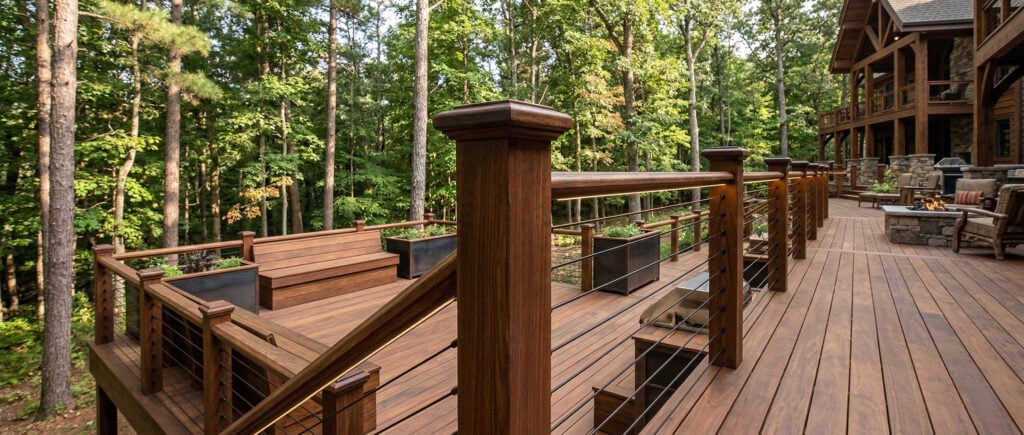
Wood and Cable Railing Design Ideas
The posts and top rail are two of the most noticeable parts of a wood and cable railing. Their size, shape, and finish can change the overall appearance quite a bit.
Square Posts With a Simple Top Rail
Square wood posts paired with a flat top rail create a clean, straightforward design. This combination works particularly well with modern homes and decks that feature simple architectural lines.
A wider top rail can also provide a convenient place to set down a drink or enjoy the view. If you want to use it as a drink rail, choose a profile that’s comfortable to lean against and suitable for exterior use.
Larger Hardwood Posts With a Substantial Top Rail
If you want the wood to be a more noticeable feature, consider larger posts and a wider top rail. This approach works especially well with hardwood decking because the natural grain becomes part of the overall design.
For example, an Ipe deck with matching Ipe posts and a top rail can create a cohesive appearance, while black or stainless steel cable keeps the railing from feeling too heavy.
Contrasting Wood and Cable Finishes
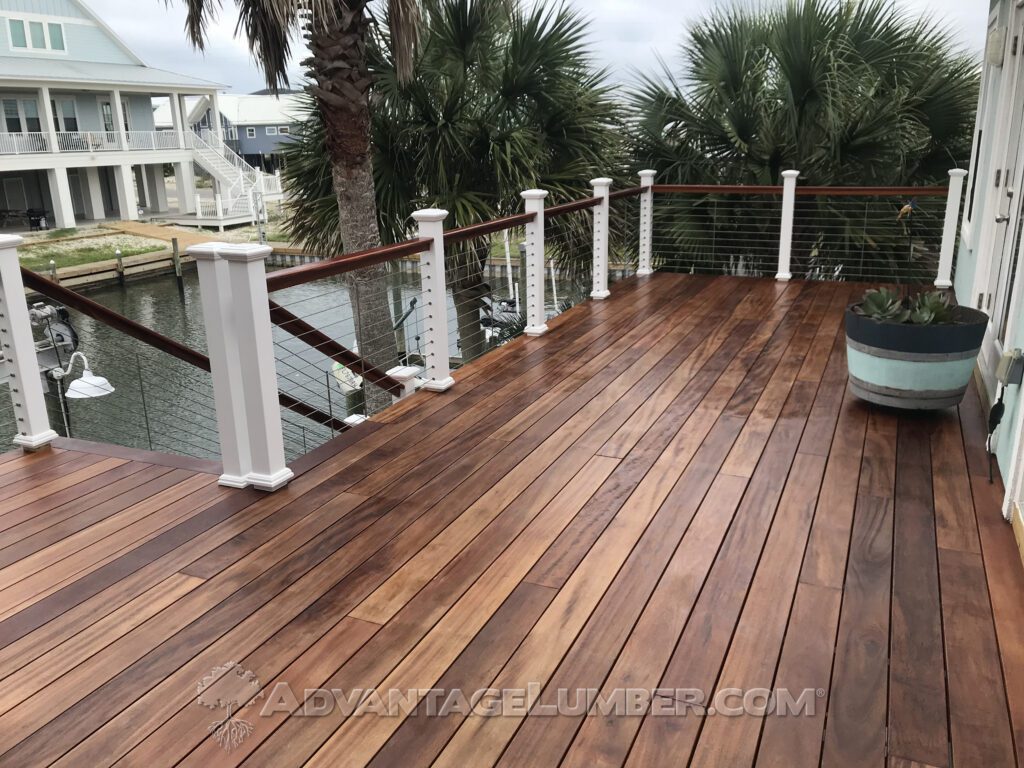
You don’t have to use matching colors throughout the railing. A lighter wood top rail paired with darker cable hardware can create an interesting contrast. You can also coordinate the cable finish with other exterior details, such as black window frames, lighting, or door hardware.
The goal is to bring the materials together in a way that feels intentional without introducing too many competing finishes.
A Few Things to Keep in Mind
Although wood and cable can be a relatively simple combination visually, the railing still needs to be designed and installed properly. Cable tension puts pressure on the posts, so they need to be adequately sized, reinforced, and securely attached to the deck structure. Cable spacing, support locations, and railing height also need to meet the manufacturer’s installation requirements and local building codes. Choose corrosion-resistant cable and hardware for your climate, and keep in mind that wood naturally expands and contracts as moisture levels change. Following the cable system’s installation instructions and checking the railing periodically can help keep everything in good shape.
Final Thoughts
Combining wood railings with metal cable infill is a great way to create a deck that feels both natural and modern. Whether you prefer the rich tones of Ipe, the distinctive grain of Tigerwood, or the lighter appearance of Garapa, wood offers plenty of design flexibility when paired with stainless steel or black cable.
The best part is that you don’t have to choose between the warmth of wood and the clean appearance of metal. With the right combination, you can enjoy both while keeping the railing open and letting the rest of your outdoor space take center stage.
Looking for ideas or materials for your next deck project? Explore Advantage Lumber’s selection of hardwoods and cable railing products to find a combination that works for your space.
Frequently Asked Questions
Can you combine wood railings with metal cable infill?
Yes. Wood posts and top rails can be combined with horizontal stainless steel or black metal cables to create a modern railing design. The wood adds a natural appearance, while the cables help maintain an open view.
What is the best wood for cable railing posts?
Durable exterior wood species such as Ipe, Cumaru, and Tigerwood are worth considering. The posts also need to be properly sized and installed to handle the tension created by the cable system.
Is black or stainless steel cable better for wood railings?
Both are good options. Traditional stainless steel offers a brighter metallic appearance, while black cable creates a more understated, contemporary look. The best choice depends on your preferred style and the surrounding materials.
Does cable railing work with hardwood decking?
Yes. Cable railing pairs particularly well with hardwood decking because the natural wood tones complement the clean appearance of metal cable. Ipe, Cumaru, and Tigerwood are a few species that can create beautiful combinations.
Does wood and cable railing require a lot of maintenance?
Maintenance is generally manageable, but both materials need occasional attention. Stainless steel cables and hardware should be cleaned and inspected, while wood may need periodic cleaning or refinishing depending on the species, exposure, and desired appearance.
