
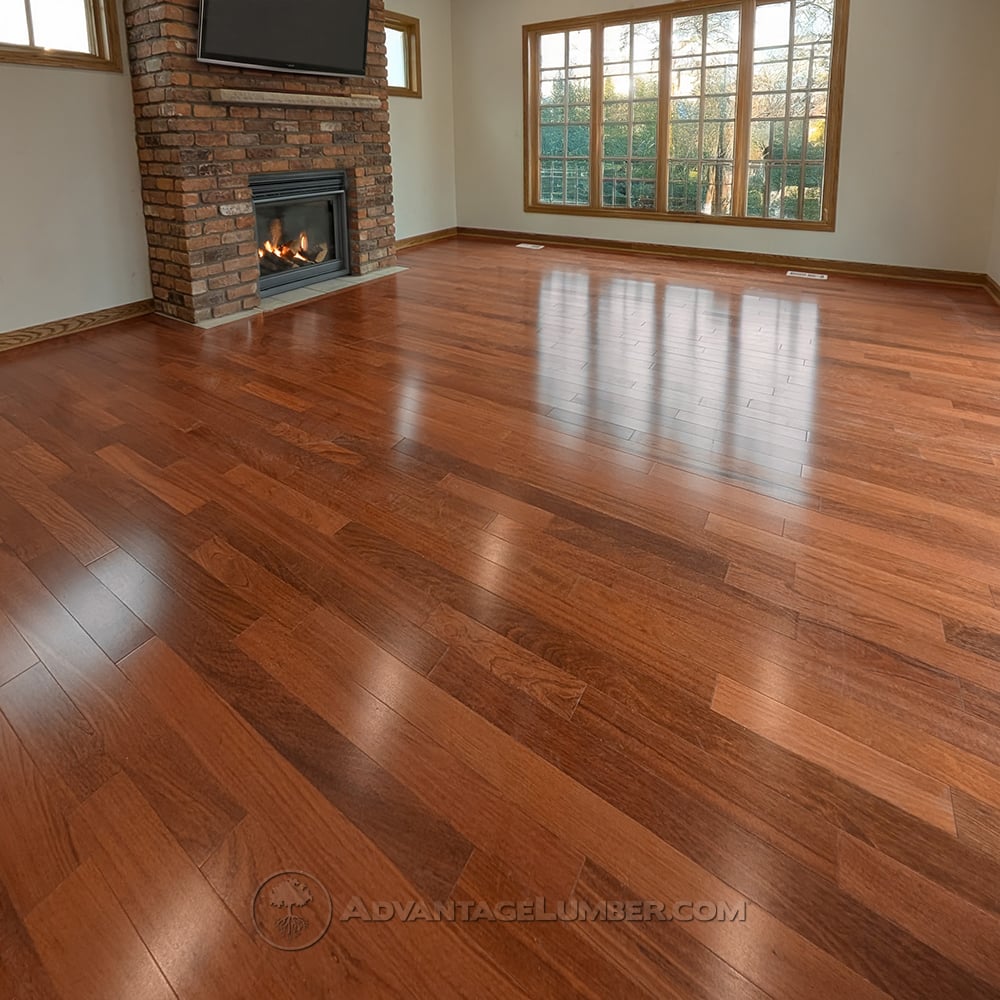
Brazilian Cherry flooring, also known as Jatoba, is a popular choice for homeowners who want a hardwood floor with rich reddish-brown tones, distinctive grain patterns, and excellent durability. Its natural beauty and impressive hardness make it stand out from many domestic hardwood species.
If you’re considering Brazilian Cherry flooring, you’ll find both solid and engineered options. While they offer a similar appearance, their construction affects how they perform, where they can be installed, and how much flexibility you’ll have when it comes to future refinishing.
So, which should you install? The answer depends on your subfloor, installation environment, and long-term expectations.
What Is the Difference Between Solid and Engineered Brazilian Cherry Flooring?
The biggest difference comes down to construction.
Solid Brazilian Cherry flooring is milled from a single piece of Jatoba hardwood. The entire plank consists of Brazilian Cherry, providing a substantial wear surface that can be sanded and refinished multiple times throughout its lifespan.
Engineered Brazilian Cherry flooring features a genuine Jatoba hardwood wear layer bonded to a multi-layer core, typically made from plywood or other wood materials. This layered construction helps minimize seasonal expansion and contraction while maintaining the natural appearance of Brazilian Cherry.
Neither option is laminate or a printed imitation of wood. Both have real Brazilian Cherry on the surface, but engineered flooring uses less of the solid hardwood throughout the plank.
Solid vs. Engineered Brazilian Cherry Flooring: A Quick Comparison
| Feature | Solid Brazilian Cherry | Engineered Brazilian Cherry |
| Construction | Single piece of Jatoba | Jatoba wear layer with engineered core |
| Appearance | Natural Brazilian Cherry grain and color | Natural Brazilian Cherry grain and color |
| Dimensional Stability | More affected by humidity changes | Better resistance to seasonal movement |
| Installation | Typically nail-down | Nail-down, glue-down, or floating, depending on product |
| Concrete Subfloors | Generally not suitable for direct installation | Compatible products available |
| Refinishing | Can be refinished multiple times | Depends on wear-layer thickness |
| Initial Cost | Typically higher | Often more affordable |
Both options can last for decades with proper installation and care. However, there are a few differences that are worth thinking about before making your decision.
1. Durability and Construction
Brazilian Cherry is a naturally hard and dense tropical hardwood, which makes it a great option for areas that see plenty of foot traffic.
Brazilian Cherry has a Janka hardness rating of approximately 2,350 lbf, making it considerably harder than many popular domestic hardwoods, including red oak. Its density makes it a durable choice for busy areas of the home where floors see plenty of foot traffic.
Since both solid and engineered Brazilian Cherry have a genuine Jatoba surface, their resistance to everyday wear is similar when comparing products with comparable finishes.
The difference is what lies underneath. Solid flooring is Brazilian Cherry all the way through, while engineered flooring has a hardwood wear layer over a more dimensionally stable core.
If you like the idea of traditional solid hardwood and want plenty of material available for future refinishing, solid Brazilian Cherry has an advantage. However, engineered flooring can offer similar surface durability while giving you more flexibility when it comes to installation.
2. Moisture, Stability, and Installation
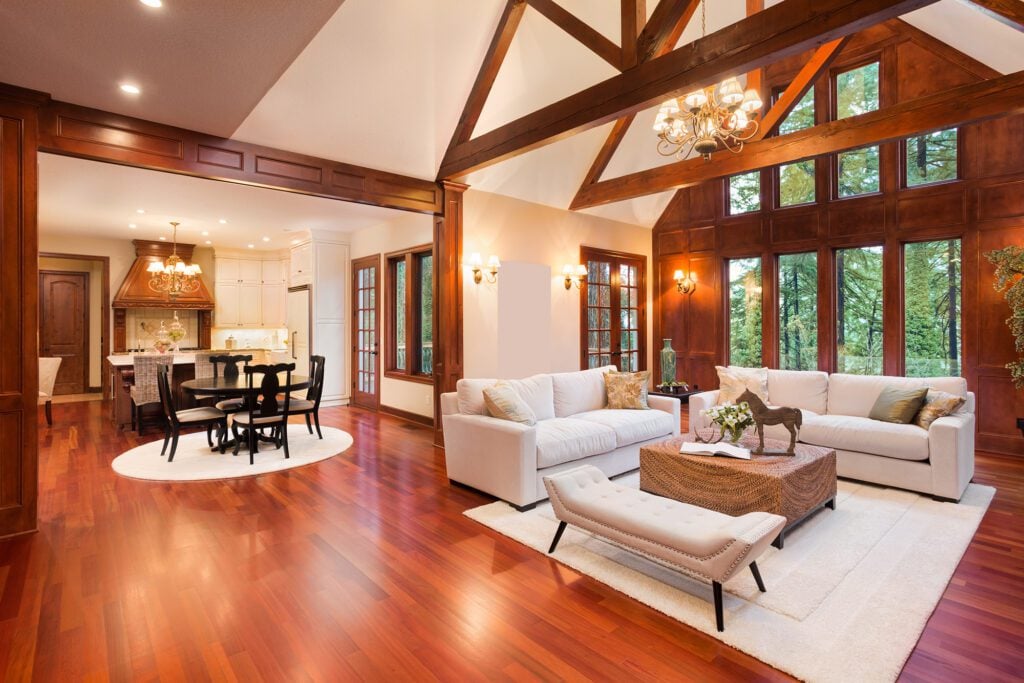
Your subfloor and indoor humidity conditions are two of the most important factors when choosing between solid and engineered Brazilian Cherry flooring.
Like other natural hardwoods, Brazilian Cherry expands as it absorbs moisture and contracts as it dries. Solid flooring is more affected by these changes because the entire plank consists of one piece of wood.
Engineered flooring is designed to minimize this movement. Its layered core helps balance the natural expansion and contraction of the hardwood surface, making it more dimensionally stable as indoor humidity changes.
This difference also affects installation options.
Solid Brazilian Cherry is typically installed using a nail-down method over an appropriate plywood subfloor. It generally isn’t recommended for direct installation over concrete slabs or in below-grade spaces.
Engineered Brazilian Cherry offers more flexibility. Depending on the product, it may be installed using:
- Nail-down: Fastened to an approved wood subfloor.
- Glue-down: Secured to an approved subfloor using flooring adhesive.
- Floating: Connected plank to plank without being directly fastened to the subfloor.
Certain engineered products are also suitable for properly prepared concrete slabs and some below-grade installations, making them a practical option for homes where solid hardwood isn’t appropriate.
Just keep in mind that engineered flooring isn’t waterproof. Excessive moisture can still damage the hardwood surface and core, so proper moisture testing and subfloor preparation are important for either opt
3. Refinishing and Maintenance
One of the biggest advantages of solid Brazilian Cherry flooring is how many times it can potentially be refinished.
Because the entire plank is made from Jatoba, solid flooring can be professionally sanded and refinished multiple times, depending on its remaining thickness and condition. So, if the finish starts looking worn or the floor picks up scratches over the years, you may be able to restore it rather than replace it.
Engineered Brazilian Cherry can also be refinished, but it depends on how thick the hardwood wear layer is. Some products allow for professional sanding, while others have very limited or no refinishing potential.
If you’re comparing engineered flooring, pay attention to the actual hardwood wear-layer thickness rather than just the overall plank thickness. A thicker plank doesn’t necessarily mean there’s more Brazilian Cherry available for sanding.
As far as everyday maintenance goes, both options are fairly straightforward. Regular sweeping or vacuuming and occasional cleaning with a hardwood floor cleaner will help keep them looking their best. Just avoid soaking the floor or allowing standing water to accumulate.
If you want the most flexibility when it comes to restoring your floors down the road, solid Brazilian Cherry is probably the better choice.
4. Cost and Appearance
Solid Brazilian Cherry typically costs more because each plank is made entirely from Jatoba hardwood. Engineered flooring uses a thinner layer of Brazilian Cherry over a less expensive core, which can make it a more affordable way to get the same natural wood appearance.
That said, the price difference isn’t always straightforward. Plank thickness, width, grade, finish, and construction all affect the cost. Some higher-end engineered products can cost as much as or even more than certain solid options.
It’s also worth thinking about long-term value. Solid flooring gives you more opportunities to refinish the surface over the years, while engineered flooring’s refinishing potential depends on the thickness of its hardwood wear layer.
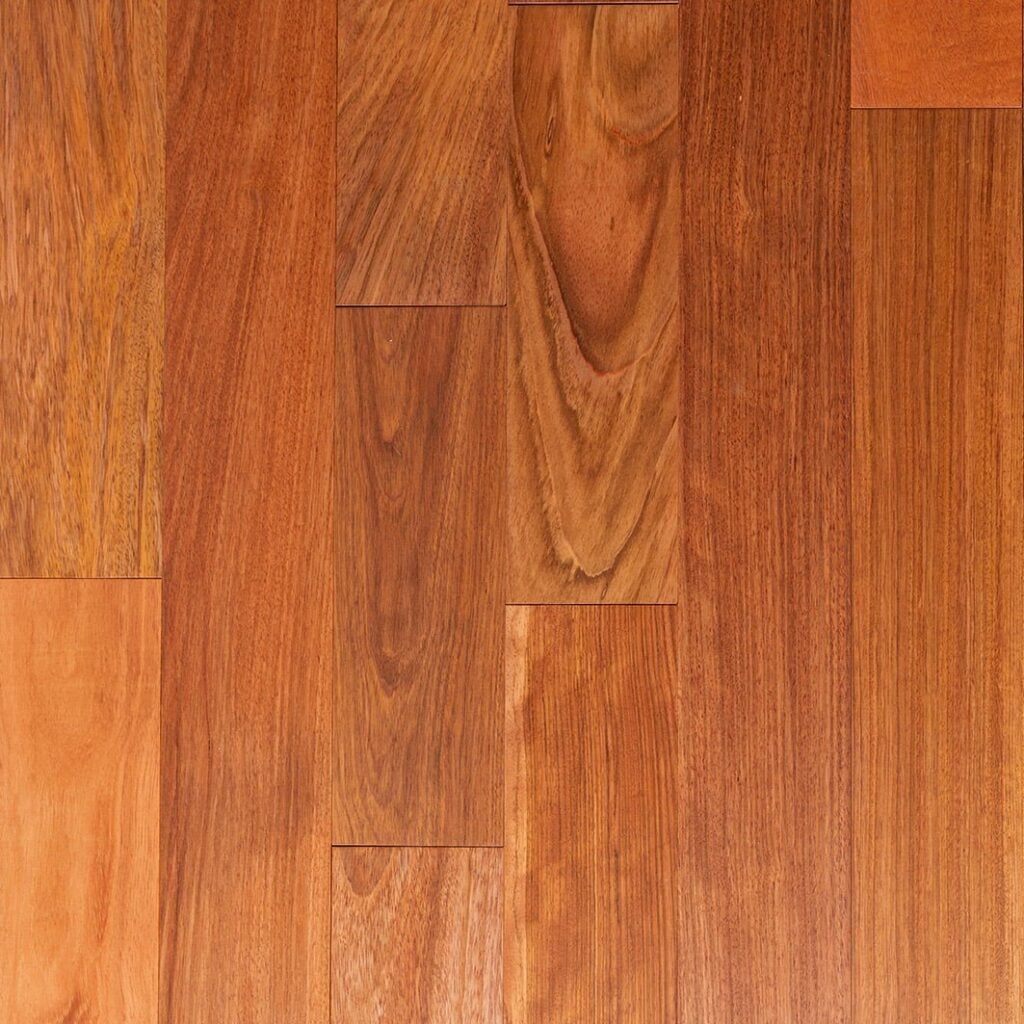
As for appearance, you won’t give up the natural beauty of Brazilian Cherry by choosing engineered flooring. Both options showcase Jatoba’s distinctive grain and color variation, which can range from lighter salmon and pinkish-brown tones to deeper reddish-brown shades.
Brazilian Cherry also darkens over time with exposure to light and air. New flooring may look lighter than you expect at first, but it gradually develops the richer color the species is known for. This happens with both solid and engineered flooring because the visible surface is genuine Jatoba.
You’ll also find prefinished and unfinished options. Prefinished flooring comes with a factory-applied finish, while unfinished flooring gives you more flexibility to choose a finish after installation.
So, Which Brazilian Cherry Flooring Should You Install?
Both solid and engineered Brazilian Cherry flooring offer the natural beauty and durability of Jatoba. The right choice for your project really comes down to where you are installing it and what matters most to you.
Solid Brazilian Cherry might be the better fit if:
- You’re installing over a suitable plywood subfloor above grade.
- You prefer traditional solid hardwood construction.
- You want the ability to sand and refinish your floors multiple times.
- You want a floor you can restore rather than replace as it ages
Engineered Brazilian Cherry might be the better fit if:
- You’re installing over a properly prepared concrete slab.
- You need an option suitable for certain below-grade applications.
- Your home experiences seasonal humidity changes.
- You want more flexibility with installation methods.
- You’d like the natural appearance of Brazilian Cherry at a potentially lower initial cost.
If you’re installing above grade over a suitable wood subfloor, solid Brazilian Cherry is an excellent long-term option, especially if refinishing potential is important to you. However, engineered Brazilian Cherry can make more sense when you’re working with concrete or want a floor that’s less affected by seasonal humidity changes.
Neither option is necessarily better across the board. It really comes down to your home, your subfloor, and what you want from your flooring over the years.
Frequently Asked Questions
Is solid Brazilian Cherry flooring better than engineered?
Not necessarily. Solid Brazilian Cherry gives you more flexibility for future refinishing, while engineered flooring offers greater dimensional stability and more installation options. The better choice depends on your subfloor and what you’re looking for in a hardwood floor.
Is engineered Brazilian Cherry real wood?
Yes. Engineered Brazilian Cherry has a genuine Jatoba hardwood wear layer bonded to a multi-layer core. The visible surface is real Brazilian Cherry, not a printed wood pattern or laminate.
Can you install Brazilian Cherry flooring over concrete?
Certain engineered Brazilian Cherry products are suitable for properly prepared concrete subfloors, provided moisture conditions and manufacturer requirements are met. Solid Brazilian Cherry is generally installed over a suitable wood subfloor.
Can engineered Brazilian Cherry flooring be refinished?
Some engineered Brazilian Cherry flooring can be sanded and refinished, but it depends on the thickness of the hardwood wear layer. Products with thicker wear layers generally offer more refinishing potential.
Does Brazilian Cherry flooring change color over time?
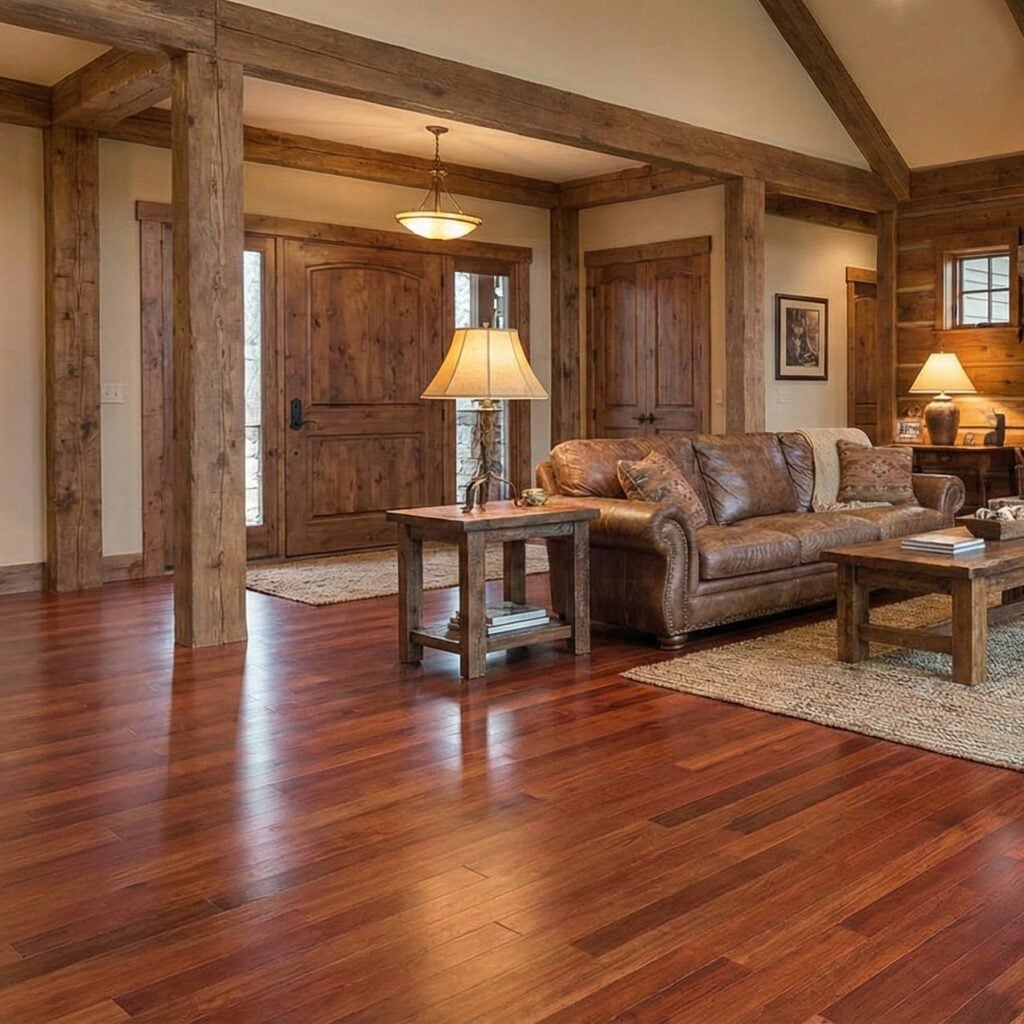
Yes. Brazilian Cherry naturally darkens with exposure to light and air. New flooring may initially have lighter salmon or pinkish-brown tones before developing the deeper reddish-brown color the species is known for. This happens with both solid and engineered flooring.
Find the Right Brazilian Cherry Flooring for Your Home
Whether you prefer solid hardwood or engineered flooring, Brazilian Cherry offers natural character and durability. Explore Advantage Lumber’s Brazilian Cherry flooring selection to find the right option for your project.
