
When planning a deck project, most homeowners focus on decking boards and railings. Fasteners, however, play a critical role in how a deck looks, performs, and holds up over time. The right fastening system affects appearance, board movement, moisture management, and long-term durability.
Understanding the different fastening options available makes it easier to choose a system that aligns with your decking material, environment, and expectations for performance and maintenance.
Surface-Attached Deck Screws
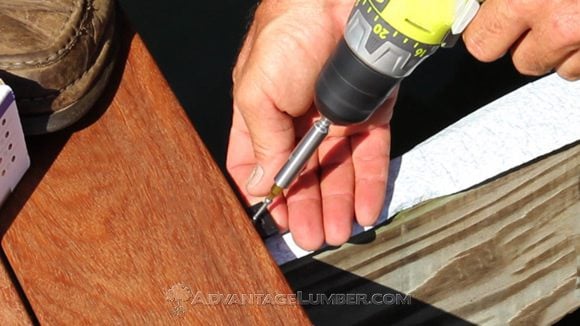
Surface-attached deck screws are one of the most common fastening methods. These screws are driven directly through the face of the deck board and into the joist below.
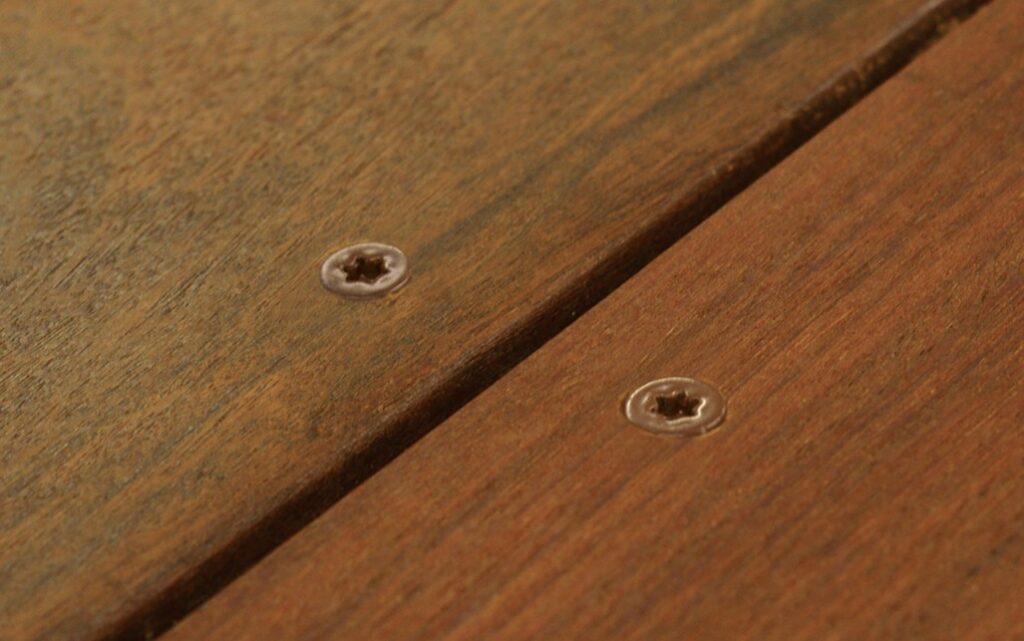
For a more finished appearance, many manufacturers offer color-matched screws designed to blend into the surface of the deck board. These are available for both composite decking and hardwood, helping reduce the visual impact of exposed fasteners.
For coastal and other high-corrosion environments, 316-grade stainless steel screws are recommended due to their superior resistance to moisture and salt air.
Fastener manufacturers may also recommend predrilling depending on the decking material, board density, or environmental conditions. Always consult both the decking and fastener installation instructions before installation.
Best suited for:
- Hardwood and composite decking
- Applications requiring a strong, direct connection
- Projects where face fastening is approved by the manufacturer
Screws and Plugs Systems
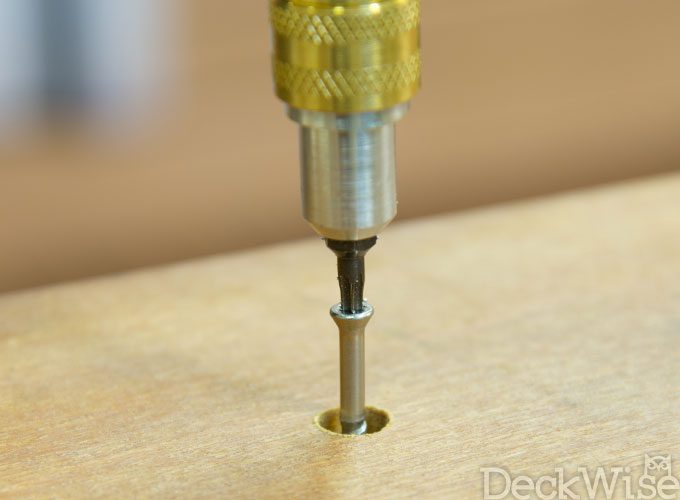
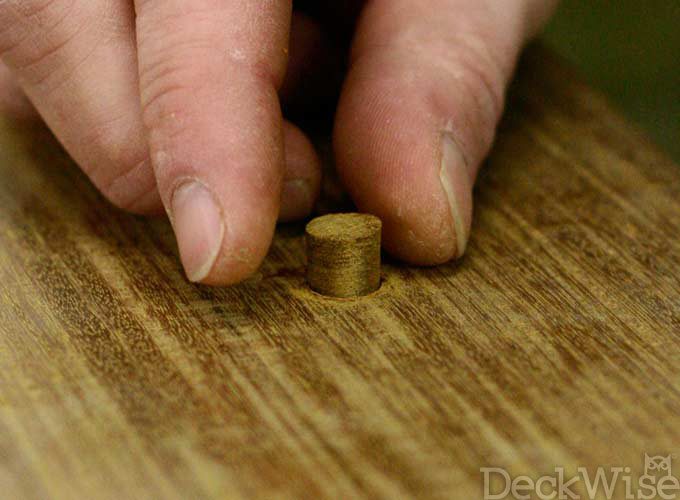
Screw-and-plug systems combine the strength of face fastening with a more refined appearance. In this approach, a screw secures the deck board to the joist, and a matching plug made from the same decking material is installed over the screw head to conceal the connection point.
These systems are available for both hardwood and composite decking, allowing the finished surface to blend naturally as the deck weathers over time.
As with surface-attached screws, manufacturer guidance should be reviewed to confirm fastener approval and predrilling requirements, which can vary by material and product line.
Best suited for:
- Hardwood and composite decks
- Highly visible deck surfaces
- Projects balancing performance with aesthetics
Edge-Fastening Systems
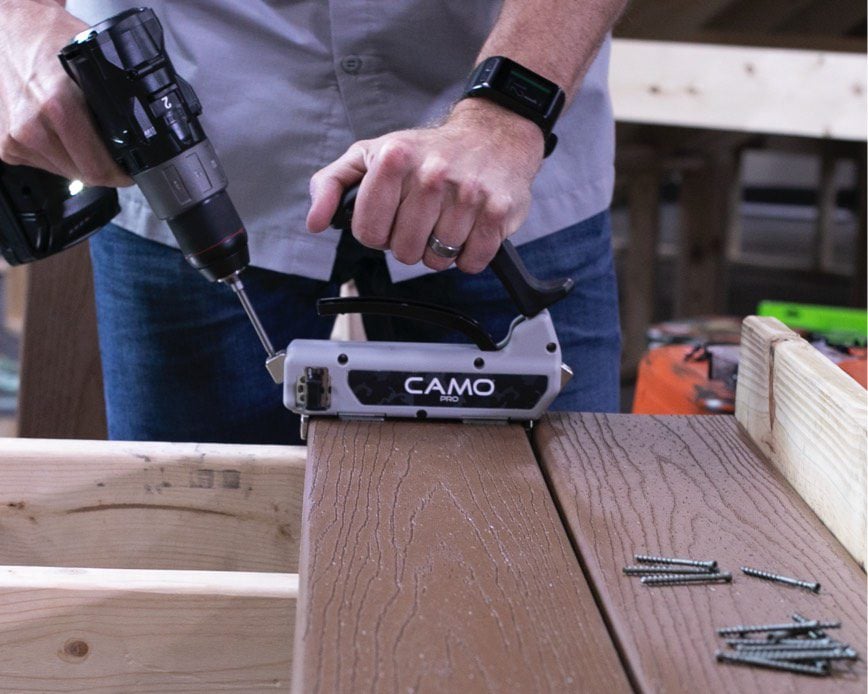
Edge-fastening systems secure deck boards by driving a screw through the side of the board and into the joist, rather than through the surface or a hidden clip. These systems require a specialized installation tool that guides the screw at a precise angle for consistent placement.
Because the fastener is installed from the side, the deck surface remains free of visible screws, and no clips are required. This provides a clean appearance while maintaining a direct mechanical connection between the deck board and framing.
Edge-fastening systems are commonly used with solid deck boards that do not have factory grooves, offering an alternative to clip-based hidden fasteners.
As with all fastening methods, it is important to confirm that edge-fastening systems are approved by the deck board manufacturer and installed according to both tool and fastener instructions.
Best suited for:
- Solid hardwood or composite deck boards
- Projects seeking a hidden look without grooved boards
- Installations requiring consistent alignment
Hidden Fastener Systems
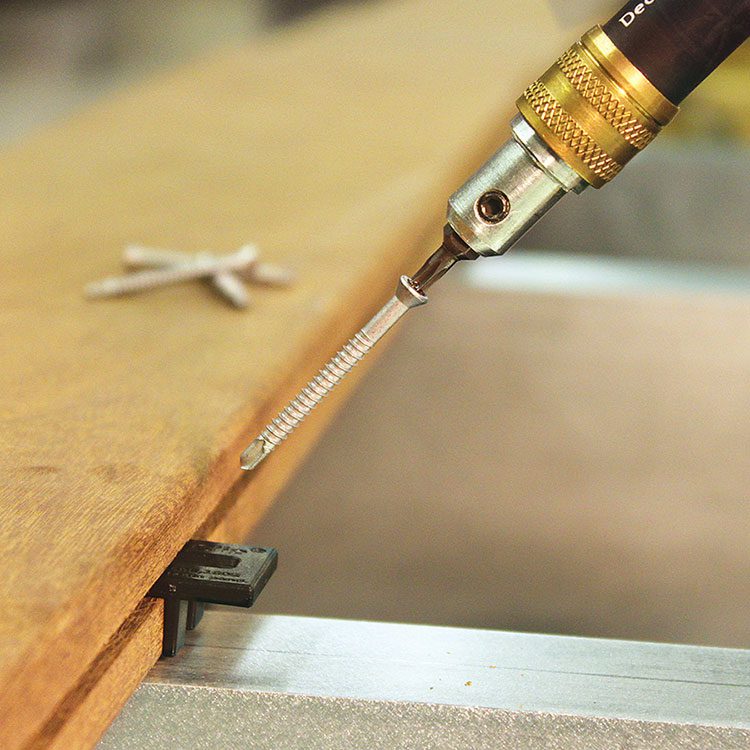
Hidden fastener systems eliminate visible screws entirely, creating a clean, modern deck surface. These systems are typically used with grooved deck boards, where the fastener fits into a groove along the edge of each board.
Some decking manufacturers offer proprietary hidden fasteners designed specifically for their boards, while other brands specialize in fastening systems compatible with a wide range of materials.
Hidden fastener clips are manufactured using different materials depending on their intended application. Some clips are made entirely of plastic, others are made of metal, and some use a hybrid design that combines a metal insert with a flexible plastic outer shell. Each construction type is engineered to balance strength, corrosion resistance, and the ability to accommodate natural board movement.
Hidden fasteners are also material-specific, with different clips available for:
- Air-dried hardwood
- Kiln-dried hardwood
- Thermally modified wood
- Composite decking
- PVC decking
In addition to aesthetics, deck clips help maintain consistent board spacing, which is critical because all decking materials move slightly over time. This movement occurs as moisture levels within the material change due to seasonal humidity, rainfall, and temperature fluctuations. Proper spacing allows for expansion and contraction while supporting drainage and airflow across the deck surface.
Installation instructions should always be followed to ensure correct spacing and long-term performance.
Best suited for:
- Composite and PVC decking
- Grooved hardwood boards
- Homeowners prioritizing a smooth surface and contemporary appearance
An Important Note on Manufacturer Recommendations
Deck board manufacturers often specify which fasteners are approved for use with their products. Using an unapproved fastener or installing fasteners incorrectly can impact performance and, in some cases, void the decking warranty.
Reviewing manufacturer guidelines before construction helps ensure compatibility and protects the overall investment.
Choosing the Right Fastening System
There is no single fastening solution that works best for every deck. The right choice depends on:
- Decking material
- Environmental exposure
- Manufacturer requirements
- Desired appearance
- Long-term performance expectations
| If your priority is… | Consider this fastening option |
|---|---|
| A strong, straightforward connection | Surface-attached deck screws |
| A clean surface with concealed fasteners | Screws and plugs systems |
| A hidden look without using deck clips | Edge-fastening systems |
| A sleek, modern appearance with no visible hardware | Hidden fastener systems |
| Consistent board spacing to accommodate movement | Hidden fastener systems or edge-fastening systems |
| Compatibility with manufacturer warranties | Manufacturer-approved fasteners for your decking material |
| Coastal or high-corrosion environments | 316-grade stainless steel fasteners (where applicable) |
At AdvantageLumber.com, we help homeowners and professionals select fastening solutions that align with their decking materials and performance goals. Choosing the right fastener from the start supports proper installation, long-term durability, and a finished deck that performs as intended for years to come.
