
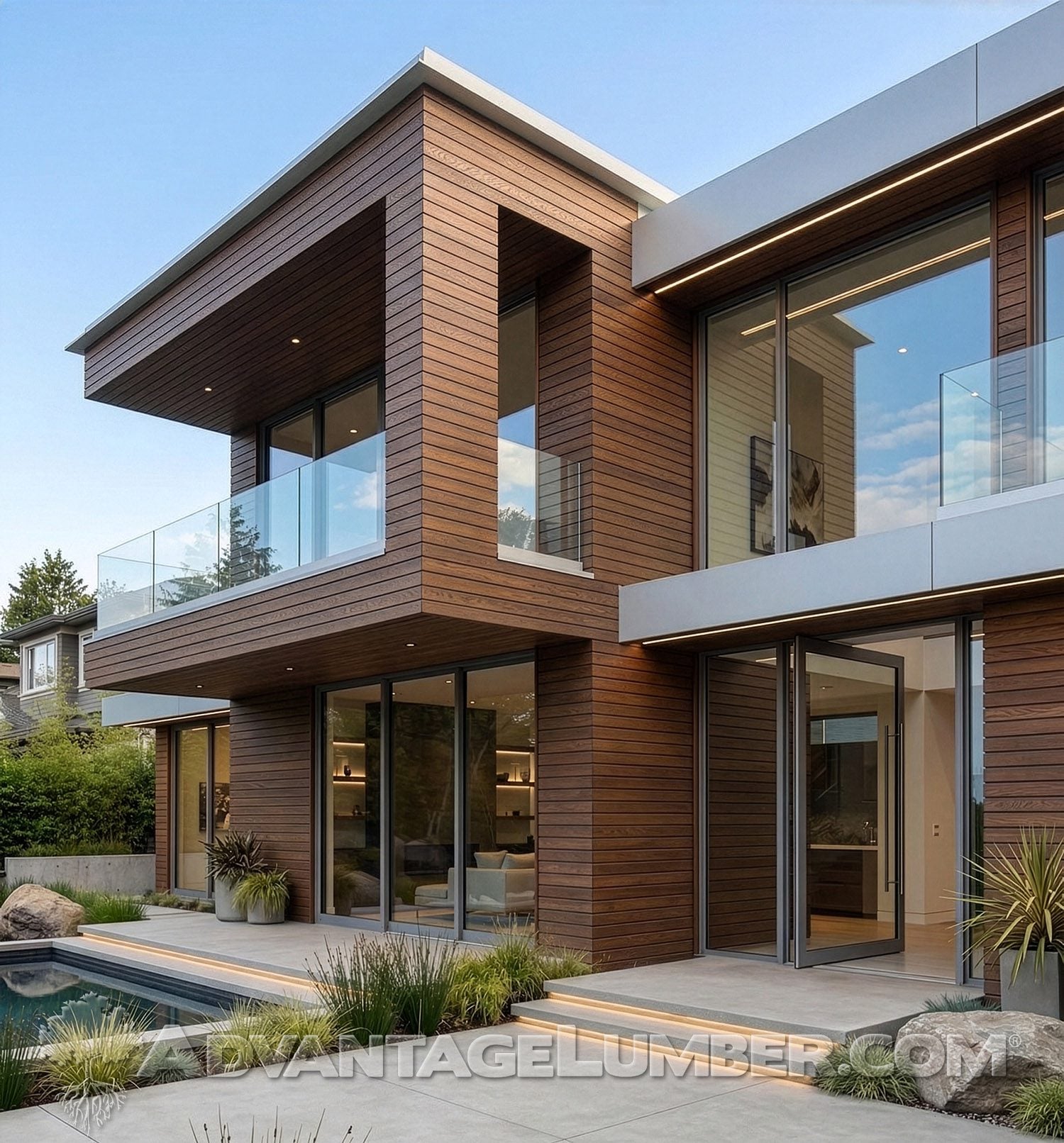
If you want real wood siding on your home, Western Red Cedar has probably made your list. It should. Builders have used cedar for generations because it looks great, cuts easily, and handles outdoor exposure better than many common softwoods.
However, another option has gained a lot of attention over the last several years: thermally modified wood siding.
So, which one should you use?
Although both materials can perform very well, they suit different homes and different priorities.
I’ve worked with enough exterior wood over the years to know one thing: don’t choose siding only because a sample looks good on a table. You also need to think about moisture, movement, maintenance, installation, climate, and how you want the house to look 10 or 20 years from now.
Let’s take a closer look.
What Is Thermally Modified Wood?

Thermally modified wood starts as regular lumber, often pine or ash. Manufacturers heat the lumber to very high temperatures under controlled conditions and may also use steam during the process.
Unlike pressure treated lumber, thermally modified wood does not rely on chemical preservatives for its improved performance. Instead, heat changes the wood itself. As a result, the wood absorbs less moisture from the surrounding air than untreated wood.
Why does that matter?
Because moisture causes a lot of trouble with exterior wood. Wood absorbs moisture and releases it as weather conditions change. As it does, boards swell and shrink. Over time, those cycles may lead to cupping, twisting, checking, or joints that move around.
Thermal modification reduces how much the wood reacts to moisture. Although no exterior wood stays completely still, thermally modified wood usually moves less than its untreated counterpart.
For siding, that can make a real difference.
What Makes Western Red Cedar So Popular?
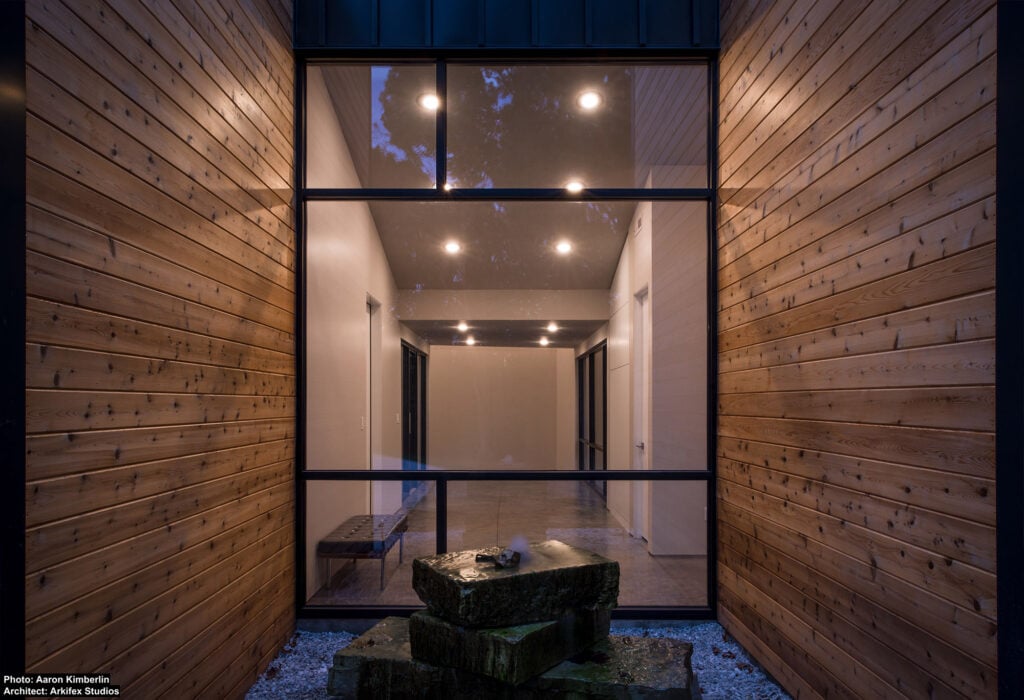
Western Red Cedar doesn’t need much of an introduction.
Builders have used it for siding, soffits, ceilings, trim, fencing, and plenty of other exterior projects for decades.
Cedar has several things going for it. It naturally resists decay, weighs very little, and stays more dimensionally stable than many other softwoods.
It also works easily.
If you’ve spent an afternoon carrying siding up scaffolding, you’ll appreciate how light cedar feels.
Cedar cuts cleanly, mills well, and accepts many different finishes. You can also choose from clear architectural grades or knotty grades, depending on the look you want.
There’s a reason builders keep using it.
Thermally Modified Wood vs. Cedar: Dimensional Stability
Here’s where thermally modified wood starts to separate itself.
Western Red Cedar already stays relatively stable for a softwood. Even so, cedar still gains and loses moisture as weather conditions change.
Because of that movement, installers still need to allow the wood room to behave naturally.
Thermally modified wood generally moves less because the heat treatment reduces how much moisture it absorbs.
For siding, that matters.
Picture a wall covered with long vertical or horizontal boards. Even small changes in board width can become noticeable across a large wall.
Although both materials can work well, thermally modified wood often gives you more consistent joints and straighter visual lines over time.
On a modern home where clean architectural lines matter, I’d give thermally modified wood a serious look for this reason alone.
Which One Handles Rot Better?
Both materials can hold up well outdoors, although they achieve durability in different ways.
Western Red Cedar naturally contains compounds that help the heartwood resist decay. That natural resistance helped cedar become a standard exterior building material in the first place.
Thermally modified wood gains better decay resistance from the heating process.
However, don’t assume every thermally modified product performs the same way.
The wood species matters. The treatment temperature matters. The process matters. The manufacturer matters.
So, if you’re comparing products, don’t stop at the words thermally modified wood.
Find out exactly what species you’re buying and how the manufacturer treated it.
Maintenance: There’s More to the Story
People often ask us which siding material is “maintenance free.”
I don’t really like using those words with exterior wood.
Although you can leave both cedar and many thermally modified siding products unfinished, sunlight will still change their appearance.
Western Red Cedar will gradually weather toward gray if you leave it bare.
Thermally modified wood will do the same.
If you like that weathered look, great. You may not need to do much beyond occasional cleaning and inspection.
However, if you want to preserve the original brown color, you’ll need to use an exterior finish with UV protection and maintain it over time.
There’s no magic finish that stops the sun forever.
What About Appearance?
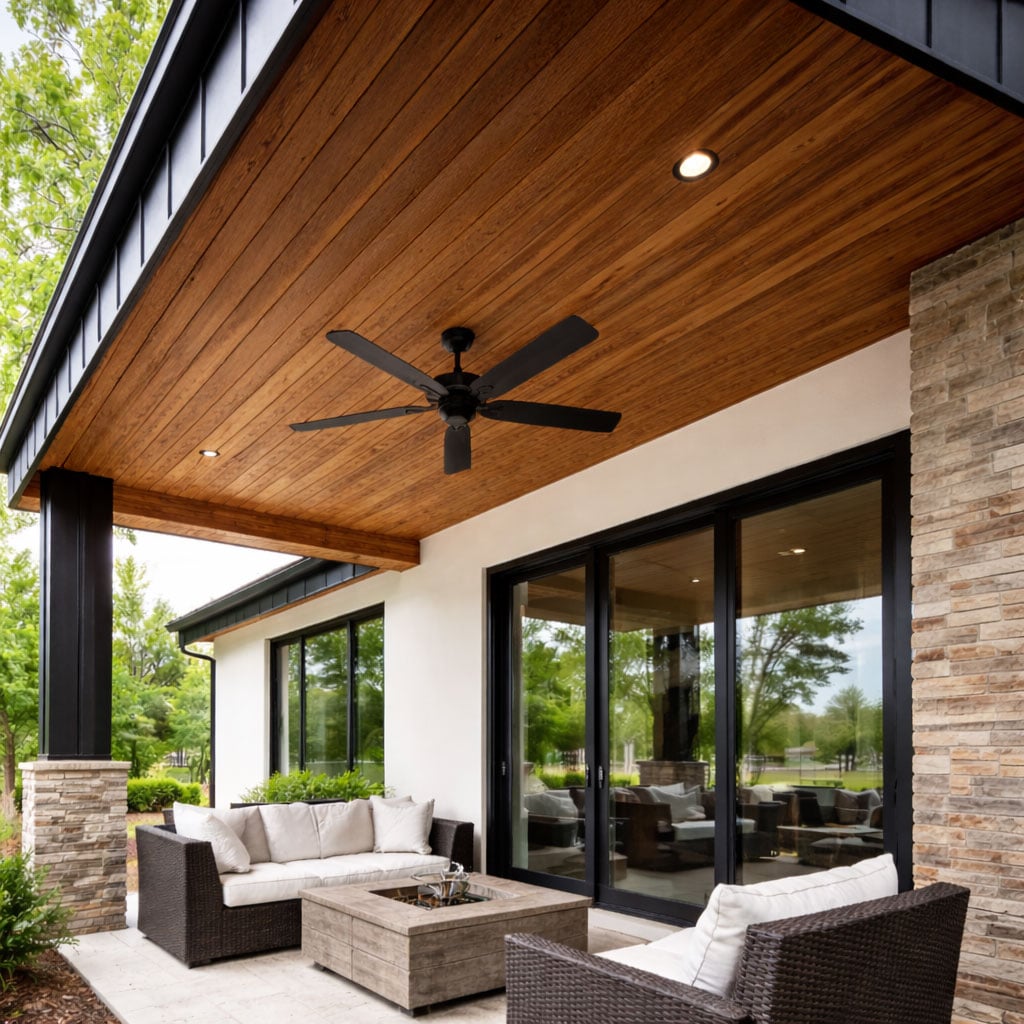
This one comes down to personal preference.
Western Red Cedar has the classic look many homeowners recognize immediately.
Depending on the grade, you can choose clear boards with a clean architectural appearance or knotty boards with more rustic character.
Cedar works well on Craftsman homes, mountain homes, lake houses, cabins, contemporary houses, and traditional architecture.
Thermally modified wood has a different personality.
The heat treatment usually darkens the wood and brings out more contrast in the grain.
Thermally modified ash, for example, can develop a rich brown color that sometimes reminds people of tropical hardwood.
Thermally modified pine gives you a different look. You still see the character of pine, although the heat gives it a warmer and darker appearance.
For contemporary homes, especially those with vertical siding or open joint rainscreen designs, thermally modified wood can look fantastic.
Don’t Forget About Hardness
Here’s one thing homeowners sometimes overlook.
Cedar is soft.
That softness makes cedar easy to cut and install, although it also means the surface dents fairly easily.
Lean a ladder against it carelessly, and you may leave a mark.
Thermally modified ash starts with a much harder hardwood species, so it can offer a tougher surface.
Thermally modified pine is different because you still start with a softwood.
Again, this is why I wouldn’t lump every thermally modified product together.
If you’re shopping for thermally modified siding, ask which species you’re actually buying.
Installation Matters More Than Either Material
I’ve seen excellent lumber fail because somebody installed it poorly. I’ve also seen fairly ordinary lumber last surprisingly well because somebody paid close attention to water.
Although the siding gets all the attention, the wall behind it matters just as much.
Your siding needs a way to dry.
For many wood siding systems, a rainscreen makes a lot of sense. Furring strips create an air space behind the boards, which gives water somewhere to drain and lets air move behind the siding.
Pay close attention to flashing around windows and doors.
Keep the siding away from roofs, decks, soil, and other areas where water can collect.
Protect vulnerable end grain when the siding system calls for it.
And use the right fasteners.
Western Red Cedar can react with the wrong metal and leave dark stains.
For premium exterior siding, I prefer stainless steel fasteners whenever the application allows them.
I’ve never heard a homeowner complain 15 years later because their contractor used fasteners that were too good.
Cedar May Make More Sense If…
I’d lean toward Western Red Cedar if you want a traditional natural wood look, easy workability, plenty of profile options, and a material with a long track record on homes.
Cedar also gives you a lot of freedom with finishes.
You can stain it, paint it, let it weather naturally, use clear grades for a clean modern look, or use knotty grades for a more rustic style.
Although newer materials get plenty of attention, cedar remains one of the most versatile exterior woods available.
Thermally Modified Wood May Make More Sense If…
I’d look closely at thermally modified wood if dimensional stability ranks near the top of your list.
It works especially well on modern homes where long boards, tight visual lines, vertical siding, and rainscreen systems shape the design.
Thermally modified ash also makes a lot of sense if you want a harder surface and a more refined hardwood appearance.
Thermally modified pine can offer many of the same moisture related benefits at a different price point.
Although thermally modified wood can weather naturally, always check the manufacturer’s recommendations because different products can behave differently.
What About Price?
This is where you need to compare actual products instead of broad categories.
Clear Western Red Cedar and knotty Western Red Cedar can carry very different prices.
Thermally modified pine and thermally modified ash can also differ quite a bit.
Board width, profile, length, grade, milling, finishing, and availability all affect cost.
So don’t compare one square foot price and stop there.
Look at waste.
Look at available lengths.
Look at the fastening system.
Look at finishing costs.
Then think about how much maintenance you’re willing to do over the next 10, 20, or 30 years.
Although the initial material price matters, the full cost of the wall matters more.
So, Which Is Better?
If somebody asked me to choose one without telling me anything about the house, I wouldn’t.
Both are good siding materials.
For a traditional home where you want the unmistakable look of cedar, Western Red Cedar is hard to argue against. It’s light, stable, easy to work with, naturally decay resistant, and well proven.
For a contemporary home where you care more about dimensional stability, clean lines, and reduced moisture movement, I’d give thermally modified wood a very close look.
Personally, I think thermally modified ash works especially well on high end modern homes, while thermally modified pine gives homeowners another option when they want thermal modification at a different price point.
However, before I worried too much about choosing between the two, I’d ask a more important question:
How are you building the wall behind the siding?
Use either material over a wall that traps water, and you’re asking for trouble.
Install either one with good flashing, proper drainage, airflow, adequate clearances, and quality fasteners, and you give the siding a much better chance to perform for decades.
That’s the part I wouldn’t compromise on.
