
Every fall, homeowners with Ipe, Cumaru, Tigerwood, Garapa, Teak, and other hardwood decks ask the same question:
Should I oil my deck before winter, or should I wait until spring?
And I get why people ask. Once the leaves start dropping and the nights get cold, there’s often this feeling that you’ve probably got about three weekends left to accomplish everything you ignored all summer.
In most cases, the answer may depend more on the weather and your deck’s condition than on the calendar.
Although fall can be one of the best times to clean and oil a hardwood deck, I wouldn’t force the job just because winter is coming. If cold nights, frequent rain, and damp boards have already arrived, you’re probably better off waiting until spring.
After all, what’s the point of getting the job crossed off your list if you might create another problem in the process?
So, here’s how I generally look at it.
First, Understand What Deck Oil Actually Does
For starters, many homeowners may assume tropical hardwood needs oil to keep it from rotting.
I’ve heard this one plenty of times. Someone buys Ipe, sees the color starting to fade, and might immediately think something is wrong with the wood.
However, that’s usually not why we oil it.
Hardwoods such as Ipe, Cumaru, Tigerwood, Garapa, Brazilian Redwood, and Teak can naturally handle outdoor exposure very well. In fact, Ipe can potentially last for decades even if you do relatively little to maintain the surface.
That’s part of what you’re paying for with these woods. They’re not inexpensive materials, but you’re generally buying a naturally durable piece of lumber.
Instead, most homeowners probably oil these woods because they want to preserve the color.
For example, leave an Ipe deck exposed to sun and weather, and the rich brown color will typically turn silver gray over time. Likewise, Cumaru, Tigerwood, Garapa, and other exterior hardwoods may weather in much the same way.
Even so, that color change doesn’t necessarily mean the wood has failed.
Actually, some people may prefer the weathered gray look. I’ve seen older gray Ipe decks that look excellent, especially around coastal homes and modern architecture.
And I’ll admit, on the right house, I really like that look. A naturally weathered hardwood deck can have a character that you just might not get from something that looks brand new forever.
On the other hand, some homeowners may want the deck to look closer to the day they installed it.
Nothing wrong with that either. If you paid for beautiful hardwood grain and rich color, why wouldn’t you want to see it?
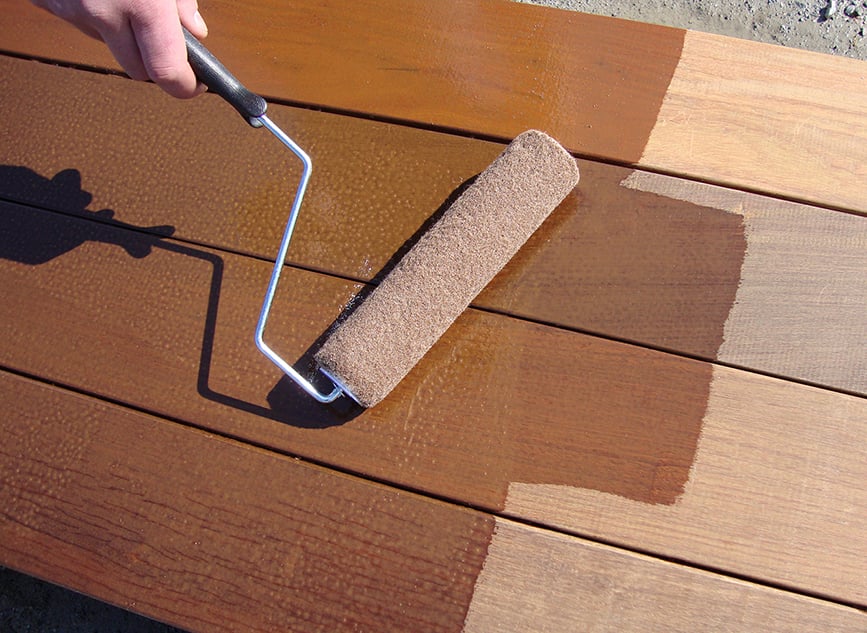
That’s where a penetrating hardwood oil can help. It can bring out the grain and rich color while also helping the wood resist UV weathering.
So, before you worry about whether you missed your fall maintenance window, you may want to decide what you want the deck to look like.
If you like the gray appearance, you may not need oil at all.
However, if you want to keep the rich brown color, regular cleaning and oiling will often make sense.
It’s really that simple. Sometimes we probably make deck maintenance more complicated than it needs to be.
Why Fall Can Be a Great Time to Oil a Hardwood Deck
Personally, I generally like fall deck maintenance.
Maybe it’s because I’d rather scrub a deck when it’s 65 degrees outside than when it’s 92 degrees and the sun is beating down on me. I don’t think I’m alone there.
By then, the brutal summer heat has usually backed off, so you probably don’t have to work over boards that feel like a frying pan. At the same time, the deck may see less traffic as the season winds down.
More importantly, fall can give you a chance to clean up what summer left behind.
And summer can leave plenty behind.
After a long summer, dirt, pollen, food, mildew, wet leaves, and everything else around the furniture can sit on the deck for months if nobody cleans it.
You move a planter or grill that’s been sitting in the same spot since May, and sometimes you might wonder what kind of science experiment has been happening underneath it.
In particular, wet leaves deserve some attention. They can trap moisture against the boards and may leave stains behind.
Although hardwood generally tolerates outdoor exposure well, I still don’t like leaving wet organic debris piled on it through winter.
Would I panic because a few maple leaves landed on an Ipe deck? Of course not. But would I leave a wet pile of them sitting there until March? Probably not.
So, if the deck has started to fade and you want the color back, fall may give you a good opportunity to clean, brighten, dry, and oil the boards.
There’s just one catch.
The weather has to cooperate.
And unfortunately, the weather probably doesn’t care about your weekend plans.
Don’t Oil a Wet Deck Just Because Winter Is Coming
Unfortunately, this is where people can get into trouble. They decide, “I have to oil this deck before winter.”
I’ve seen this mindset turn what should be a simple maintenance project into a mad dash against the weather forecast.
Then October starts disappearing. Suddenly, it rains Wednesday. Temperatures drop Friday. Saturday looks decent, so they rush outside and potentially coat boards that still hold moisture.
Sound familiar?
Although they may finish the job before winter, they haven’t necessarily helped the deck.
Remember, a penetrating finish generally needs the right conditions so it can soak into the wood and cure correctly. If the boards are damp, temperatures are too low, or rain is coming, you may end up with uneven color, poor penetration, or a sticky surface.
I’ve never understood rushing a finishing job. You could spend years looking at the results of something you hurried through because you wanted to save one Saturday. As a result, you probably gain nothing by squeezing the job into a bad weather window.
If I had to choose between oiling a deck badly in late fall and waiting for a dry stretch in spring, I’d probably wait.
Every time.
The deck likely isn’t going anywhere.
Make Sure the Deck Is Clean and Dry
Along those same lines, you generally don’t want to put fresh oil over a dirty deck either. I’ve seen homeowners sweep off the leaves, look at the boards, and decide they’re probably ready to start oiling.
Not so fast.
If dirt, mildew, old finish, or heavy weathering covers the surface, you’ll generally want to clean the deck first.
Think about it this way: would you paint over a dirty wall and expect a perfect finish? Probably not. Same basic idea.
For hardwood decks, I like the DeckWise two step system with Deck & Wood Cleaner followed by Deck & Wood Brightener. First, the cleaner can lift dirt and buildup. Then, the brightener may help restore the wood’s appearance and prepare the surface for oil.
Even so, you don’t automatically need a pressure washer.
I know, I know. Pressure washers are fun. Once you start cleaning something with one, suddenly you might want to pressure wash the driveway, the patio, the retaining wall, and probably half the neighborhood.
Although pressure washing can help with stubborn buildup, more pressure isn’t always better when you’re working with wood. In many cases, cleaner, a good scrub brush, and a thorough rinse may do the job just fine on a reasonably well maintained deck.
After you clean the deck, let it dry completely.
And yes, actually let it dry. Don’t get impatient because the top looks dry while moisture may still be sitting in the wood.
Then, and only then, oil it.
One Thin Coat Means One Thin Coat
Now, this may be the most important advice in the entire article.
More oil does not necessarily mean more protection.
If you remember only one thing from this article, I’d probably make it that. For one thing, dense tropical hardwood doesn’t absorb finish the way pressure treated pine does.
Ipe is especially dense. You can keep spreading oil across it, though the wood will only accept so much. Eventually, once the boards stop absorbing the oil, the extra product can stay on top.
And that’s how you can end up with a sticky deck.
Over the years, I’ve talked with homeowners who couldn’t understand why their deck still felt tacky days after they finished oiling it. In many cases, they may simply have used too much product or failed to remove the excess.
It’s an easy mistake to make. You see that beautiful color pop when the oil hits the wood, so your brain may naturally say, “Well, if some is good, more must be better.”
It probably isn’t.
So, follow the manufacturer’s directions. Apply the recommended amount. Then, give the oil enough time to penetrate. Finally, wipe away whatever the wood doesn’t absorb, as the product instructions direct.
Above all, don’t think, “This looks good. Another coat will look even better.” That’s often where the trouble starts.
Trust me, nobody has ever called me complaining that their Ipe deck wasn’t sticky enough.
What If My Deck Has Already Turned Gray?
Fortunately, that’s generally fine too. You probably haven’t ruined the wood.
I can’t emphasize this enough because people sometimes see gray hardwood and assume they’ve waited too long.
Over time, sunlight and weather can change the surface color. However, gray boards don’t necessarily mean the wood underneath has started to fail. So, if you like the silver gray appearance, you may simply leave it alone.
Seriously. You don’t have to create a maintenance project just because your neighbor oils his deck every year.
On the other hand, if you want the brown color back, you probably shouldn’t just pour oil over the gray surface.
Instead, clean the deck first. Then, use a wood brightener if the surface needs it. Although many decks may clean up nicely without sanding, heavily weathered boards might need some sanding before you refinish them.
Once the surface looks right and the wood has dried, you can apply the Ipe oil. In fact, I’ve seen old Ipe decks come back beautifully with surprisingly little work.
That’s one of the reasons I like good hardwood.
You can look at an old gray deck and think, “There’s no way that’s coming back.” Then you clean and brighten a small test area, and suddenly that rich wood color may show up again. That’s always satisfying.
When I Would Oil the Deck in Fall
Generally, if September or October gives me several dry, mild days and the deck needs work, I’d probably rather get it done.
First, clean it.
Next, brighten it if needed.
Then, let it dry.
Finally, oil it properly.
At that point, you’re probably finished.
And isn’t that a nice feeling going into winter?
As a result, the deck can go into winter clean, and you may not have to deal with the job in April when you’d rather set out the patio furniture.
At the same time, fall can give you a good chance to inspect everything while you’re already outside.
For example, check the fasteners.
Then, check the railing.
While you’re at it, look underneath the deck if you can.
I know crawling underneath a deck isn’t anybody’s idea of a great Saturday afternoon, but you can potentially learn a lot down there.
Also, clear debris from the gaps between the boards.
Finally, inspect stairs, fascia, framing, and any place where water tends to sit.
Personally, I spend almost as much time looking underneath decks as I do looking at the boards.
I’ve seen some beautiful decking sitting over framing that didn’t look nearly as healthy. That’s probably not where you want to discover the weak link in your deck.
Although homeowners often focus on the hardwood, the framing underneath can matter just as much. After all, a durable hardwood deck may easily outlast ordinary wood framing, so water management and framing condition deserve plenty of attention.
When I Would Wait Until Spring
On the other hand, I’d probably wait if fall weather has already turned against me.
Maybe temperatures keep dropping.
Or, perhaps the deck sits in shade and stays damp most of the day.
Maybe rain shows up every few days.
Or maybe you’re already into November and trying to finish the job before Thanksgiving.
At that point, I’d probably ask myself a pretty simple question: why am I rushing this?
Either way, don’t turn routine deck care into an emergency.
Your Ipe deck probably isn’t going to fall apart because you waited a few months to oil it.
That’s part of the beauty of using durable hardwood in the first place.
Instead, sweep off the leaves.
Then, keep the gaps open.
Also, remove debris that could trap moisture.
After that, come back to the finish when spring gives you better weather.
Although oil can help preserve the color, proper installation and moisture control generally matter much more to the long term life of these hardwoods.
And frankly, I’d rather see someone maintain the important stuff correctly than obsess over whether the boards look freshly oiled every month of the year.
What About a Brand New Hardwood Deck?
Of course, a new deck may deserve slightly different treatment.
If you just installed Ipe, Cumaru, Tigerwood, Garapa, Brazilian Redwood, Teak, or Mahogany and you want to preserve the fresh color, you’ll generally want to follow the finish manufacturer’s directions rather than waiting automatically for spring or fall.
After spending the time and money to build a new hardwood deck, I understand wanting it to look perfect. Who wouldn’t?
If the weather gives you good conditions, you may be able to finish the deck in fall.
However, if the weather doesn’t cooperate, I’d probably wait.
Don’t let impatience potentially ruin the last step of an otherwise beautiful project.
Ultimately, the same rule still applies:
Good conditions generally beat the calendar.
Fall vs. Spring: Which Is Better?
If both seasons give me equally good weather, I’d probably lean slightly toward fall.
Why?
For starters, you can clean off the summer grime before it sits there all winter.
At the same time, you can remove wet leaves and debris.
While you’re doing that, you can inspect the deck before snow, freezing weather, and winter moisture arrive.
Finally, if you want to maintain the brown color, you may be able to refresh the surface before several more months of exposure.
Plus, I’ll take a comfortable October afternoon working outside over that first spring weekend when everybody suddenly remembers the yard needs six months’ worth of attention.
Although fall gets a slight edge from me, the difference probably isn’t big enough to justify oiling under poor conditions.
Simply put, a warm, dry April weekend will usually beat a cold, damp October afternoon.
My Advice
In the end, don’t oil your hardwood deck just because someone told you it has to happen every October.
Instead, look at the deck. Really look at it. The wood will often tell you more than the calendar will. Does the color still look good? Then you can probably leave it alone.
Has it faded, and do you want the rich brown color back? In that case, you may want to clean it and consider oiling it. Do you like the weathered silver gray look? If so, you may decide to skip the oil.
Does the deck need oil even though the weather won’t cooperate? Then I’d probably wait until spring. See the pattern here? There’s really no prize for oiling your deck on a particular date. After all, hardwood decking shouldn’t force you to babysit it.
That’s one of the reasons people may choose Ipe, Cumaru, Tigerwood, Teak, and other durable hardwoods in the first place. So, keep the deck clean, clear away debris that can trap moisture, and maintain the finish when the appearance suggests it’s time.
Then, when you do oil the deck, use a penetrating finish made for dense hardwood and follow the manufacturer’s directions carefully. Above all, don’t rush the job just because winter is coming.
I’ve worked with enough wood over the years to know that patience can often cost a lot less than fixing a rushed job. Sometimes, the best thing you can probably do for your deck in October is sweep off the leaves, put the oil back on the shelf, and wait for a better day.
