
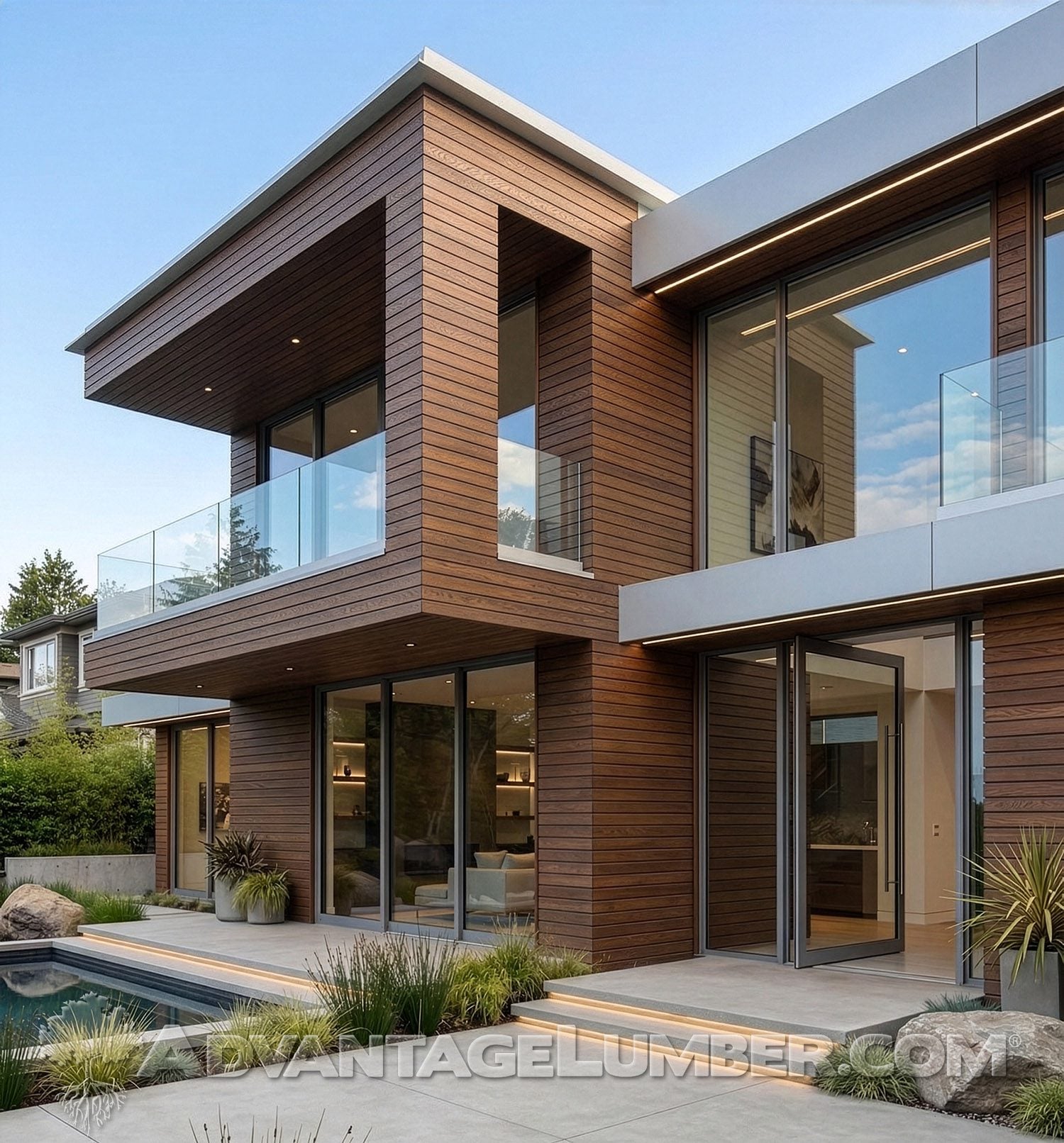
Architects have more exterior building materials to choose from than ever. Despite all the composite, PVC, metal, and other manufactured products available today, real wood continues to have a place in modern architecture.
One material that is attracting more attention is thermally modified wood.
It offers something that’s difficult to find in one material: the natural appearance of wood along with improved dimensional stability and resistance to moisture and decay. Although those qualities don’t necessarily make thermally modified wood suitable for every project, they can make it a great option for exterior siding, cladding, soffits, ceilings, and other architectural details.
What Is Thermally Modified Wood?
Thermally modified wood is real wood that manufacturers treat with high heat under controlled conditions. During the process, the heat alters some of the wood’s physical properties, including how readily it absorbs moisture.
Unlike pressure-treated lumber, thermal modification doesn’t rely on chemical preservatives to change the wood’s properties. As a result, thermally modified wood can become more dimensionally stable and more resistant to decay than the untreated version of the same species.
The exact characteristics can differ, however, depending on the species and treatment process.
Why Does Dimensional Stability Matter?
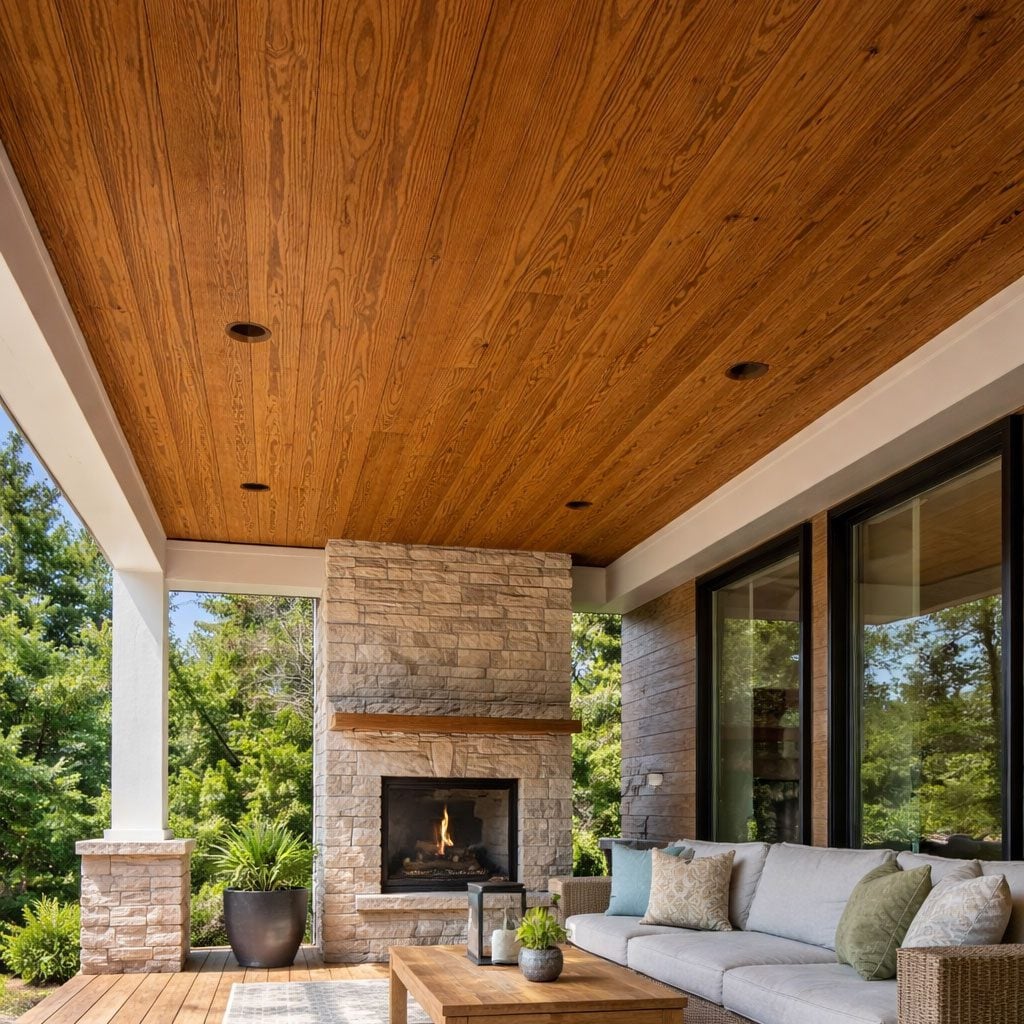
Thermal modification can reduce how quickly wood absorbs moisture, which may help it remain more dimensionally stable. For an architect, that matters for clean lines, tight joints, and consistent spacing.
Take a modern wood-clad home, for example. When the siding plays a major role in the design, excessive movement can become much more noticeable. Although no wood stays completely still outdoors, boards that move less may help the finished installation retain its appearance as the seasons change.
Real Wood With Improved Exterior Performance
One reason thermally modified wood appeals to architects is that it doesn’t require choosing between the look of wood and improved exterior performance.
You still get natural grain patterns, variations in color, texture, and the character that comes from working with an actual piece of lumber. Thermal modification can also improve some of the characteristics that make untreated wood more challenging outdoors. It can be a good fit for projects where appearance and performance are important.
The natural color can be another benefit. Depending on the species and treatment, thermal modification can produce deeper brown tones, giving the wood a refined appearance without relying on stain to create its initial color.
Exterior Siding and Cladding
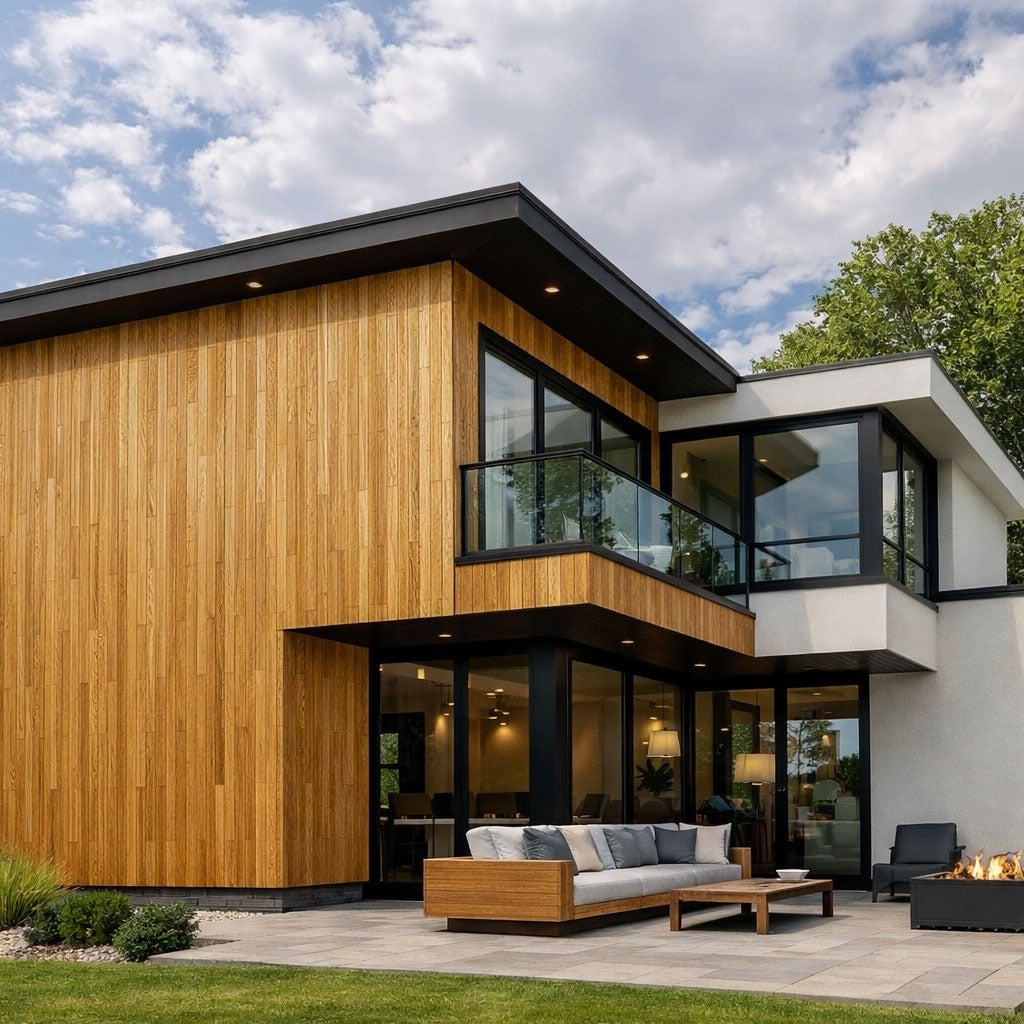
Siding and cladding are some of the most natural applications for thermally modified wood.
Modern architecture often combines wood with stone, metal, concrete, stucco, and glass. In those combinations, wood can add warmth and texture without taking away from a clean, contemporary design.
Manufacturers can also mill thermally modified wood into different profiles, including siding, shiplap, tongue-and-groove, and rainscreen profiles. That flexibility can give architects more options when they want to achieve a particular exterior look.
Thermally modified wood can work well for:
- Modern residential siding
- Commercial building facades
- Rainscreen systems
- Accent walls
- Horizontal or vertical cladding
- Exterior architectural details
Outdoor Ceilings and Soffits
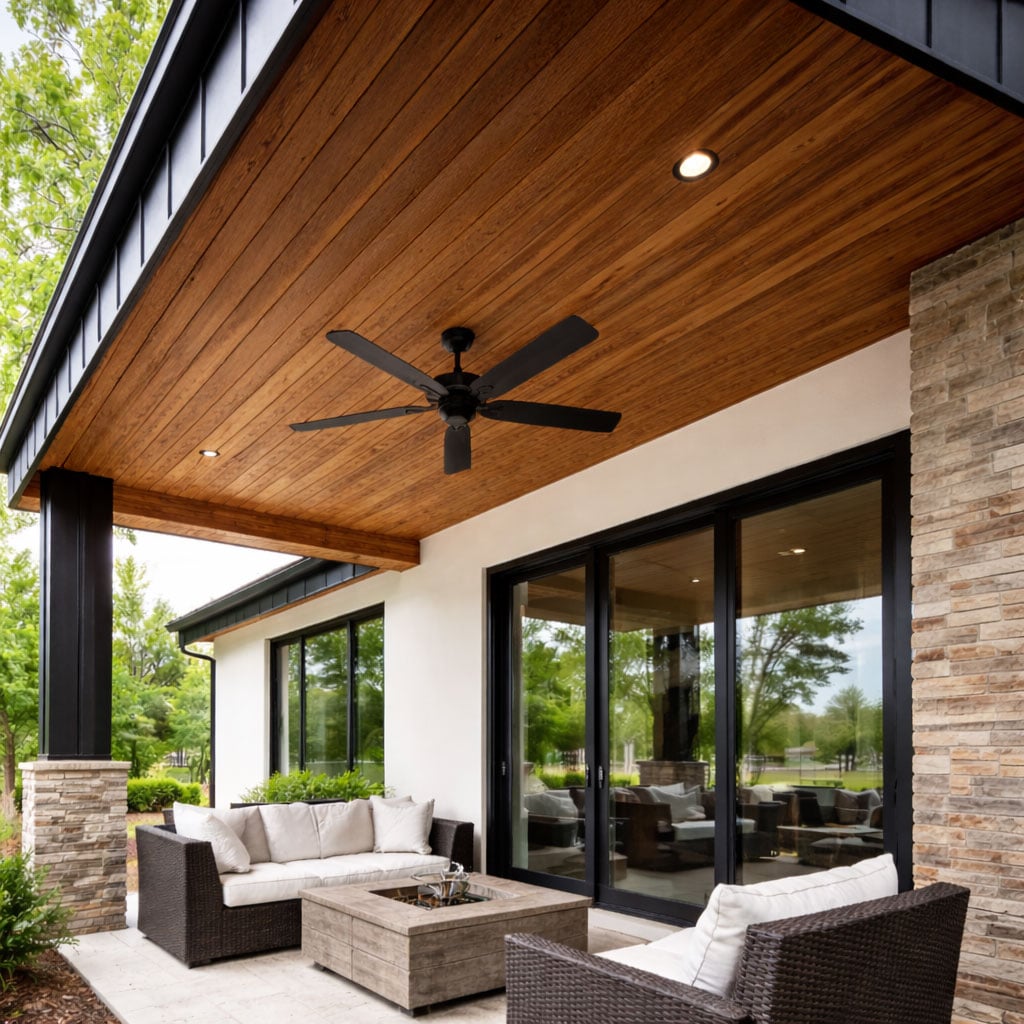
Thermally modified wood isn’t limited to siding and cladding. It can also be a good option for exterior ceilings and soffits, particularly on covered porches, patios, entryways, and other outdoor living spaces.
These areas are somewhat protected from direct rain, but they still experience changes in humidity and temperature. Thermally modified wood may offer the dimensional stability that helps it perform well in those conditions while providing the natural look of real wood.
It can also add warmth and texture to a space without overwhelming the rest of the design. In many projects, an exterior wood ceiling can become an architectural feature in its own right.
Why Might Architects Choose It Over Other Materials?
Thermally modified wood isn’t automatically the right choice for every exterior project. Still, several characteristics may make it worth considering:
- Natural appearance: Architects get the grain, texture, and variation of real wood rather than a manufactured imitation.
- Dimensional stability: Thermal modification can reduce moisture absorption and may limit some movement associated with changing humidity.
- Decay resistance: Thermal modification can improve resistance to decay and fungi, which is helpful for exterior applications.
- No traditional chemical preservatives: Manufacturers use heat rather than traditional chemical preservatives to alter the wood’s properties.
- Design flexibility: Depending on the species and product, thermally modified wood can work for siding, cladding, ceilings, soffits, decking, and other architectural applications.
These characteristics don’t guarantee that thermally modified wood will outperform every alternative. Rather, they give architects another material to consider when a project has specific aesthetic and performance requirements.
Thermally Modified Wood Still Requires the Right Installation
Thermally modified wood shouldn’t be treated like a completely maintenance-free material.
If it is exposed to sunlight, it will naturally weather over time. The original brown color can gradually fade to a silver-gray appearance, just like other wood products. Some architects and homeowners may prefer that weathered look, while others choose an exterior finish to preserve the original color.
Installation also matters. Thermally modified wood can have different mechanical properties than untreated lumber. Those properties can vary by species and treatment.
So, although a thermally modified board may perform well outdoors, you can’t use it anywhere you would use structural lumber. Follow the manufacturer’s installation recommendations and applicable building codes for the specific product.
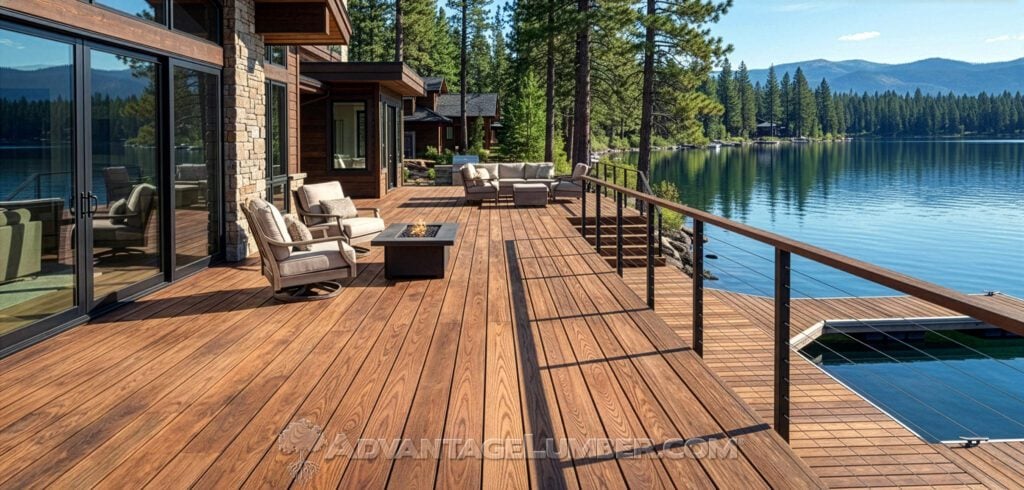
Thermally Modified Wood vs. Tropical Hardwood
Architects and builders may also compare thermally modified wood with naturally durable tropical hardwoods such as Ipe, Cumaru, Garapa, and Tigerwood.
Both can perform well outdoors. However, the reasons for that are different.
Tropical hardwoods are naturally dense and durable. Species such as Ipe provide exceptional hardness, wear resistance, and natural resistance to decay without thermal treatment.
Thermally modified wood takes a different approach. Manufacturers use a controlled heat treatment to improve some exterior characteristics of species that don’t naturally offer the same level of durability.
Thermally modified wood may make particular sense for siding, cladding, soffits, and ceilings, where dimensional stability, appearance, weight, and workability may matter more than maximum hardness.
There isn’t one material that makes sense for every project. Ultimately, the right choice will depend on the application, species, appearance, budget, and performance requirements.
Is Thermally Modified Wood a Good Choice for Exterior Projects?
Thermally modified wood can be a good fit when a project calls for the natural look of wood but also needs better resistance to the challenges of exterior conditions.
It may be especially worth considering for siding, cladding, soffits, and ceilings where dimensional stability, appearance, and workability are important. Although it won’t eliminate the need for proper installation and maintenance, the thermal modification process can improve some of the properties that make untreated wood more difficult to use outdoors.
For architects looking for a balance between natural wood character and exterior performance, thermally modified wood can be a compelling option.
Ready to Explore Thermally Modified Wood?
If you’re planning a siding, cladding, ceiling, soffit, or other exterior project, check out the thermally modified wood options available from Advantage Lumber.
