
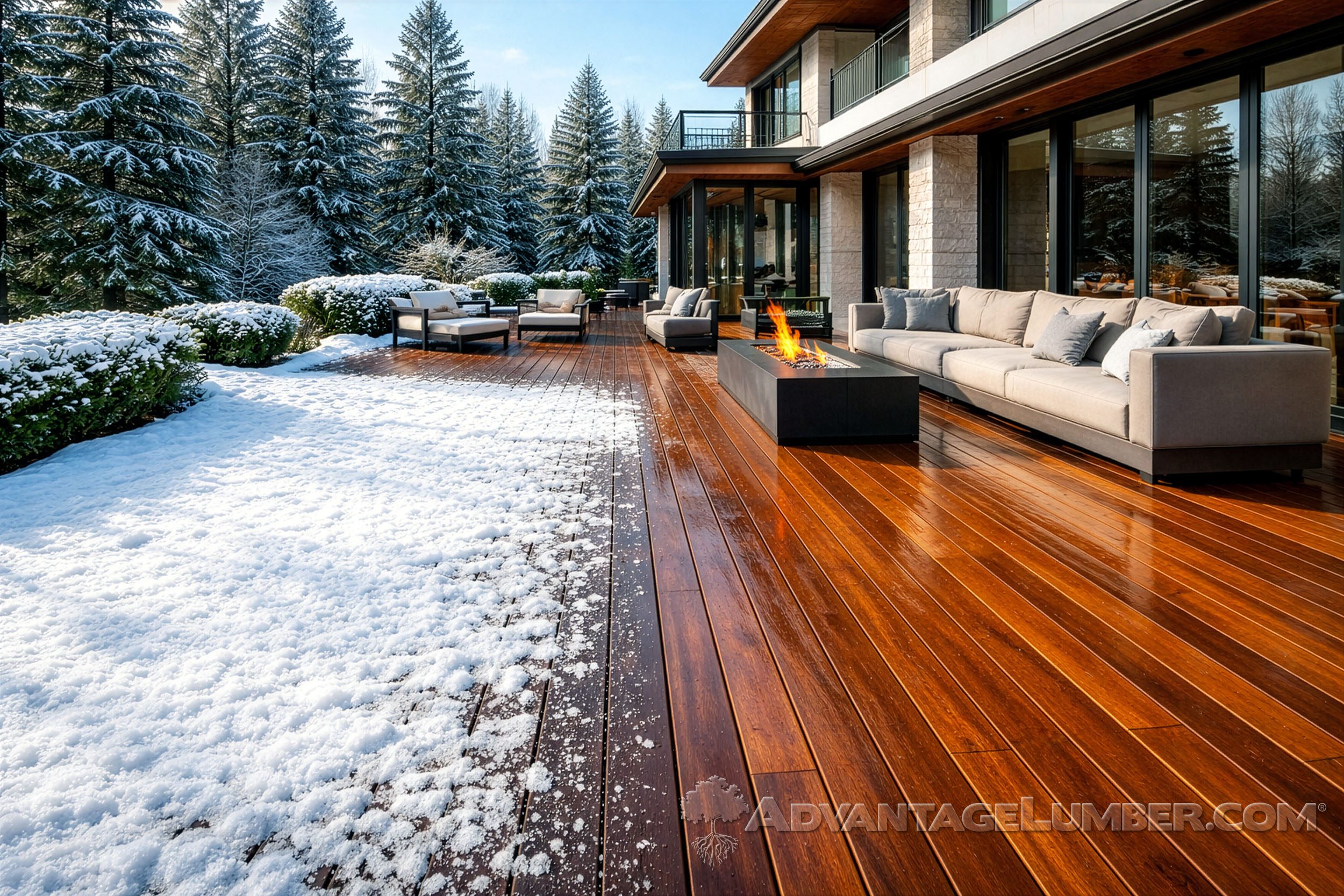
Winter can be tough on a deck, especially in areas where temperatures bounce above and below freezing. One day, snow is melting between your deck boards. The next morning, everything is frozen solid.
Most homeowners don’t give much thought to the small gaps between their deck boards. After all, they’re just there to let water drain through, right?
Well, there’s a little more to it.
When water gets trapped between deck boards and freezes, it can create some problems. Depending on the decking material, how the deck was installed, and how often temperatures change, those problems might range from a little surface ice to damaged boards and fasteners.
Let’s look at what actually happens when water freezes between deck boards and what you can do to protect your deck.
Why Freezing Water Can Damage a Deck
Here’s a little science lesson, but don’t worry, we’ll keep it simple.
When water freezes, it expands by about 9%. That might not sound like much, but ice can create tremendous pressure when it forms inside a confined space.
Think about what happens when you leave a full water bottle in the freezer. As the water turns to ice, it expands. If there’s nowhere for that extra volume to go, the bottle may swell or even crack.
Now imagine water trapped inside a narrow gap between two deck boards.
As temperatures drop, that water begins to freeze. If the ice has room to expand upward or downward, it may not cause any damage at all. However, when water gets trapped in a tight space, especially around fasteners or inside cracks, freezing can put stress on the surrounding material.
Over time, repeated freezing and thawing can make existing problems worse.
And here’s something worth remembering: The biggest concern isn’t usually one cold night. It’s the repeated freeze thaw cycles throughout winter.
What Happens When Ice Forms Between Deck Boards?
A properly built deck should have enough space between boards to allow water to drain and the decking material to move naturally.
Unfortunately, not every deck has the right spacing.
Sometimes installers place boards too close together. Other times, dirt, leaves, and other debris fill the gaps over the years.
When water can’t drain properly, several things can happen.
1. Ice Can Put Pressure on Deck Boards
If water becomes trapped between tightly spaced boards, freezing can create pressure against the edges.
This is especially concerning when the boards already have limited room to expand or move.
With wood decking, seasonal moisture changes can also cause boards to swell and shrink. When you combine those natural movements with ice buildup, you may see additional stress along the board edges.
In some cases, this can contribute to splitting, raised edges, or movement around fasteners.
However, ice forming in an open gap doesn’t automatically mean your boards will get pushed apart. Most of the time, the ice can simply expand out of the gap.
Problems are more likely when drainage is blocked or water becomes trapped in a confined area.
2. Freeze Thaw Cycles Can Make Small Cracks Bigger
This is one of the more common concerns with wood decking especially with softwoods.
Wood naturally develops small surface checks as it ages. These tiny cracks aren’t always a structural problem, but they can collect moisture.
During the day, melting snow or rainwater may work its way into those openings. Then temperatures drop overnight. The trapped moisture freezes and expands, potentially putting pressure on the sides of the crack.
When warmer weather returns, the ice melts. More water can enter the opening, and the process starts again. After enough freeze thaw cycles, some cracks may grow larger.
Of course, wood also checks because of normal moisture changes, sun exposure, and drying. Freezing water is just one possible factor.
3. Ice Buildup Can Affect Hidden Fasteners
Hidden deck fasteners have become extremely popular, and for good reason. They give decks a clean appearance without rows of visible screw heads. However, proper board spacing is still important.
Systems such as Ipe Clip hidden deck fasteners are designed to maintain consistent gaps between hardwood deck boards while securely holding them in place.
If a deck was installed with inadequate spacing, water and debris may become trapped around the fastening system. Repeated ice buildup can add stress to already tight connections, especially when the boards move with seasonal moisture changes.
That doesn’t mean hidden deck fasteners are bad for cold climates. Quite the opposite. A properly installed system with the correct spacing can perform very well through harsh winters.
The key is following the decking and fastener manufacturers’ installation requirements.
4. Trapped Moisture Can Lead to Deck Frame Rot
Here’s a problem I think homeowners should worry about even more than ice between the deck boards. What’s happening underneath the deck?
When water can’t drain freely, it may sit on top of the deck joists. Over time, this trapped moisture can cause serious damage to pressure treated wood framing.
Although pressure treated lumber resists decay better than untreated wood, it isn’t completely rot proof.
The tops of joists are particularly vulnerable because water can become trapped between the joist and the decking above it. During winter, that moisture may repeatedly freeze and thaw.
The freezing itself isn’t what causes wood rot. Rot requires suitable moisture and temperature conditions for fungi to grow. However, persistent moisture and poor drainage can create those conditions when the weather warms up.
This is one reason we recommend using joist tape when building a deck with pressure treated framing.
For homeowners who want a longer lasting structure, steel deck framing from New Castle Steel or aluminum framing systems from TimberTech and Outdure are also worth considering.
After all, there’s not much sense installing decking that could last 50 years if the framing underneath fails long before then.
Does Freezing Water Affect Hardwood, Composite, and PVC Decking Differently?
Not all decking materials respond to winter weather the same way. Some absorb more moisture than others, while certain products expand and contract more with temperature changes.
Let’s compare the most common options.
Hardwood Decking: Ipe, Cumaru, Tigerwood, and Teak
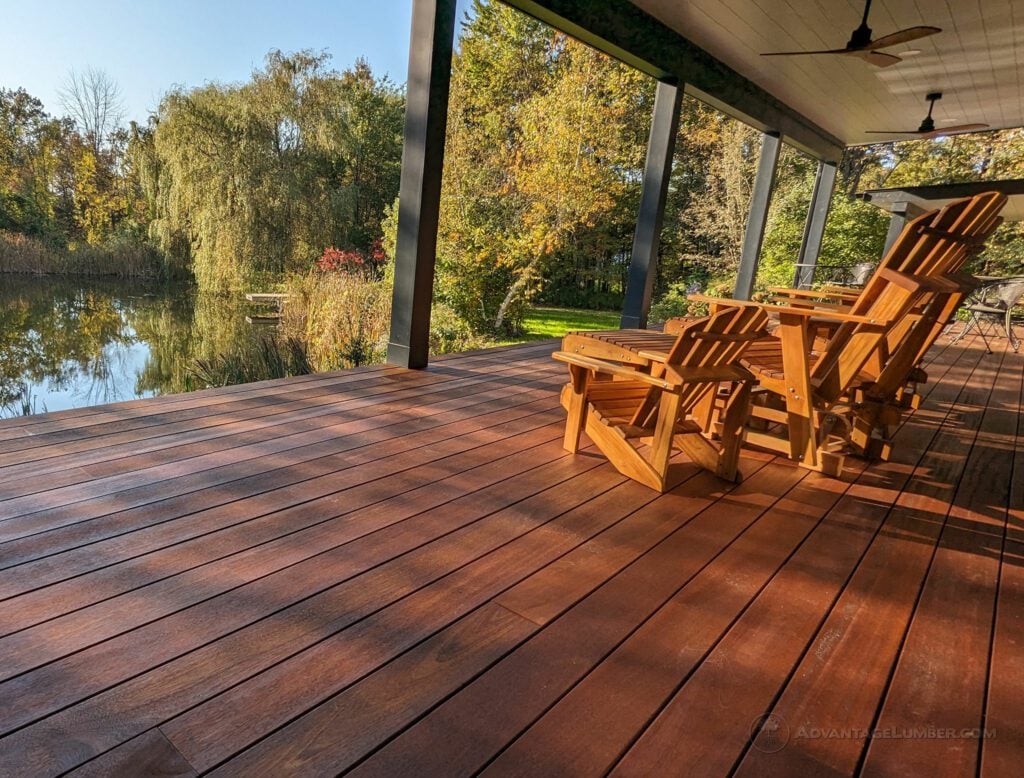
Tropical hardwoods such as Ipe, Cumaru, Tigerwood, and Teak are naturally dense and durable. One of the reasons these woods perform so well outdoors is their ability to resist decay and withstand harsh weather when properly installed.
Ipe, in particular, has an excellent track record in demanding outdoor applications. Still, no wood is completely immune to moisture movement.
Even dense tropical hardwoods expand and contract as their moisture content changes. If hardwood decking is installed too tightly, the boards may not have enough room for seasonal movement.
During winter, water trapped between boards can freeze. Although the ice itself may not cause damage, poor drainage and repeated moisture exposure can contribute to checking, cupping, and other problems.
My advice: Always follow the recommended spacing for the specific hardwood species, board width, moisture condition, and installation environment.
Also, make sure the deck has adequate airflow underneath. Good ventilation helps hardwood decking dry more evenly after rain and snow.
Composite Decking: Trex, TimberTech, and Deckorators
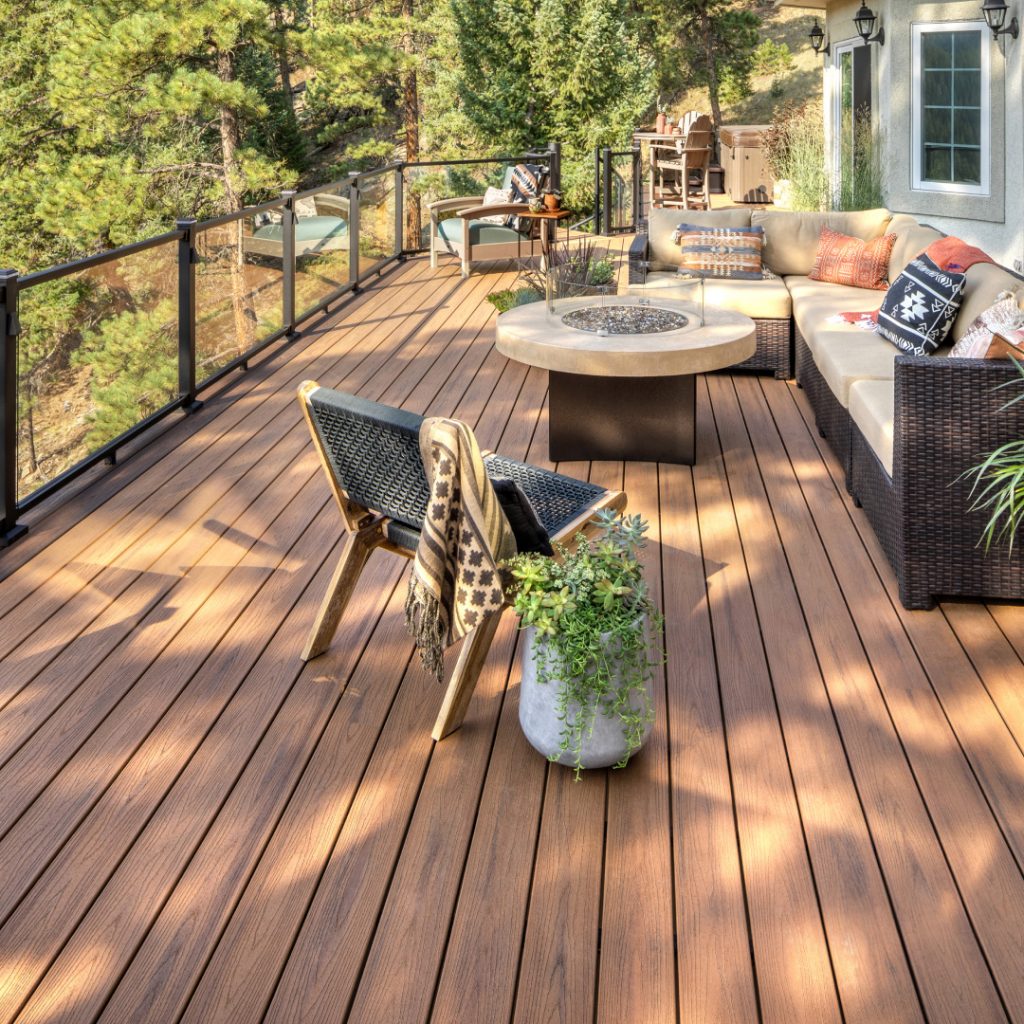
Composite decking is popular because homeowners don’t have to worry about many of the maintenance issues associated with traditional wood decks.
Most modern composite boards contain wood fibers, synthetic materials, or other engineered ingredients, depending on the product. Their moisture resistance varies by construction.
For example, capped composite decking has a protective outer layer designed to help resist moisture and staining. Even so, composite boards still expand and contract with temperature changes.
In fact, thermal movement can be an important consideration when installing composite decking in climates with hot summers and freezing winters.
If installers leave insufficient gaps between board ends or around fixed objects, temperature related expansion can cause problems. Ice buildup may make an existing spacing or drainage issue more noticeable.
However, properly installed composite decking is generally designed to handle normal outdoor winter conditions. For products from Trex, TimberTech, and Deckorators, always follow the installation instructions for the exact collection.
Don’t assume every composite board uses the same spacing requirements.
PVC Decking: TimberTech Advanced PVC and Other PVC Products
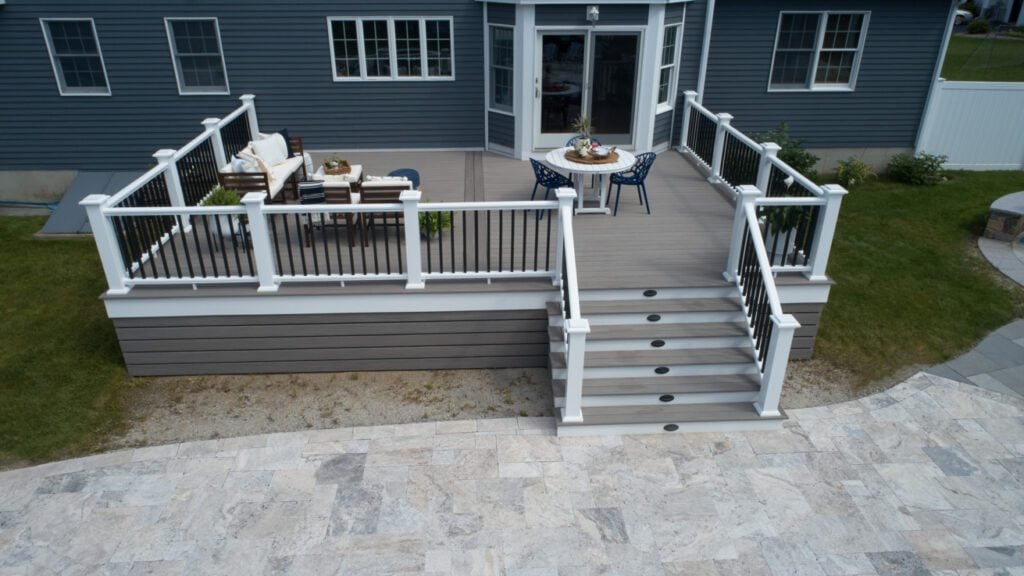
PVC decking offers excellent resistance to moisture because the boards don’t contain the wood fibers found in many traditional composites. That makes PVC an appealing choice for wet environments.
Freezing water between properly spaced PVC deck boards generally isn’t a major concern. However, PVC decking can experience significant thermal expansion and contraction.
Cold temperatures cause boards to contract, while warm temperatures make them expand. This means the gaps between boards, particularly at the ends, can change throughout the year.
If those gaps weren’t installed correctly, boards may develop problems as temperatures change. PVC also becomes less flexible in cold weather, so avoid striking frozen boards with metal tools or trying to chip away ice aggressively.
Although PVC resists water extremely well, proper drainage and installation still matter.
Why Deck Board Spacing Matters So Much in Winter
If there’s one thing I want homeowners to take away from this article, it’s the importance of proper deck board spacing. Those little gaps between boards serve several purposes.
They allow rainwater and melting snow to drain, provide room for material movement, and help keep debris from accumulating between boards. Without adequate spacing, water may sit on the deck longer than it should.
And when winter arrives, that standing water can turn into ice. So, how much space should you leave between deck boards? Unfortunately, there isn’t one universal answer.
For many hardwood deck installations, a gap around 1/8 inch to 1/4 inch may be appropriate, depending on the species, board width, moisture content, and conditions during installation.
Composite and PVC decking manufacturers often specify different side to side and end to end gaps based on temperature and product design.
Some hidden fastening systems automatically establish the correct side spacing. Others require installers to measure and adjust gaps manually.
Never guess at deck board spacing. Check the manufacturer’s instructions before installing the material. A little extra attention during installation can prevent years of headaches.
Can Ice Between Deck Boards Cause a Deck to Buckle?
Homeowners sometimes notice raised or uneven deck boards after a harsh winter and assume ice pushed everything out of place. While trapped ice can contribute to localized stress, buckling often involves other factors.
Wood boards may swell after prolonged moisture exposure. Composite and PVC boards can expand when temperatures rise. Inadequate gaps, improper fastening, or movement in the deck framing can also cause trouble.
If the boards have nowhere to move, they may push against one another or surrounding structures. This can result in raised edges, uneven joints, or boards that appear to buckle.
So, if you notice changes after winter, don’t automatically blame the ice. Take a closer look at the entire installation. Check the board gaps, fasteners, framing, and drainage before deciding what caused the problem.
Should You Remove Ice From Between Deck Boards?
Usually, the best approach is to let the ice melt naturally.
I know that’s probably not what someone wants to hear when their deck is covered in snow and ice, but trying to force frozen material out of narrow gaps can do more harm than good.
Avoid using metal screwdrivers, chisels, or other sharp tools to break ice loose. Those tools can scratch composite and PVC decking or damage the edges of hardwood boards.
Likewise, pouring boiling water onto frozen decking isn’t a great idea. It can create rapid temperature changes, and the water may simply refreeze.
If you need to clear snow, use a plastic shovel with a smooth edge and work carefully. A broom can also be useful for light, fluffy snow.
For stubborn ice, check the decking manufacturer’s recommendations before applying any ice melting product. Some products may be approved for certain decking materials but not others.
And remember, even if a deicer is safe for the deck boards, it may still affect nearby metal fasteners, railings, plants, or concrete.
How to Prevent Freeze Thaw Damage to Your Deck
The good news is that preventing winter moisture problems doesn’t require much work. A few simple habits can make a big difference.
Keep the Gaps Between Boards Clear
Leaves, pine needles, dirt, and other debris can collect between deck boards. Over time, this material can block drainage and hold moisture.
Before winter arrives, inspect the gaps and gently remove any buildup. A plastic putty knife or another nonmetallic cleaning tool can help, provided you don’t damage the decking or fasteners.
Make Sure Water Can Drain Away
Watch what happens during a heavy rainstorm. Does water drain through the deck boards, or does it collect in certain areas?
Standing water can indicate clogged gaps, low spots, or other drainage problems. Also, check underneath the deck. Poor grading or standing water beneath the structure can keep the framing damp for long periods.
Inspect Your Deck Before Winter
Fall is a great time to give your deck a quick inspection. Look for loose fasteners, cracked boards, blocked drainage gaps, and signs of rot around the framing.
Pay special attention to the ledger board where the deck attaches to the house. Water damage in this area can become a serious structural concern.
If you notice significant movement, soft wood, or questionable connections, have a qualified deck professional inspect the structure.
Use Quality Decking and Framing Materials
One of the best ways to avoid future problems is to choose materials suited to your climate. For example, dense hardwoods such as Ipe and Cumaru offer excellent durability when installed correctly.
Modern composite and PVC decking from Trex, TimberTech, and Deckorators also provide good options for homeowners who want lower maintenance surfaces.
However, don’t forget the framing. A durable deck surface deserves a durable foundation.
Steel and aluminum deck framing can eliminate many of the moisture related decay concerns associated with traditional wood framing.
Don’t Ignore Ventilation
Decks need airflow. When moisture becomes trapped underneath a deck, the boards and framing can stay wet much longer.
This is particularly important for low clearance decks.
If you’re building with hardwood, make sure the design provides adequate ventilation according to the supplier’s installation requirements.
Good airflow helps the deck dry after rain, snow, and ice melt.
What If Your Deck Boards Are Already Too Close Together?
Sometimes homeowners discover a spacing problem only after the deck has been installed. Maybe the boards were installed tightly during construction, or perhaps wood swelling has reduced the gaps.
If water regularly pools on the surface, it’s worth investigating. Start by cleaning out any debris between the boards. If the gaps are still too narrow, the next step depends on the decking material.
With some wood decks, a qualified contractor may be able to correct spacing problems. However, cutting wider gaps between installed boards can damage fasteners or weaken board edges if done incorrectly.
Composite and PVC decks require even more caution because their fastening systems and expansion requirements vary. Before making changes, consult the decking manufacturer’s instructions or speak with an experienced deck contractor.
Don’t start cutting between boards with a circular saw unless you’re certain the method is appropriate for that particular deck.
Is Freezing Water Between Deck Boards Really a Big Problem?
For most properly installed decks, the answer is no. Decking materials are designed to live outdoors, and that includes exposure to rain, snow, and freezing temperatures.
A little ice between the boards during winter is normal. What concerns me more is a deck where water can’t drain, the boards are installed too tightly, or moisture stays trapped against the framing.
Those conditions can cause problems long after the ice melts.
I’ve always believed a good deck should be built for the worst weather it will face, not just how nice it looks on a sunny summer afternoon.
That means choosing the right decking material, allowing proper spacing, using quality fasteners, and making sure the framing can handle years of exposure.
Get those details right, and winter becomes a lot less intimidating.
Final Thoughts: Build Your Deck to Handle Every Season
Water expands when it freezes, but that doesn’t mean ice between deck boards will automatically damage your deck.
Most problems develop when moisture becomes trapped, drainage is poor, or the decking wasn’t installed with enough room for natural movement.
Whether you’re building with Ipe, Cumaru, Trex, TimberTech, Deckorators, or PVC decking, proper installation makes all the difference.
At AdvantageLumber.com, we’ve spent more than 30 years helping homeowners and contractors choose quality decking materials for projects across the country.
We stock a wide selection of premium hardwood decking, composite decking, PVC decking, hidden fasteners, and long lasting deck framing systems.
With four U.S. warehouses and manufacturing facilities, we can help you find the right materials for your project, whether you’re building a new deck or replacing an old one.
Because a great deck shouldn’t just look beautiful in July.
It should still be standing strong when February rolls around.
