
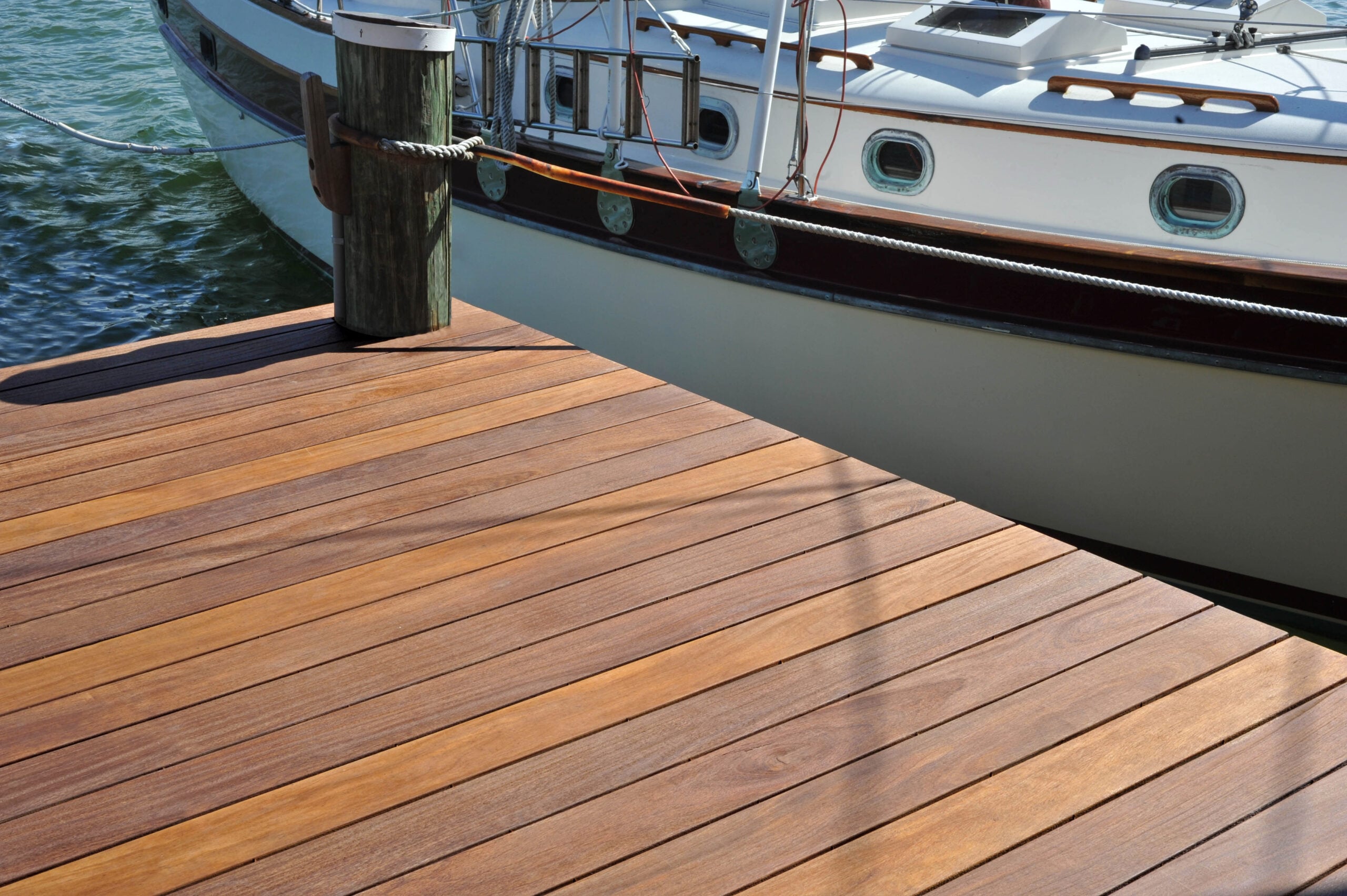
Building a boat dock or replacing old boards? Choosing the right decking matters. Unlike a typical backyard deck, a dock faces regular moisture, direct sunlight, and foot traffic. Depending on its location, it may also deal with saltwater, waves, and changing water levels.
So, what’s the best decking for a waterfront or dock?
For natural wood decking, Ipe is one of the best choices for durability and longevity. If you want a lower-maintenance option, HDPE or PVC decking may be a better fit. Composite decking is another possibility, but not every product is suitable for use over water.
Tropical Hardwood Decking
Tropical hardwoods are a popular choice for docks because many species naturally resist rot, decay, and insect damage. They also offer the warmth and character of real wood without relying on chemical preservatives for durability.
Ipe is one of the strongest options for a long-lasting wood dock. It’s exceptionally hard and dense, and with proper installation, it can last for decades. Its natural color ranges from brown to olive-brown, but the boards will weather to a silver-gray if left unfinished. Applying a suitable decking oil helps maintain the original color, though it isn’t necessary for the wood’s natural durability.
Ipe’s hardness and density are part of what make it so durable, but they also require a little extra care during installation. Using the right tools and fasteners is important. The initial material and installation costs may also be higher than those of some alternatives.
Other tropical hardwoods are worth considering, too:
- Cumaru: Similar in appearance and durability to Ipe, with golden-tan to reddish-brown tones and often a lower price.
- Tigerwood: Known for its reddish-brown color and distinctive dark stripes.
- Garapa: A lighter, golden-yellow hardwood.
- Brazilian Redwood (Massaranduba): A dense hardwood with rich reddish-brown coloring.
Hardwood docks need occasional cleaning and inspection, especially around fasteners and areas where water may collect. If you prefer the original wood color, apply a hardwood oil as recommended. Otherwise, you can let the boards weather naturally.

HDPE Decking
High-density polyethylene (HDPE) is a plastic lumber that offers an alternative to traditional wood decking. Advantage Lumber carries Tangent TanDeck marine decking, which is designed for applications such as residential docks, piers, and marinas.
Unlike composite decking, HDPE lumber doesn’t contain wood fibers. That means it won’t rot like wood or develop wood splinters, and it doesn’t need staining, painting, or sealing. Routine cleaning with mild soap and water is usually enough.
TanDeck is available in solid colors and woodgrain finishes, giving you options for different dock styles. Its textured surface also provides traction, although actual slip resistance depends on the product and conditions.
One important consideration is expansion and contraction with temperature changes. Follow the manufacturer’s installation instructions for board spacing, fastening, and joist spans.
PVC Decking
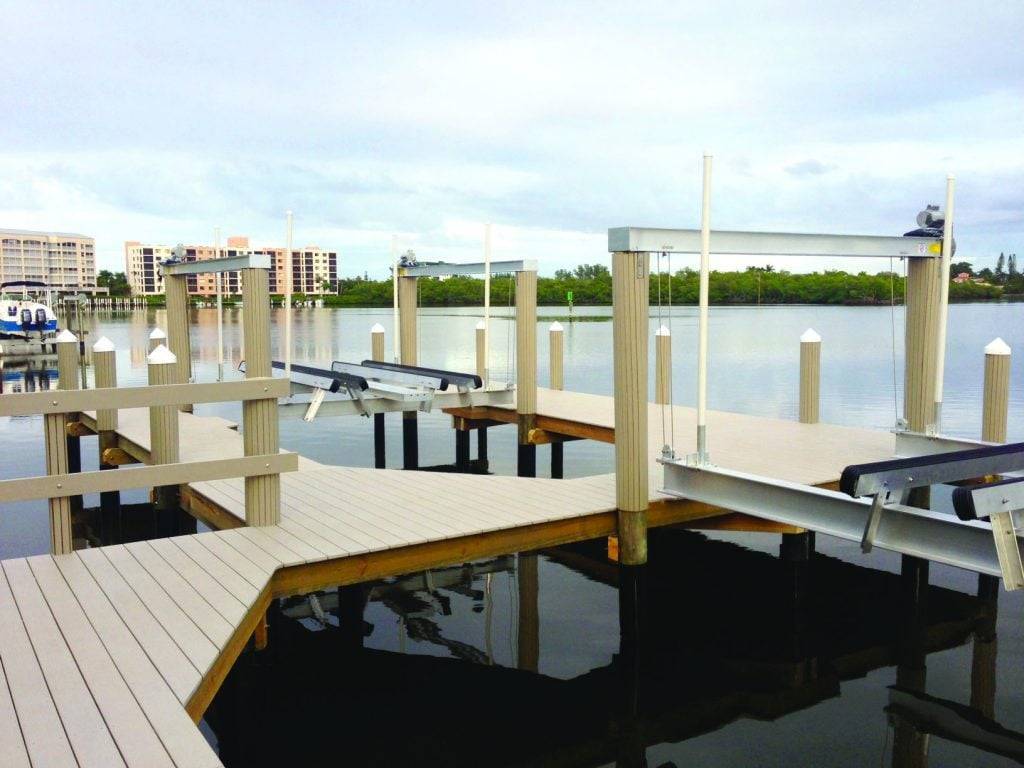
PVC decking is made primarily from polyvinyl chloride and contains no wood fibers. Like HDPE, it resists moisture and doesn’t require the regular staining or sealing associated with wood.
It also comes in a range of colors and finishes. However, PVC boards can get hot in direct sunlight, and they expand and contract as temperatures change. Installation requirements vary by product, so check the manufacturer’s guidance before choosing a board for a dock.
Not every PVC decking line is intended for waterfront use. For example, TimberTech recommends its Advanced PVC decking for dock-style applications rather than its standard composite lines. Always confirm that the specific product is approved for your project.
Composite Decking
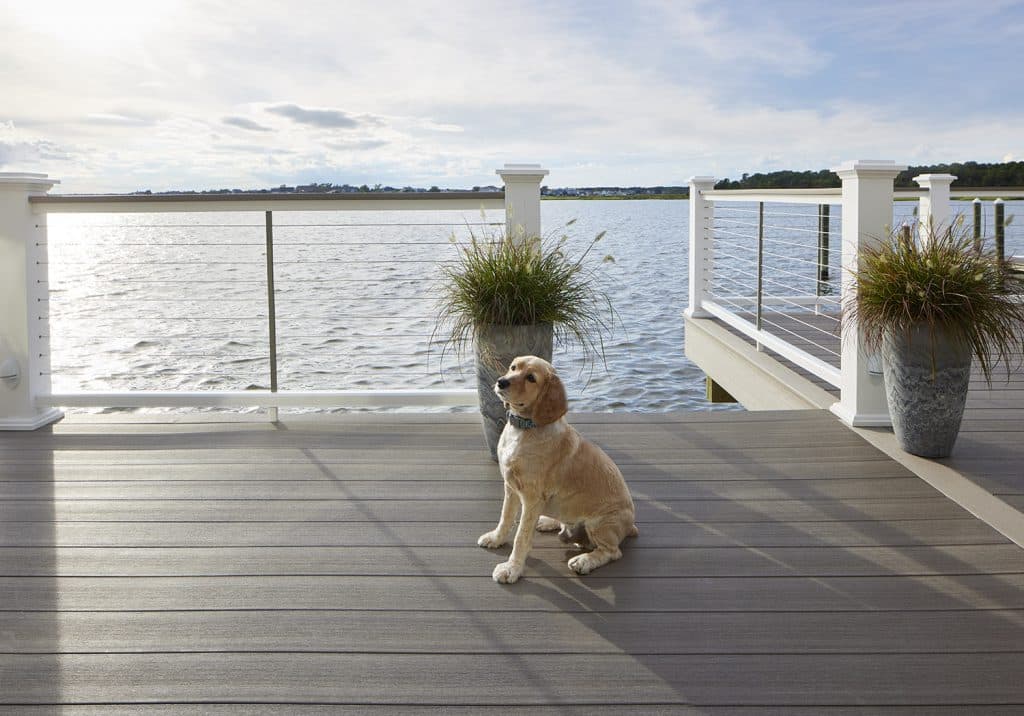
Composite decking typically combines wood fibers and plastic. Brands such as Trex and TimberTech offer boards designed to reduce the maintenance associated with traditional wood, but their products vary in composition, performance, and approved applications.
Some composite decking may work well in waterfront settings, while other lines aren’t recommended for docks. Before choosing one, check the manufacturer’s installation guidance for water exposure, drainage, and the intended application. Don’t assume that every board from the same brand is suitable for use over water.
There’s another consideration with synthetic decking: static electricity can build up under certain conditions. Trex and TimberTech both acknowledge that static can occur on their decking surfaces. If you refuel a boat at the dock, check the decking manufacturer’s recommendations and follow the marina’s safety guidance.
Other Things to Consider
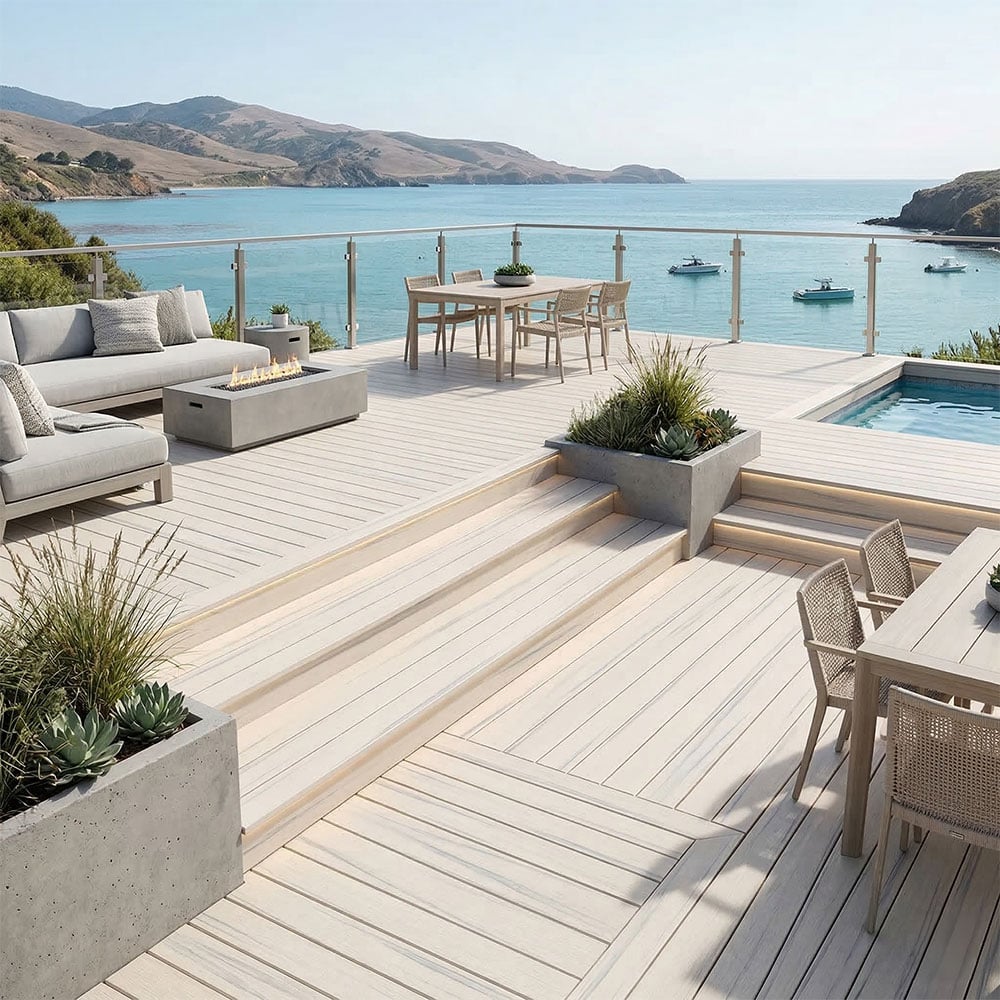
The decking material is only part of the decision. Your dock’s location, structure, and how you plan to use it matter, too.
Slip resistance: Water, algae, and surface buildup can make any dock slippery. Look at the manufacturer’s traction information, keep the surface clean, and don’t assume that a textured board is automatically slip-proof.
Sun exposure: Dark boards can become hot in direct sunlight, especially synthetic decking. Consider the amount of sun your dock receives and compare available colors and product temperature information.
Framing and fasteners: Make sure the framing can support the decking and expected loads. Dense hardwood boards can be heavy, and waterfront installations need fasteners suited to the exposure. In saltwater environments, corrosion-resistant hardware is especially important. Proper joist spacing, drainage, and installation also help the dock perform as intended.
So, What’s the Best Decking for a Dock?
The best choice depends on your priorities. Choose Ipe or another tropical hardwood if you want the look of real wood and excellent natural durability. HDPE is a strong option if low maintenance is your main concern, while PVC decking designed for dock use offers another synthetic alternative. Composite may also work, provided the manufacturer approves the specific product for that application.
Before deciding, consider your budget, exposure to sun and water, maintenance preferences, and the requirements of your dock’s framing.
Explore Advantage Lumber’s dock decking options to compare materials for your waterfront project.
