
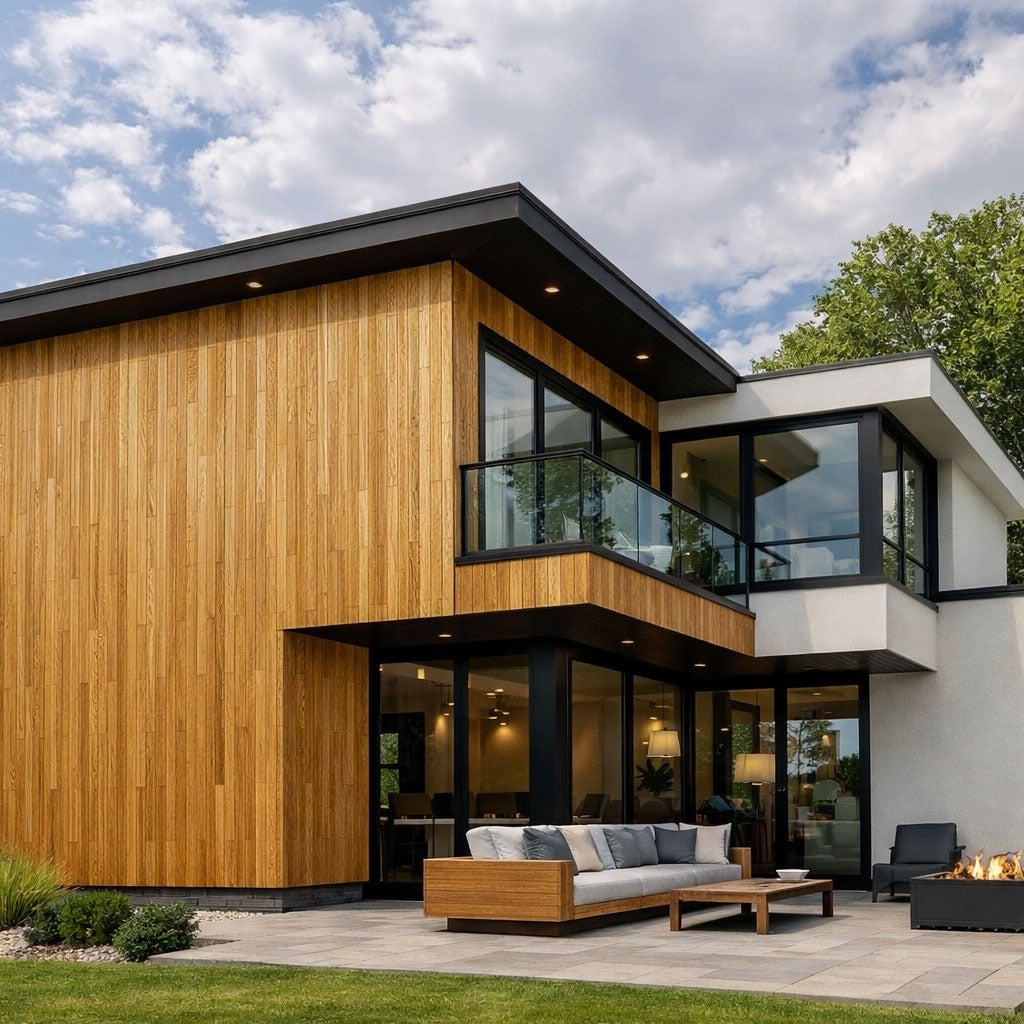
Modern homes often combine wood with glass, metal, stone, and concrete. Wood brings warmth to these materials and keeps a contemporary design from feeling too cold or industrial. Even a well-designed home can feel a little stark when everything has the same hard, smooth finish.
Thermally modified wood offers one way to strike that balance. It has the natural grain and texture of real wood, along with improved dimensional stability and resistance to decay compared with untreated wood of the same species. For modern homes, it’s particularly worth considering for siding, cladding, soffits, porch ceilings, and interior accents.
Why Does Thermally Modified Wood Work Well in Modern Design?
Heat treatment darkens wood, although the final color depends on the species and treatment process. The result often looks warmer and richer than untreated wood.
Thermally modified ash, for example, has a pronounced grain pattern that pairs well with dark window frames, metal roofing, and stone. Pine offers a different appearance for projects where another grain pattern might work better. It comes down to the look you’re after and how the wood fits with the other materials.
Board profiles matter, too. Narrow vertical boards can emphasize a home’s height, while wider horizontal boards create a different feel. With the right layout, wood siding becomes a defining feature rather than just another exterior finish.
There’s a practical advantage as well. Thermal modification reduces moisture absorption and can limit some swelling and shrinking as humidity changes. Wood will still move, but improved dimensional stability may help keep lines and spacing more consistent, especially across long runs of siding.
Where Can You Use Thermally Modified Wood?
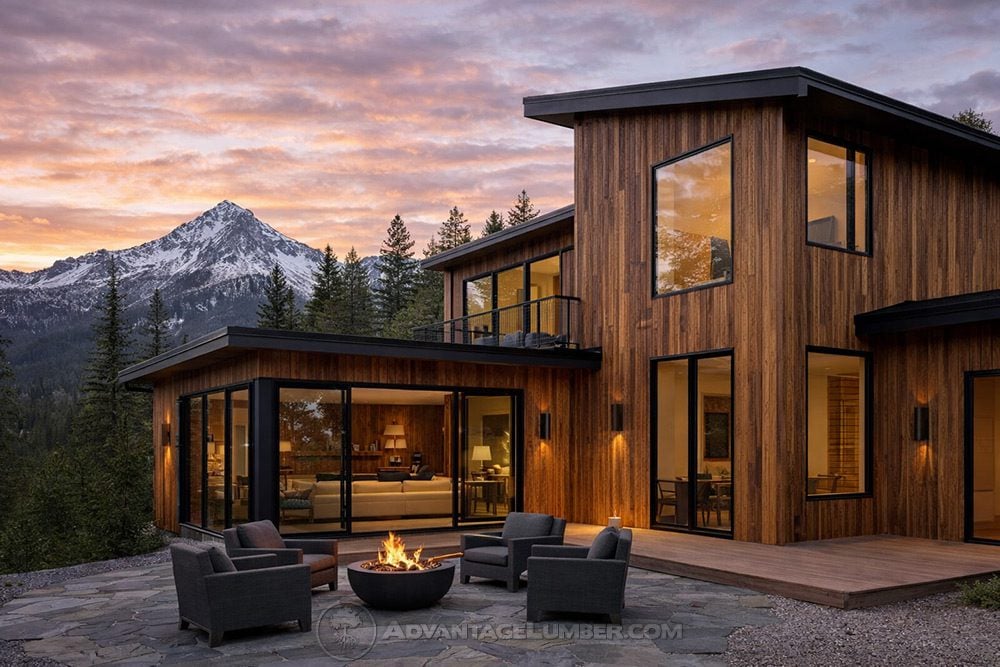
One of the biggest advantages of thermally modified wood is its versatility. Depending on the product, you may be able to carry a consistent look from the exterior into covered outdoor spaces and selected interior areas. Using the same material in different places can help tie a home’s design together.
Siding and Cladding
Wood siding gives a modern home character without requiring an elaborate design. Vertical boards emphasize height, while horizontal siding can make a building appear wider and more grounded.
Thermally modified wood comes in several profiles, including shiplap, tongue-and-groove, and suitable rainscreen siding profiles. These options give architects flexibility with board layouts and the shadow lines between boards.
Wood cladding also works well alongside stone, brick, and metal. A section of wood can break up a large surface without overwhelming the design. In my view, that’s where wood really earns its place in modern architecture: it brings natural variation to materials that might otherwise look uniform.
For rainscreen applications, proper drainage and ventilation remain essential. Siding is only one part of the wall assembly, so follow the manufacturer’s installation instructions and applicable building requirements.
Soffits and Covered Outdoor Ceilings
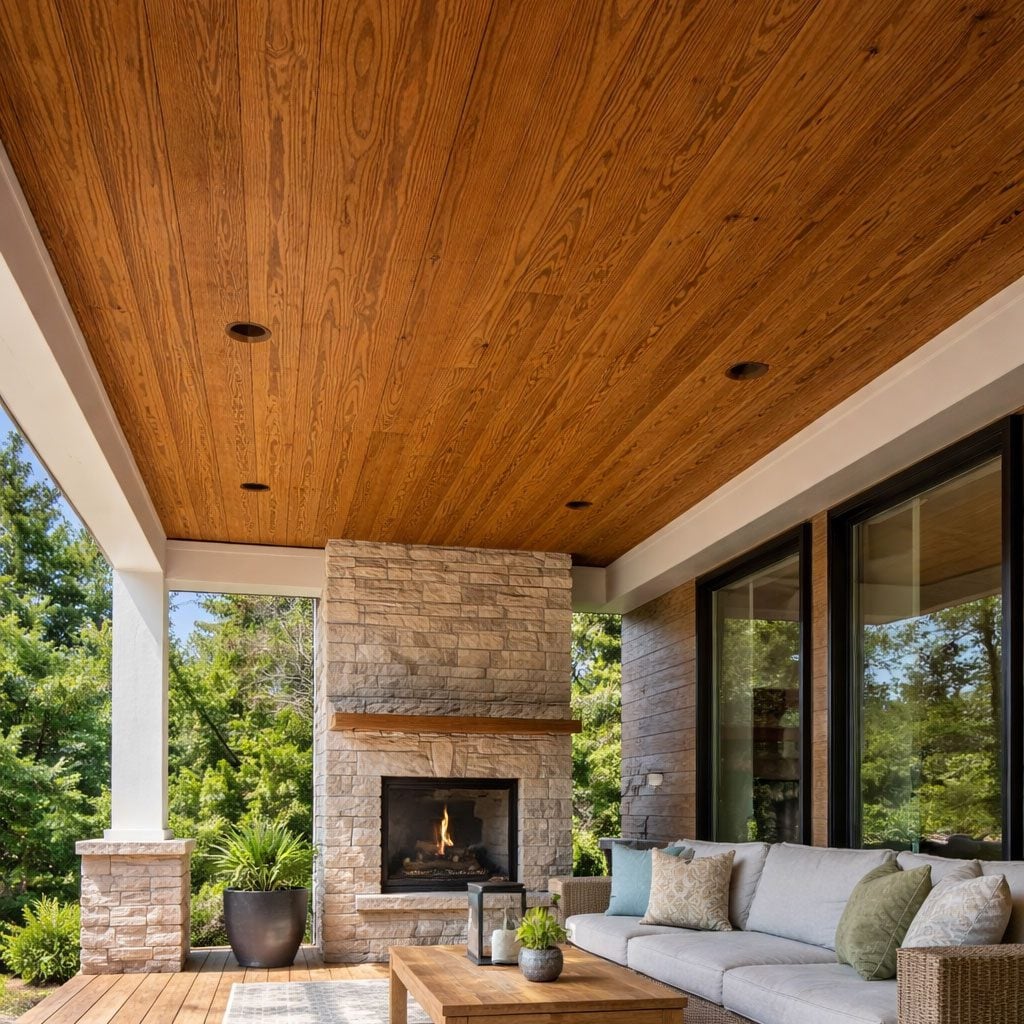
A wood ceiling can warm up an entryway, covered patio, or porch. It adds texture overhead and makes an outdoor space feel more like an extension of the home. It’s also a simple way to carry exterior materials into a space where people spend time.
Thermally modified wood may suit these applications because it can offer better dimensional stability and resistance to decay than untreated wood of the same species. Although covered ceilings receive less direct rain than siding, they still experience changes in temperature and humidity.
Board width and direction affect the finished look. Narrow boards create a different effect than wider planks, while the layout can emphasize the roofline or shape of the space. Neither approach is necessarily better; it depends on the architecture.
Interior Ceilings and Accent Walls
Thermally modified wood can also bring natural tones into interior ceilings, accent walls, and other decorative features.
For instance, you could use wood on a covered patio ceiling and continue the same look into an adjoining living area. That visual connection may help the transition between indoor and outdoor spaces feel more natural. Even a small amount of wood can change the feel of a room, particularly when the other finishes are simple and understated.
Decking
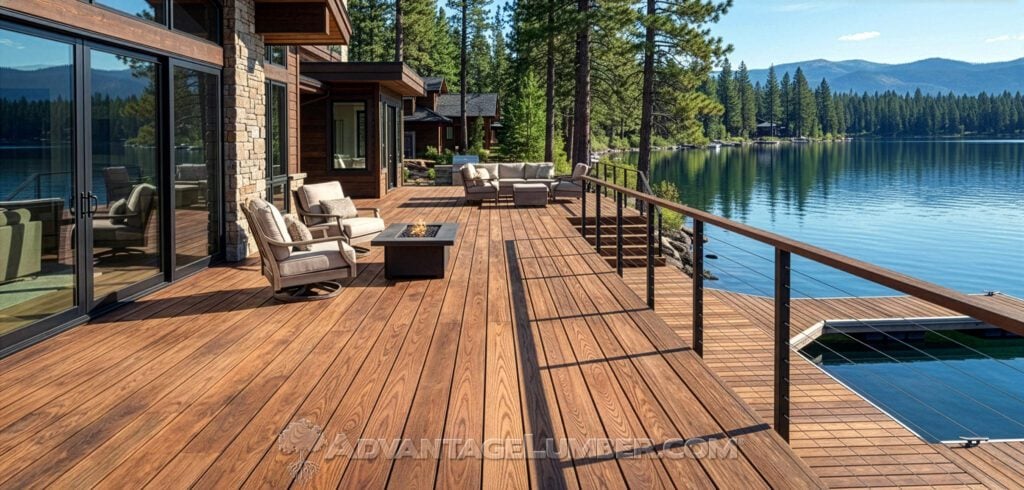
A wood deck can make an outdoor living space feel like a natural extension of a modern home. Thermally modified ash and pine offer two different looks, from the pronounced grain of ash to the simpler appearance of pine. Pair either with dark metal railings, clean-lined furniture, and large windows for a cohesive design.
Thermally modified decking is also worth considering for its improved dimensional stability and resistance to decay compared with untreated wood of the same species. It still needs proper installation, drainage, and ventilation, but it gives homeowners another way to bring the warmth and character of real wood into their outdoor spaces.
What Should You Know Before Choosing Thermally Modified Wood?
Thermally modified wood offers several advantages, but there are a few things to consider before choosing it for your project.
The color will change outdoors. Without a UV-protective finish, the wood will gradually weather toward silver-gray. If you prefer its original brown tones, use a compatible exterior finish and plan on periodic maintenance.
Installation matters. Thermal modification improves dimensional stability and resistance to decay, but it can also make wood more brittle. Predrilling may help prevent splitting around fasteners. Proper drainage, ventilation, and fastening are also important, especially for siding and decking. Follow the manufacturer’s installation instructions for the specific product.
Check the product specifications. Thermally modified wood isn’t automatically suitable for every application. The treatment can affect certain mechanical properties, so verify that the product is designed for your intended use and follow applicable building codes.
Is Thermally Modified Wood a Good Choice for Modern Homes?
If you want the natural appearance of wood with improved dimensional stability and resistance to decay, thermally modified wood is worth considering. It can work particularly well for siding, cladding, soffits, and ceilings, where appearance and consistent board spacing matter.
It still needs proper installation and care. Before choosing a product, consider the look you want, how much exposure to the elements it will receive, and whether you’re willing to maintain its original color. Those decisions will help you determine whether thermally modified wood makes sense for your home.
Explore thermally modified wood options at AdvantageLumber.com to find a profile for your next project.
