
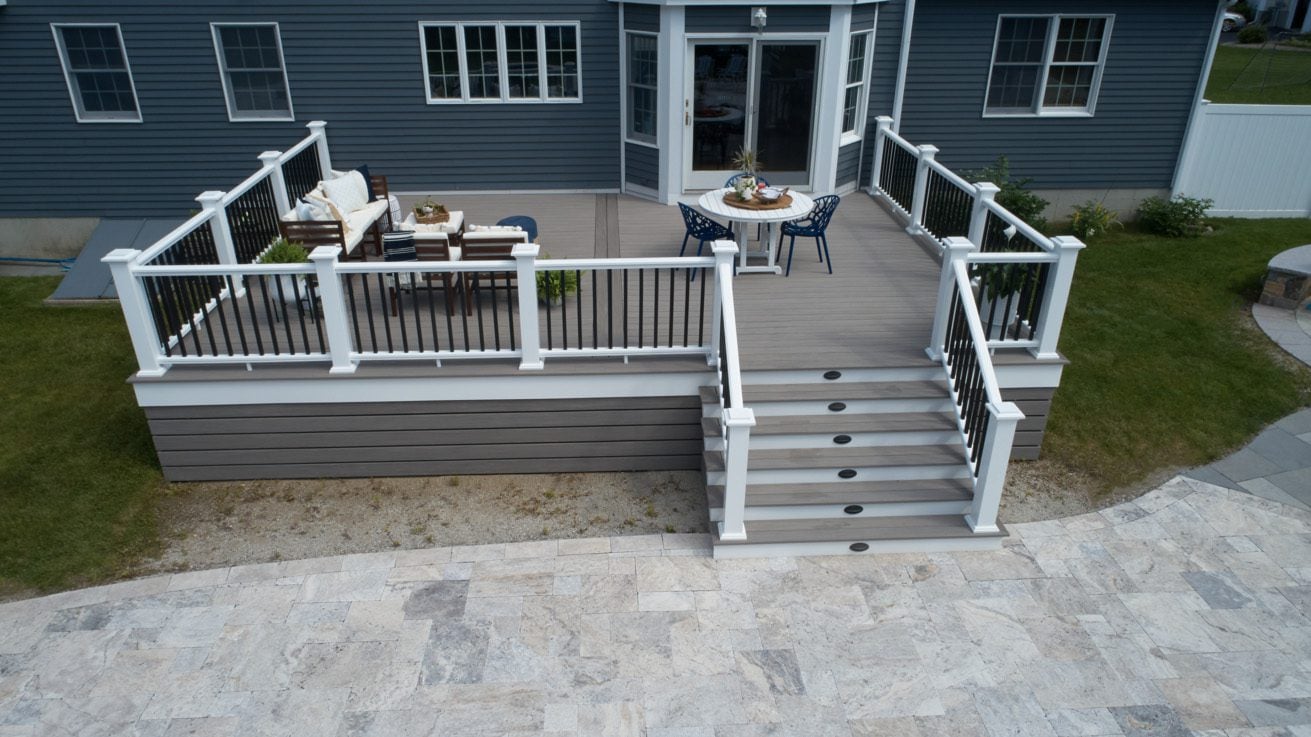
When homeowners plan a new deck, they usually spend most of their time choosing decking materials, picking out railings, and deciding how big they want their deck to be. There’s one important detail many people overlook: airflow underneath the deck.
It might not sound like a big deal, but poor airflow can shorten your deck’s lifespan, cause boards to cup or warp, and even allow the framing to rot prematurely.
We’ve seen homeowners spend thousands of dollars on premium decking materials such as Ipe, Cumaru, or composite decking, only to run into moisture problems because nobody considered what was happening underneath the deck.
Although premium decking materials can last for decades, they still need enough airflow to dry properly.
Let’s take a closer look at why airflow matters and how you can prevent moisture problems before they start.
1. Moisture Is One of Your Deck’s Biggest Enemies
Wood and moisture have a complicated relationship. Although certain hardwoods handle wet conditions exceptionally well, prolonged exposure to moisture can still cause problems.
Here’s what happens.
After it rains, moisture collects in the soil beneath your deck. As the sun comes out and temperatures rise, some of that moisture evaporates into the air.
With an elevated deck that has plenty of open space underneath, moving air helps carry that moisture away rather than trapping it under your deck.
When a deck sits just a few inches above the ground, damp air can linger underneath the boards much longer.
As a result, the underside of your decking may stay wetter than the top. And that’s where problems can begin.
Even naturally durable hardwoods such as Ipe and Cumaru can move when one side of the board repeatedly absorbs more moisture than the other.
Meanwhile, pressure treated framing may stay damp for extended periods, allowing fungi to attack the wood over time.
The bottom line? A deck doesn’t have to sit in standing water to suffer moisture damage.
Sometimes, consistently damp air underneath the deck is enough to cause trouble.
2. Poor Airflow Can Cause Deck Boards to Cup and Warp
One of the more frustrating problems homeowners encounter with hardwood decking is cupping.
When a board cups, its edges curl upward or downward instead of staying relatively flat.
Although several factors can cause this, uneven moisture levels often play a major role.
For example, imagine a beautiful Ipe deck sitting just six inches above damp soil.
The top of the boards gets plenty of sunshine and dries relatively quickly after a rainstorm. Meanwhile, the underside stays exposed to humid air rising from the ground.
As moisture levels change, the wood expands and contracts.
Because the top and bottom don’t experience the same conditions, the boards may develop uneven stresses and begin to cup.
Now, Ipe is an incredibly dense hardwood with excellent durability. In fact, it’s one of our favorite materials for long lasting decks.
That said even Ipe can develop problems when you ignore proper building practices.
We’ve always believed that even the highest quality lumber can perform poorly when a contractor overlooks the basics.
Wider Boards May Cup More Easily
Another thing worth considering is board width.
Wider decking boards generally expand and contract more across their width than narrower boards of the same species.
For this reason, a 5/4×6 hardwood deck sitting close to the ground may show more noticeable cupping than one built with narrower 5/4×4 boards under similar conditions.
That doesn’t mean you should avoid six inch decking.
However, if you’re building a low deck in a humid environment, you should discuss board width with your decking supplier before ordering lumber.
3. Your Deck Framing Needs Airflow Too
Most homeowners worry about how long their deck boards will last. However, the framing underneath deserves just as much attention.
After all, what good is a deck built with hardwood that can last 50 years or longer if the framing starts rotting after 10 to 15 years?
Traditional pressure treated pine framing can suffer when moisture remains trapped around the joists, beams, and posts.
Even though the pressure treating process helps protect wood against decay, it doesn’t make lumber completely immune to moisture problems.
We’ve seen situations where the decking still looks excellent, but the framing underneath has deteriorated enough to require major repairs.
That’s an expensive problem, especially when you have to remove perfectly good decking boards to repair the structure.
How to Help Your Deck Framing Last Longer
If you’re building with pressure treated framing, there are several ways you can help it last longer.
- Allow plenty of airflow: Leave enough open space beneath your deck so moving air can help dry damp framing.
- Protect your joists with tape: Products such as DeckWise Joist Tape help keep water away from vulnerable areas along the tops of joists.
- Keep your deck framing away from soil: Use elevated footings and post connectors so your posts and beams don’t sit directly on the damp ground.
- Remove leaves and dirt: Wet leaves and dirt can hold moisture against wood and accelerate decay.
- Consider galvanized steel or aluminum framing: Metal framing won’t rot like wood, although you still need to account for drainage and corrosion.
Personally, we’re big fans of pairing long lasting hardwood decking with steel or aluminum framing when the budget allows.
Although these framing systems generally cost more upfront, they can make a lot of sense when you’re investing in premium materials such as Ipe or Cumaru.
Why build a deck surface that might last half a century on framing that could need replacing much sooner?
4. How Much Clearance Should You Leave Under a Deck?
This is probably one of the most common questions we hear from homeowners planning ground level decks.
Unfortunately, there’s no single measurement that works for every deck.
Your climate, soil conditions, decking material, and surrounding landscape all affect how much airflow your deck needs.
However, for traditional hardwood decking, we generally recommend leaving approximately 18 inches of open space beneath the deck whenever possible.
Although this isn’t a universal building code requirement, that extra room can help air move underneath the boards and make future inspections easier.
Keep in mind that some decking manufacturers have their own minimum clearance requirements. You should always follow those instructions, even if they call for more space.
What About Decks Only 6 Inches Above the Ground?
Can you build a deck that low? Sure, but you’ll need to approach the project differently.
When a deck sits just six inches above the soil, air has very little room to move underneath it. If the ground stays damp, humid air can linger beneath the boards for long periods.
Although you might choose expensive hardwood decking, the wood itself won’t solve that moisture problem.
Instead, you may need to improve drainage, control moisture rising from the soil, and choose a deck board that can handle low clearance conditions.
For extremely low decks, we often recommend considering hardwood deck tiles over a properly prepared surface rather than trying to squeeze a traditional deck frame into a few inches of space.
However, even deck tiles need a stable base and somewhere for rainwater to drain.
5. Deck Skirting Can Make Airflow Problems Worse
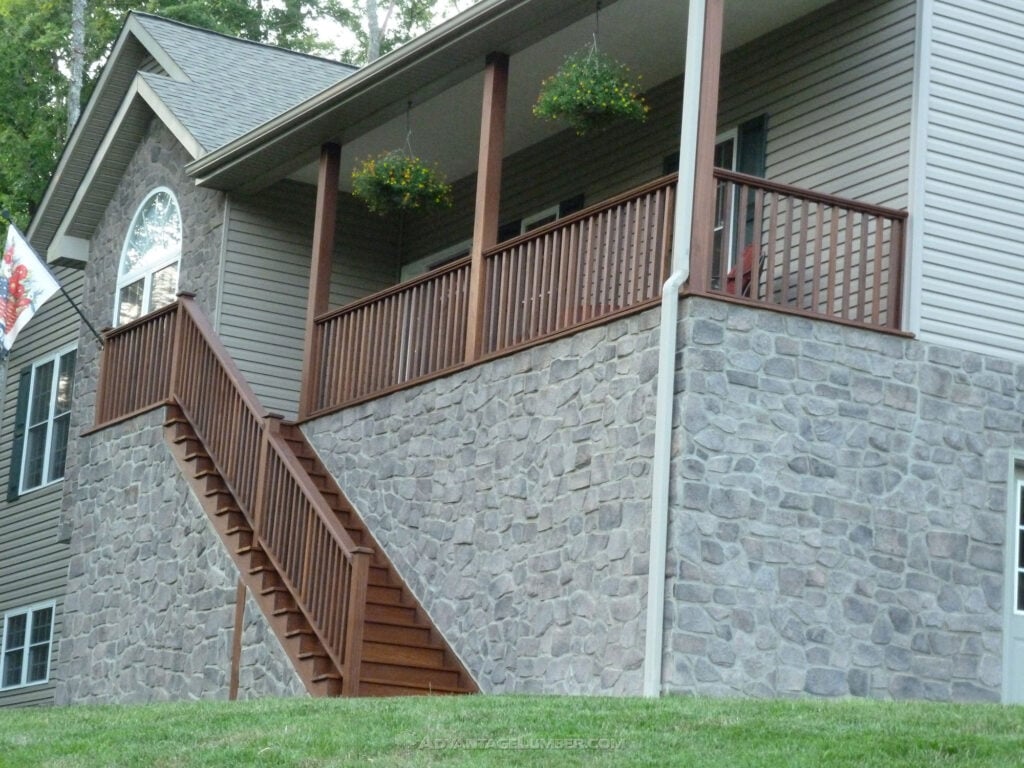
Deck skirting can give your deck a nice, finished appearance. It also helps hide framing, storage areas, and other things you might not want everyone to see.
However, solid skirting can create problems when it blocks air from moving underneath your deck. Like in the picture above which shows an Ipe wood deck with solid stone skirting wrapped around the entire deck.
Let’s say you have a deck that sits three feet above the ground. Normally, that provides plenty of room for air to circulate.
But what happens when you install solid skirting around all four sides?
Unfortunately, you’ve created an enclosed area where humid air may linger and add additional moisture to your framing lumber for prolonged periods of time which will lead to faster rot and decay of your framing lumber.
Although this might not cause immediate problems, it can become troublesome in humid climates or heavily shaded backyards.
Better Deck Skirting Options
If you want to hide the underside of your deck without blocking airflow, consider these options:
- Open lattice panels
- Horizontal wood slats with adequate gaps
- Decorative skirting with openings for ventilation
- Removable panels that allow air to pass through
The goal is to let fresh air enter from one side and damp air escape from another.
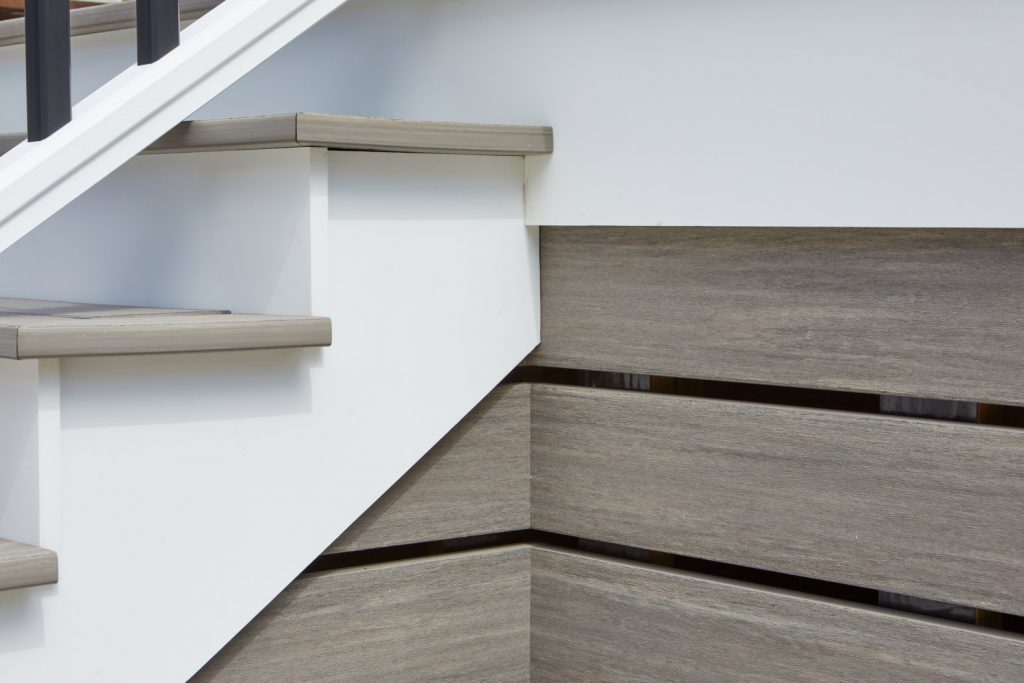
Although a few small vents might help, they may not provide enough airflow beneath a large deck.
Also, remember that airflow can’t make up for poor drainage. If water constantly pools underneath your deck, you’ll need to address that problem too.
6. Composite Decking Needs Airflow Too
Here’s something that surprises a lot of homeowners.
Composite decking may resist rot far better than traditional softwood, but that doesn’t mean you can install it anywhere without worrying about moisture.
Brands such as Trex, TimberTech, and Deckorators make decking products that handle outdoor weather extremely well.
However, the framing underneath still needs protection, and different decking collections have different installation requirements.
When air can’t move freely underneath the deck, moisture may linger around the framing. Damp dirt and debris can also encourage mildew growth.
Although composite decking itself may resist decay, the pressure treated lumber underneath can still rot.
That’s why you should always follow the manufacturer’s instructions for the exact decking collection you plan to install.
Don’t assume every Trex, TimberTech, or Deckorators product requires the same ground clearance.
What About PVC Decking?
PVC decking doesn’t absorb moisture the same way natural wood does, so it can work well in certain damp environments.
However, PVC decking still needs a properly built support structure. You also need to account for thermal expansion, drainage, and the manufacturer’s installation requirements.
In other words, switching to PVC doesn’t mean you can ignore what’s happening underneath your deck. That being said it’s one of the materials that would be safer to place closer to the ground provided you are within the manufacturers specified installation instructions.
7. Poor Drainage Makes Airflow Problems Even Worse
Airflow matters, but drainage deserves just as much attention. Imagine building a beautiful deck over a section of your backyard where rainwater regularly collects.
Although you might leave reasonable clearance underneath, standing water can keep the surrounding air humid. Now add a few inches of fallen leaves, compacted soil, and very little sunlight.
You’ve created an environment where moisture may linger for days. Before building a deck, take a good look at how water moves across your property.
Does rainwater flow away from your house?
Are there low spots where puddles form?
Does the ground stay wet long after a storm?
Although these questions might seem unrelated to choosing deck boards, they can help you avoid expensive problems later.
Ways to Improve Drainage Under Your Deck
Depending on your property, you may be able to improve drainage by:
- Grading the soil so rainwater flows away from your home and deck supports.
- Adding drains where water regularly collects.
- Removing vegetation and organic debris that hold moisture.
- Using an appropriate ground cover to help reduce moisture rising from the soil.
- Adding clean, compacted stone where it makes sense for the site.
However, don’t assume that spreading gravel over wet ground will solve everything. If water has nowhere to go, the gravel may simply hide the problem.
Also, be careful when changing the grade around your home’s foundation. You don’t want to solve one drainage problem only to create another.
8. Does Airflow Matter More in Humid Climates?
Absolutely. If you live in Florida, Georgia, Louisiana, or another area with consistently high humidity, you should pay extra attention to airflow beneath your deck.
Warm, humid air can slow the drying process, especially when the deck sits in the shade. However, homeowners in northern climates shouldn’t ignore this issue either.
Snowmelt, spring rain, wet leaves, and freezing temperatures can expose deck framing to moisture for extended periods.
For example, a deck in New York might stay relatively dry during parts of the summer but experience much wetter conditions throughout the spring and fall.
And if leaves pile up underneath the deck during October and November, they may hold moisture against the framing well into winter.
Although the weather changes depending on where you live, the goal remains the same. You want your deck to dry out as quickly as practical after it gets wet.
9. What If Your Existing Deck Has Poor Airflow?
Maybe your deck was built years ago, and you’re just now realizing that it doesn’t have much airflow underneath it.
Does that mean you need to tear everything apart? Not necessarily.
First, take a look underneath your deck if you can access the area safely.
Watch for these warning signs:
- Deck boards that cup, twist, or move excessively.
- Joists and beams that stay damp long after the surrounding area dries.
- Wood that feels soft, crumbles, or shows signs of decay.
- Standing water or consistently wet soil.
- Heavy mildew growth or musty odors.
- Leaves, dirt, and debris that block airflow.
Although discoloration doesn’t automatically mean wood is rotting, soft or crumbling framing deserves immediate attention.
If you suspect structural damage, have a qualified deck contractor inspect the framing before you continue using the deck.
Simple Ways to Improve Airflow
Depending on how your deck was built, you may be able to improve airflow by removing debris, opening sections of solid skirting, fixing drainage problems, or adding larger vents.
Simply trimming back thick vegetation around the deck can help air move more freely.
However, if your deck sits only a few inches above constantly damp soil, these smaller changes might not solve the problem.
In that case, you may need to rebuild the deck with more ground clearance or choose a different decking option such as our hardwood deck tiles.
10. Even the Best Decking Materials Can’t Overcome Poor Building Practices
This is something we try to explain to customers whenever they’re planning a new deck. You can buy some of the most durable decking materials on the market, but the details underneath the surface still matter.
Ipe, Cumaru, Tigerwood, Teak, and other premium hardwoods can last for decades when you install them under suitable conditions.
Likewise, high quality composite and PVC decking can provide many years of service when you follow the manufacturer’s instructions.
No decking material can fix poor drainage, weak framing, or moisture that constantly collects underneath your deck.
And although airflow plays a major role, it isn’t the only thing that affects your deck’s lifespan.
Proper board spacing, quality fasteners, strong framing, effective drainage, and regular maintenance all help protect your investment.
That’s why we always recommend planning the entire deck rather than focusing only on the boards you’ll see when the project is finished.
Final Thoughts: Don’t Forget About What’s Under Your Deck
When you’re standing on a finished deck, you probably aren’t thinking about the air moving underneath your feet. And that’s understandable.
You’re thinking about how nice the decking looks, where you’re going to put the grill, or how much furniture you can fit on it.
However, the space underneath your deck plays a major role in how well the entire structure holds up over time.
Good airflow helps wet decking and framing dry, discourages the conditions that lead to wood rot, and can reduce moisture related problems with hardwood decking.
Although homeowners often focus on the appearance of their decking, we believe the structure underneath deserves equal attention.
If you’re building a new deck, plan for proper ground clearance, drainage, and airflow before construction begins.
It might not be the most exciting part of building a deck, but it could save you thousands of dollars in repairs down the road.
And if you’re investing in premium hardwood decking that could last 50 years or longer, making sure the framing underneath can last is just good common sense.
At AdvantageLumber.com, we help homeowners and contractors choose premium hardwood, composite, PVC, and long lasting deck framing materials. Our experienced staff can help you compare decking options, understand proper installation practices, and get a free material estimate for your project.
A great deck isn’t just about what you see on top. It’s also about how well everything underneath was built.
