
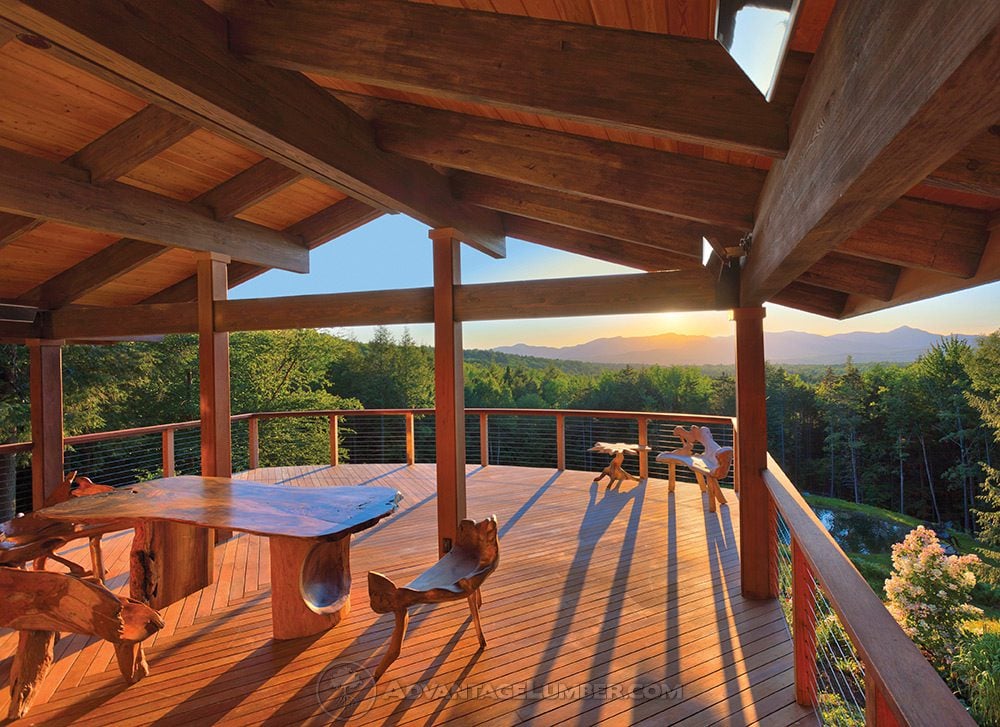
One of the first questions customers ask us when they look at hardwood decking is pretty simple:
How long is this stuff actually going to last?
Honestly, it’s a fair question. After all, if you’re spending the money to build a deck with Ipe, Cumaru, Tigerwood, Teak, or another premium hardwood, you probably don’t want to tear it apart 15 years from now.
And really, who would?
Fortunately, tropical hardwood decking can potentially last for decades when you install it correctly. In fact, Ipe may last 50 to 75 years or longer under the right conditions.
Although those numbers sound impressive, the words under the right conditions matter.
I’ve learned over the years that those four words can save a lot of misunderstanding.
We’ve sold hardwood decking for more than 30 years, and, over that time, we’ve seen enough old decks to know the species alone probably doesn’t determine how long a deck lasts. Instead, how you install the boards, how much airflow you provide, how well water drains, which fasteners you use, and how you build the frame can all affect the deck’s lifespan. Even something as simple as leaves piling up against the house may cause trouble.
You’d probably be surprised how often a little thing can turn into the big thing.
So, with that in mind, let’s look at how long you might realistically expect the major hardwood decking species to last.
Hardwood Decking Lifespan at a Glance
First, these aren’t expiration dates. Obviously, wood doesn’t suddenly quit when it reaches a certain birthday. Instead, think of these numbers as reasonable potential lifespans when you design and build the deck correctly.
I’ve never liked talking about wood as though it has a timer hidden inside it.
| Hardwood | Typical Potential Lifespan |
|---|---|
| Ipe | 50–75+ years |
| Cumaru | 40–50+ years |
| Tigerwood | 30+ years |
| Garapa | 30+ years |
| Brazilian Redwood (Massaranduba) | 30+ years |
| Plantation Teak | 30+ years |
| Mahogany / Red Balau | 25–30+ years |
Although these numbers offer a useful starting point, actual service life can vary quite a bit. For example, a well built deck with plenty of airflow in a favorable environment may beat these estimates. On the other hand, a poorly designed deck where moisture constantly gets trapped could fall short of them.
And that’s the part people sometimes skip when they compare materials on paper.
That’s why, in my opinion, I don’t like selling hardwood based on a lifespan number alone.
Ipe Decking: 50–75+ Years
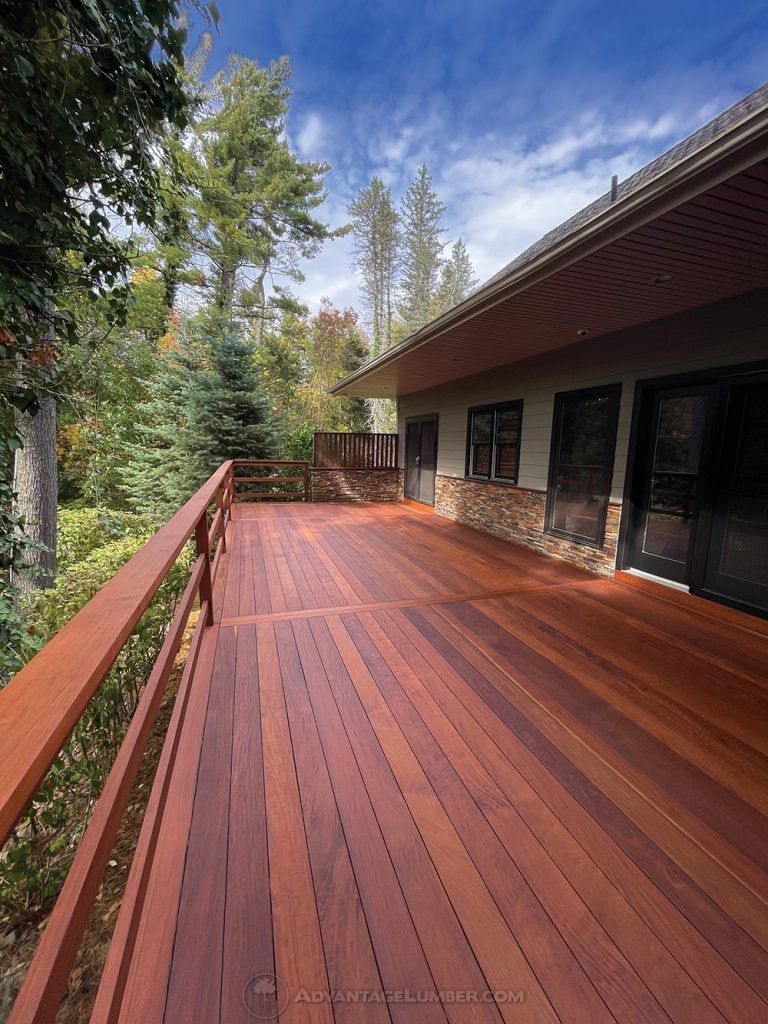
If longevity sits at the top of your list, Ipe is still probably the hardwood I compare everything else against.
That’s not because Ipe is trendy. It’s because I’ve seen what it can do.
For one thing, Ipe is extremely dense, naturally resists decay and insects, and has served in demanding exterior projects for generations. In addition, we’ve sold Ipe for decks, docks, boardwalks, siding, and other outdoor projects for more than three decades.
When you install Ipe correctly, you can reasonably expect it to last 50 years or more, while some decks may reach the 75 year range or beyond.
That’s a long time. Think about where you were 50 years ago, or where your house might be 50 years from now.
Although the wood can potentially last that long, don’t expect the deck to look brand new for 75 years without touching it.
This is where people can sometimes confuse appearance with structural lifespan.
And I get it. Homeowners probably look at color first because that’s what they see every day.
If you don’t oil Ipe, sunlight will gradually turn it silver gray. However, that’s normal weathering and doesn’t mean the boards are deteriorating structurally.
If you want to keep the rich brown color, you’ll probably need to periodically clean the deck and apply an appropriate hardwood oil such as Ipe Oil from DeckWise. On the other hand, if you like the silver appearance, you can simply let the wood weather naturally.
Personally, I think both looks can be beautiful when the deck is built well.
Either way, Ipe doesn’t necessarily need to stay brown to remain durable.
Cumaru Decking: 40–50+ Years
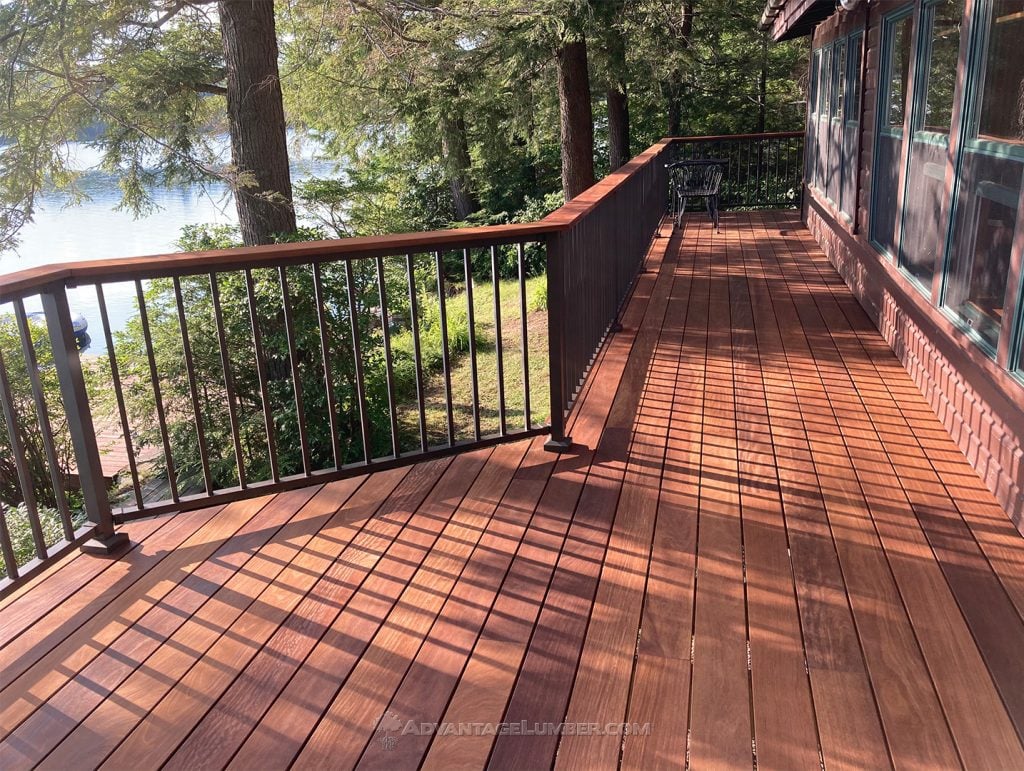
Cumaru, which people commonly call Brazilian Teak, is another extremely durable hardwood.
Although Ipe usually gets most of the attention, Cumaru can come surprisingly close in many areas. As a result, when customers want performance similar to Ipe but want to spend a little less, Cumaru is usually one of the first woods I suggest.
Frankly, Cumaru probably doesn’t always get the credit it deserves.
A Cumaru deck can potentially last 40 to 50 years or longer when you build it correctly.
In addition, Cumaru naturally resists rot and insects, and the wood is extremely hard and dense. At the same time, it can also show more color variation than Ipe. You’ll commonly see reddish brown, golden brown, and darker brown boards throughout the same deck.
Personally, I like that variation. Although some homeowners may want everything to look perfectly uniform, others choose Cumaru specifically because they want more character.
And isn’t that part of why people buy real wood in the first place?
So, when you consider both price being upward of 50% cheaper than Ipe and potential lifespan, Cumaru can offer one of the best values in natural hardwood decking.
Tigerwood Decking: 30+ Years
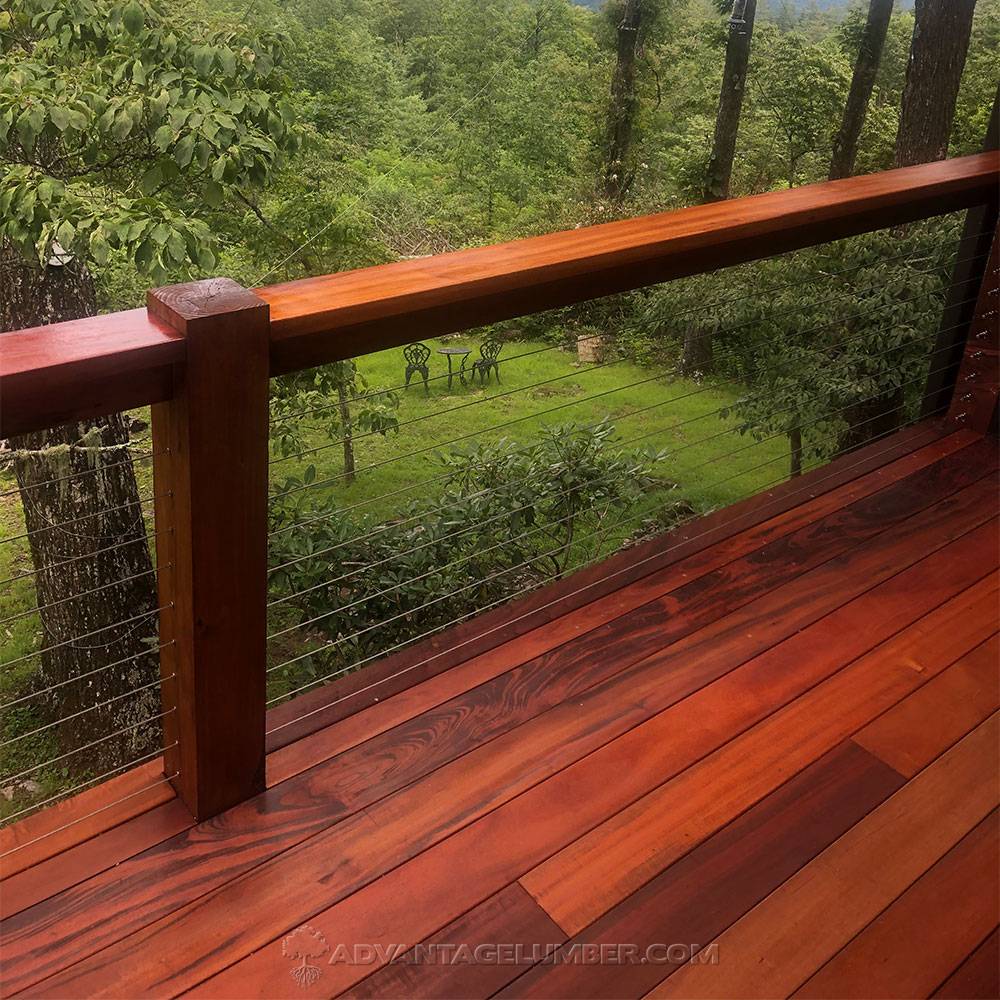
Tigerwood gets most of its attention because of its appearance.
And that’s understandable. Fresh Tigerwood can show dramatic orange, reddish brown, and dark streaks across the boards. Indeed, few decking materials look quite like it.
I’ve seen Tigerwood decks where the grain almost steals the whole show.
Fortunately, Tigerwood isn’t just a pretty face.
When you install it correctly, 30 years or more can be a reasonable expectation.
Although Tigerwood doesn’t quite match Ipe for potential longevity, you still get a naturally durable tropical hardwood with excellent resistance to decay.
At the same time, if you want to preserve Tigerwood’s dramatic color, you’ll probably want to maintain it with a UV protective hardwood oil. Otherwise, sunlight can eventually turn the surface gray, just as it does with Ipe and Cumaru.
Some people may love that weathered look. Others absolutely don’t. That’s one of those personal calls.
Garapa Decking: 30+ Years
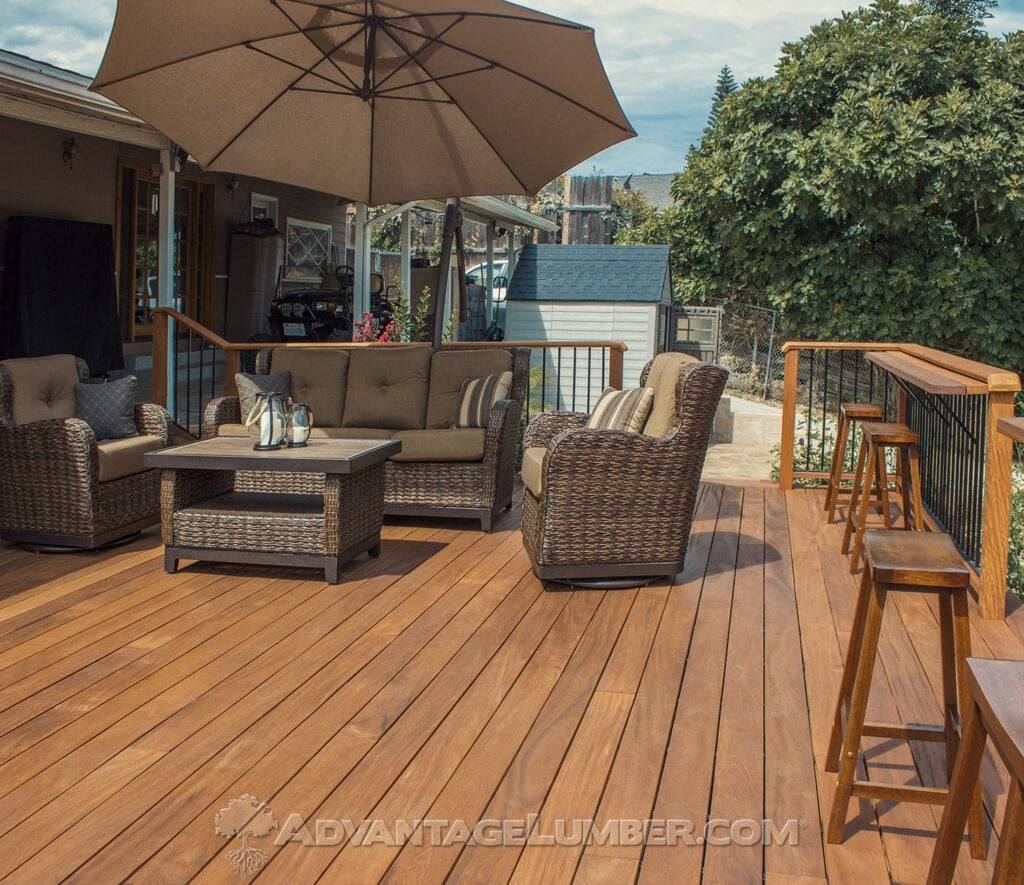
Garapa sometimes gets overlooked because it isn’t as dark as Ipe or as dramatic as Tigerwood.
However, that’s a shame because it can be a very good decking wood.
I’ve always thought Garapa is one of those materials people may appreciate more once they see a full deck instead of one sample board.
Garapa typically has a golden to honey colored appearance and can hold up extremely well outdoors. In fact, when you build the deck correctly, Garapa can potentially provide 30 years or more of service.
It’s also potentially a good option for homeowners who want natural hardwood but don’t necessarily want the darker brown appearance of Ipe.
Although Garapa will eventually weather gray when you leave it unfinished, periodic oiling may help retain more of its golden color.
So, if you want something lighter in color but still want tropical hardwood durability, Garapa may deserve serious consideration.
Brazilian Redwood (Massaranduba): 30+ Years
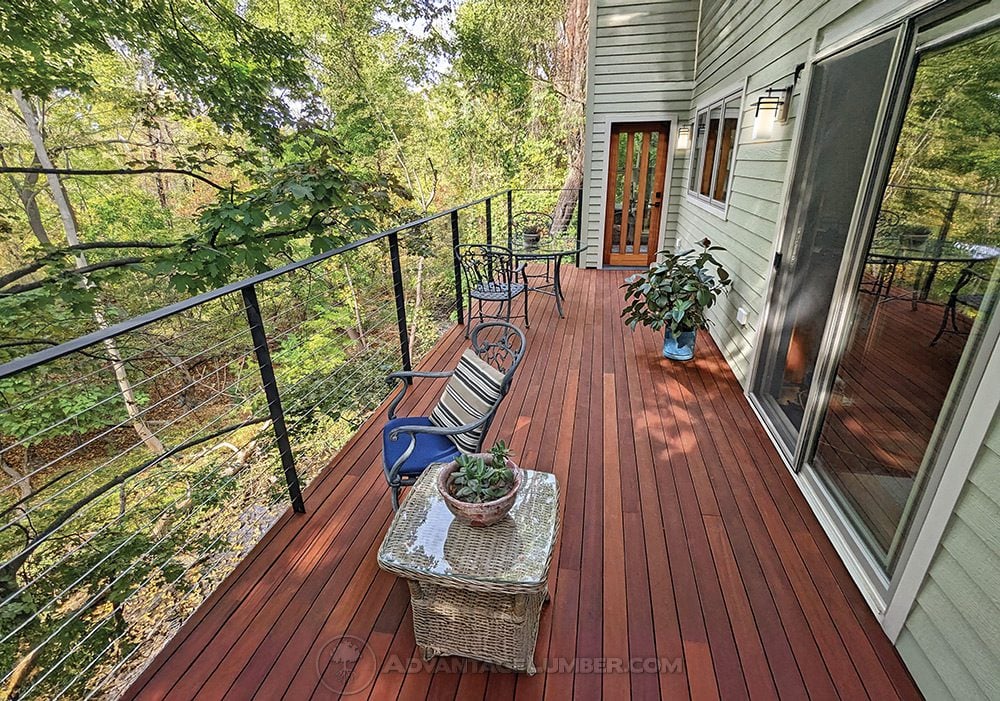
Brazilian Redwood, also known as Massaranduba, is another dense tropical hardwood that can potentially last 30 years or longer outdoors.
However, don’t confuse it with the redwood you commonly see for sale in North America.
They’re completely different woods.
I’ve had that conversation more times than I can count.
For example, Massaranduba is considerably harder and denser than traditional redwood, and it naturally resists rot, decay, and insects.
At the same time, the wood generally has a rich reddish brown appearance. So, if you want a deeper red tone but still want the durability tropical hardwoods can offer, Brazilian Redwood may deserve a look.
And if you’ve only ever seen standard redwood, the difference can be pretty striking.
Plantation Teak: 30+ Years
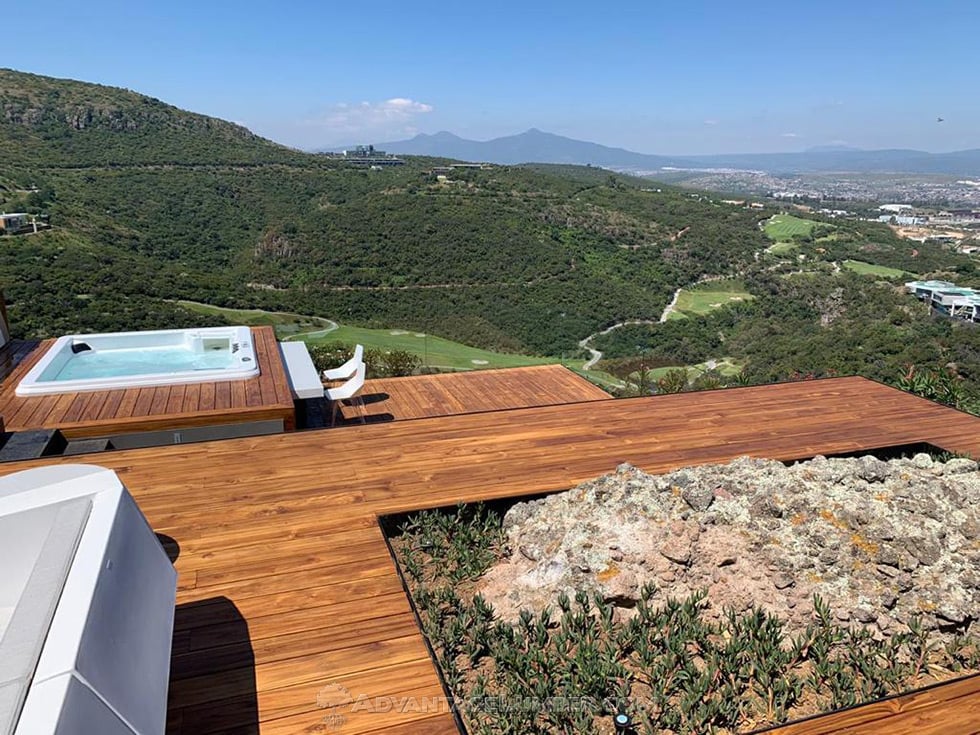
Teak probably has the best known reputation of any outdoor hardwood.
And, really, there’s a reason people have used it for boats, outdoor furniture, decks, and other exterior projects for generations. Teak contains natural oils, resists decay, and can stay remarkably stable as environmental conditions change.
You don’t build that kind of reputation by accident.
Quality plantation Teak decking can potentially provide 30 years or more of service, although favorable conditions may allow it to last considerably longer.
At the same time, Teak tends to behave very well outdoors.
That’s something you start appreciating after you’ve worked with enough wood.
Ask any carpenter who’s dealt with a board that wants to move every direction at once. Stability starts to look pretty attractive.
People talk a lot about hardness when they compare decking, although dimensional stability matters too. After all, every exterior wood absorbs and releases moisture. As a result, how much the board moves as its moisture content changes can make a big difference over the life of a deck.
Teak has probably earned its reputation for a reason.
Mahogany / Red Balau: 25–30+ Years
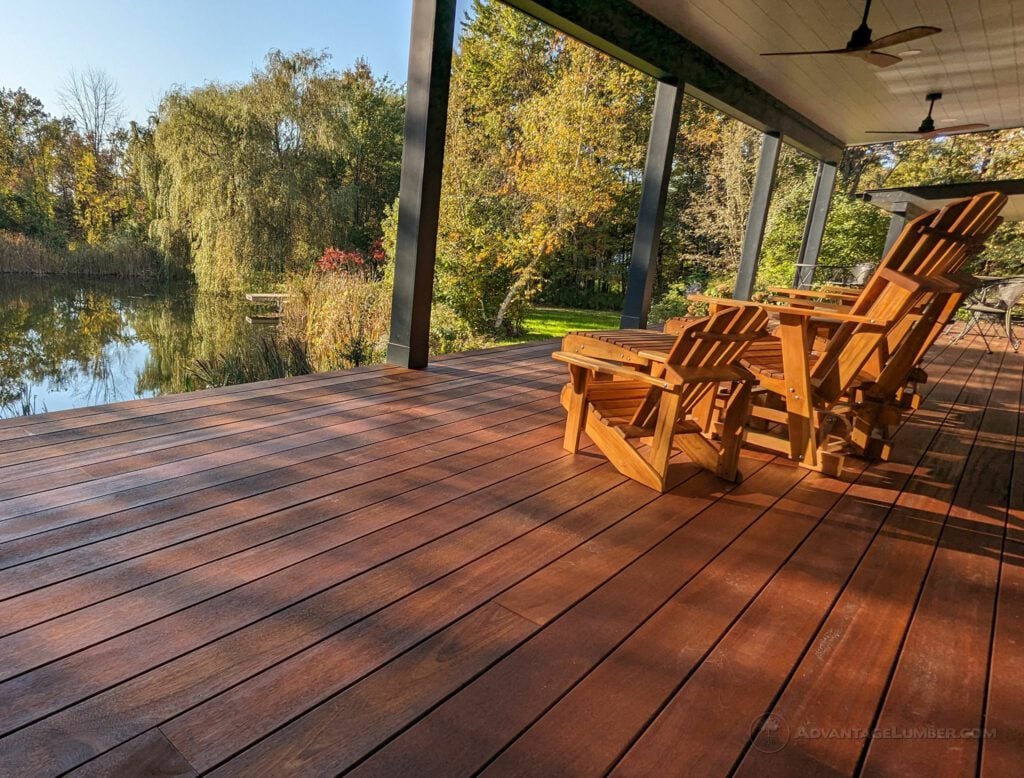
People use the name Mahogany pretty loosely in the lumber business, so you need to know what you’re actually buying.
That’s one of those names where I always tell people to ask one more question.
For exterior decking, for example, Red Balau is a popular option that many sellers market as Mahogany decking.
When you install it correctly and take reasonable care of it, Red Balau can potentially last 25 to 30 years or more.
Although I wouldn’t put it in quite the same potential longevity category as Ipe or Cumaru, Red Balau can offer attractive reddish brown coloring and good exterior durability.
Still, for the right project and budget, it can make a lot of sense.
Not every deck needs to win a contest for longest possible lifespan.
What Really Determines How Long Your Hardwood Deck Lasts?
Now we get to the part people sometimes don’t want to hear.
You can buy some of the best decking in the world and still potentially cause problems if you build the deck poorly.
Over the years, I’ve seen expensive materials installed in ways that made me scratch my head. Although hardwood can handle an awful lot, it probably can’t overcome every construction mistake.
I’ve looked at projects before and thought, “The wood probably wasn’t the problem here.”
So, before you get too caught up in lifespan numbers, you may want to pay close attention to how the deck actually gets built.
Ventilation Matters
First and foremost, this is a big one.
Exterior hardwood needs airflow. After all, wood naturally absorbs and releases moisture as weather conditions change.
If you build a deck extremely close to the ground and provide almost no ventilation underneath it, the bottom of the boards can stay damp while the sun dries the top. As a result, the two sides of the board may experience very different moisture conditions.
Quite simply, that’s potentially asking the wood to fight a battle it doesn’t need to fight.
Why make the material’s job harder than it has to be?
For traditional hardwood decks near grade, we generally like to see plenty of ventilation beneath the boards. However, around pools, patios, rooftops, and other areas where you have limited clearance, hardwood deck tiles may make more sense than conventional deck boards.
In the end, good airflow can be cheap insurance.
And cheap insurance is usually the kind I like best.
Drainage Matters Too
Along the same lines, drainage matters.
Water occasionally sitting on a deck isn’t necessarily the problem. After all, these woods can handle plenty of moisture.
Water that stays trapped can be the problem.
So, pay attention to places where leaves, dirt, and other debris collect. Likewise, keep drainage paths open. And don’t create pockets where water can sit between boards, against walls, or around framing members.
I’ve seen homeowners worry about rain while ignoring a pile of wet leaves sitting in the same corner for three weeks.
Although none of this sounds particularly exciting, a little common sense can go a long way.
Use the Right Fasteners
Next, don’t overlook the fasteners.
If you’re building with Ipe, Cumaru, or another dense tropical hardwood, you probably don’t want to save twenty bucks by buying cheap screws.
I’ve never understood that one.
Someone will spend thousands of dollars on premium decking and then, somehow, grab inexpensive coated steel screws because they’re sitting on the shelf at the local hardware store.
Come on. If there’s one place where you probably don’t want to be cheap with the budget, this is it.
Instead, use quality stainless steel fasteners that can handle hardwood.
For hidden fastening, we’ve had excellent results with Ipe Clip systems. In particular, the full stainless steel insert can give the fastener serious hold down strength, which matters when you’re working with dense hardwood boards.
Whichever fastening method you choose, though, follow the installation requirements for the species and profile you’re using.
Your future self may thank you.
Your Decking Might Outlast Your Deck Frame
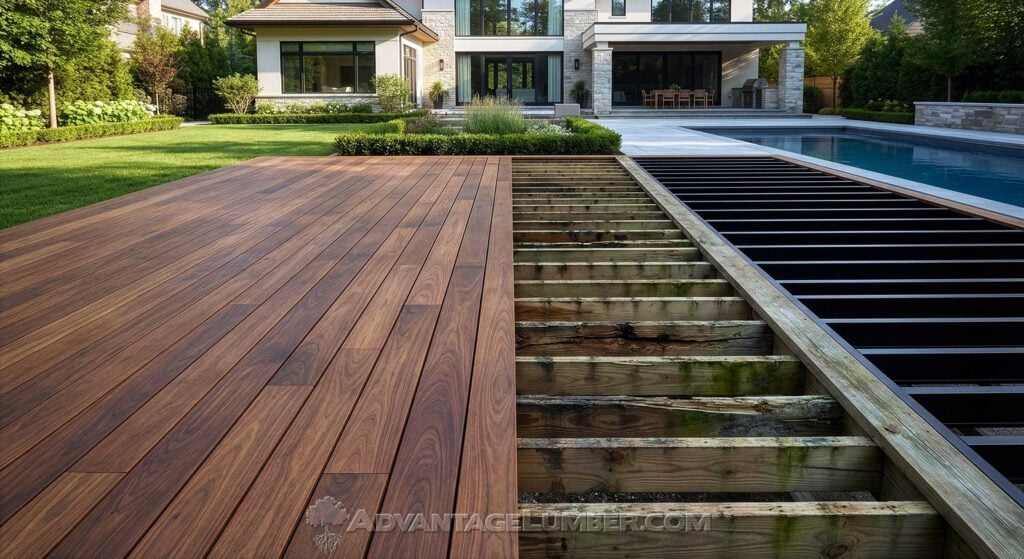
This may be the most important point in this entire article.
Think about the framing underneath your hardwood.
If you install a deck board that can last 50 years or longer over framing that may fail much sooner, what happens when the frame starts rotting?
Unfortunately, we’ve seen exactly this problem.
Customers come back years after buying Ipe or Cumaru, and their deck boards still look great. Meanwhile, portions of the pressure treated framing underneath may have started to deteriorate.
That’s a rough conversation because nobody wants to hear that the beautiful boards on top may be fine but the structure underneath needs work.
As a result, they can face a difficult decision because their decking may still have decades of potential life left.
If you’re building a long term hardwood deck, you may want to consider framing materials such as steel or aluminum. Although pressure treated lumber may make more sense for your budget, you can protect vulnerable areas with quality joist and ledger tape.
At the very least, think about how long the whole deck might last, not just the boards you can see.
After all, what sense does it make to buy a 50 year deck board and put it on a frame you expect might need replacement much sooner?
To me, that one’s pretty hard to argue with.
Does Oiling Hardwood Make It Last Longer?
Well, yes and no.
Primarily, you oil hardwood to help maintain its color and protect its surface from UV exposure.
However, oil doesn’t give Ipe, Cumaru, or Teak their fundamental resistance to decay. Those woods already have that natural durability.
So, if you stop oiling an Ipe deck, it isn’t necessarily going to suddenly rot.
Instead, it will probably turn gray over time.
That’s an important distinction.
And, believe me, it’s one we explain a lot.
Although some homeowners may love the weathered silver gray appearance and intentionally let their decks age naturally, others may want to keep the deep brown, red, or golden colors they saw when they first installed the wood.
If you’re in the second group, you’ll probably need to periodically clean and oil the deck.
Even so, don’t overdo it. Dense hardwoods don’t absorb finish like softwoods. Therefore, follow the manufacturer’s directions when you apply hardwood oil, and wipe away any excess. Otherwise, too much oil can potentially leave you with a sticky mess that collects dirt instead of the beautiful deck you had in mind.
And yes, I’ve seen that happen plenty of times.
Ask me how many calls we’ve gotten about that one over the years.
Can Hardwood Decking Really Last 50 Years?
Absolutely, although the details matter.
Ipe can potentially last 50 years or longer, but I’d never tell someone every Ipe deck will automatically reach that age simply because the invoice says Ipe.
If only construction worked that way.
For starters, how you build the deck can matter.
Likewise, the climate can matter.
Airflow can matter.
Drainage can matter.
Fasteners can matter.
Framing can matter.
And, of course, maintenance can matter.
Really, the same probably goes for almost every building material I’ve worked with.
However, tropical hardwoods stand apart because they can give you so much natural durability from the start. As a result, when you combine a durable species such as Ipe or Cumaru with smart deck design and proper installation, you may end up with a deck that stays in service for several decades.
And that’s really the point, isn’t it? You’re probably trying to build it once and enjoy it for a long time.
Which Hardwood Lasts the Longest?
If maximum lifespan is your goal, Ipe is still probably my first choice.
Quite simply, few decking woods can match its combination of density, decay resistance, insect resistance, strength, and long history in exterior construction.
I’ve worked around a lot of different decking materials, and Ipe still seems to set a very high bar.
Although Cumaru isn’t far behind, it can cost less and still give you excellent potential longevity. Meanwhile, Tigerwood may make a great choice when appearance ranks high on your list. Garapa can give you a lighter golden color. Brazilian Redwood can offer rich red tones. And Teak can combine excellent durability with impressive stability.
So, there really isn’t one hardwood that’s necessarily best for everybody.
Wouldn’t life be easier if there were?
Instead, a better question may be: Which wood makes the most sense for your project, budget, appearance, climate, and expectations?
Ultimately, that’s probably the conversation worth having.
Build the Whole Deck for the Long Haul
Finally, when you’re planning a hardwood deck, don’t just look at the decking.
Instead, look underneath it.
That’s not the glamorous part of the deck, but it’s usually the part I worry about first.
If you’re choosing Ipe because you want a deck that may last 50 to 75 years, think about whether your framing, fasteners, hardware, and overall design can potentially keep up with it.
So, spend money where it matters. Give the wood proper ventilation. Likewise, give water somewhere to go. Use stainless steel hardware. And, if you’re using wood framing, protect it from trapped moisture. On the other hand, consider steel or aluminum when you want the longest possible frame life.
Then, once everything is built correctly, you can probably take care of the deck without obsessing over it.
You should be enjoying the deck, not inspecting it with a magnifying glass every Saturday morning.
After more than 30 years of working with and selling these woods, that’s probably the biggest advantage I’ve seen with quality tropical hardwood decking. You don’t necessarily have to baby it to get a long service life. You just have to build it right and give the wood a fair chance to do what it does best.