
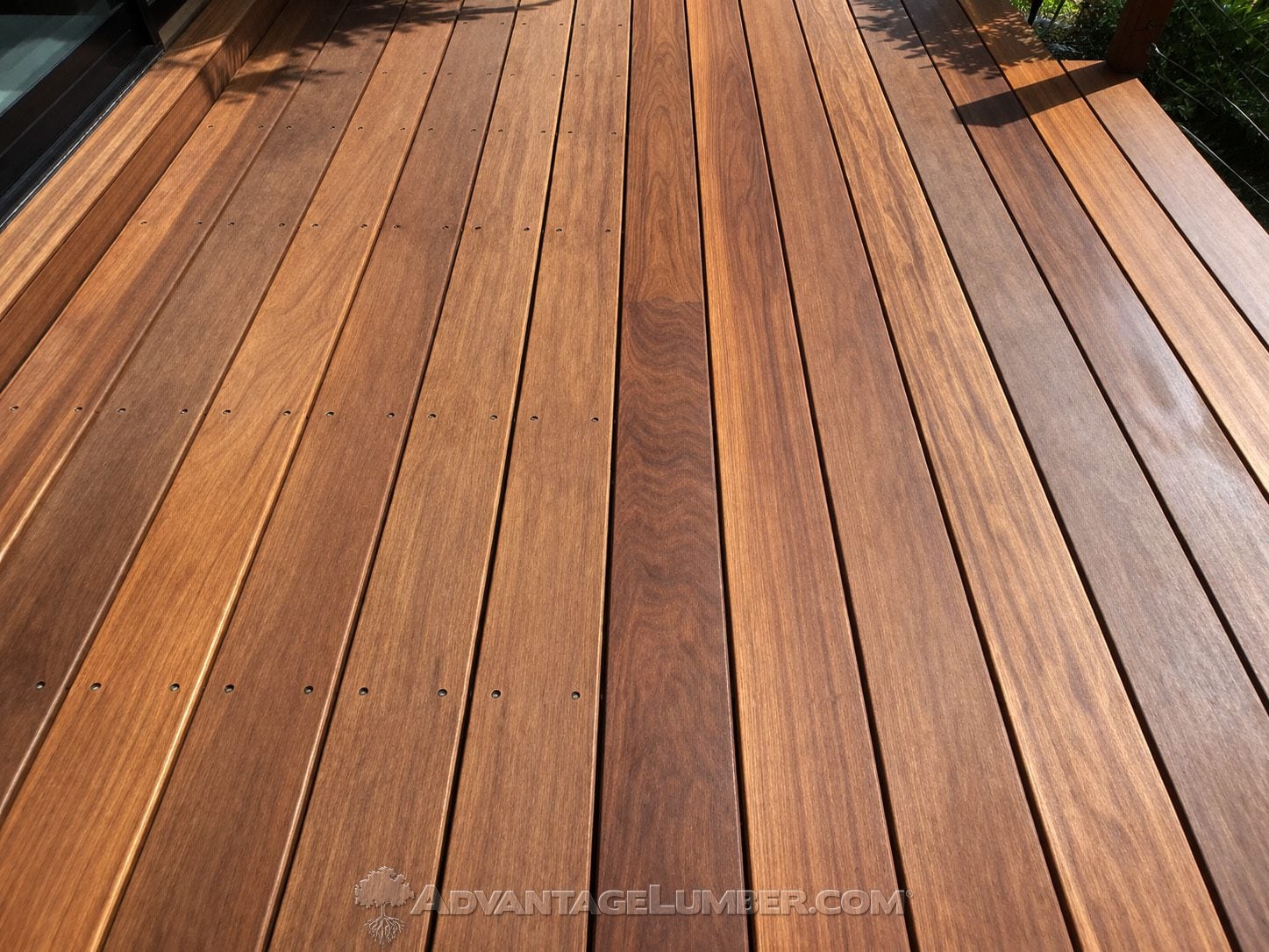
When building a new deck, the decking material tends to get most of the attention. But how you fasten those deck boards to the framing can have a major impact on the finished appearance, installation process, and long-term performance of the deck.
Two of the most common options are hidden deck fasteners and traditional face screws.
Both methods have their place. Traditional screws offer simplicity, strength, and easy access to individual boards, while hidden fasteners create the clean, uninterrupted deck surface that many homeowners prefer.
At AdvantageLumber.com, we’ve been selling hardwood decking for more than 30 years, including Ipe, Cumaru, Teak, Mahogany, Tigerwood, and many other premium decking species. Based on our experience with these dense, durable woods, our preferred hidden fastening system is Ipe Clip® hidden deck fasteners.
Here’s how hidden fasteners and traditional screws compare.
What Are Hidden Deck Fasteners?
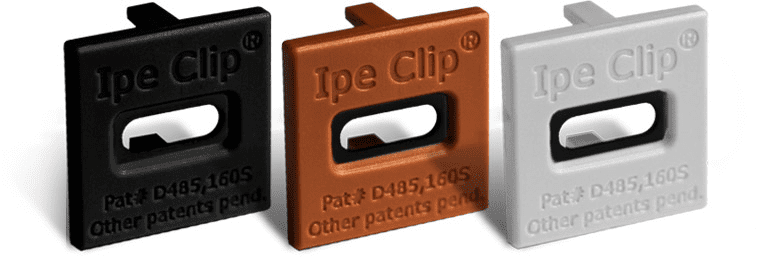
Hidden deck fasteners secure deck boards without placing visible screw heads through the walking surface of each board.
Instead, the fastener works with the groove along the side of the deck board. The fastener fits between adjacent boards and is screwed into the joist, securing the decking while keeping the fastener largely out of sight.
The result is a smooth deck surface without rows of exposed screw heads.
For homeowners investing in beautiful hardwood decking such as Ipe, Cumaru, Tigerwood, Teak, or Mahogany, this can be especially appealing. You get to see the natural beauty of the wood rather than hundreds or thousands of fastener heads.
Advantages of Hidden Deck Fasteners
1. A Cleaner Finished Appearance
The biggest advantage is appearance.
With traditional face screws, every fastener penetrates the top of the deck board and remains visible unless plugs are used. Hidden fasteners allow the natural grain and color of the decking to become the focus.
This can be particularly attractive with premium hardwoods, where every board has its own unique grain patterns and color variations.
2. No Screw Heads on the Main Deck Surface
Because the fastening system is installed along the sides of grooved deck boards, you don’t have rows of screw heads interrupting the surface.
That creates a clean, high end appearance that works particularly well with modern deck designs.
3. Consistent Board Spacing
A properly selected hidden fastening system can also help establish consistent spacing between deck boards.
Proper spacing is important because it allows for drainage, ventilation, and the natural movement of decking materials.
4. Excellent Option for Premium Hardwood Decking
Dense hardwoods require a fastening system capable of securely holding the boards in place.
This is one of the primary reasons Ipe Clip hidden deck fasteners are our preferred hidden fastener at AdvantageLumber.com.
Why We Recommend Ipe Clip Hidden Deck Fasteners
After more than 30 years of selling premium hardwood decking, we’ve worked with decking materials ranging from Ipe and Cumaru to Tigerwood, Teak, Mahogany, and many others.
For hidden fastening applications, Ipe Clip made by DeckWise is our preferred system.
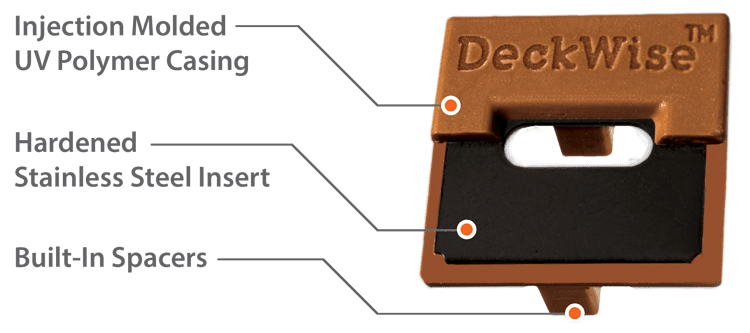
One of the most important features of the Ipe Clip fastener is the full stainless steel washer embedded into the hidden fastener.
That stainless steel reinforcement provides excellent hold down power, which is particularly important when installing dense hardwood decking.
Hardwoods such as Ipe and Cumaru are significantly denser and heavier than many common decking materials. A fastening system needs to securely hold the boards while accommodating the demands associated with exterior deck installations.
The stainless steel washer incorporated into the Ipe Clip fastener helps distribute the fastening force and provides the strength needed for premium hardwood decking.
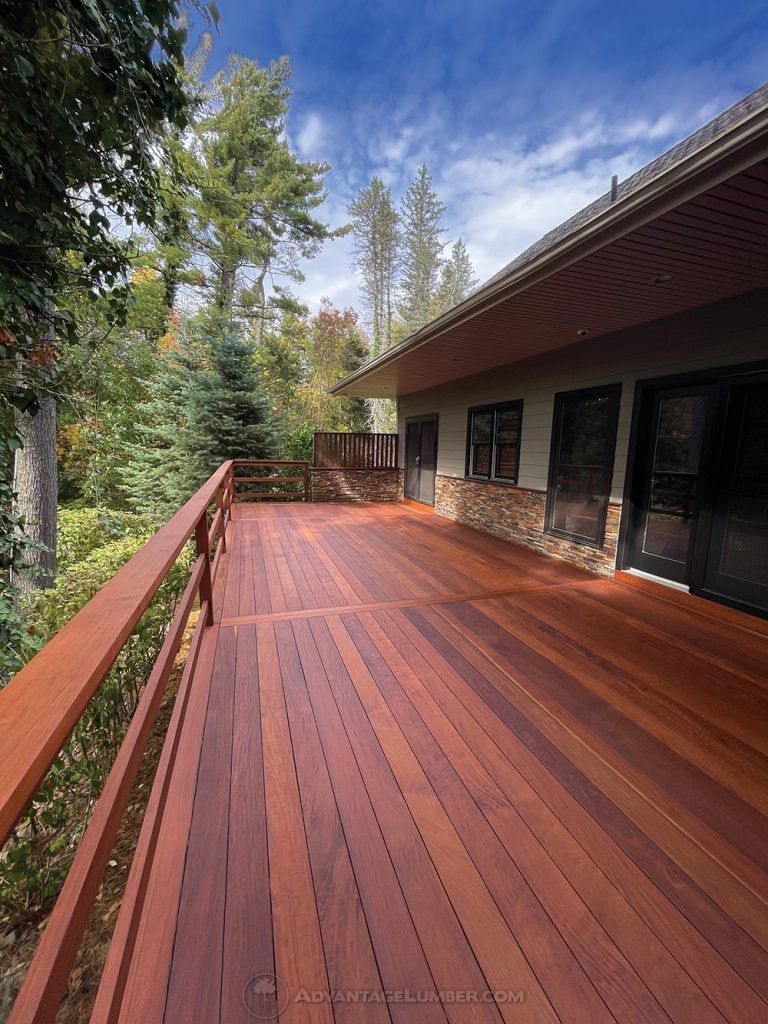
For homeowners who want the beauty of hardwood without visible rows of screws, this combination of a clean appearance and strong hold down power makes Ipe Clip an excellent choice.
Ipe Clip Isn’t Just for Ipe Decking
Despite the name, Ipe Clip fasteners aren’t limited to Ipe.
Different Ipe Clip fastening options are available for a wide variety of decking materials, including:
- Ipe decking
- Cumaru decking
- Tigerwood decking
- Teak decking
- Mahogany decking
- Other hardwood decking species
- Thermally Modified Pine
- Thermally Modified Ash
- Composite decking
- PVC decking
Choosing the correct fastener for the particular decking material and board profile is important. Different materials have different expansion, contraction, density, and installation requirements.
Are There Any Disadvantages to Hidden Fasteners?
Yes. Although we prefer hidden fasteners for many decking projects, they aren’t automatically the best solution for every situation.
1. Installation Can Require More Planning
Hidden fastening systems generally require grooved deck boards or boards that are properly prepared to accept the fasteners.
Installation technique and board layout therefore become especially important.
2. Individual Board Replacement Can Be More Involved
One advantage of face screws is accessibility. If a face screwed board needs to be replaced, the screws can simply be removed from above.
Replacing a board installed in the middle of a deck with hidden fasteners can sometimes require additional steps.
3. Certain Areas May Still Require Face Fastening
Depending on the deck design, there may be locations where hidden fastening isn’t practical.
Starter boards, perimeter boards, stairs, picture framing, and other details can require different fastening techniques depending on the installation.
Always follow the appropriate installation instructions for your decking and fastening system.
What About Traditional Deck Screws?
Traditional face fastening is exactly what it sounds like: screws are driven through the face of the deck board and into the joist underneath.
It’s one of the oldest and simplest ways to install decking.
Face screws remain a perfectly viable fastening method, particularly when appearance isn’t the primary concern or when easy access to individual deck boards is important.
Advantages of Traditional Screws
1. Simple Installation
Face fastening is straightforward.
The installer can position the board, properly pre-drill when required, and drive the appropriate screw through the board into the framing.
2. Strong Mechanical Connection
A properly selected and installed deck screw provides direct fastening through the deck board and into the framing.
This makes face fastening a dependable option for many decking installations.
3. Easier Board Replacement
This is one of the biggest practical advantages.
If a damaged deck board needs to be replaced later, its screws are accessible from above. Remove the screws, replace the board, and reinstall the appropriate fasteners.
4. Works Well for Complicated Deck Details
Face screws can be particularly useful around stairs, borders, picture frames, and other areas where hidden fasteners may not be practical.
Disadvantages of Traditional Screws
1. Visible Screw Heads
The most obvious disadvantage is appearance.
A typical deck can require hundreds or even thousands of screws. That means the finished deck surface may contain long rows of visible screw heads.
On premium hardwood decking, some homeowners feel that this takes away from the appearance of the wood.
2. Installation Requires Precision
Visible screws make inconsistent installation obvious.
Screws that aren’t aligned, aren’t driven to a consistent depth, or aren’t evenly spaced can make an otherwise beautiful deck look poorly finished.
3. Pre-Drilling Is Important With Dense Hardwoods
Hardwoods such as Ipe and Cumaru are extremely dense. You shouldn’t treat them like ordinary softwood decking.
Proper installation techniques, including pre-drilling where required, help prevent problems and make installation easier.
4. Fastener Selection Matters
Not every screw is suitable for exterior decking, and fastening premium hardwood requires particular attention to fastener type and corrosion resistance. Only the best quality stainless steel screws should be used when installing hardwood decking or any decking that will last 20+ years.
The correct fasteners should always be selected based on the decking material, framing material, installation environment, and manufacturer’s recommendations.
Hidden Fasteners vs. Traditional Screws: Quick Comparison
| Feature | Hidden Fasteners | Traditional Face Screws |
|---|---|---|
| Finished appearance | Excellent, minimal visible hardware | Screw heads remain visible |
| Clean deck surface | Excellent | Visible fasteners |
| Hold down strength | Excellent with properly selected Ipe Clip fasteners | Excellent with appropriate screws |
| Board spacing | Fastener can help maintain consistent spacing | Installer must establish spacing |
| Board replacement | Can be more involved | Generally easier |
| Installation | Requires compatible boards and proper technique | Straightforward |
| Hardwood compatibility | Excellent when using the appropriate Ipe Clip | Excellent with proper screws and installation |
| Best application | Clean, premium deck appearance | Simplicity, accessibility, and certain deck details |
Which Fastening Method Should You Choose?
If your primary goal is a clean, premium looking deck surface, hidden fasteners are difficult to beat.
This is particularly true when you’re investing in a premium natural hardwood such as Ipe, Cumaru, Tigerwood, Teak, or Mahogany. These woods are selected in large part for their beautiful natural appearance, and eliminating rows of visible fasteners allows that beauty to take center stage.
For these applications, Ipe Clip hidden deck fasteners are the hidden fastening system we recommend at AdvantageLumber.com.
Their design, including the embedded full stainless steel washer, provides the excellent hold down power that we look for when fastening dense hardwood decking.
Traditional face screws, however, still have important advantages. They’re straightforward, provide a strong mechanical connection, make individual board replacement easier, and can be useful for portions of a deck where hidden fastening isn’t practical.
In fact, many professionally built decks may use a combination of fastening techniques depending on the particular detail.
More Than 30 Years of Hardwood Decking Experience
Fastening hardwood decking isn’t something we approach as a theoretical question.
For more than 30 years, AdvantageLumber.com has specialized in premium hardwood decking, supplying homeowners, contractors, architects, and builders with species including Ipe, Cumaru, Tigerwood, Teak, Mahogany, and more.
These are exceptionally durable decking materials, but getting the best performance from them starts with proper design and installation including choosing the right fastening system.
That’s why Ipe Clip remains our preferred hidden deck fastener for hardwood decking.
And with Ipe Clip fastening solutions also available for Thermally Modified Pine, Thermally Modified Ash, composite decking, and PVC decking, builders can achieve the same clean hidden fastener appearance across a wide variety of modern decking materials.
Whether you choose hidden fasteners or traditional screws, always select a fastening method that’s appropriate for your specific decking, framing, and installation conditions.
Planning a new deck? AdvantageLumber.com can help you select the decking, fasteners, and accessories needed to build it right from premium hardwoods such as Ipe and Cumaru to thermally modified, composite, and PVC decking options.
