
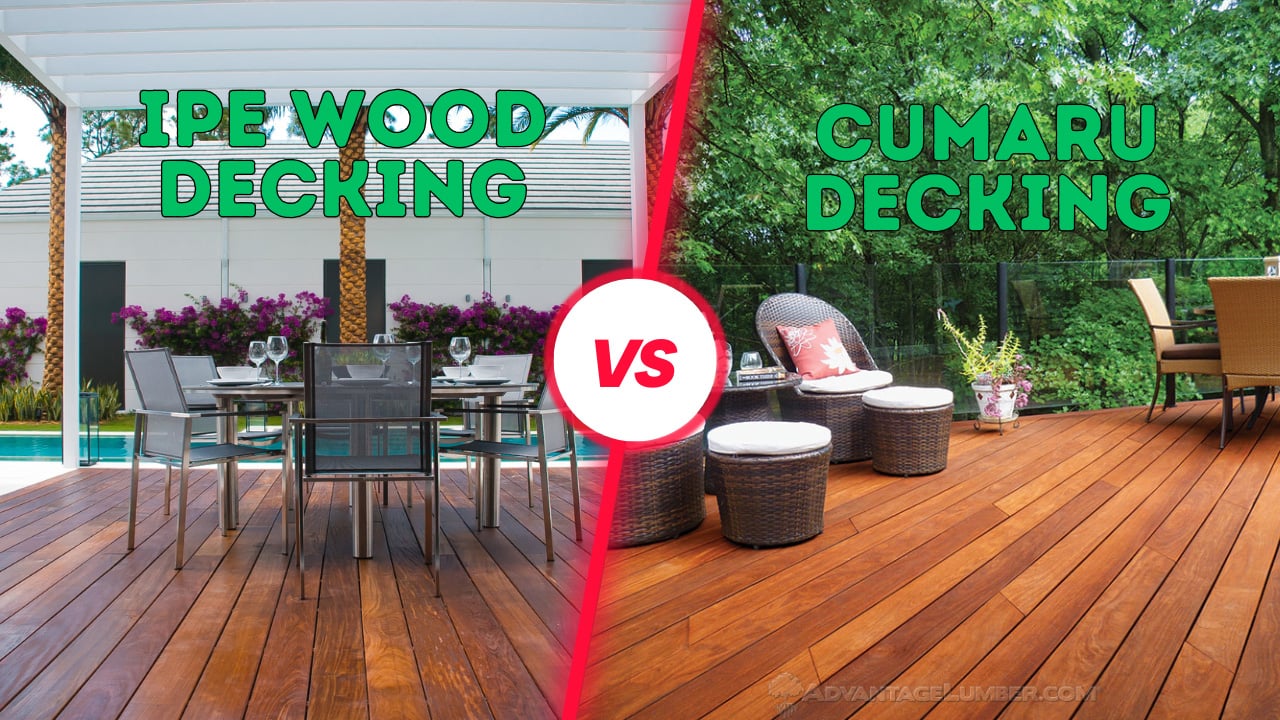
If you’re shopping for premium hardwood decking, chances are you’ve narrowed your choices to Ipe and Cumaru. These two South American hardwoods have earned a reputation for exceptional durability, incredible strength, and natural beauty. Both can easily outperform pressure treated lumber, cedar, and many composite decking products when properly installed.
So which one is better?
The answer depends on your budget, aesthetic preferences, and how long you expect your deck to last. At AdvantageLumber.com, we’ve sold both species for decades and have helped thousands of homeowners, contractors, and architects choose between them.
Here’s everything you need to know.
Quick Comparison
| Feature | Ipe Decking | Cumaru Decking |
|---|---|---|
| Lifespan | 50–75+ Years | 50+ Years |
| Janka Hardness | 3,680 | 3,540 |
| Appearance | Dark olive to chocolate brown | Golden brown to reddish brown |
| Stability | Excellent | Very Good |
| Rot & Insect Resistance | Excellent | Excellent |
| Fire Rating | Class A | Class A |
| Maintenance | Low | Low |
| Price | Premium | More Affordable |
What Is Ipe?
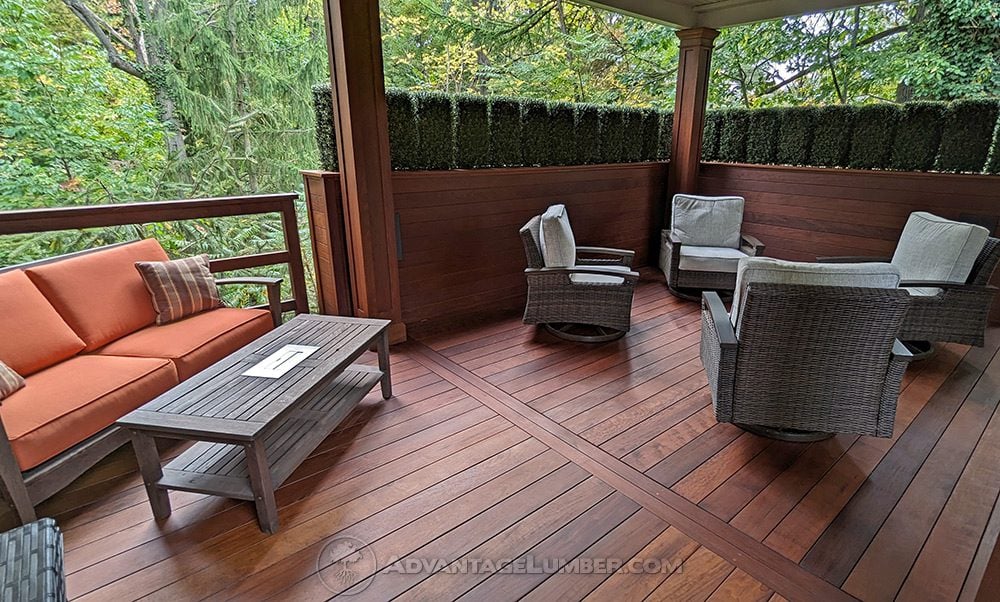
Ipe (pronounced ee-pay) is often called the gold standard of hardwood decking. Native to South America, Ipe is one of the hardest and most durable woods available anywhere in the world.
Its dense grain, natural oils, and exceptional weather resistance make it a favorite for:
- Luxury homes
- Boardwalks
- Commercial projects
- Rooftop decks
- Waterfront construction
With proper installation, Ipe decks commonly last 50 to 75 years or more.
What Is Cumaru?
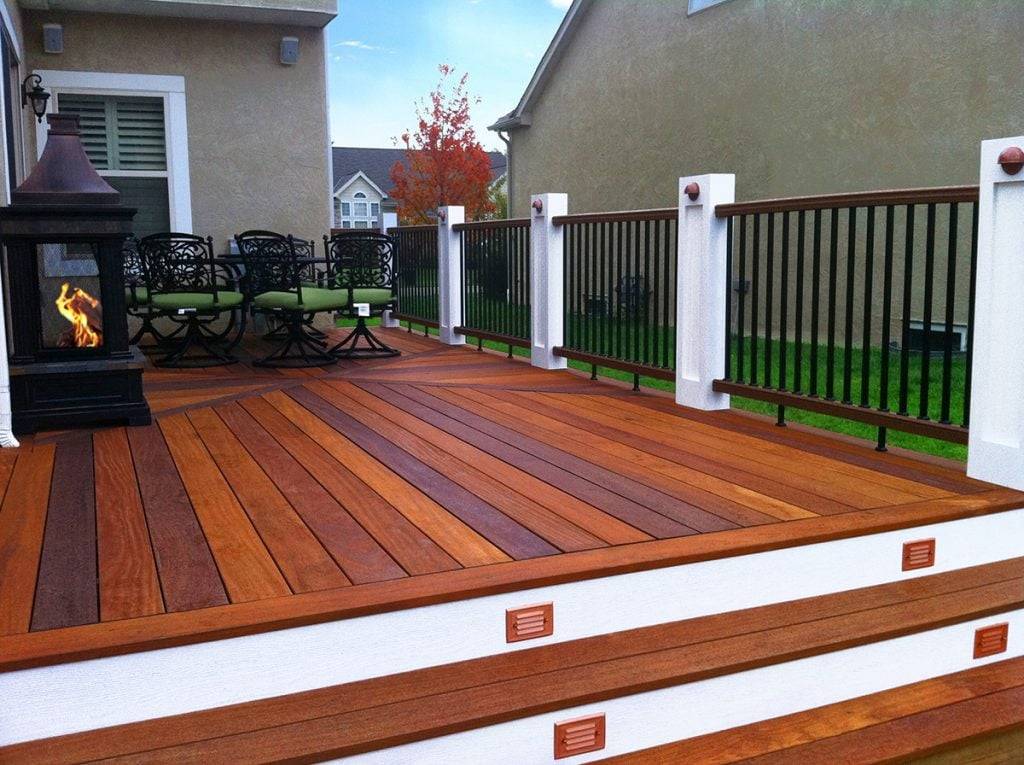
Cumaru, commonly marketed as Brazilian Teak, is another premium tropical hardwood with remarkably similar performance characteristics.
It’s:
- Extremely dense
- Naturally resistant to rot
- Highly resistant to insects
- Beautifully colored
- Often significantly less expensive than Ipe
Cumaru has become one of the most popular alternatives to Ipe because it delivers exceptional value while still offering decades of service.
Hardness & Durability
Both woods are incredibly hard.
Janka Hardness
- Ipe: 3,680
- Cumaru: 3,540
To put that into perspective:
- Red Oak: ~1,290
- White Oak: ~1,360
- Cedar: ~350
That means either hardwood will resist:
- Scratches
- Dents
- Heavy furniture
- High foot traffic
- Pets
In real world applications, you’ll likely never notice the small difference in hardness between the two species.
Appearance
This is where many homeowners make their decision.
Ipe
Ipe has a rich, refined appearance featuring:
- Olive brown
- Chocolate brown
- Deep espresso tones
- Fine, tight grain
- More consistent color
It tends to create a luxurious, elegant deck.
Cumaru
Cumaru offers:
- Honey brown
- Golden brown
- Reddish brown
- Occasional blonde highlights
- More dramatic grain variation
Many homeowners love Cumaru because every board has a little more character.
After a few weeks of exposure and one coat of hardwood deck oil, Cumaru often darkens and becomes much closer in appearance to Ipe.
Stability
This is one area where Ipe has a slight advantage.
Because of its exceptional dimensional stability, Ipe is generally:
- Less prone to movement
- Less likely to cup
- Better suited for demanding climates
- Ideal for commercial applications
Cumaru is extremely durable, but it can experience more seasonal movement than Ipe, if large weather swings are common in your area it’s safer to use narrower and thicker deck boards. Also make sure to follow all of the installation instructions to minimize undesirable movement.
Weather Resistance
Both species naturally resist:
- Rain
- Snow
- UV exposure
- Salt air
- Moisture
- Mold
- Decay
- Insects
- Termites
Neither requires chemical treatment.
That makes both woods excellent choices for:
- Pool decks
- Coastal homes
- Waterfront projects
- Hot climates
- Freeze/thaw regions
Fire Resistance
One feature many homeowners don’t realize is that both woods earn a Class A Fire Rating, the same classification achieved by many concrete and steel building materials when installed as decking systems.
Both species excel for wildfire prone regions where local building codes require Class A decking materials.
Maintenance
Maintenance is nearly identical.
If you love the rich brown color:
- Clean annually
- Apply a quality hardwood deck oil every 12–24 months depending on climate and sun exposure
If you don’t mind the natural silver gray patina:
Simply let nature do the work.
Neither wood requires:
- Staining
- Painting
- Sealing
Many homeowners intentionally allow these hardwoods to weather naturally because the silver gray appearance resembles aged teak found on yachts and coastal boardwalks.
Price
This is usually the deciding factor.
In most markets:
- Cumaru costs noticeably less than Ipe.
- The exact price difference changes with supply and demand, but Cumaru has historically been one of the best values among premium hardwood decking options.
For homeowners covering several hundred square feet, the savings can be substantial.
Which Wood Lasts Longer?
Both woods offer extraordinary longevity.
Typical expectations:
Ipe
- 50–75+ years
Cumaru
- 50+ years
Both dramatically outlast most pressure treated lumber and many composite decking products.
What Contractors Say
Contractors who install hardwood decking often describe the choice this way:
“If budget isn’t a concern, choose Ipe. If value matters most, Cumaru is hard to beat.”
That opinion is echoed in many online discussions. Several experienced builders on Reddit note that they selected Cumaru because it offered nearly all of Ipe’s performance at a lower cost, while others felt Ipe’s tighter grain, greater uniformity, and additional stability justified the premium. (Reddit)
Which One Should You Choose?
Choose Ipe if you want:
- The industry’s benchmark hardwood decking
- Maximum longevity
- Exceptional dimensional stability
- A darker, more uniform appearance
- Premium luxury aesthetics
Choose Cumaru if you want:
- Outstanding value
- Excellent durability
- Beautiful color variation
- A premium hardwood at a lower price
- Nearly all the performance of Ipe while saving money
The Bottom Line
The truth is, there really isn’t a wrong choice.
Both Ipe and Cumaru are among the finest decking materials available and will outperform most traditional wood and many synthetic alternatives for decades.
If your goal is to build the best deck possible and budget isn’t the primary concern, Ipe remains the king of hardwood decking thanks to its legendary durability, stability, and refined appearance.
If you’re looking for the best value in premium hardwood decking, Cumaru is incredibly difficult to beat. It delivers nearly identical performance, stunning natural beauty, and decades of service while often costing significantly less.
At AdvantageLumber.com, we stock both Ipe and Cumaru in a wide variety of sizes and profiles. Our decking experts can help you compare samples, estimate material quantities, and choose the hardwood that’s the best fit for your project. Whether you choose Ipe or Cumaru, you’ll be investing in a deck that’s built to last for generations.
