
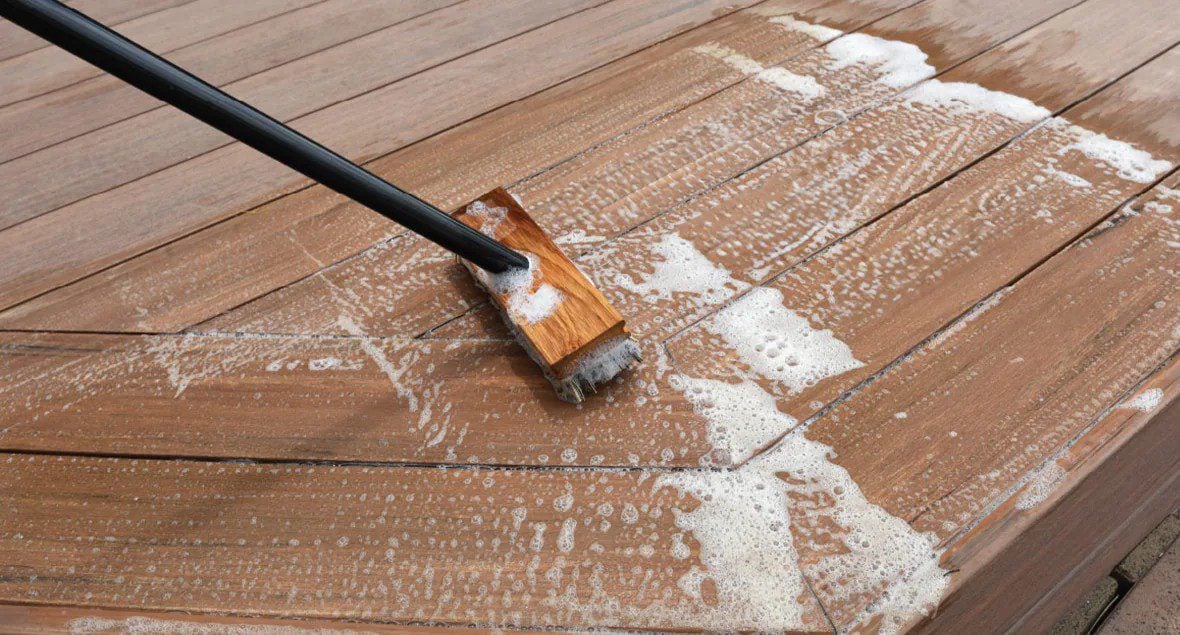
Composite decking is known for its low maintenance performance, but it still needs occasional cleaning to look its best. Dirt, pollen, leaves, food spills, mold, and mildew can accumulate over time, especially in shaded or heavily used outdoor spaces.
The good news is that most composite decking can be cleaned with simple tools and gentle cleaning methods. The key is knowing what to use and what to avoid to prevent scratches, discoloration, or damage to the deck’s protective surface.
Whether you have a deck built with composite boards from Trex, TimberTech, Deckorators, or another manufacturer, following a few basic cleaning practices can help keep your deck looking great for years.
Quick Answer: What Is the Best Way to Clean Composite Decking?
For routine cleaning:
- Remove leaves, dirt, and debris with a broom or leaf blower.
- Rinse the deck with a garden hose.
- Apply warm water and a mild soap solution or a manufacturer-approved deck cleaner.
- Gently scrub with a soft-bristle or nylon brush.
- Rinse thoroughly and allow the deck to dry.
Avoid using harsh chemicals, wire brushes, or excessive pressure when cleaning composite decking.
Why Regular Cleaning Matters
One of the biggest misconceptions about composite decking is that it never needs maintenance.
While composite boards do not require sanding, staining, or sealing like traditional wood decking, regular cleaning helps prevent:
- Mold and mildew growth
- Surface staining
- Pollen and dirt buildup
- Hard water deposits
- Tannin stains from leaves and organic debris
- Slippery surfaces caused by accumulated grime
In many cases, mold is not actually growing on the decking material itself. Instead, it feeds on dirt, pollen, leaves, and other organic material that collects on the deck surface.
Keeping the deck clean removes these food sources and helps prevent future problems.
Step 1: Remove Surface Debris
Start by clearing the deck surface.
A soft broom or leaf blower works well for removing:
- Leaves
- Dirt
- Pine needles
- Grass clippings
- Pollen
Pay special attention to gaps between deck boards where debris can accumulate and trap moisture.
Routine sweeping is one of the easiest ways to prevent mold, mildew, and staining before they start.
Step 2: Rinse the Deck
Before applying any cleaner, thoroughly rinse the deck with a garden hose.
This removes loose dirt and helps prevent abrasive particles from scratching the surface during scrubbing.
For many decks, a simple rinse is enough to remove light dust and pollen buildup.
Step 3: Use a Gentle Cleaning Solution
Most composite decking manufacturers recommend cleaning with warm water and a mild detergent or a deck cleaner specifically designed for composite decking.
For routine maintenance:
- Warm water
- Mild dish soap
- Manufacturer-approved composite deck cleaners
Generally work well.
Before using any specialty cleaner, always test it in an inconspicuous area first and follow the manufacturer’s instructions.
Avoid These Cleaning Products
Certain products can damage the deck surface or affect its appearance.
Avoid:
- Wire brushes
- Steel wool
- Abrasive scouring pads
- Strong solvents
- Paint removers
- Acetone (unless specifically recommended for a particular stain by the manufacturer)
- Harsh cleaners not approved for composite decking
When in doubt, use the gentlest cleaning method first.
Step 4: Scrub with the Right Brush
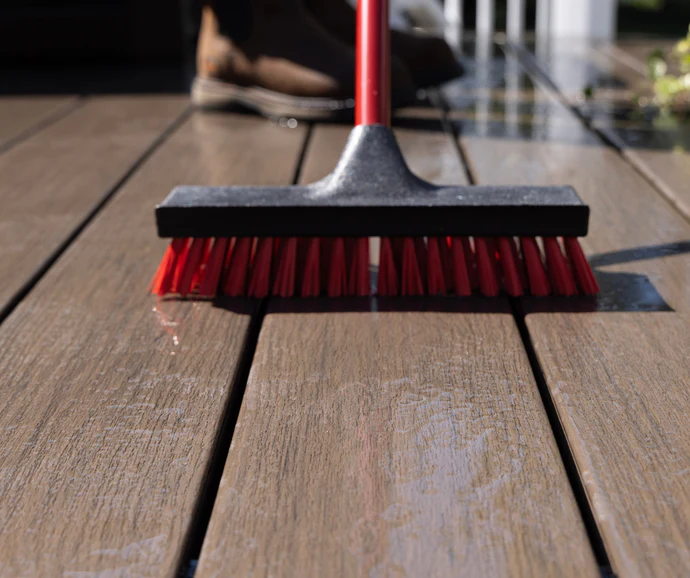
A soft-bristle or medium-stiff nylon brush is usually the safest option for composite decking.
Scrub in the direction of the board grain rather than across it.
Focus on:
- High-traffic areas
- Food spills
- Grease spots
- Shaded areas prone to mildew
Allow the cleaning solution a few minutes to loosen dirt before scrubbing if recommended by the cleaner manufacturer.
Step 5: Rinse Thoroughly
After cleaning, rinse the deck completely.
This is an important step that many homeowners overlook.
If soap, cleaner, or dirty rinse water is allowed to dry on the surface, it can leave behind a visible film or residue that attracts additional dirt.
Continue rinsing until the water runs clear and all cleaning solution has been removed.
Can You Pressure Wash Composite Decking?
Yes but carefully. Many composite decking manufacturers allow pressure washing for general cleaning, but excessive pressure can damage the deck surface.
If pressure washing is permitted by the decking manufacturer:
- Use a fan-tip nozzle
- Keep the nozzle moving
- Maintain adequate distance from the deck surface
- Use the lowest pressure setting that effectively cleans the deck
Pressure washers should be used to gently clean or rinse the surface, not to blast away stains, mold, or embedded dirt.
Always consult the cleaning recommendations for your specific decking product before pressure washing.

How to Remove Common Composite Deck Stains
Food and Grease Stains
Food spills should be cleaned as soon as possible.
Use:
- Warm water
- Mild soap
- Soft-bristle brush
Fresh spills are typically much easier to remove than stains that have been allowed to sit for extended periods.
Mold and Mildew
Mold is most common in damp, shaded areas where debris accumulates.
To remove mold:
- Remove leaves and organic debris.
- Clean with soap and water.
- Scrub gently with a soft-bristle brush.
- Rinse thoroughly.
Improving airflow and sunlight exposure can help reduce future mold growth.
Hard Water Stains
Hard water can leave behind mineral deposits that appear as white or cloudy spots. These stains can often be removed using white vinegar or a deck cleaner designed to address mineral buildup. Always test cleaning products in a small area first.
Tannin Stains from Leaves
Leaves, acorns, and other organic debris can leave brown stains if they remain on the deck for long periods. Regular sweeping is the best prevention.
For stubborn discoloration, a deck brightener formulated for exterior surfaces may help remove tannin stains.
Rust Stains
Rust stains may occur from metal furniture, grills, or fasteners.
Many deck manufacturers recommend cleaners containing oxalic acid for removing rust stains. Always verify compatibility with your decking product before application.
Winter Cleaning and Snow Removal Tips
Composite decking can be safely maintained throughout the winter.
For snow removal:
- Use a plastic snow shovel
- Use a push broom for light snow
- Avoid metal shovels and metal edged tools
For ice:
- Use an appropriate ice melt product according to the decking manufacturer’s recommendations
- Remove residue after the ice has melted
Avoid aggressively scraping ice from the deck surface.

Frequently Asked Questions
What is the best cleaner for composite decking?
For routine cleaning, warm water and mild soap are often sufficient. For tougher stains, use a cleaner approved by your decking manufacturer.
Can composite decking get mold?
Yes. Mold typically grows on dirt, pollen, and organic debris that accumulates on the deck surface rather than on the composite material itself.
Does composite decking need to be sealed?
No. Most modern composite decking products are designed to perform without sealing, staining, or painting.
How often should composite decking be cleaned?
Most homeowners should perform a thorough cleaning at least once or twice per year and remove debris as needed throughout the season.
Keep Your Composite Deck Looking Its Best
Composite decking is designed to provide years of low maintenance outdoor enjoyment, but a little routine care goes a long way. Regular cleaning, prompt spill removal, and avoiding overly aggressive cleaning methods can help preserve the appearance of your deck while preventing unnecessary wear.
Whether your deck is used for family gatherings, outdoor dining, or everyday relaxation, keeping it clean is one of the easiest ways to protect your investment and enjoy your outdoor living space for years to come.
Ready to Build a Low-Maintenance Deck?
Advantage Lumber offers premium composite decking from leading manufacturers, along with expert guidance to help you choose the right products for your project. Explore our selection of composite decking and request free samples to get started today.
