
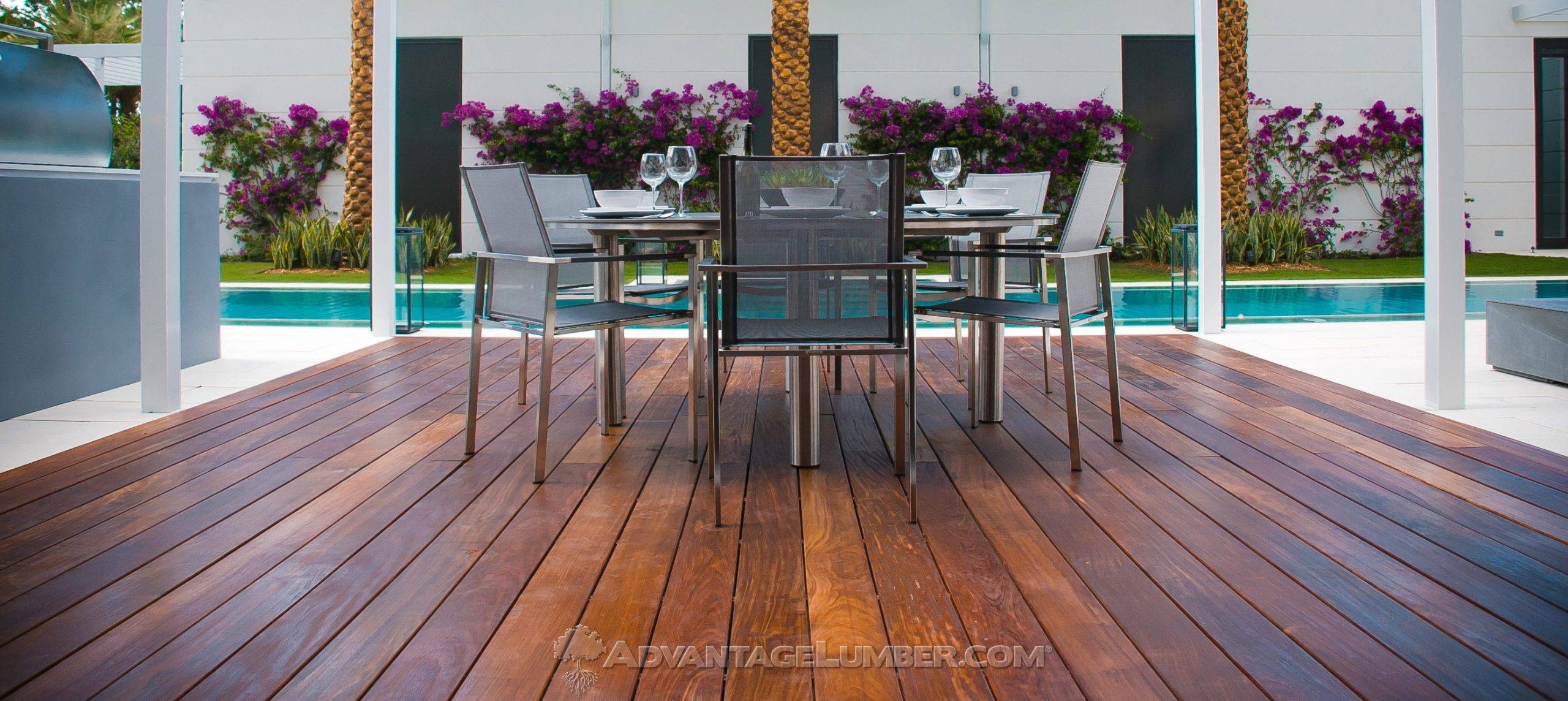
When building a deck around a pool, dock, lake house, or in a rainy climate, slip resistance becomes one of the most important factors to consider.
Wet surfaces naturally increase the risk of slips and falls, especially in areas exposed to frequent rain, standing water, humidity, or pool splash zones. But not all decking materials perform the same under wet conditions.
Some decking materials become slick when moisture, algae, or dirt accumulate. Others naturally provide better traction, dry faster, and resist the organic buildup that often causes slippery surfaces.
What Actually Makes Decking Slippery?
One of the biggest misconceptions about decking is that boards become slippery simply because they get wet.
In reality, most slippery deck surfaces are caused by:
- Mold and mildew growth
- Algae buildup
- Dirt and pollen accumulation
- Poor drainage
- Standing water
- Smooth surface textures
This can happen with virtually any decking material if the deck is not properly maintained or designed.
Shaded areas, humid climates, and waterfront environments are especially prone to organic buildup, which creates the slick film many homeowners associate with “slippery decking.”
That is why the best decking materials for wet environments are typically those that:
- Resist moisture absorption
- Dry quickly
- Resist mold and mildew growth
- Maintain natural surface traction
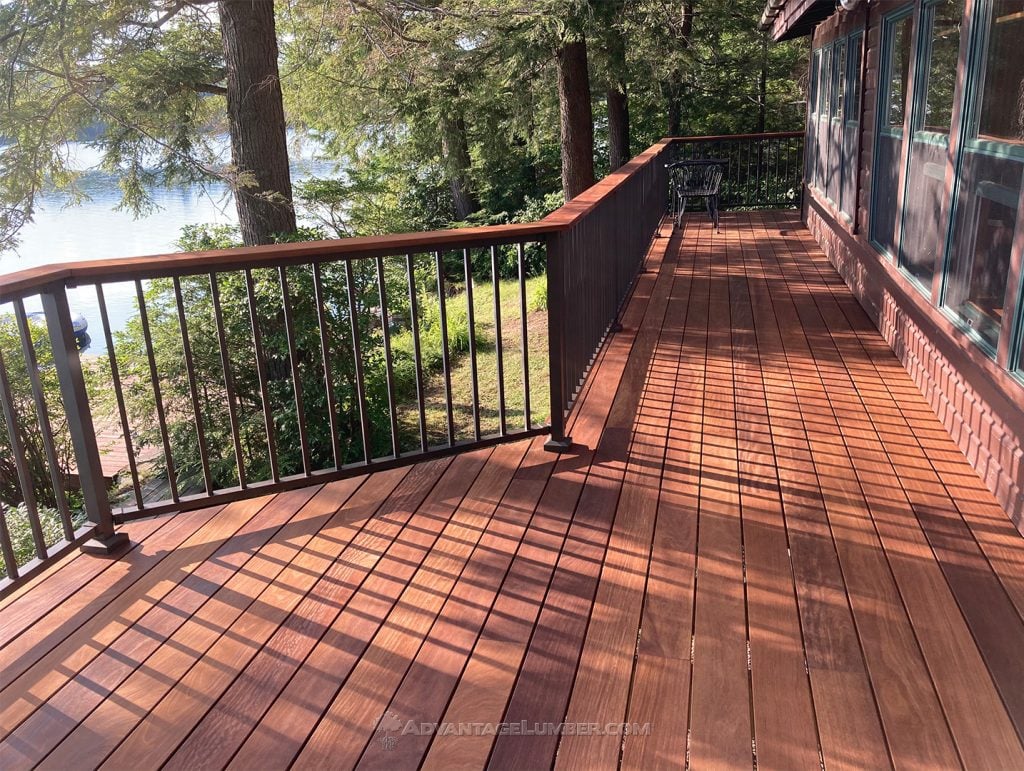
Tropical Hardwood Decking: The Best Natural Slip-Resistant Option
For homeowners looking for the best combination of traction, durability, longevity, and natural beauty, tropical hardwood decking is often the top choice.
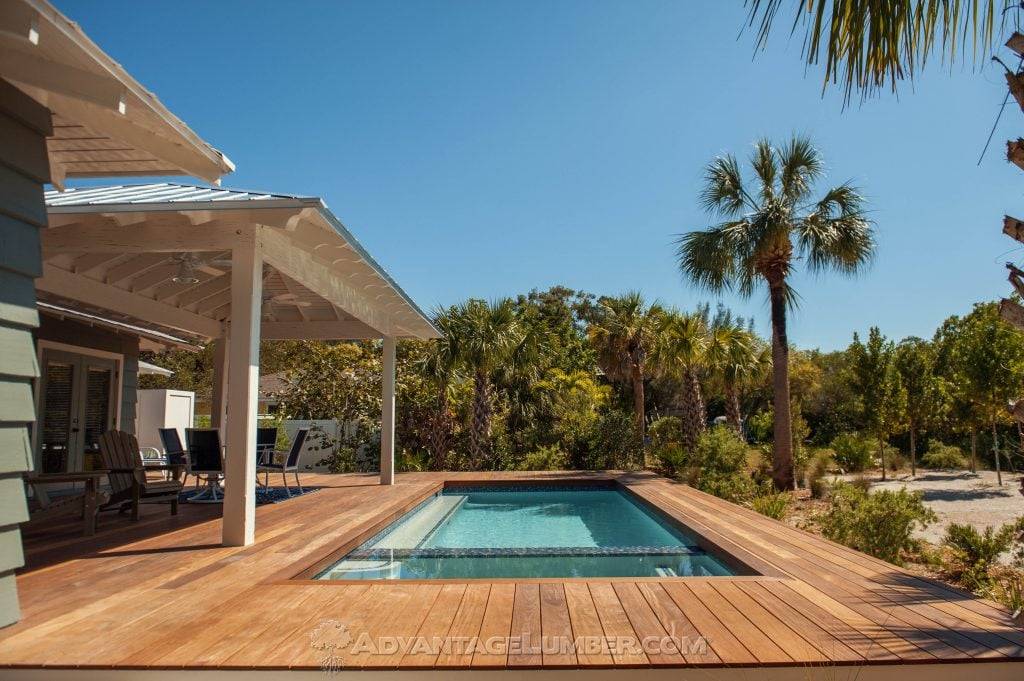
Premium hardwood species such as Ipe, Cumaru, Garapa, Tigerwood, and Teak have been used for decades in demanding outdoor environments including:
- Pool decks
- Boardwalks
- Commercial walkways
- Rooftop decks
- Waterfront applications
- Docks and marinas
Unlike some decking materials that can become slick when wet, dense tropical hardwoods provide natural traction due to their tight grain structure and durable surface texture.
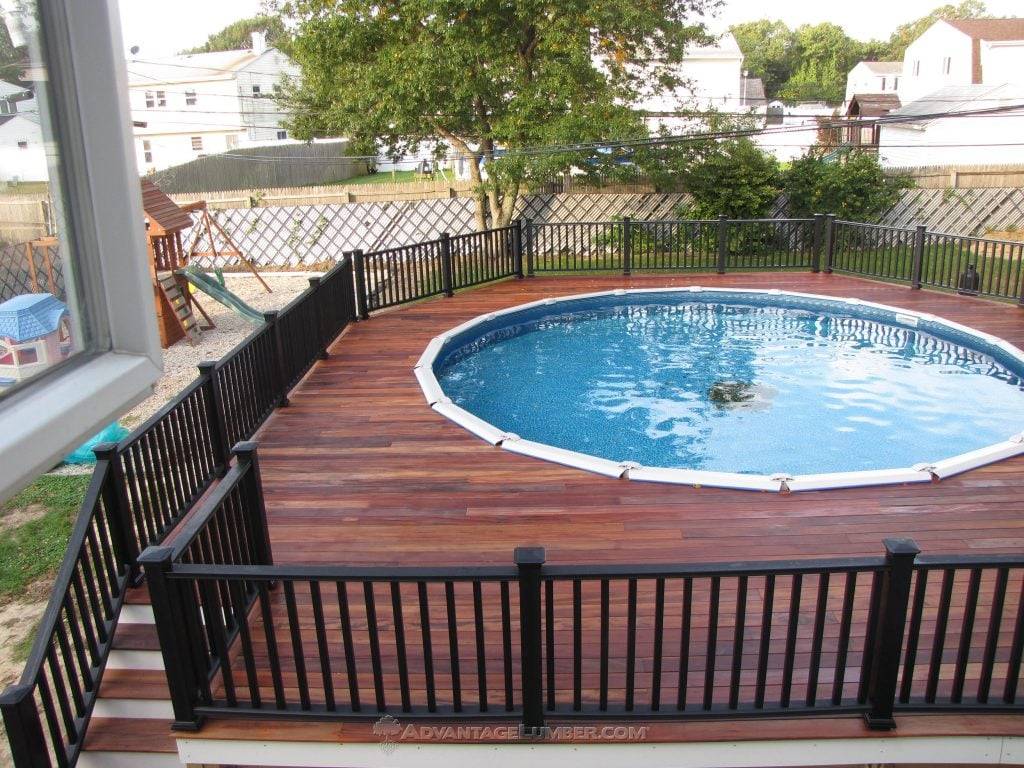
Why Tropical Hardwoods Perform So Well in Wet Environments
Tropical hardwood decking is naturally well-suited for wet conditions because the wood is extremely dense and resistant to moisture intrusion.
Benefits include:
- Excellent natural traction
- Fast drying characteristics
- Resistance to rot and decay
- Resistance to mold and mildew
- Long lifespan in harsh climates
- Minimal surface deterioration over time
Dense hardwood decking also tends to stay structurally stable and durable for decades, even in high-moisture environments.
This is one reason hardwood decking is commonly used in commercial boardwalks, resorts, public spaces, and waterfront construction projects.
Low-Maintenance Alternatives: PVC & Mineral-Based Decking
While tropical hardwood decking is often considered the premium choice for wet environments, some homeowners prefer synthetic decking because of its lower maintenance requirements.
Fortunately, modern PVC and mineral-based composite decking has improved significantly in recent years, especially when it comes to traction and moisture resistance.
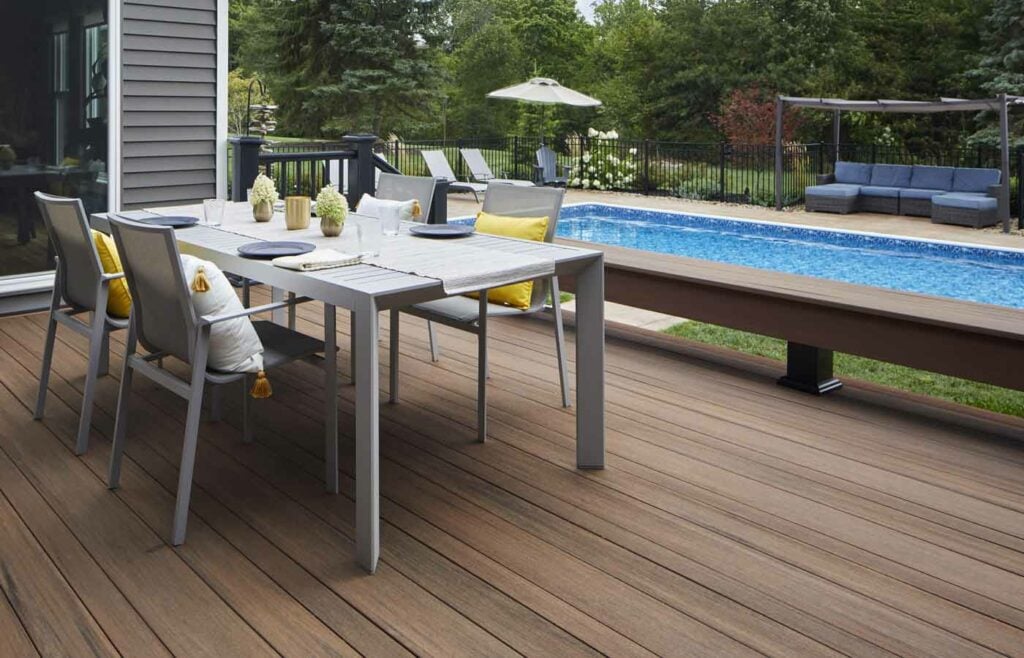
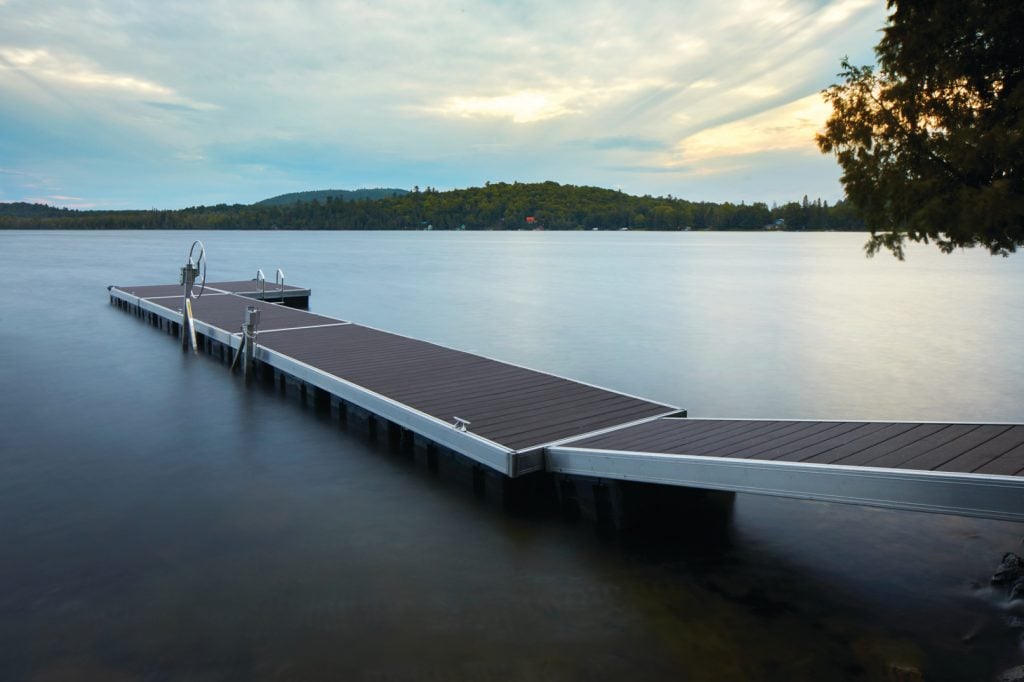
TimberTech Advanced PVC Decking
TimberTech Advanced PVC Decking is one of the better-performing synthetic options for wet environments.
Collections such as the Vintage Collection feature textured surfaces designed to improve traction while resisting moisture absorption.
Because Advanced PVC boards contain no organic wood filler, they are less susceptible to:
- Mold growth
- Moisture retention
- Surface deterioration
This makes them a strong choice for:
- Pool decks
- Coastal homes
- Rainy climates
- Docks
- High-moisture applications
Additional benefits include:
- Low maintenance
- Lightweight construction
- Strong fade resistance
- Resistance to staining and moisture damage
Deckorators® Surestone® Technology Decking
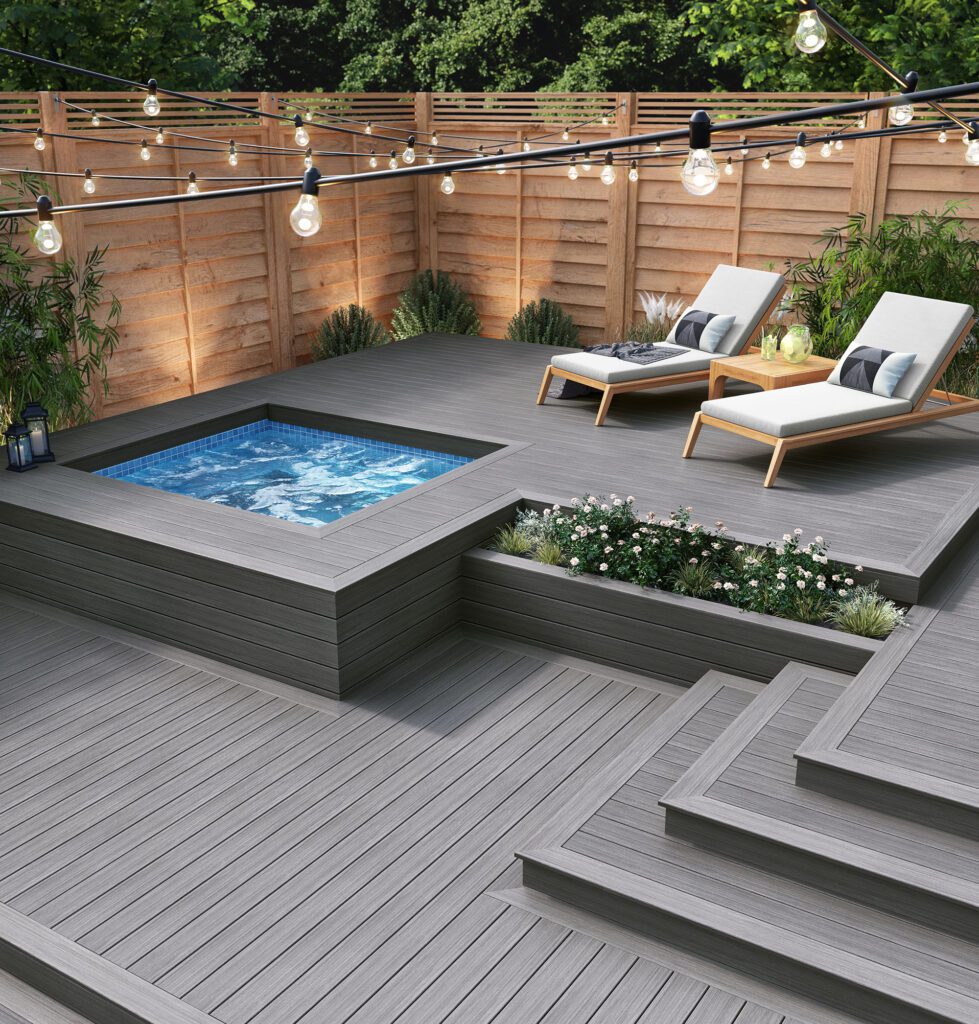
Deckorators Voyage Decking with Surestone® Technology is also popular for wet applications.
These mineral-based composite boards feature textured surfaces specifically designed to increase traction and reduce slips.
Deckorators markets these boards as having: “Textured surfaces for increased traction.”
The mineral-based construction also helps improve:
- Dimensional stability
- Strength
- Moisture resistance
- Long-term durability
This makes them well-suited for:
- Pool surrounds
- Rain-heavy regions
- Waterfront homes
- Elevated decks exposed to frequent moisture
Choosing the Right Decking for Wet Environments
Pools, docks, waterfront homes, and rainy climates all expose decking to frequent moisture, humidity, and standing water. These conditions increase the risk of mold growth, slippery surfaces, and long-term structural wear.
The best decking materials for wet environments are those that:
- Provide reliable traction
- Resist moisture absorption
- Dry quickly
- Resist mold and mildew buildup
- Hold up well over time
For most homeowners, the top-performing options include:
- Tropical hardwood decking such as Ipe, Cumaru, Garapa, and Tigerwood
- TimberTech Advanced PVC decking
- Deckorators® mineral-based decking with Surestone® Technology
Tropical hardwood decking is often considered the premium choice because of its natural traction, exceptional durability, and long lifespan in demanding outdoor conditions.
For homeowners prioritizing lower maintenance, advanced PVC and mineral-based composite decking can also perform very well around pools, docks, and rainy climates.
How to Improve Slip Resistance on Any Deck
Even the best decking material benefits from proper maintenance and deck design.
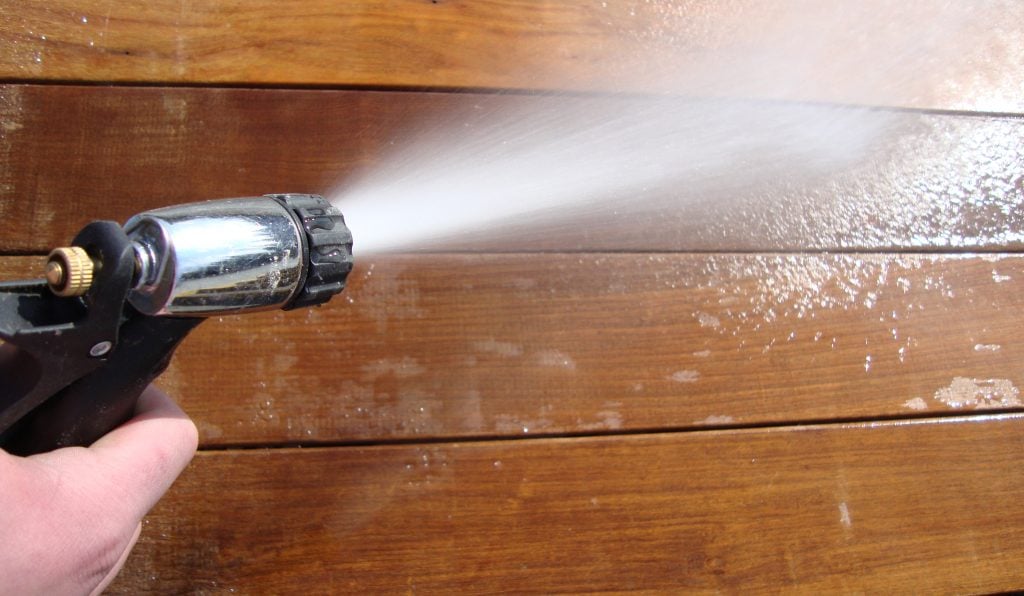
Keep the Surface Clean
Regular cleaning helps prevent:
- Mold
- Algae
- Dirt buildup
- Pollen accumulation
These are some of the biggest causes of slippery decks.
Improve Drainage & Airflow
A properly designed deck should:
- Allow water to drain freely
- Include proper board spacing
- Maintain airflow beneath the deck
Dryer surfaces are generally safer surfaces.
Choose Textured Deck Boards
Boards with textured finishes or natural grain patterns typically provide better traction than ultra-smooth surfaces.
This is especially important around:
- Pools
- Docks
- Rain-heavy climates
- Commercial walkways
Avoid Glossy Surface Coatings
Glossy coatings and film-forming finishes can create slippery surfaces when wet.
For hardwood decking, penetrating oil finishes are generally the better option because they help protect the wood without creating a slick surface film.
The Bottom Line
When it comes to slip-resistant decking for pools, docks, and rainy climates, tropical hardwood decking remains one of the best overall choices.
Dense hardwoods like Ipe, Cumaru, Garapa, and Tigerwood naturally provide excellent traction, resist moisture-related issues, and deliver unmatched long-term durability.
For homeowners looking for lower-maintenance alternatives, modern PVC and mineral-based composite decking options such as TimberTech Advanced PVC and Deckorators Surestone® decking also offer strong wet-weather performance.
Ultimately, the safest deck is one built with:
- The right material
- Proper drainage
- Good airflow
- Routine cleaning and maintenance
When these elements come together, you can create an outdoor space that remains beautiful, durable, and safer to walk on for decades.
Explore Premium Decking Options at AdvantageLumber.com
At AdvantageLumber.com, we offer premium tropical hardwood decking and high-performance low-maintenance decking materials designed for demanding outdoor environments.
Whether you are building a pool deck, dock, rooftop deck, or waterfront project, our team can help you choose the right decking material for long-term performance, beauty, and safety.
