
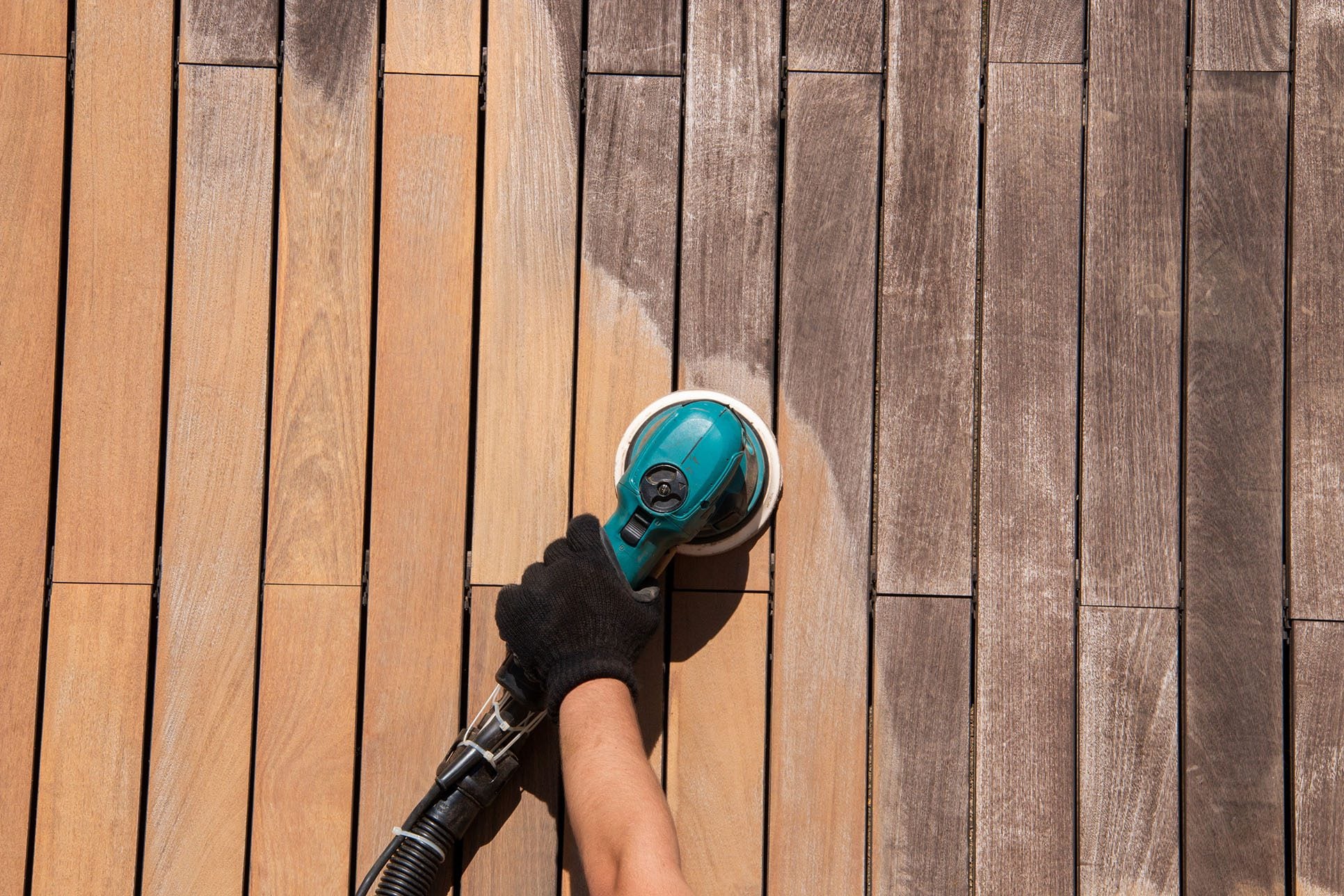
Hardwood decking is prized for its strength, beauty, and longevity. Species like Ipe, Cumaru, Tigerwood, Brazilian Redwood (Massaranduba), Garapa, Teak, and Mahogany can last decades—but like any exterior wood product, they benefit from proper maintenance. One step to restoring or preparing hardwood decking is sanding.
When done correctly, sanding refreshes the surface, improves appearance, and ensures your deck properly accepts oil or sealer. When done incorrectly, it can actually reduce performance. Here’s what homeowners need to know.
When Should You Sand Hardwood Decking?
Hardwood decking typically needs sanding when:
- The surface has turned gray from UV exposure
- Old oil or finish buildup needs to be removed
- The deck feels rough, splintered, or uneven
- You are refinishing the deck after years of weathering
Unlike softwoods, hardwood decking does not require aggressive sanding. These species are extremely dense and naturally durable.
Pro Tip: Sanding is not always necessary to restore your deck. You can use DeckWise Cleaner & Brightener as well as a power washer with an orbital surface cleaning attachment to restore your deck to a like new appearance with less work. Many of our customer choose to only sand every 5-10 years to restore their hardwood deck to a like new appearance.

Recommended Grit: Why 80–100 Grit Is Ideal
For hardwood decking, we typically recommend using 80–100 grit sandpaper.
This grit range is ideal because it:
- Smooths the surface without damaging the wood
- Opens the grain just enough to absorb oil properly
- Removes surface oxidation and minor imperfections
Avoid Sandpaper That Is Too Fine
Many homeowners assume that finer sandpaper (120–220 grit) is better—but with hardwood decking, that’s not the case.
Using sandpaper that is too fine can:
- Close the wood grain, preventing oil from penetrating
- Cause finishes to sit on the surface rather than absorb
- Increase slipperiness, especially when wet
- Reduce the long-term performance of the finish
Hardwood decking needs a slightly textured surface to perform its best outdoors.
Sanding Tips for Hardwood Decking Species
While each hardwood species has its own look, the sanding process is similar for all:
- Ipe & Cumaru – Extremely dense; sand slowly and evenly with the grain
- Tigerwood – Sanding will bring back it’s original appearance the best
- Brazilian Redwood (Massaranduba) – Heavy and hard; avoid over-sanding edges
- Garapa – Lighter in color; even sanding helps prevent blotchiness
- Teak & Mahogany – Naturally oily; sanding helps refresh the surface before finishing
Best Practices:
- Use a random orbital sander for even results
- Always sand with the grain
- Keep the sander moving to avoid swirl marks
- Do not over-sand—light, even passes are all that’s needed
- You can use a larger orbital floor sander as long as you deck boards are perfectly flat.
Cleaning After Sanding
Once sanding is complete, thoroughly clean the deck to remove dust and debris.
- Sweep the surface carefully
- Rinse with water or use a mild deck cleaner if needed
- Allow the deck to fully dry before applying any finish
Skipping this step can prevent proper adhesion and penetration of your chosen finish.
Applying the Finish: Oil or Water-Based Options
After sanding and cleaning, your hardwood deck is ready to be protected.
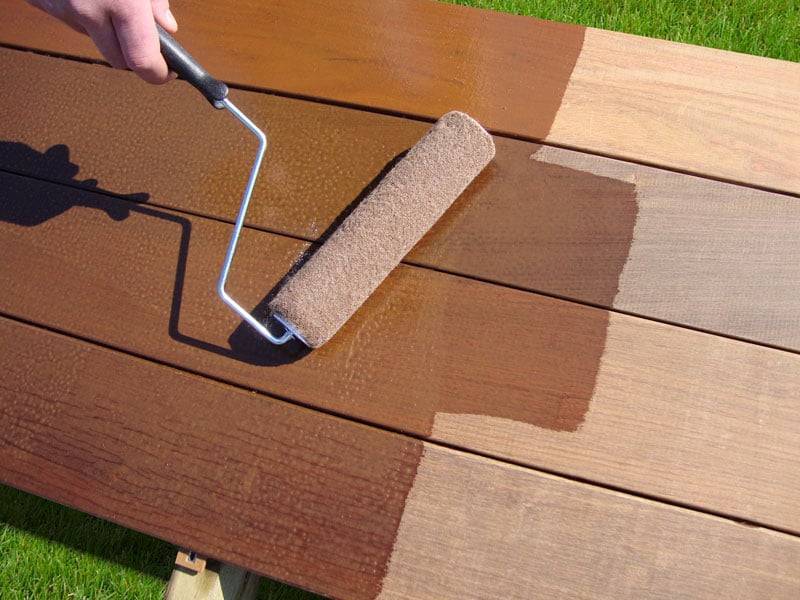
Ipe Oil (Oil-Based Finish)
Ipe Oil is a popular choice for hardwood decking because it:
- Penetrates deeply into dense wood species
- Enhances natural color and grain
- Helps reduce UV graying
- Is easy to maintain and reapply
This is an excellent option if you want to preserve the rich, natural look of hardwood decking.
WiseCoat® (Water-Based Finish)
For homeowners who prefer a water-based option, WiseCoat® is a great alternative.
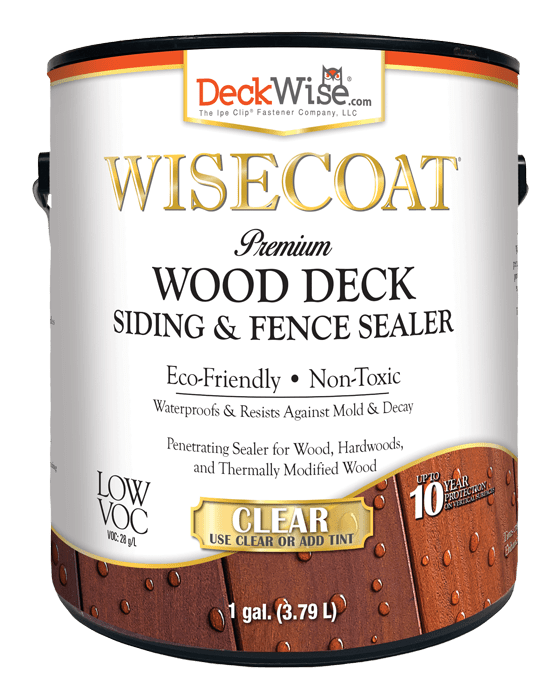
WiseCoat offers:
- Deep penetration without forming a surface film
- Excellent moisture protection
- No peeling or flaking
- Easier cleanup compared to oil-based products
Both finishes perform well when applied to properly sanded hardwood decking.
Final Thoughts
Sanding hardwood decking doesn’t require aggressive tools or ultra-fine sandpaper. In fact, keeping it simple—with 80–100 grit sandpaper, proper technique, and the right finish—delivers the best results.
When maintained correctly, hardwood decking species like Ipe, Cumaru, Tigerwood, Brazilian Redwood, Garapa, Teak, and Mahogany will continue to perform and look beautiful for decades.
For expert guidance, premium hardwood decking, and proven finishes, AdvantageLumber.com is your trusted resource for long-lasting outdoor wood solutions.
