
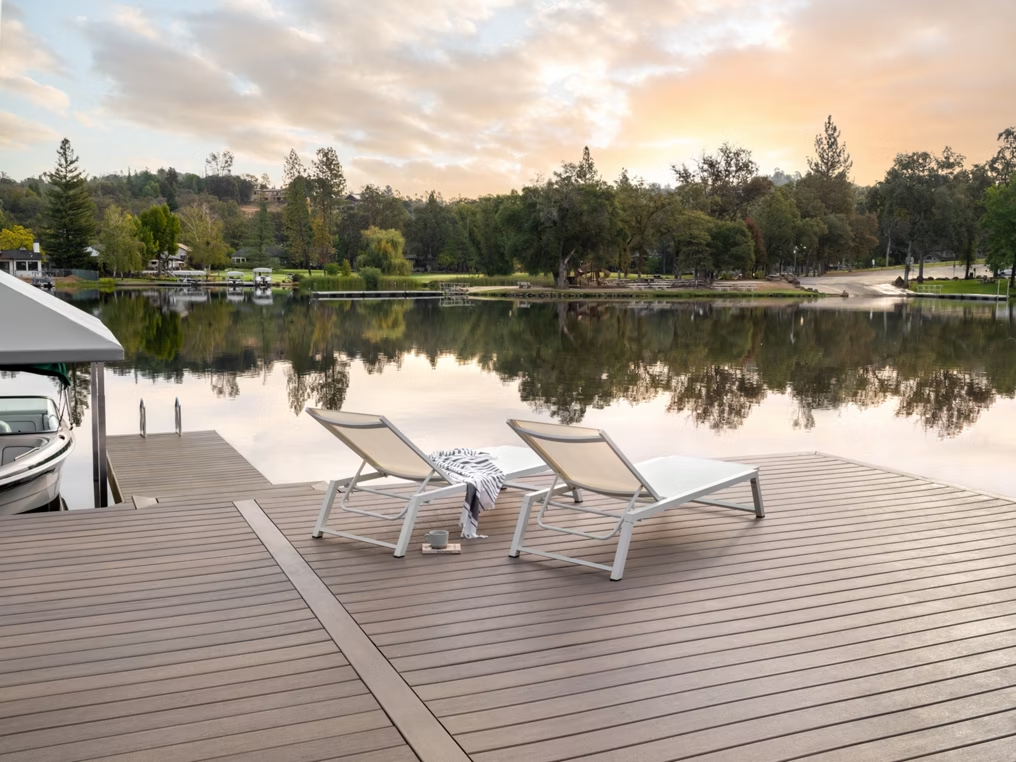
Boat docks place far greater demands on decking materials than a typical residential deck. Constant moisture, direct sun exposure, foot traffic, and saltwater can quickly expose the weaknesses of the wrong material. Composite decking is often considered for these environments, and Trex is one of the most recognized names in the industry.
So, is Trex decking a good choice for boat docks?
In many cases, yes—but as with any dock material, performance depends on site conditions, installation details, and long-term expectations.

What to Know About Trex Decking
Trex is one of the most established composite decking brands on the market and is widely known for its low-maintenance construction and consistent appearance. Trex boards are made from a blend of reclaimed wood fibers and recycled plastic, designed to resist rot, splintering, and insect damage without the need for staining or painting.
Because of these characteristics, Trex is commonly used not only for residential decks but also for boardwalks, docks, and waterfront-adjacent installations.
Trex Performance in Dock and Waterfront Environments
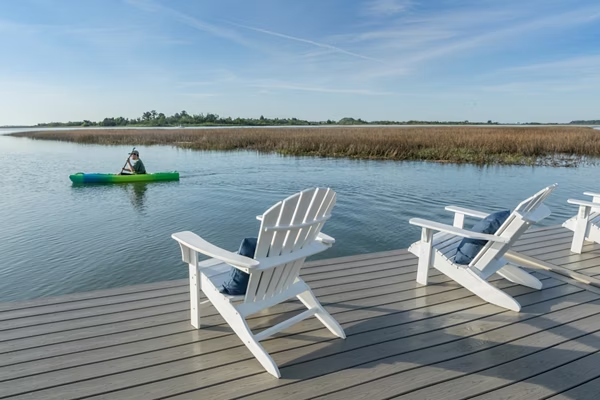
Trex promotes its decking as suitable for demanding outdoor environments, including areas exposed to heavy moisture, rain, and saltwater. The brand highlights its use in projects that experience extreme conditions, from intense sun exposure to seasons where surrounding land may be largely underwater.
In real-world dock applications, Trex performs well when used as a dock surface material, where boards are regularly exposed to water, spray, humidity, and changing weather conditions. Like most decking materials, performance is closely tied to proper installation, drainage, airflow, and adherence to manufacturer guidelines.
For homeowners and builders, this means Trex can be a viable dock decking option but it should still be evaluated in the context of how the dock is built and how water interacts with the structure over time.

Heat Considerations for Boat Docks
Heat retention is a common concern for composite decking, especially on docks where shade is limited and sunlight reflects off the water.
Some Trex decking products are available with SunComfortable™ heat-mitigating technology, which is designed to reduce surface temperatures compared to traditional composite boards. Availability varies by product line and color, and even heat-mitigating decking can become warm in direct sunlight.
For dock installations, lighter-colored boards, footwear use, and thoughtful design elements such as shade structures can help reduce surface temperature concerns regardless of material choice.
Pros and Cons of Trex Decking for Boat Docks
Pros
Durability
Trex is engineered to resist rot, decay, and insect damage, making it well-suited for damp and high-exposure environments.
Low Maintenance
Trex does not require sealing, staining, or painting. Routine cleaning is typically all that is needed.
Eco-Friendly Construction
Trex products incorporate recycled plastics and reclaimed wood fibers.
Design Versatility
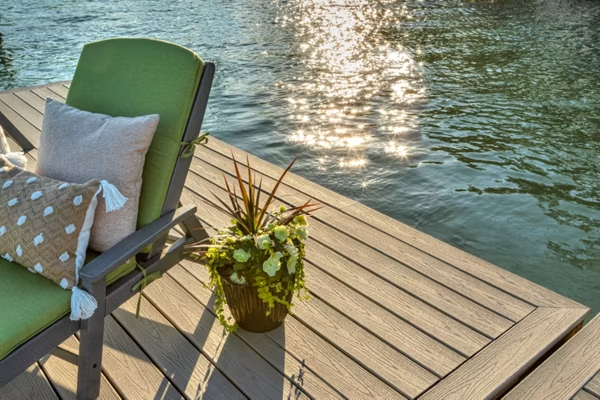
Available in a range of colors and profiles, Trex allows dock designs that complement both modern and natural waterfront settings.
Cons
Heat Retention
Like most composite decking materials, Trex can become warm under direct sunlight.
Cost
Trex typically has a higher upfront cost than pressure-treated lumber.
Composite Makeup
Trex contains wood fiber blended with plastic and is not capped on the bottom of the board, which may be a consideration in particularly demanding marine environments.
Takeaways for Dock Projects
Trex decking has been used successfully in a wide range of dock and waterfront applications, offering durability, low maintenance, and a consistent appearance. It can be a good fit for docks where ease of upkeep and long-term performance are priorities.
That said, no single decking material is right for every dock. Factors such as water exposure, climate, sun intensity, budget, and aesthetic goals all play a role in determining the best solution. In some cases, tropical hardwoods or fully synthetic decking materials may be a better match for specific site conditions.
Need Help Choosing the Right Dock Decking?
Choosing the right decking material for a boat dock is not just about brand recognition. It is about matching material performance to real-world conditions.
Advantage Lumber works with a wide range of decking materials, from composite options to hardwoods and marine-grade solutions. If you need help evaluating which material makes the most sense for your dock or waterfront project, our team can help you compare options and choose the right fit for your environment and goals.
