
When planning a new deck, homeowners often rely on advice that’s been passed down for decades. The problem? Much of that advice is outdated. Building materials, treatments, and best practices have changed significantly—and many long-standing deck building “rules” simply no longer apply.
At AdvantageLumber.com, we work with homeowners, builders, contractors and architects every day. We also see what actually fails in the real world. Below are the most common deck building myths that have been debunked—and what you should know instead.
Myth #1: Pressure-Treated Lumber Lasts 30–40 Years
Debunked.
Older decks framed with pressure-treated lumber often did last decades—but that was when CCA-treated lumber (Chromated Copper Arsenate) was widely used. CCA was eventually banned for residential use due to health and environmental concerns.
The Reality Today
Modern pressure-treated lumber uses different, less toxic chemical treatments that simply do not perform the same in long-term outdoor applications.
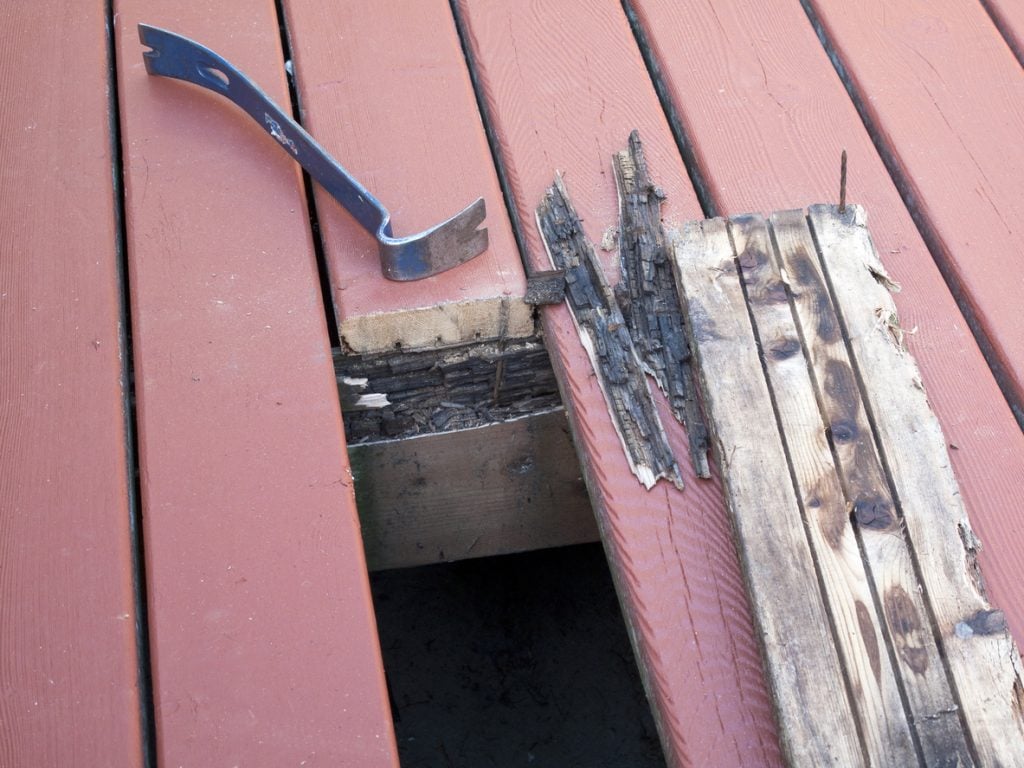
At AdvantageLumber.com, we’ve seen pressure-treated deck framing rot in as little as 10–15 years, especially in:
- Low-clearance decks
- Poorly ventilated areas
- High-moisture or coastal environments
Myth #2: The Deck Boards Are the Most Important Part of a Deck
Debunked.
Deck boards are the most visible part of a deck—but they are not the most important.
Why the Frame Matters More
The deck frame:
- Supports all structural loads
- Determines safety and longevity
- Is extremely difficult and expensive to replace
We regularly hear from customers who installed Ipe hardwood decking, a product with a proven lifespan of 50–75 years, only to have the pressure-treated frame underneath begin rotting in as little as 10 years.
What good is installing a 50–75 year decking product if the structure beneath it fails in 10–15 years?
You wouldn’t build a new house on a weak foundation—and you shouldn’t build a deck on one either.
Myth #3: Composite Decking Is Maintenance-Free
Debunked.
In the past Composite decking was often marketed as maintenance-free, but that’s not entirely true. In fact some brands found themselves slapped with class action law suits for deceptively marketing their composite decking as no maintenance.
Composite decking manufacturers no longer market their products as no maintenance and all have detailed maintenance instructions that most be followed to maintain the warranty.
The Truth About Composite Decking
Composite decking is low maintenance, not no maintenance. It still requires:
- Periodic cleaning
- Proper drainage and airflow
- Mold and mildew prevention
Early generations of composite decking also experienced issues like staining, fading, mold growth, and surface delamination. While newer products have improved, proper installation, maintenance and ventilation remain critical.
Myth #4: Hardwood Decking Is High Maintenance
Debunked.
This myth has kept many homeowners from choosing one of the longest-lasting decking materials available.
The Reality of Hardwood Decking
Hardwoods like Ipe, Cumaru, and Tigerwood are:
- Naturally rot- and insect-resistant
- Extremely dense and durable
- Structurally low maintenance
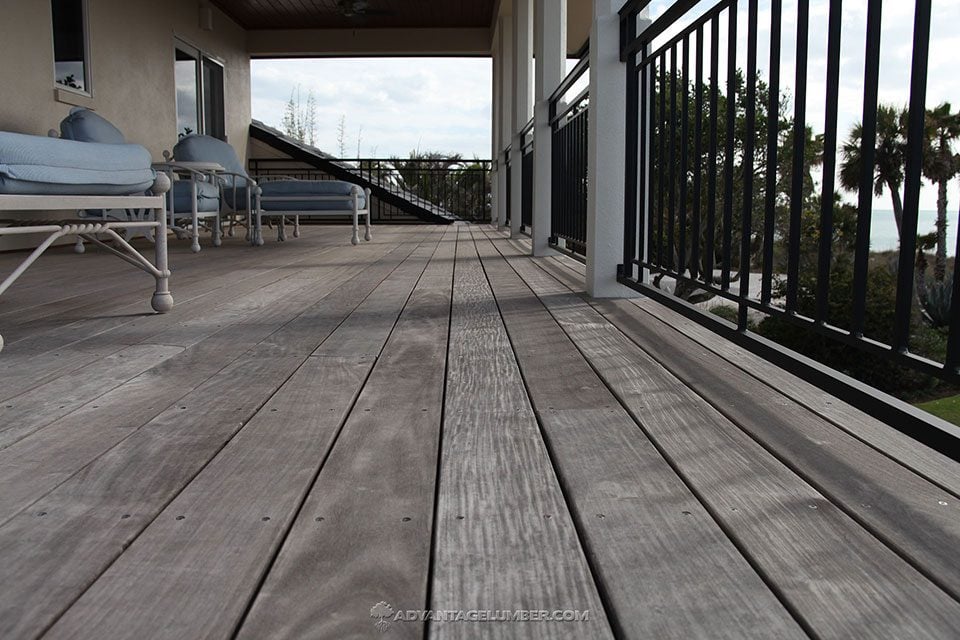
The only maintenance required is optional oiling if you want to preserve the original color. If left untreated, hardwood decking naturally weathers to a silver-gray patina without compromising performance.
Myth #5: Deck Boards Can Be Installed Directly Over Concrete
Debunked.
Deck boards—wood or synthetic—should never be attached directly to concrete.
Why This Fails
Concrete constantly wicks moisture from the ground. When decking is installed directly on concrete:
- Moisture becomes trapped
- Boards absorb water from the underside
- Cupping, warping, and movement occur
A proper installation always requires a sleeper system or deck tile system to allow airflow and drainage.
Myth #6: All Decking Warranties Are Basically the Same
Debunked.
Warranty length alone doesn’t tell the full story.
What Many Warranties Don’t Cover
Many decking warranties exclude:
- Labor costs
- Installation errors
- Real-world fading, staining, or heat buildup
A 25–50 year warranty doesn’t necessarily mean a deck will perform that long in actual conditions.
Proven real-world performance matters more than marketing claims.
Myth #7: Wider Deck Boards Are Better
Debunked.
While wider boards can look appealing, they’re not always better—especially for wood decking.
Narrower Boards Perform Better
Narrower boards:
- Cup less
- Move less
- Drain water more effectively
This is why hardwood decking and hardwood deck tiles often use narrower profiles for improved stability and longevity.
If you are after the wide plank deck board look than the TimberTech Vintage Collection and Harvest Collection offer an 8″ wide deck board
Myth #8: All Decking Gets Equally Hot in the Sun
Debunked.
Deck temperature varies significantly based on:
- Material type
- Color
- Density
- Airflow underneath
Dark composite decking, especially black or near-black boards, can become dangerously hot for bare feet, children, and pets. Lighter colors and certain hardwoods remain noticeably cooler in direct sunlight.
Myth #9: Deck Failures Are Rare
Debunked.
Deck failures happen every year and are far more common than most homeowners realize.
Common Causes of Deck Failure
- Rotting deck framing
- Improper ledger board attachment
- Undersized joists or beams
- Corroded fasteners
In most cases, deck boards are not the problem—the structure underneath is.
Myth #10: Cheaper Decks Are Cheaper in the Long Run
Debunked.
Saving money upfront often leads to higher costs later.
Decks built with short-term materials frequently require:
- Major structural repairs
- Partial rebuilds
- Full replacement far sooner than expected
A deck built with long-lasting framing and premium decking materials often costs less over its lifetime.
The Takeaway: Build Decks for the Long Term
Many deck building myths persist because they’re based on outdated materials and old assumptions. Today’s best decks are designed with longevity in mind—from the frame to the surface.
At AdvantageLumber.com, we believe:
- The frame should last as long as the decking
- Structural integrity matters more than appearance alone
- Proven materials outperform shortcuts every time
If you’re planning a new deck or replacing an old one, let us help you build it once—and build it right.
👉 Contact AdvantageLumber.com for expert guidance on long-lasting decking and framing solutions.
