
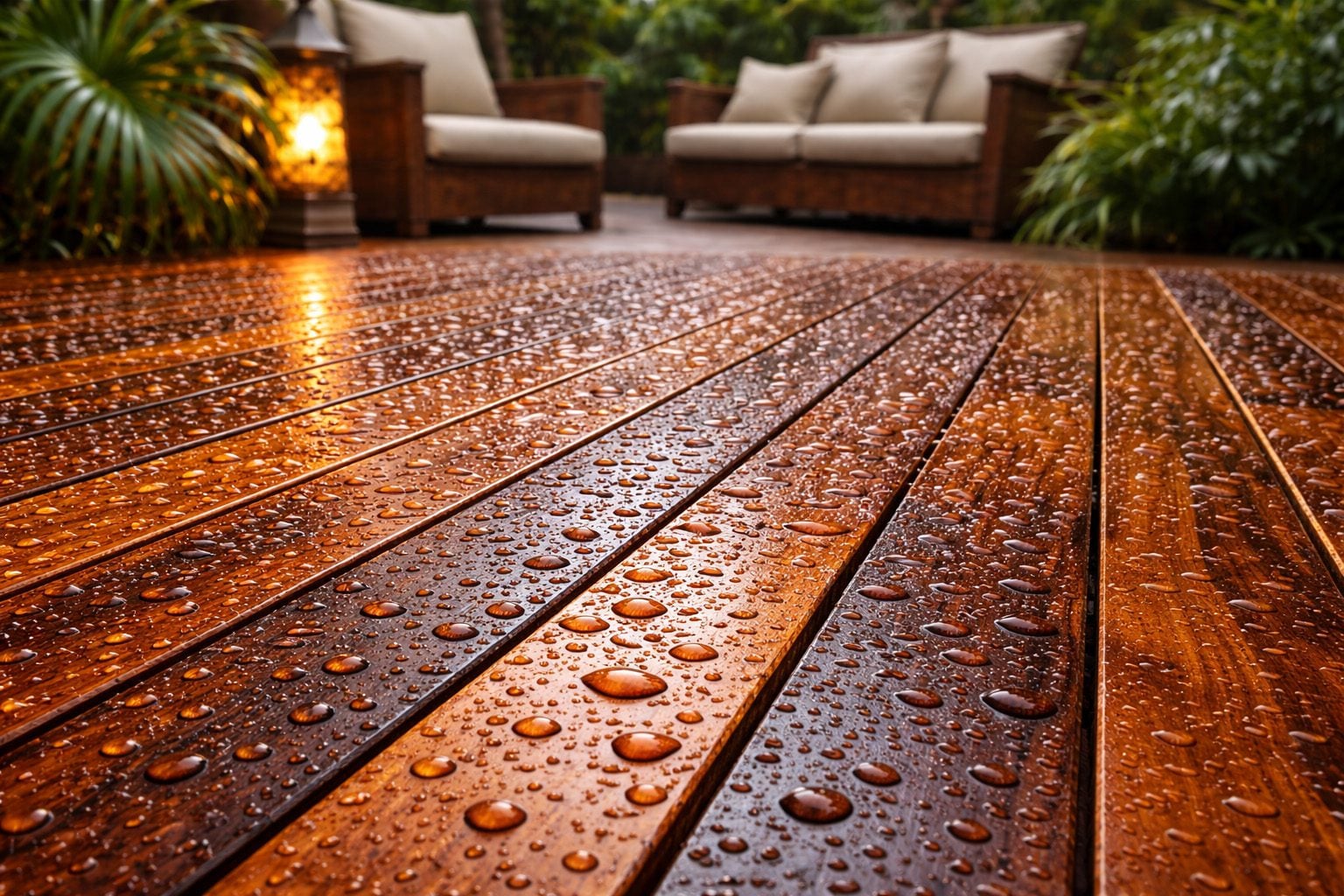
What Causes Slipperiness & How to Prevent It
One of the most common questions homeowners ask before choosing a deck material is: “Is hardwood decking slippery?”
The short answer is no—hardwood decking is not inherently slippery. In fact, when properly selected, installed, and maintained, hardwood decking can offer excellent traction, even in wet conditions. However, like any outdoor surface, hardwood decking can become slippery under certain circumstances.
Understanding what causes deck surfaces to become slippery—and how to prevent it—will help you enjoy a beautiful, safe hardwood deck for decades.
Is Hardwood Decking Naturally Slippery?
Hardwood decking species such as Ipe, Cumaru, Tigerwood, Garapa, Teak, and Brazilian Redwood are dense, fine-grained woods. This density is actually a benefit—it makes them extremely durable, resistant to rot, insects, and wear.
Contrary to popular belief, hardwood decking does not become slippery simply because it gets wet. In fact:
- Properly milled hardwood boards provide solid traction
- Hardwood does not form a slick surface like some composites can
Most reported “slippery deck” issues are not caused by the wood itself, but by surface conditions.
What Causes Hardwood Decking to Become Slippery?
1. Mold, Mildew, and Algae Buildup
The number one cause of slippery decks—of any material—is organic growth.
Shaded areas, poor drainage, and damp environments can allow:
- Algae
- Mold
- Mildew
to form on the surface. This creates a slick film that reduces traction.
This issue affects composite, PVC, pressure-treated wood, and hardwood decking alike.
2. Dirt, Pollen, and Environmental Residue
Even without visible mold, a buildup of:
- Dirt
- Tree pollen
- Dust
- Airborne contaminants
can create a slippery surface over time if not cleaned.
3. Improper Sealers or Film-Forming Coatings
Some homeowners mistakenly apply surface-coating products (like glossy sealers or polyurethane-type finishes) that sit on top of the wood.
These products:
- Can become slick when wet
- May peel or flake
- Trap moisture and dirt
Hardwood decking performs best with penetrating oil-based or water-based sealers such as WiseCoat, not surface films.
4. Poor Drainage or Installation Issues
Decks that:
- Don’t allow water to drain properly
- Are built too close to the ground
- Lack airflow underneath
are more likely to stay damp, encouraging growth that leads to slipperiness.
How to Prevent Hardwood Decking from Becoming Slippery
1. Choose the Right Hardwood Species
Premium hardwoods offered by AdvantageLumber.com—such as Ipe, Cumaru, Tigerwood, Garapa, and Teak—naturally resist moisture absorption and decay, making them less prone to organic growth than softer woods.
Dense hardwoods dry faster and stay cleaner longer.
2. Keep the Deck Clean (Minimal Maintenance)
Routine cleaning is simple and effective:
- Sweep regularly to remove debris
- Rinse periodically with water
- Use a hardwood-safe deck cleaner once or twice a year
This alone eliminates most slip risks.
3. Use a Penetrating Sealer — Not a Surface Coating
For best results, use a penetrating hardwood sealer such as Ipe Oil designed for dense tropical woods. These sealers:
- Absorb into the wood
- Repel moisture
- Do not create a slick surface
- Help prevent mold and mildew growth
Avoid paints, stains, or sealers that leave a glossy film.
4. Proper Deck Design & Installation
A well-built deck stays drier and safer:
- Allow proper spacing between boards
- Ensure water can drain freely
- Maintain airflow beneath the deck
- Use corrosion-resistant fasteners
Good construction plays a major role in long-term safety.
Is Hardwood Decking More Slippery Than Composite?
No. In many cases, hardwood decking offers better real-world traction than composite decking.
Composite boards can:
- Become slick from mold growth
- Trap moisture within capped layers
- Feel smoother underfoot when wet
- Very slippery with snow and ice
Hardwood’s natural texture, density, and ability to dry quickly often make it a safer surface when properly maintained.
The Bottom Line: Is Hardwood Decking Slippery?
✔ Hardwood decking is not naturally slippery
✔ Slipperiness is usually caused by mold, dirt, or improper finishes
✔ Simple cleaning and proper sealing prevent issues
✔ Premium hardwoods provide excellent traction and longevity
When installed and maintained correctly, hardwood decking is one of the safest, most durable, and most beautiful deck materials available.
Explore Premium Hardwood Decking at AdvantageLumber.com
At AdvantageLumber.com, we offer the highest-quality hardwood decking—including Ipe, Cumaru, Tigerwood, Garapa, Teak, and Brazilian Redwood—along with expert guidance to help you build a deck that’s safe, stunning, and built to last.