
When planning or building a deck, most homeowners focus on the decking material, railing style, or overall design. But one critical factor often gets overlooked: deck ventilation. Without proper airflow, even the highest-quality decking—whether it’s Ipe, Cumaru, Tigerwood, Garapa, composite, or PVC—can suffer premature failure.
In this guide, we’ll break down why deck ventilation matters, what can happen when airflow is restricted, and how to design a deck that stands the test of time.
Why Deck Ventilation Is So Important
1. Moisture Control
The space beneath your deck naturally traps moisture. Rainwater, morning dew, and ground humidity all contribute to elevated moisture levels. Without airflow to allow evaporation, that moisture lingers—creating the perfect environment for:
- Mold and mildew growth
- Wood rot in deck frames
- Swelling, cupping, and warping of deck boards
- Corrosion of metal fasteners
Even high-density hardwoods like Ipe and Cumaru benefit greatly from a well-ventilated structure.
2. Extending Decking Lifespan
Every decking material has a rated lifespan—but poor ventilation can drastically shorten it. For example:
- Hardwood decking may move more than expected if moisture gets trapped beneath the boards.
- Composite and PVC decking can trap heat and moisture, potentially voiding warranties if installed too close to the ground without adequate ventilation.
- Pressure-treated framing deteriorates much faster when continuously exposed to damp conditions.
Proper airflow helps decking materials dry evenly, maintain stability, and perform as intended for decades.
3. Temperature Regulation
Composite and PVC decks, in particular, can build up heat. Adequate ventilation helps dissipate warmth from underneath the deck, reducing expansion, contraction, and surface heat.
This makes the deck more comfortable to use—and helps avoid long-term structural issues.
What Happens When a Deck Lacks Ventilation?
Poor ventilation can lead to several avoidable issues:
- Premature rot of joists and beams
- Increased insect activity
- Odor from trapped moisture
- Decking discoloration or staining
- Buckling, heaving, or cupping of boards
- Mold on the underside of decking
A deck that can’t breathe is a deck that won’t last.
Best Practices for Proper Deck Ventilation
1. Maintain Adequate Ground Clearance
Different decking materials have different clearance requirements:
- Hardwoods (like Ipe): minimum 18″ from ground to bottom of joists
- Composite/PVC decking: follow manufacturer guidelines; many require 12″ or more
- Low-profile or ground-level decks must incorporate special ventilation strategies (see below)
Ground clearance ensures natural airflow and prevents moisture from being trapped against the structure.
2. Leave the Proper Gap Between Deck Boards
Deck boards should never be installed tight. Proper gapping helps with drainage and airflow:
- Hardwoods: typically 1/8″ – 3/16″
- Composites/PVC: manufacturer-specific spacing, usually 3/16″ – 1/4″
Gaps allow air to circulate and water to escape.
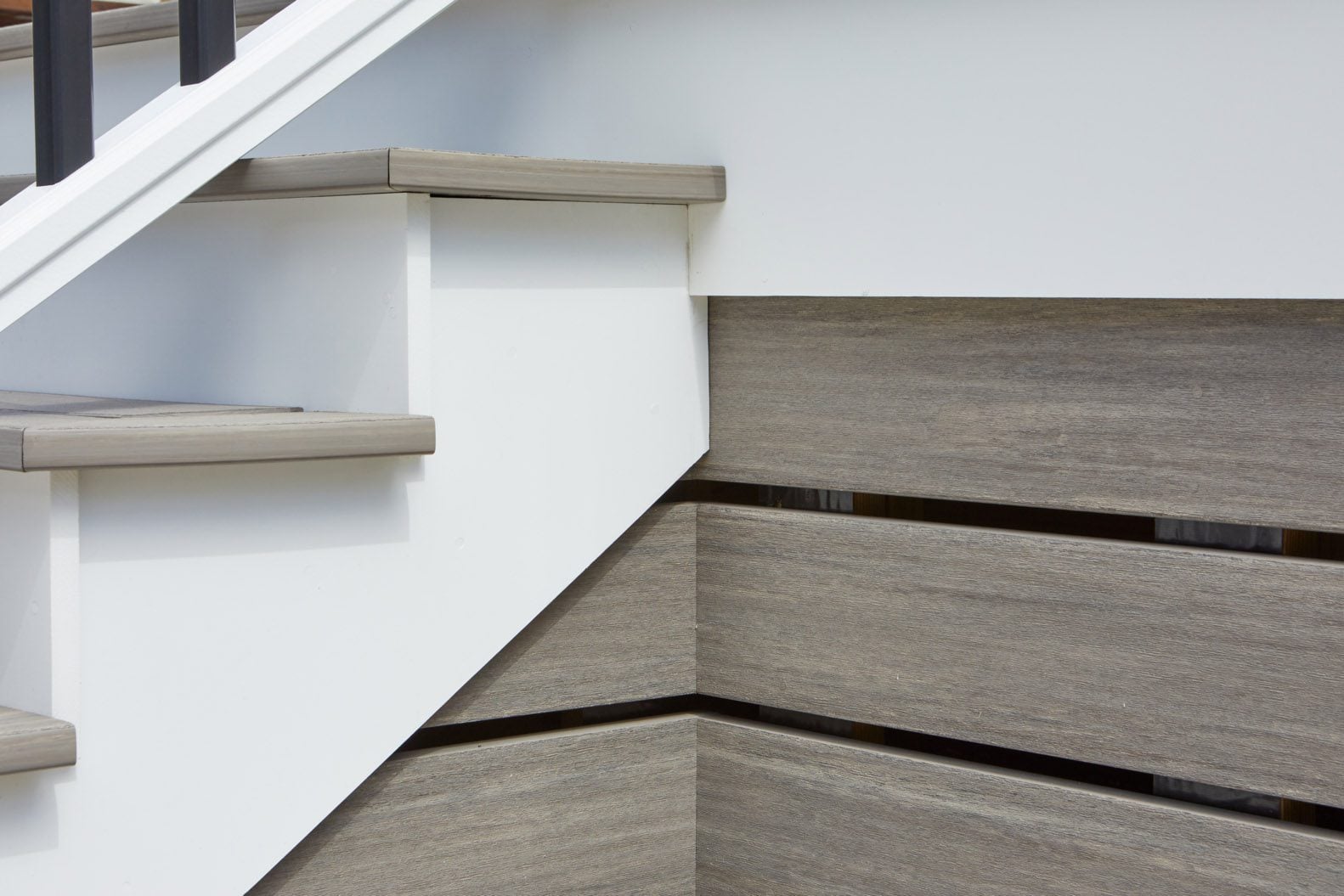
3. Use Ventilated Skirting
Solid deck skirting traps moisture. Instead:
- Use louvered panels
- Add perforated metal panels
- Include intentional airflow gaps along the perimeter
At least 20% of the total skirting area should be open for ventilation.
4. Avoid Blocking Airflow With Landscaping
Shrubs and mulch placed too close to the deck perimeter can trap moisture. Keep a minimum 12″ space between vegetation and the deck structure.
5. Consider Under-Deck Drainage Systems Carefully
Systems like under-deck ceilings can be great for creating dry space—but only if the joists above are properly ventilated.
Ensure:
- Adequate airflow both above and below the drainage system
- Moisture doesn’t get trapped between the deck boards and structure
- Top down under deck drainage systems like Trex RainEscape offer the most protection since these systems don’t allow water to hit the deck joists at all.
6. Choose Materials That Perform Well in Moist Environments
AdvantageLumber.com offers several decking options that excel in challenging conditions:
- Ipe, Cumaru, Tigerwood, Garapa – naturally rot-resistant hardwoods
- Deckorators® mineral-based composite – absorbs minimal moisture and resists swelling
- TimberTech® PVC decking – designed for increased ground-level performance
Proper ventilation enhances the performance of all these materials.
Special Considerations for Ground-Level or Low-Profile Decks
Decks that sit close to the ground (<12″) are at the highest risk of moisture issues. Solutions include:
- Using gravel instead of soil under the deck
- Installing a vapor barrier (such as 6-mil plastic) to stop ground moisture
- Selecting moisture-resistant materials like Ipe, Garapa, or mineral-based composite
- Increasing board spacing for better airflow
- Designing removable deck panels for maintenance access
If you’re building a ground-level deck, proper ventilation planning is absolutely essential.
Final Thoughts: Let Your Deck Breathe
A beautiful deck starts with strong materials—but it lasts because of proper design. Ventilation is one of the most overlooked aspects of deck construction, yet it has one of the biggest impacts on longevity, performance, and safety.
Whether you’re a homeowner or a contractor, paying attention to airflow beneath your deck will ensure your investment lasts for decades.
Looking for long-lasting decking and expert guidance?
AdvantageLumber.com supplies premium hardwoods, composites, PVC decking, framing solutions, and everything you need to build a better, longer-lasting deck.
