
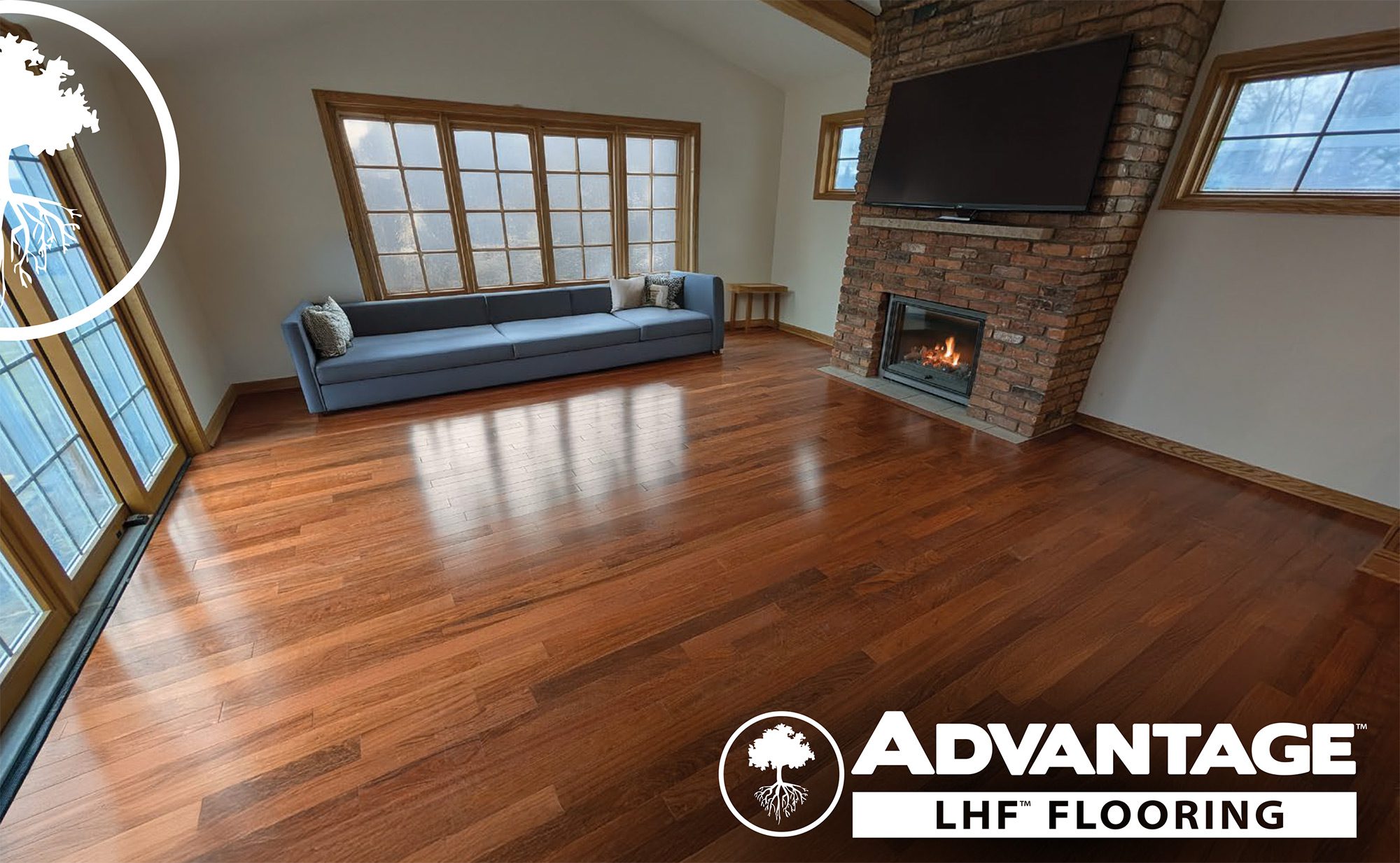
When it comes to choosing wood flooring for your home, one of the most common questions we hear at Advantage Lumber is: “What size is best?” While wood flooring comes in various lengths, thicknesses, and species, the width of the planks often plays the biggest role in both performance and aesthetics.
In this post, we’ll discuss why width matters, focusing on how narrower options like 3-inch planks can offer advantages over wider 5-inch ones, especially in moisture-prone environments. We’ll also explore how different widths align with various home design styles to help you make an informed decision.
The Impact of Width on Flooring Stability: Why Narrower Might Be Better
Wood is a natural material that expands and contracts with changes in humidity and temperature. One of the key issues this can cause is cupping, where the edges of the plank curl upward while the center stays flat, creating an uneven surface. This happens when the bottom of the board absorbs more moisture than the top, often due to subfloor humidity or spills.
Here’s where width comes into play: narrower flooring, such as 3-inch wide planks, is generally less prone to cupping compared to wider 5-inch planks. The reason boils down to physics and material behavior. Wider boards have more surface area across their width, which means they’re more susceptible to dimensional changes.
A 5-inch plank might expand or contract by a noticeable amount—say, up to 1/8 inch or more in extreme conditions—leading to visible gaps, buckling, or that dreaded cupping. In contrast, a 3-inch board experiences the same percentage of movement but over a smaller span, so the effects are less pronounced and easier for the floor to accommodate without warping.
This stability is particularly crucial in installations where moisture levels might be higher than average. Think about kitchens, bathrooms, laundry rooms, or basements—these areas are exposed to spills, steam, or even higher ambient humidity from plumbing and appliances.
In such spaces, opting for narrower widths can reduce the risk of long-term damage, ensuring your floor stays flat and beautiful for years. For example, in a coastal home or a humid climate, a 3-inch oak or maple floor might hold up better than a wide-plank alternative, minimizing the need for costly repairs.
That said, no wood floor is completely immune to moisture issues. At Advantage Lumber, we always emphasize the importance of proper preparation and maintenance to reduce any chances of excessive moisture exposure. Start by acclimating your wood flooring to the room’s environment for at least 72 hours before installation.
Use vapor barriers or moisture-retardant underlayments on concrete subfloors, and maintain indoor humidity between 30-50% year-round with dehumidifiers or humidifiers as needed. Sealing the floor with a high-quality finish can also add an extra layer of protection. By taking these steps, you can safeguard any wood floor—narrow or wide—from swelling, shrinking, or other moisture-related problems that could lead to cracks, splits, or even mold.
Matching Width to Your Home’s Design Style
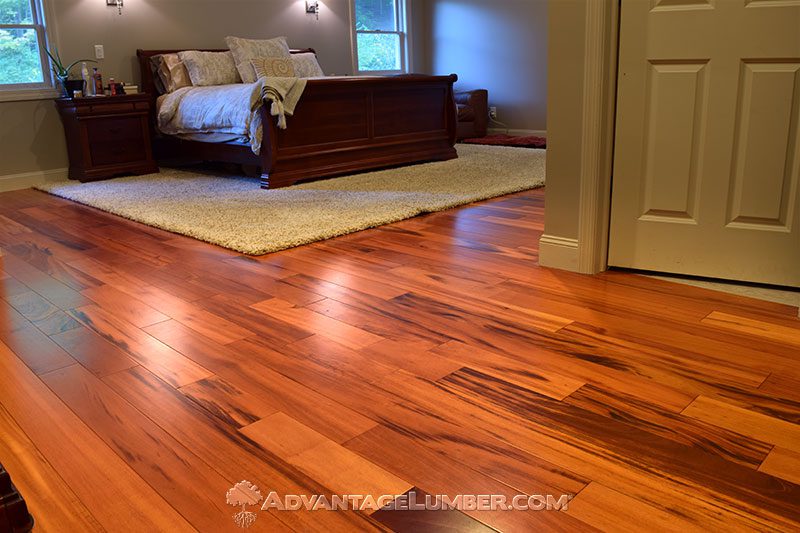
Beyond performance, the width of your wood flooring can dramatically influence the overall look and feel of your space. Different widths evoke distinct vibes, making them ideal for specific design styles. Here’s a breakdown to guide your choice:
- Narrow Widths (2-4 inches, like 3-inch planks): These create a classic, intricate pattern with more visible seams, adding charm and detail to a room. They’re perfect for traditional or historic homes, such as Colonial, Victorian, or Craftsman styles, where the floor complements detailed millwork and antique furnishings. In smaller rooms, narrow planks can make the space feel cozier and more proportionate without overwhelming the eye.
- Medium Widths (4-6 inches): Offering a balanced look, these are versatile for transitional designs that blend old and new. They’re commonly used in modern farmhouse or Scandinavian-inspired homes, where clean lines meet rustic elements. A 5-inch width, for instance, provides a subtle nod to wider trends while maintaining enough seams for a grounded, approachable feel—ideal for open-concept living areas or family rooms.
- Wide Planks (6 inches and up): For a bold, expansive statement, wide flooring minimizes seams and emphasizes the wood’s natural grain and knots. This suits contemporary, rustic, or industrial styles, like in lofts, cabins, or minimalist modern homes. Wide planks can make a room appear larger and more luxurious, drawing attention to the floor as a focal point. They’re especially popular in great rooms or master suites where you want a seamless, high-end vibe.
Ultimately, the “best” width depends on your priorities. If durability in humid areas is key, lean toward narrower options. For a dramatic aesthetic in a dry, controlled environment, go wide. And remember, mixing widths—such as using narrow planks in hallways and wider ones in main living areas—can add visual interest and flow.
Final Thoughts: Finding Your Perfect Fit with Advantage Lumber
There’s no one-size-fits-all answer to the best wood flooring size—it’s about balancing functionality, style, and your home’s unique conditions. At Advantage Lumber, we offer a wide selection of premium hardwood flooring in various widths, from narrow 3-inch strips to luxurious wide planks, all sourced sustainably and ready to ship. Whether you’re renovating a humid kitchen or designing a rustic retreat, our experts can help you choose the right option. Browse our collection today or contact us for personalized advice—your dream floor is just a click away!